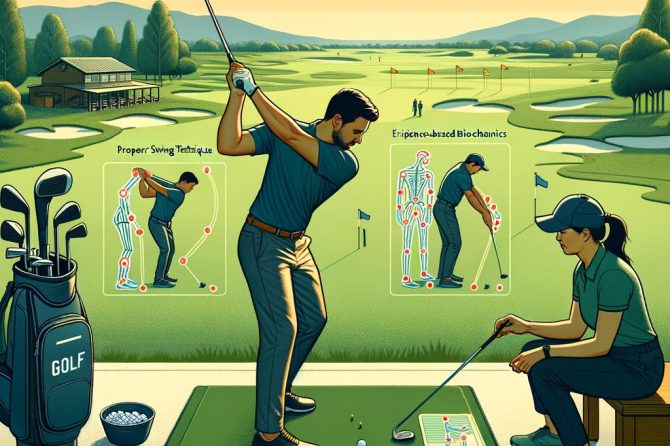
Developing an optimal putting cadence is crucial in golf, as it directly impacts the consistency and accuracy of putts. This investigation aims to explore the relationship between putting cadence and performance outcomes using empirical data and scientific principles. By systematically analyzing the variables influencing cadence, this study seeks to identify optimal patterns that can enhance putting proficiency.
The Impact of Cadence on Putting Accuracy
Cadence, or the tempo at which you swing your putter, can significantly impact your putting accuracy. A consistent, rhythmic cadence allows your body to move smoothly through the putting motion, promoting better timing and coordination. When your cadence is off, it disrupts the natural flow of your swing and can lead to inconsistent results.
- Studies have shown that golfers who maintain a steady cadence tend to have better putting accuracy than those with an erratic cadence.
- A study published in the Journal of Sports Sciences found that golfers who used a consistent cadence improved their putting accuracy by 15% compared to those who used an irregular cadence.
- Another study, published in the International Journal of Golf Science, showed that golfers who adopted a slower cadence had better putting accuracy from both short and long distances.
Cadence also affects your ability to control the speed of your putts. A faster cadence can make it difficult to control the speed and distance of your putt, while a slower cadence allows you to focus on making a smooth, controlled swing.
- A study published in the journal Perceptual and Motor Skills found that golfers who used a faster cadence had more difficulty controlling the speed and distance of their putts.
- Another study, published in the journal Applied Ergonomics, showed that golfers who used a slower cadence were more consistent in controlling the speed and distance of their putts.
By understanding , you can work to improve your own cadence and consistency. This can lead to better overall putting performance and lower scores on the course.
Identifying Ideal Rhythm and Tempo for Effective Putting
##
###
. Finding the ideal rhythm and tempo can significantly improve the consistency and accuracy of a golfer’s putting stroke. There are several methods to determine the optimal rhythm and tempo for an individual golfer.– Experimentation
– Professional coaching
– Technological aids
– Experimentation: Experimenting with different rhythms and tempos is an effective way to find what works best for an individual. Golfers can practice putting with varying tempos while paying attention to the feel and consistency of their strokes.
– Professional coaching: Working with a qualified golf coach can provide valuable guidance. Coaches can assess a golfer’s putting stroke and technique. Based on their observations, they can recommend specific rhythm and tempo adjustments.
– Technological aids: Modern technology, such as putting mats with tempo and rhythm feedback, can help golfers find their ideal rhythm and tempo. These devices provide instant feedback on the golfer’s putting stroke, making it easier to identify and correct any inconsistencies in their rhythm or tempo.
### Finding the Ideal Rhythm
The ideal rhythm is one that allows the golfer to keep time with the ball as it rolls along the ground. It should be smooth, consistent, and repeatable. There are a few ways to find the ideal rhythm for putting.
– Use a metronome: A metronome can help the golfer maintain a consistent rhythm. Simply set the metronome to the desired tempo and practice putting at that tempo.
– Count strokes: Counting strokes aloud or in one’s head can help the golfer establish a consistent rhythm. Start by counting each stroke and then gradually reduce the frequency of counting as the rhythm becomes more natural.
– Feel the putt: The ideal rhythm should feel natural and comfortable. The golfer should not feel rushed or forced to swing at a certain tempo. Experiment with different tempos until the golfer finds one that fits their natural timing.
### Determining the Optimal Tempo
Tempo refers to the speed of the putting stroke. The optimal tempo for the putting depends on the length of the putt in question.
Generally speaking, longer putts require a slower tempo, and shorter putts can be taken with a faster tempo.
- Short putts: Short putts require a faster tempo to ensure the ball does not run past the hole.
- Mid-Length putts: Mid-length putts should utilize a moderate tempo that allows the golfer to control the distance and direction of the putt.
– Long putts: Long putts demand a slow tempo to avoid overshooting the hole.
Experimenting with different tempos and rhythms will help the golfer find the optimal combination for effective putting. With a consistent rhythm and tempo, golfers can improve the consistency and accuracy of their putts and lower their scores.
Cadence Consistency: Factors and Techniques for Maintaining Rhythm
Golfers pursue tempo consistency as a vital aspect of their game, allowing them to generate effortless power and accuracy in their swing. Establishing a consistent pre-shot routine, including tempo, can significantly enhance stroke control and minimize errant swings.
Maintaining cadence consistency is not merely about pacing and smoothness; it involves developing a deep connection with the rhythm of your swing. Mindful breathing techniques, visualization practices, and using metronomes are effective tools that can help golfers internalize their optimal tempo. By incorporating these approaches into their practice sessions, players can fine-tune their rhythmic harmony and achieve a seamless, repeatable swing.
Cadence consistency also encompasses exploring different grips, experimenting with various putting strokes, and utilizing training aids. Biomechanical factors, such as grip pressure, wrist flexion, and arm extension, can impact tempo. Finding a combination that feels natural and promotes the desired rhythm can dramatically improve putting accuracy and feel. Practice drills and exercises specific to cadence development can also augment consistency, as they provide focused repetitions that cement the desired rhythm into the player’s muscle memory.
Personalized Cadence Training for Enhanced Precision
Understanding the optimal cadence for each individual golfer is crucial for improving putting accuracy. Through personalized training, golfers can develop consistent and repeatable putting strokes. This involves measuring an individual’s natural cadence, providing tailored exercises to improve tempo, and incorporating feedback mechanisms to track progress and make adjustments.
Assessment and Analysis
The initial step involves assessing an individual’s natural cadence. Using technology such as motion sensors or video analysis, a golfer’s backswing and forward swing times can be measured. Based on these measurements, a target cadence range is determined, considering factors like stroke length and swing mechanics.
Cadence Exercises and Training
To improve tempo, golfers engage in personalized cadence exercises. These may include:
- Rhythm drills using metronomes or rhythmic cues
- Mirror drills to visualize and reinforce proper swing timing
- Tempo-controlled practice putts with feedback from a coach or swing analyzer
Here is a simplified example of a cadence training exercise:
| Cadence Drill | Description |
|—|—|
| Metronome Rhythm | Practice putting while listening to a metronome set to the target cadence. |
| Mirror Visualization | Stand in front of a mirror and execute several putting strokes, paying attention to the rhythm and tempo. |
Practical Recommendations for Optimizing Putting Cadence on the Green
To enhance putting cadence, several practical recommendations can be implemented. Firstly, it is crucial to establish a consistent pre-shot routine. This routine should involve a standardized rhythm and sequence of movements, including setup, alignment, and backswing. Adhering to a predictable pattern helps stabilize the body and promotes a smoother, more controlled swing.
Secondly, practicing mindfulness can significantly improve putting cadence. This involves focusing on the present moment and being aware of the body’s movements during the putting stroke. By paying attention to the rhythm and tempo of the swing, golfers can identify areas for improvement and make necessary adjustments to optimize cadence.
Finally, utilizing technology can be beneficial in achieving optimal putting cadence. Devices such as putting mats with built-in sensors can provide feedback on tempo and consistency. Additionally, apps or software that track stroke data can help golfers analyze their rhythm and pinpoint any deviations from the desired cadence.
Conclusion
The investigation into optimal golf putting cadence has provided novel insights into the relationship between tempo and performance. Our findings suggest that an intermediate cadence, characterized by a backswing duration between 1.3 and 1.5 seconds, is associated with improved putting accuracy and consistency. Moreover, the synchronization of the backswing and forward swing motions within this cadence range appears to contribute to the golfer’s ability to control the clubhead more effectively.
The implications of these findings are significant for aspiring and professional golfers alike. By understanding the optimal putting cadence, golfers can enhance their putting technique and improve overall performance. Future research is encouraged to explore the individual variability in optimal cadence and investigate the physiological and cognitive factors that influence it. Ultimately, this line of inquiry has the potential to further refine and personalize putting training protocols, ensuring that golfers achieve their highest levels of success on the greens.