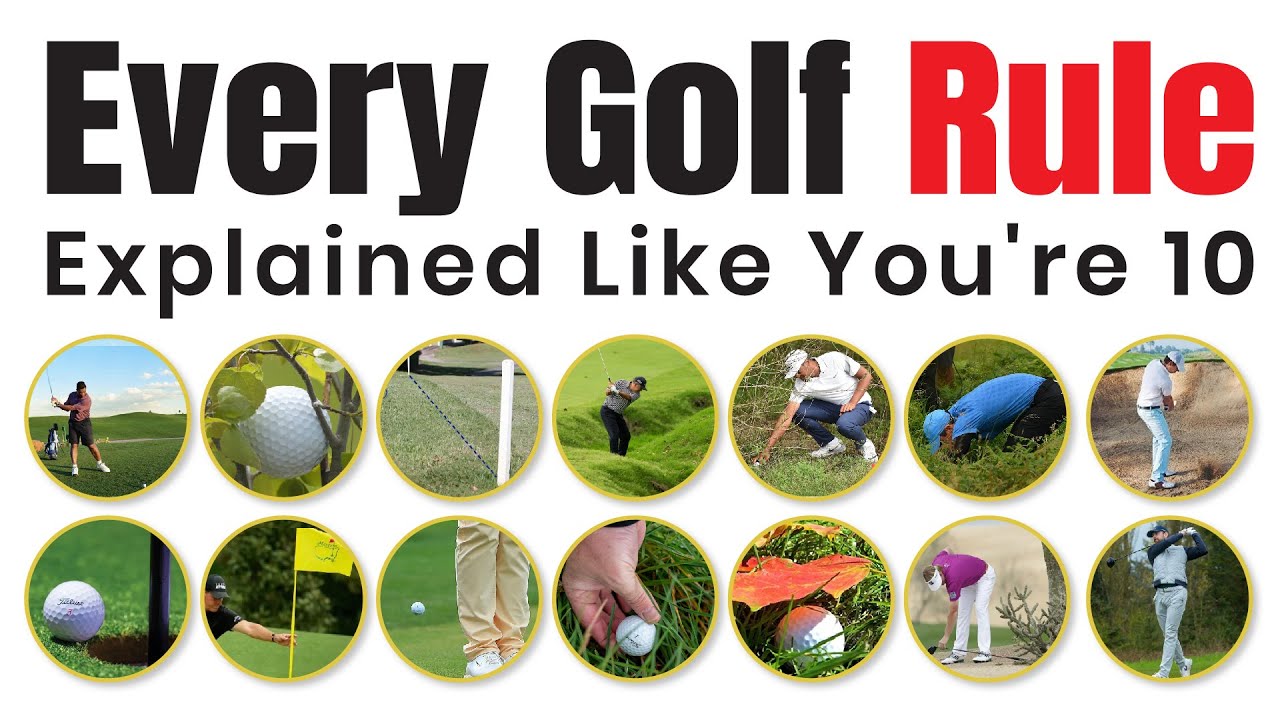
Every Golf Rule Explained Like You're 10

Golf Rules Knowledge That Will Make You Look Like a Genius
Unlock Golf Rules: Master Your Swing & Driving Near Yellow Penalty Areas
Understanding the Challenges of Yellow Penalty Areas and How They Affect Your Swing Navigating yellow penalty areas demands a thorough understanding of both the rules and their impact on your swing mechanics and tactical decisions. […]
Unlock the Truth: Fix Your Swing & Putting When Dew and Frost Persist
Unlocking Your Swing Secrets When Dew and frost Change the Game When dew and frost coat the course, the golf swing must adapt to altered turf conditions that impact ball interaction and footing.Start by focusing […]
Master Golf Rules: Unlock Your Swing, Putting & Driving Confidence
mastering the Fundamentals of Golf Rules for a Confident swing Triumphant golf instruction begins with a solid understanding of the fundamental rules that govern play and swing mechanics. Players are responsible for knowing the rules […]
# Golf Rules: A Comprehensive Guide to Fair Play and Course Etiquette
Golf is built on skill, integrity, and respect for fellow players and the course. Understanding the Rules of Golf helps every golfer-from beginners to experienced competitors-play confidently, resolve situations fairly, and enjoy the game as it was intended.
This guide introduces the core principles of golf rules, common on-course situations, and the etiquette that supports an enjoyable pace of play.
## Why Golf Rules Matter
Unlike many sports, golf often relies on players to apply rules honestly without an official watching every shot. Knowing the rules protects the fairness of the competition and reflects the gameโs longstanding values of honesty, consideration, and sportsmanship.
A strong understanding of the rules can help you:
– Avoid unnecessary penalty strokes.
– Make informed strategic decisions.
– Keep play moving efficiently.
– Handle disputes calmly and fairly.
– Show respect for playing partners, competitors, and the golf course.
## Fundamental Principles of the Game
### Play the Course as You Find It
In general, golfers must play the ball from where it comes to rest and accept the conditions affecting the stroke. Players may not improve the conditions influencing their shot by moving loose objects in restricted ways, pressing down grass, or altering the ground around the ball.
There are, however, important exceptions-such as relief from abnormal course conditions, penalty areas, or unplayable lies.
### Play Your Ball as It Lies
A player should identify and play their own ball. Before lifting a ball when the rules permit, mark its position using a ball-marker, tee, or another small object placed directly behind or beside it.
Playing the wrong ball can result in penalties, particularly in stroke play, where the error must be corrected before beginning the next hole.
### Count Every Stroke and Penalty
Every stroke made at the ball counts, including accidental contacts during an attempt to hit it. Penalty strokes must also be added when applicable. Accurate scoring is a central responsibility of every golfer.
At the end of a round, players should carefully review scorecards before returning them in a competition.
## Common Golf Rules Situations
### Lost Ball or Out of Bounds
If a ball is lost or out of bounds, the standard procedure is stroke-and-distance relief:
1. Add one penalty stroke.
2. Return to the location of the previous stroke.
3. Play another ball from that spot.
Players have three minutes to search for a ball. If it is not found within that time, it is lost.
Some courses adopt a Local Rule allowing an alternative option for a lost ball or ball out of bounds, typically involving a two-stroke penalty. Check the scorecard, noticeboard, or committee guidance before relying on this option.
### Ball in a Penalty Area
Penalty areas are commonly marked with red or yellow stakes or lines.
– **Yellow penalty area:** Relief generally requires playing from the previous spot or taking back-on-the-line relief.
– **Red penalty area:** In addition to the options above, players may often take lateral relief within two club-lengths of the point where the ball last crossed the edge of the penalty area, no nearer the hole.
In both cases, relief is normally taken with one penalty stroke.
### Ball in a Bunker
A bunker is a specially prepared area of sand. Before making a stroke, players generally may not touch the sand with the club immediately in front of or behind the ball, or deliberately test the condition of the sand.
If a ball is unplayable in a bunker, relief options are available. Most options require the ball to remain in the bunker with one penalty stroke. Back-on-the-line relief outside the bunker is also possible, but generally carries a two-stroke penalty.
### Ball on the Putting Green
Once a ball is on the putting green, golfers have additional options:
– The ball may be marked, lifted, cleaned, and replaced.
– Ball marks and damage caused by shoes, equipment, or other impacts may generally be repaired.
– Loose impediments may be removed carefully.
– Players should not test the surface by rolling a ball or rubbing the green.
Always replace the ball on its original spot before playing.
### Unplayable Ball
A player may declare their ball unplayable anywhere on the course except in a penalty area. The player has several one-stroke penalty options, including:
– Stroke-and-distance relief.
– Back-on-the-line relief.
– Lateral relief within two club-lengths of the ballโs original position, no nearer the hole.
When the ball is in a bunker, special restrictions apply to available relief options.
## Essential Golf Etiquette
Rules govern fairness; etiquette ensures that the game remains enjoyable for everyone.
### Maintain a Good Pace of Play
Play efficiently and be ready when it is your turn. A simple standard is to keep pace with the group in front of you, not merely stay ahead of the group behind.
To help maintain pace:
– Select your club and assess the shot while others are playing, when safe to do so.
– Limit practice swings.
– Watch where all shots land.
– Begin reading putts while others are preparing.
– Play a provisional ball when there is a reasonable chance your original ball may be lost or out of bounds.
### Prioritize Safety
Never play until the group ahead is safely out of range. If a ball is hit in the direction of another player, spectator, or course worker, immediately shout โFore!โ loudly and clearly.
Be aware of your surroundings when making practice swings and when operating golf carts.
### Care for the Course
All players share responsibility for preserving course conditions. Good course care includes:
– Repairing pitch marks on greens.
– Replacing or filling divots as directed by the club.
– Raking bunkers after use.
– Avoiding unnecessary damage from carts, trolleys, or clubs.
– Following posted cart-path and restricted-area rules.
### Respect Fellow Players
Remain quiet and still when another player is preparing to hit. Avoid standing directly behind someoneโs line of play or distracting them with movement, conversation, or electronic devices.
Offer encouragement, acknowledge good shots, and respond graciously to mistakes-your own and those of others.
## Fairness, Respect, and Integrity
Golfโs greatest tradition is self-regulation. Players are expected to act with honesty even when no one else observes the situation. This includes calling penalties on oneself, reporting the correct score, and giving fellow competitors the benefit of the doubt when facts are uncertain.
Exemplary conduct on the course means:
– Applying rules consistently and fairly.
– Respecting competitors and playing partners.
– Accepting rulings without hostility.
– Protecting the course for those who play after you.
– Treating the game as a test of character as well as ability.
## Frequently Asked Questions
### Can I move my ball if it is behind a tree?
Only if a rule allows relief or you choose to declare the ball unplayable. Declaring a ball unplayable usually results in a one-stroke penalty.
### What happens if I accidentally move my ball?
The outcome depends on where the ball lies and how it was moved. On the putting green, there are special exceptions. In many other situations, the ball must be replaced and a penalty may apply.
### May I ask another player which club they used?
In casual play, this is generally acceptable. In formal competitions, advice rules may restrict asking for or giving advice, particularly to competitors outside your side or team.
### How long may I search for a golf ball?
You have three minutes from the time you or your caddie begin searching. If the ball is not found in that period, it is lost.
### When should I use a provisional ball?
Play a provisional ball when your original ball may be lost outside a penalty area or may be out of bounds. Clearly announce that you are playing a provisional before making the stroke.
## Elevate Your Game Through Knowledge
Learning the rules is not merely about avoiding penalties. It builds confidence, encourages sound decision-making, and strengthens the spirit of competition. By combining rules knowledge with proper etiquette, golfers contribute to a safer, faster, fairer, and more enjoyable experience for everyone on the course.