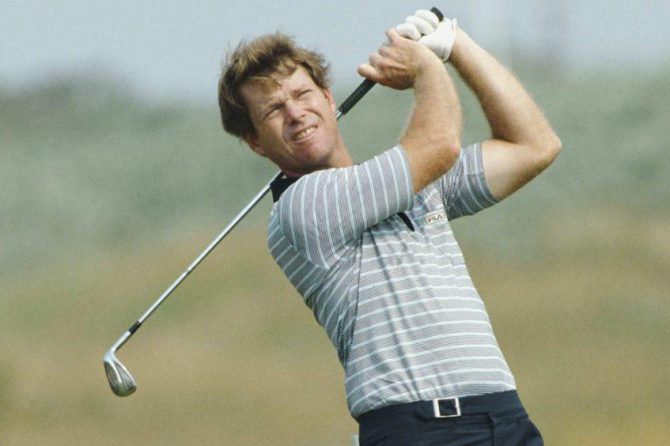
Jimmy demaret played with flair, but the lesson in his game was simple: golf is easier when the swing has rhythm, the setup is soundand the player commits to the shot. This Jimmy Demaret golf lesson is less about copying his exact motion than borrowing the qualities that made it work-flow, balanceand touch.
Find a smoother swing rhythm
Demaret’s looping action is a good reminder that power does not come from yanking the club back or attacking the ball from the top. Start in a balanced, athletic position: feet about shoulder-width apart with a mid-iron, weight centered through the archesand enough knee flex that you feel ready to move without sitting too low.
Take the club back low and wide for the first foot or so, then let it rise as your shoulders complete the turn. The loop itself should not be forced. Think of it as a natural transition: your lower body begins moving toward the target while the club settles behind you and approaches on a shallower path. For most players, the useful checkpoint is simple-let the club return from inside the target line instead of throwing it over the top.
Try a few slow rehearsal swings without a ball. Pause briefly at the top, then let the club fall before you turn through. Once that feels cozy, hit a handful of seven-irons at half speed. Pay attention to were the ball starts and how solidly you strike it, rather than chasing distance. Finish with a few drives using the same unhurried tempoand hold your finish until the ball lands. If you cannot hold the finish, the swing was probably harder than it needed to be.
That rhythm matters even more with the driver. Tee the ball so about half sits above the top edge of the clubface, play it opposite the inside of your lead heeland allow your trail shoulder to sit a little lower than your lead shoulder. That setup encourages an upward strike rather than the steep, glancing blow many golfers create when thay rush.
If you slice,resist the urge to simply roll your hands through impact. First check your alignment. Many players who think they aim at the target are actually aimed left, then swing farther left to compensate. Also watch for the trail shoulder lunging toward the ball in transition. A smoother change of direction often helps more than a frantic release of the hands.
On the course, rhythm also means choosing sensible targets. A tight driving hole may call for a controlled three-wood or hybrid rather than a full driver. the right club is usually the one that keeps your usual miss in play. Good course management is not cautious golf; it is deciding on a target and shot shape before the swing, then making one committed move.
The same idea carries into chips. Narrow your stance, favor the lead foot slightlyand keep your chest just ahead of the ball. Let the chest and arms move together in a short stroke rather of trying to create touch with flicking wrists. Use more loft when the ball needs to carry farther,but let an eight-iron or nine-iron do the work when there is plenty of green and the ball can run. A simple target-such as getting six of ten chips inside six feet-gives practice some purpose without making it complicated.
Build a putting routine you trust
Good putting starts before the putter moves. Read the putt from behind the ball, choose a clear start lineand make one or two rehearsal strokes while looking at the hole. That last part matters: it helps you feel the pace rather of standing over the ball and trying to calculate everything at once.
Set the putter face first, aimed at your intended start line, then build your stance around it. Your eyes should be over or slightly inside the ball line, the ball can sit just forward of centerand your grip pressure should stay light. For a right-handed golfer, the feet, hipsand shoulders are parallel to the target line while the putter face points where the ball needs to begin. The goal is not to keep the face perfectly square throughout the entire stroke. It is to return it squarely at impact.
Let the shoulders control the motion. The arms and putter should move together as a quiet unit, with little need for hand action.Many golfers have a slight natural arc in the strokeand that is fine if it produces a predictable face and solid contact. Trying to force a perfectly straight path can create more tension than it solves.
A useful drill is to place two tees just wider than the putter head,roughly six inches in front of the ball. From four feet, roll putts through the gate. If you keep clipping a tee, check your face aim before changing everything else. Often the answer is a calmer grip and a shorter, more controlled stroke.
For speed control, keep the tempo steady and change the length of the stroke. On a rapid downhill putt, make a shorter stroke but do not jab at it. On a slow uphill putt,let the stroke become longer while keeping the same smooth rhythm. A miss that dies near the hole is usually easier to clean up than one struck so firmly that it races several feet past.
Once you have read the putt, stop looking for a new answer over the ball. Take one final look at the target, return your eyes to the balland use a simple thought such as “roll it over the spot” or “smooth through.” Demaret’s feel for the game is a useful model here. A routine should clear your mind and help you react to the green, not load you up with a dozen mechanical thoughts.
Keep track of your three-putts and your results from short range over several rounds. Before leaving the practice green, spend time on three-footers, then finish with longer putts aimed at a three-foot finishing circle. That combination builds confidence on the short ones and touch on the putts that matter for avoiding three-putts.
Set up for straighter drives
A slightly stronger grip can definately help some golfers square the driver face without trying to save the shot at the last second. For a right-handed player, rotate the lead hand a little to the right until two or three knuckles are visible.The thumb-and-forefinger “V” shapes should generally point toward the trail shoulder.The critically important point is that the grip is stronger in position,not tighter in pressure.Keep your hands relaxed enough that your forearms can move freely.
Build the stance from there: feet a little wider than shoulder-width, ball inside the lead heeland trail shoulder lower than the lead shoulder. That slight tilt helps you sweep the ball on the upswing. Demaret’s example still applies: real power comes from a free turn and a balanced finish, not from swinging as hard as possible.
Start the club back with your chest and shoulders rather than instantly rolling the wrists. Make a full turn, allowing pressure to move into the inside of the trail foot, then let the lower body begin the downswing.You do not need to chase a particular swing shape. You need a clubface that returns to the ball predictably.
Your ball flight will give you useful feedback. Drives that start left and continue left may point to a grip that is too strong or a face that closes too quickly. Shots that start right and stay there often mean the face is open at impact. Before making a major change, check the basics: clubface alignment at address, grip positionand whether you are staying balanced through the finish.
On the range, choose a fairway target rather than a distant object and focus first on starting the ball close to that line. Distance can wait. Hit several drives at a comfortable pace and hold each finish for three seconds. That small habit makes it easier to notice when you are falling back, spinning outor trying to force speed.
choose the tee shot that gives you a playable next shot. Into a headwind, tee the ball a little lower and make a controlled swing rather of trying to create extra speed. When trouble sits along one side of the hole, give your normal shot shape room to move away from it. A player who draws the ball does not need to aim at left-side trouble and hope for perfection; aiming farther right can turn an ordinary draw into a safe tee shot.
That is the practical takeaway from Demaret’s style. A smooth swing finds more solid strikes. A reliable putting routine makes pressure putts feel less dramatic. And a balanced setup with the driver helps keep the ball in play. You do not need to imitate every detail of Jimmy Demaret’s swing to learn from him-just make rhythm, balanceand smart decisions part of your own game.