Master Golf Chipping: Transform Your Swing and Putting
Good chipping is one of teh fastest ways to lower your scores. It is indeed not about trying to hit a perfect, high-spinning shot every time. More frequently enough, it comes down to choosing a simple shot, making clean contactand knowing where the ball should land before it starts rolling toward the hole. Mastering the Fundamentals of Golf Chipping gives you a reliable framework for doing exactly that-and the same habits can improve your full swing and putting, too.
Build a Setup You Can Repeat
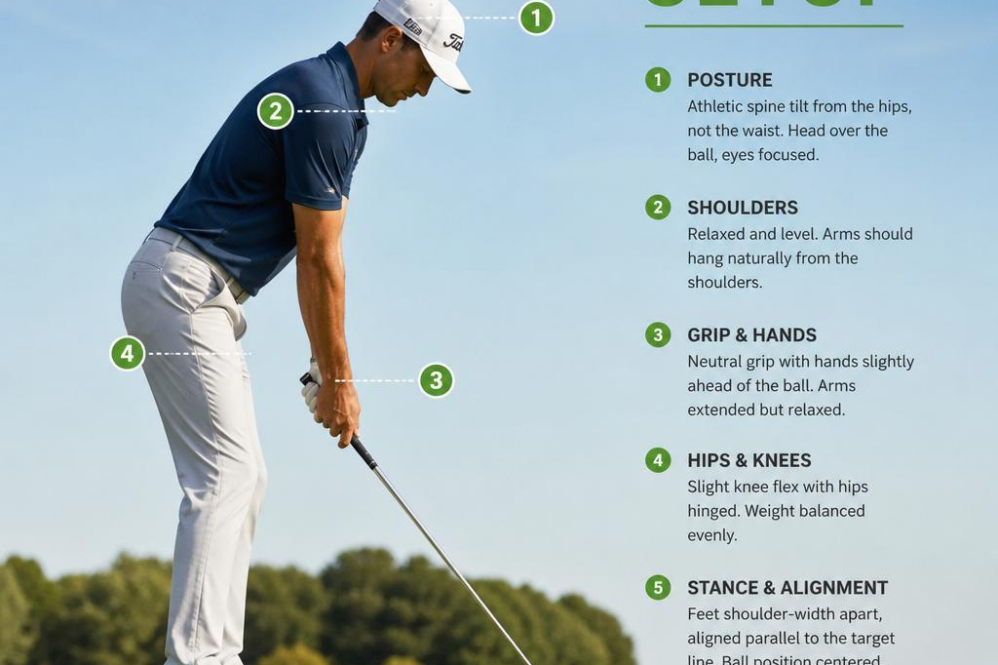
Start with a setup that feels quiet and dependable. From a closely mown lie, stand with a narrow stance-roughly a clubhead’s width between your feet. Aim the clubface first,then set your body parallel to the target line. Let a little more pressure favor your led foot, place the ball near the middle of your stance or just back of itand position the handle slightly ahead of the ball.
That setup helps move the low point of the swing ahead of the ball, which is what produces clean, ball-first contact. You do not need to force the club down or try to scoop the ball into the air. The loft on the club is already there. Your job is simply to return the club to the ball with a compact, controlled motion.
Keep your grip pressure light enough that you can feel the clubheadand let your chest, armsand hands move together. The motion should resemble a small pendulum: back smoothly, then through with the same intention. A lot of poor chips come from a quick jab at the ball or a nervous wrist flick. Instead, make a few rehearsal swings that brush the grass just ahead of the ball, then hold your finish facing the target.
Once the motion starts to feel natural, choose the shot before you choose the club. If there is plenty of green between you and the hole, a pitching wedge, gap wedge, 9-iron, or even 8-iron can keep the ball low and rolling. When you have little green to work with, need to carry a slope or bunkeror are playing from light rough, more loft may make sense. The goal is not to use one club for every chip. It is indeed to choose the simplest shot the situation allows. (golflessonschannel.com)
Before you hit, pick a landing spot. The hole matters, of course, but the landing spot is what gives the shot its direction and pace. Read the green from the ball to the hole, then look back from the hole to the spot where you expect the ball to land. A downhill slope, firm afternoon greensor grain running away from you can create more release than you expect. In those situations, land the ball a little shorter and let it roll.
Make Clean Contact the Priority
Crisp contact starts before the club ever moves. set the face behind the ball, settle into a balanced postureand make a few practice strokes that clip the turf in the same place. For a basic chip, you want the club to brush the ground just ahead of the ball-not dig deeply into it and not bottom out behind it.
The same idea applies to your iron play.With irons, the bottom of the swing should be slightly ahead of the ball, allowing the club to strike the ball first and then take a shallow divot. If you tend to hit thin or heavy shots, resist the urge to add more hand action. A simple half-swing with a balanced finish is often more useful than trying to fix everything at once.
On chips, a stable lead wrist and a chest that continues moving toward the target will usually give you a much better strike than a scooping motion. Trying to lift the ball adds unnecessary variables. Trust the clubface to provide the loft,and keep the stroke moving through the shot.
Practice with a towel or small target on the green. Place it a few feet onto the putting surface and try to land several balls on or near it. Use a pitching wedge, then a gap wedge or 8-ironand notice how the landing point and rollout change. This is a practical way to learn which club fits which shot without getting caught up in complex swing thoughts.
A tight lie generally favors a lower-running chip and a quieter stroke.Light rough may call for more loft and a slightly longer swing, since the grass can get between the clubface and the ball. If the ball is sitting down, do not attempt a delicate shot unless you have room and confidence to accelerate through it. often, the smarter play is simply to get the ball safely on the green and give yourself a putt.
Treat the Chip Like a Short Putt
Chipping and putting have more in common than most golfers realize. both require you to judge distance, read slope, and picture how the ball will travel after it starts rolling.A chip is really a putt with a short carry attached.
Use the same basic process you would use on the putting green. Pick the landing spot, take a couple of rehearsal strokes while looking at it, and let the length of the backswing control distance. Keep the rhythm consistent. If a shot needs to travel farther, make the backswing a little longer rather than trying to hit harder or slow down through impact.
For a running shot, the ball can sit just back of center with the hands slightly ahead.For a higher shot, move the ball closer to the middle of your stance and allow the club to use its loft. What matters most is that you understand how much of the shot will be carry and how much will be roll.
Try practicing from several distances and lies rather than hitting the same chip again and again. Hit a few shots from the fringe, a few from light roughand a few from a tight collar. Change the landing spot each time. You will quickly learn that the same swing can produce very different results depending on the slope, grass, moistureand club you choose.
If your chips consistently finish long, do not decelerate through the ball. Shorten the backswing slightly and keep the through-swing smooth. If thay finish short, add a little more length to the motion while keeping the same tempo. That simple adjustment is much easier to repeat than trying to manufacture speed with your hands.
This is where mastering the fundamentals of golf chipping pays off. when you can predict rollout, you stop guessing around the green. You begin to see a clear landing area, choose a sensible cluband make a stroke with purpose.
Bring That Same Discipline to the Tee
The habits that improve your chipping can also help with longer shots. A reliable chip asks for balance, a clear target, steady tempoand commitment. Those are the same qualities that make a driver more dependable.
With the driver, make the necessary adjustments: tee the ball so part of it sits above the crown of the club, play it inside your lead heeland allow your upper body to tilt slightly away from the target.But do not confuse that tilt with hanging back. You still want to finish in balance, with your body continuing through the shot.
Think of your chip-shot rhythm when you are on the tee. Start the club back without snatching it away, make a full turn, and avoid rushing from the top. Many players try to create distance by swinging harder,only to lose their balance and miss the center of the face.A controlled swing that finds the fairway is usually worth far more than a wild drive that travels a few extra yards.
Course management matters here, too.Before reaching for driver, look at the landing area, the trouble on each sideand the approach shot you would prefer to have next. On a firm, downwind hole, a 3-wood, hybrid, or long iron may leave a better position than a driver that risks running through the fairway. If trees block your path after a poor tee shot, take the sensible recovery rather of trying to force a heroic escape.
A useful practice habit is to finish a range session by playing a few imaginary holes. Pick a tee-shot target, decide where you can afford to missand choose the club that gives you the best chance of finding that area. Then picture the approach you would have left.It turns range work into golf rather than just ball striking.
Keep It Simple around the Green
The best chippers are not always the players with the fanciest shots. They are usually the players who make good decisions, create clean contact, and understand how the ball will react once it lands.
Build a repeatable setup. Pick a landing spot. Use the lowest-risk club that gets the job done. Then make a smooth, committed stroke and let the club do its work. With practice, those small habits can turn missed greens from stressful moments into genuine scoring opportunities-and give you more confidence everywhere else on the course.