
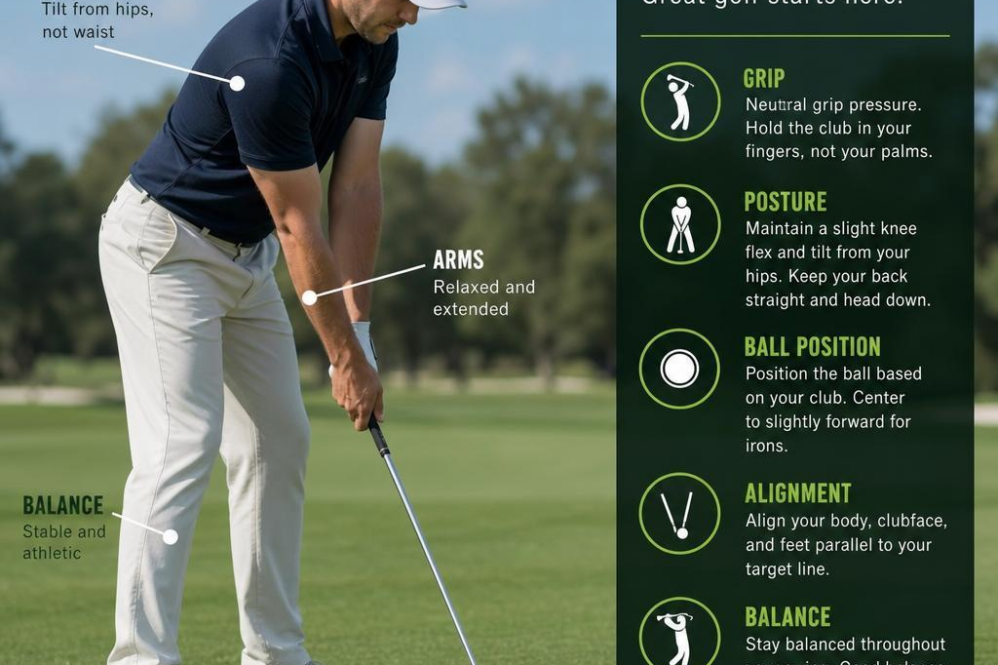
Mastering the Fundamentals of Your Golf Swing for greater Power and Precision
Achieving greater power and precision in your golf swing begins with a solid understanding of fundamental mechanics,starting with your setup and posture. Establishing a balanced stance with feet shoulder-width apartand slightly flexed knees sets the foundation for controlled movement.Position the ball appropriately based on the club – approximately 2-3 inches inside the left heel for a driver and progressively closer to the center of the stance for irons. From there, focus on maintaining a neutral spine angle and ensuring your weight distribution favors the balls of your feet, which promotes stability throughout the swing arc. A smooth takeaway with the clubhead moving back low and slow allows the body to coiling effectively, engaging the torso and hips to generate torque. Incorporate drills such as the “pause at the top” to access proper wrist hinge and prevent casting, thereby maximizing lead arm extension and clubhead speed. Developing a connected swing motion-where arms, shouldersand hips move in sync-enhances both consistency and distance while reducing unwanted slices or hooks caused by early release or over-rotation.
Translating mechanical improvements into effective course strategy demands attentiveness to situational variables and shot selection.For example, on narrow fairways or windy days, prioritize a controlled tempo and smoother transitions to keep your ball flight lower and more penetrating. Integrate practice routines that emphasize hitting partial swings with mid-irons, focusing on clean contact and ball striking within a 75%-90% effort range to build feel and accuracy.Players at all levels benefit from video analysis or launch monitor feedback to track key performance metrics such as clubhead speed, attack angle, and swing path, which inform targeted adjustments. Additionally, understanding when to employ punch shots or controlled fades based on pin placement enhances scoring potential. Incorporate course management techniques like laying up short of hazards or using the upslope for added distance, translating technical proficiency into measurable gains on the scoreboard. remember, refining your swing should always be paired with deliberate practice under varied conditions and reflective journaling to solidify improvements and boost confidence within competitive play.
Unlocking the Secrets to Consistent Putting with Proven practice Techniques
Success in putting hinges on mastering the fundamentals of setup and stroke mechanics, which directly influence ball roll and accuracy. Begin with a consistent stance width of approximately shoulder-width, allowing for solid balance and controlled movement. Position the ball slightly forward in your stance, just inside the lead foot’s heel, to promote a smooth, upward stroke path that reduces skidding. Grip pressure should remain light yet firm to maintain feel while preventing tension that adversely affects touch. During the stroke, focus on keeping your wrists stable and hinging primarily at the shoulders to create a pendulum-like motion. This technique encourages consistent contact with the ball and a true roll, especially on subtle green breaks.Incorporating drills like the “gate drill” - placing two tees slightly wider than your putter head to practice the straight-back-and-through path – helps reinforce this motion for all skill levels. Additionally, assess putter loft carefully; many modern putters have around 3-4 degrees of loft to help lift the ball out of surface imperfections and encourage forward roll, which can be optimized by ensuring your putter face is square at impact.
Course management profoundly affects putting outcomes, requiring golfers to analyze green contours, grain directionand speed-factors ofen altered by weather conditions or turf health. When reading putts, adopt the “clock method” by imagining the hole at the center and estimating the break grade in degrees to adjust your aim accordingly. For example, a right-to-left break may require aiming 2-3 degrees right of the hole for putts within 10 feet. Practicing lag putting with targets 20 to 30 feet away develops distance control essential for minimizing three-putts on faster greens. Consider drills such as the “ladder drill,” where you place coins or tees incrementally closer to the hole, aiming to stop putts within those distances.This builds touch and feel vital for competitive play. Lastly, implement a pre-putt routine to sharpen focus and calm nerves; from visualizing the path to executing a few practice strokes mimicking the intended pace, this mental preparation synchronizes your technique with your strategy, resulting in higher confidence and more consistent scoring across varying conditions.
Driving with Confidence Learn How to Maximize Distance and Control
Driving with both distance and control begins with establishing a solid setup that promotes a powerful yet repeatable swing. Start by positioning the ball just inside your left heel (for right-handed golfers) to encourage an upward angle of attack, which is crucial for maximizing carry distance. Maintaining a tee height that allows the clubface to strike the ball slightly on the upswing-approximately half the ball’s diameter above the crown of the driver-further optimizes launch conditions. In your stance, adopt a wider-than-shoulder-width base with knees flexed and weight balanced slightly toward the balls of your feet; this promotes stability and rotational power throughout the swing. Incorporate a smooth takeaway that keeps the clubhead low for the first few feet and gradually transitions into a full shoulder turn of about 90 degrees to build torque. This coil acts like a spring, generating clubhead speed while maintaining control. During practice, use drills such as the “pause and go” where you halt your backswing momentarily at waist height before accelerating into the downswing, helping improve timing and sequencing to avoid common errors like casting or early release.
Once your mechanics are aligned for distance, controlling the ball flight on the course requires deliberate course management and situational focus. reading the wind, choosing the right tee boxand adapting your shot shape are paramount to consistent driving success. For example, if a crosswind is present, adjust your alignment slightly to allow a controlled fade or draw, depending on the hole layout and hazards. Use the “feet-together” drill during practice sessions to enhance balance and increase awareness of weight transfer through impact, which directly translates into improved directional control and reduced slices or hooks. Additionally, consider optimizing your equipment by experimenting with loft adjustments in 0.5 to 1-degree increments; this fine-tuning can improve your launch angle and backspin to suit varied course conditions and grass types. for golfers across skill levels, regular integration of these drills and strategic shot planning can lower scores by increasing fairway accuracy and creating better approach shot opportunities-ultimately contributing to a confident and powerful driving game that withstands pressure and fluctuating course challenges.
Integrating Drill Work into Your Game Plan for Lasting Improvement
To effectively integrate drill work into your game plan, start by identifying specific weaknesses through honest self-assessment and, if possible, feedback from a coach. This targeted approach allows you to choose drills that directly address your swing mechanics or short game nuances. For example, if you struggle with inconsistent contact on approach shots, focus on drills that improve your clubface control and swing path. One effective drill is the “gate drill,” where you place two tees just wider than your clubhead to encourage a square, shallow takeaway and impact position, promoting cleaner ball striking. When practicing putting, incorporate drills like the “clock drill” to enhance both your green reading and distance control by practicing putts of varying lengths (3, 6and 9 feet) around the hole. Integrate these exercises into timed practice sessions to simulate on-course pressure,reinforcing muscle memory and decision-making under realistic conditions.
Building on technical skill improvement, it’s essential to weave these drills into broader course management strategies to see lasting results. As a notable example, after developing a reliable fade or draw shape through shot shaping drills-such as the “aiming box” drill where alignment sticks define your target line and swing path-translate these skills to strategic club selection and shot choice on the course. Practice in varied weather conditions to better understand ball flight changes due to wind or humidityand refine your pre-shot routine to maintain focus and confidence. Remember to set measurable goals, like reducing three-putts by 30% within a month or hitting >75% of fairwaysand track progress via a practice journal or golf GPS app. By combining precise drill work with thoughtful course play, you create a holistic improvement process that enhances consistency, lowers scores, and builds long-term confidence in every facet of your game.




