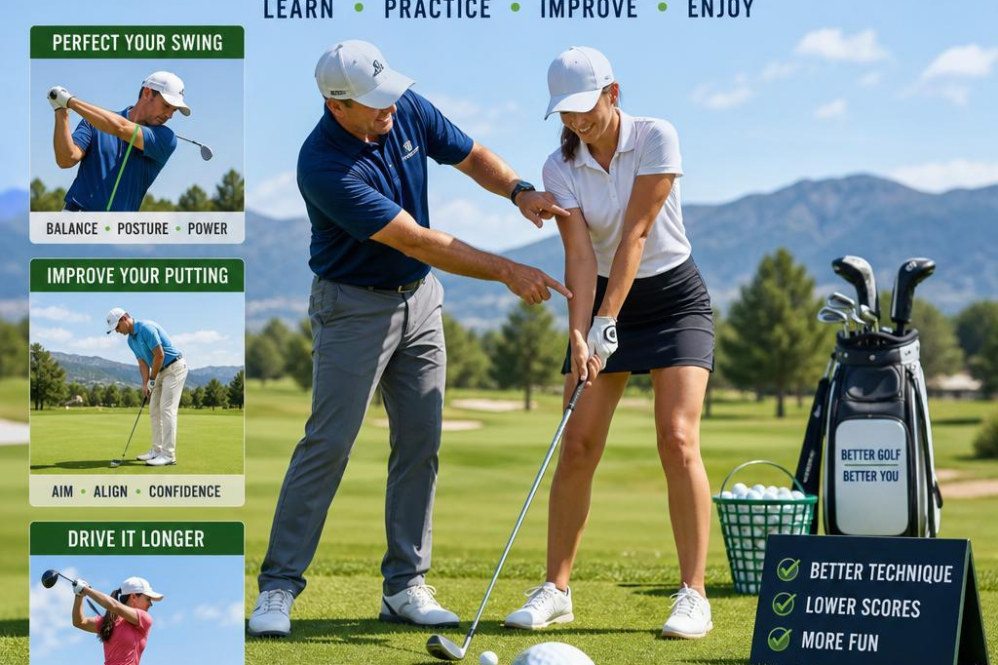
Good golf is built on a few repeatable habits: a balanced swing, reliable speed on teh greensand tee shots that keep the next shot manageable. The best golf lessons do not ask you to rebuild everything at once. They help you identify the one or two habits costing you the most strokes, then give you a clear way to practice them.
Build a Repeatable swing
A stronger swing begins with a sound setup,not a harder effort.Set the clubface behind the ball, let your arms hang naturallyand balance your pressure through the middle of both feet. A small amount of knee flex and a hip hinge will help you stay athletic without feeling stiff. For most iron shots,play the ball near the middle of your stance,moving it gradually forward as the clubs get longer. With driver,the ball belongs farther forward,near the inside of your lead heel.
From ther, think about sequence. Turn your chest on the backswing while allowing the trail hip to move behind you rather than sway away from the target. On the way down, pressure shifts toward the lead foot, the hips begin to openand the torso, armsand club follow. You do not need to force those pieces into position. A balanced finish is usually the best evidence that the motion worked. If you can hold your finish with your chest facing the target and most of your pressure on the lead foot, you are likely swinging with decent balance.
For newer players, three-quarter swings are often more productive than trying to create full speed right away. Focus on solid contact and a finish you can hold.More experienced golfers can use face-on and down-the-line video to check posture,clubface control,and impact position. Keep the feedback simple. Pick one thing to work on, then give it enough repetitions to learn from it.
A useful range session might include ten shots at roughly 70 percent effort, aimed at a defined target. notice how many strike the middle of the face and finish near the intended line. Then change clubs and targets instead of hitting the same shot over and over. That makes practice feel more like golf.
The same thinking applies on the course. If you usually hit a fade, there is no need to fix it between the first tee and the ninth green. Allow for the curve, aim away from the worst troubleand play the shot you know you can produce. A controlled swing that stays in play will almost always serve you better than the occasional perfect shot followed by a penalty.
Make Putting Simpler
Putting gets easier when your setup allows the putter to return to the ball consistently. Stand with your eyes over or just inside the ball-to-target line, let your arms hang comfortablyand place the ball slightly forward of center. Your feet, hipsand shoulders should be aimed where you want the ball to start. Hold the putter lightly enough to feel the head, but not so loosely that the face wobbles.
Let the stroke come from your shoulders and upper body rather than your hands.The lower body stays quiet while the putter swings back and through with a steady rhythm. On short putts, face alignment matters most. A simple drill is to place two tees just wider than the putter head and make practice strokes without touching either one. It is a swift way to check whether the putter is travelling freely and returning squarely.
Once you are starting putts on line, put more attention on pace. On long putts, the goal is not to make every one; it is to leave a comfortable next putt. Read the overall slope from behind the ball, then take a look from the low side of the hole, where the final few feet of break can be easier to see. Make one rehearsal stroke while looking at the hole, settle inand go. Too many extra looks tend to create doubt rather than better reads.
practice lag putting from several distances, such as 20, 30and 40 feet, and try to leave each ball within a manageable tap-in range.On slower or wet greens, you will need a firmer stroke. On fast greens, especially downhill, the better choice is usually to let the ball arrive softly. A putt that finishes near the hole is far more useful than one that races several feet past.
Drive it With a Plan
Distance is useful only when it leaves you a playable second shot. Start with a driver setup that promotes solid contact: tee the ball high enough that about half of it sits above the top of the clubface, play it opposite the inside of your lead heeland set your spine with a slight tilt away from the target. Stay balanced through your feet rather than leaning onto your toes or hanging back on your trail side.
make a full turn, but keep it controlled. Let the trail hip turn behind you and avoid drifting too far away from the target. From the top, resist the temptation to throw the club at the ball. A patient change of direction gives the lower body time to lead and makes it easier for the club to approach the ball from a useful path.A tall, balanced finish is a better goal than trying to manufacture speed.
When you practice, check where the ball is striking the clubface. A little foot spray on the face can make the pattern easy to see. Centered contact generally produces more useful distance and more predictable direction than a faster swing struck toward the heel or toe. You can also hit a few drives at a relaxed pace before moving to normal speed. If control disappears when you swing harder, that is valuable information.
On the course, choose a landing area before you tee the ball up. On a narrow hole with out-of-bounds or water on one side, use the teeing area to give yourself a better view away from trouble and aim toward the widest part of the fairway. the teeing area extends two club-lengths back from its front edge, so use the space available to you.
Driver is not automatically the right club. If your typical miss brings a bunker, trees, water, or out-of-bounds into play, a 3-wood, hybridor long iron might potentially be the smarter choice. Into a strong wind, avoid trying to overpower the shot. Tee the ball a little lower if needed, make a balanced swingand accept a more controlled flight.
Turn Better Shots Into Lower Scores
The goal is not to hit every shot perfectly. It is to make fewer costly mistakes. Start each hole by choosing a tee shot that keeps the ball in play, then select an approach target that reflects the pin position, windand your usual shot shape. When a flag is tucked behind a bunker, near wateror close to a steep drop-off, the middle of the green is often the right target.
That approach takes pressure off the rest of the hole. A safe tee shot, a sensible approachand a putt that finishes close can produce a par without requiring anything heroic. Around the green,use a narrow stance for basic chips,favor the lead side,and let the loft of the club do the work. Avoid trying to scoop the ball into the air. In wet conditions, expect less rollout; on firm ground or in wind, a lower-running shot may be easier to control.
Progress is easier to see when you track simple things: tee shots kept in play,penalty shots avoided,three-putts,and how frequently enough chips leave you a reasonable first putt. Those numbers reveal more than a single good drive or a hot putting day. They also make practice more focused.
Keep your routine steady: choose a target, make one rehearsal swing or stroke, step inand commit. Over time, better decisions and a more repeatable motion will do more for your score than chasing perfect mechanics. Play the shot you can trust when the wind is up,the greens are quick,or a good score is on the line.