Unlocking the Power Behind Greg Norman’s Effortless Swing
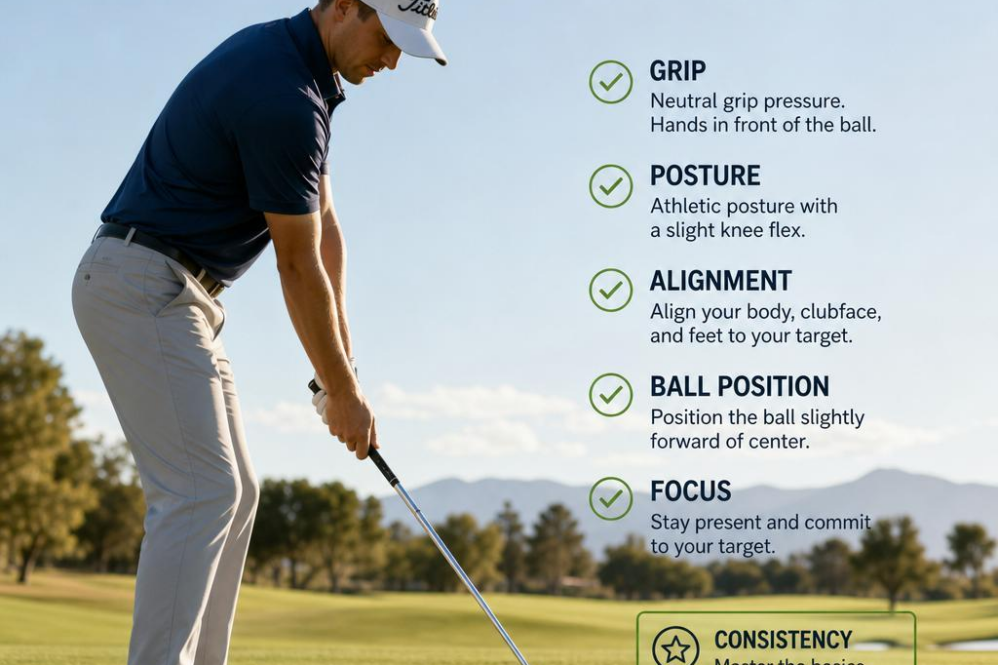
Greg Norman’s swing is often admired for its fluidity and power, but the true key lies in the precise sequencing of body movement and instantaneous weight transfer.To unlock this power, focus frist on maintaining a solid, athletic setup with feet shoulder-width apart and knees slightly flexed-this foundation promotes balance and generates torque.During the takeaway, emulate Norman’s iconic one-piece takeaway, keeping the arms and shoulders in sync to avoid early wrist break and unneeded tension. As you transition into the downswing, initiate the sequence by shifting your weight smoothly from the back foot to the front foot while simultaneously rotating the hips toward the target. This controlled rotation creates a natural lag in the clubhead, increasing clubhead speed without sacrificing control. For measurable enhancement, set a baseline by using a launch monitor to track swing speed and ball flight, then practice drills like the “pump drill,” which encourages delayed release of the wrists, helping sustain power throughout impact.By ingraining this kinetic chain-from ground force generation up through the torso and arms-golfers at all levels can develop a swing that feels effortless yet produces consistent, penetrating ball striking that holds true even under pressure.
Beyond mechanics, Norman’s swing method integrates smart course management and adaptability that every golfer should emulate. On challenging layouts or windy conditions, he adjusts his setup by slightly narrowing stance width and lowering his ball position to produce a lower, more controlled ball flight that resists adverse elements. This tactical alteration minimizes shot dispersion and helps maintain accuracy. Practicing effective shot shaping through alignment sticks or target lines fosters better visualization and execution, translating training ground skills to the course seamlessly. additionally, Norman’s pre-shot routine emphasizes rhythm and breathing techniques to maintain calmness and focus-essential for controlling nerves on crucial shots. Incorporate structured practice sessions that alternate between full swings and partial swings in windy conditions, paired with targeted alignment and tempo drills, to build confidence across diverse playing scenarios. This holistic approach not only refines swing mechanics but also enhances decision-making and psychological resilience, culminating in lower scores and more satisfying rounds.Whether you’re a beginner developing fundamentals or a low handicapper tuning precision, modeling Norman’s balance of technical excellence and strategic thinking can dramatically elevate your golf game.
Driving Like The Shark Tips to Add Distance and Accuracy
maximizing driving distance and accuracy hinges on mastering the fundamentals of swing mechanics in a way that aligns with your natural motion, a strategy championed by Greg Norman’s approach to the game. Begin with a solid setup that emphasizes a slightly wider stance than shoulder width, maintaining 50-55% of your weight on the front foot to promote a powerful weight transfer through impact. To add distance without sacrificing control, focus on a smooth takeaway with a one-piece swing, where your shoulders and hips rotate in harmony while maintaining a relaxed grip pressure. Achieving the ideal dynamic loft of about 10.5 to 12 degrees at impact helps optimize launch conditions, especially when paired with a shallow angle of attack tailored to your driver’s specifications.Incorporate Greg Norman’s insight by practicing a drill where you place alignment sticks parallel to your target line, ensuring your clubface remains square through impact and promoting a consistent path to reduce slices or hooks. This alignment checkpoint, combined with controlled hip rotation, can add several yards to your drives while enhancing accuracy-critical for setting up short irons into greens during tournament play or windy conditions.
Beyond mechanics, effective course management plays a key role in driving success. Norman emphasizes not just power, but strategic placement off the tee to avoid hazards and optimize your second shot. When approaching a hole with tight fairways or strategic bunkers,aim for the widest landing zones and use target-oriented visualization to reinforce chosen shot shapes-whether a gentle draw or fade-that suit the layout and prevailing wind conditions. For practice routines, incorporate controlled shaping drills by hitting half swings with your driver to different targets on the range, gradually increasing swing length while maintaining the desired curvature. Additionally, consider equipment factors: selecting a driver with adjustable loft and shaft flex can better match your swing speed (generally 90-100 mph for average male amateurs) and help fine-tune launch conditions under varying course setups. By integrating these precise techniques with mindful shot selection, golfers from beginners refining their setup to advanced players seeking marginal gains can consistently add extra yards and accuracy, ultimately lowering scores through smarter, more confident tee shots.
The Putting Routine That Transformed Greg Norman’s Game
Greg norman’s putting routine is a masterclass in consistency and mental focus, designed to eliminate doubt and build repeatable mechanics at the crucial moment. It begins with a precise pre-shot setup where alignment and posture are paramount. Norman advocates for setting the feet shoulder-width apart to ensure stability, while positioning the ball slightly ahead of center in the stance to promote a smooth, pendulum-like stroke.He emphasizes the importance of finding a cozy, relaxed grip pressure-firm enough for control but loose enough to allow fluid wrist hinge and rotation. This foundation supports a putter path that moves slightly inside-to-square-to-inside, encouraging a natural arc and better roll. Golfers of all skill levels should practice with a mirror or alignment sticks to develop this consistent setup and stroke plane, aiming for a putter face angle within ±2 degrees at impact for true, reliable ball contact.
Building on setup, Norman incorporates a holistic focus on green reading and pace control that radically improves scoring potential. He studies subtle factors like grain direction, wind impact, and green slope-visualizing the ball’s line and speed before the stroke. To replicate this, golfers should practice drills that simulate different slopes and distances, such as:
- Lag putting exercises from 30-50 feet to develop feel and distance judgment.
- Gate drills that improve face alignment and path consistency.
- Reading putts from multiple angles to strengthen green interpretation under pressure.
Furthermore, Norman’s routine integrates a brief, controlled breathing sequence to steady nerves and enhance concentration during competition.By combining technical precision with mental calm, this approach fosters measurable improvements, reducing three-putts and lowering overall scores. Whether tackling a fast, undulating California course or a slower, softer green, following these expert-endorsed protocols will empower golfers to transform their short game into a dependable scoring weapon.
Mastering Mental Focus for Consistent Performance on the Greens
Developing unwavering mental focus on the greens begins with establishing a consistent pre-putt routine that centers your attention and aligns your physical and psychological states.Greg Norman emphasizes the importance of visualizing the putt’s intended path before addressing the ball, which activates neural pathways linked to precise motor execution. To implement this, stand behind the ball and identify a target line-consider the slope gradients and grain direction-then step into your stance maintaining that visual. Setting up with a ball position slightly forward of center helps promote a smooth, descending stroke essential for clean contact. incorporate controlled breathing exercises,inhaling deeply for three seconds and exhaling slowly,to reduce tension prior to the stroke. This approach reduces the likelihood of common mental errors such as rushing the stroke or second-guessing your line, leading to consistent green reading and execution. For beginners, practicing this routine with a focus on tempo and cadence can help build automaticity, while advanced players benefit from integrating subtle cue words like “smooth” or “through” to maintain rhythm under competitive pressure.
Once the mental framework is established, focus on maintaining conscious control over the stroke mechanics to enhance consistency amid varying course conditions. A key insight from Norman is recognizing how environmental factors-such as wind speed, green firmness, and grain direction-affect ball roll and speed. Golfers should cultivate practice drills that replicate these variables; for example, placing alignment rods at different angles and elevations can simulate green undulation and help develop touch sensitivity. Key technical checkpoints include maintaining a stable head position with minimal lateral movement (not exceeding half an inch), and ensuring the putter face remains square through impact within 2 degrees to avoid unintended sidespin. Emphasizing a pendulum-like stroke with even acceleration throughout ensures optimal energy transfer, minimizing skidding and bounce on firm greens. As part of a robust course management strategy, always allow for an extra half-putt margin on undulating surfaces to compensate for unpredictable breaks, which reduces pressure and fosters a confident mindset. Collectively, these focus-driven techniques not only sharpen putting performance but also contribute directly to lowering stroke count and improving scoring consistency across diverse playing conditions.