
Optimizing Golf Performance: Unveiling the Nuances for Refined Execution
Golfing excellence isn’t just about hitting the ball far and straight. It’s about mastering the subtleties that set skilled players apart. This article explores the techniques that can elevate your game, from reading greens to managing the course and making smart decisions under pressure. By refining your skills and mindset,you can improve your accuracy,reduce your score,and enjoy the game more.
Respecting the Game While Fine-Tuning Your Swing
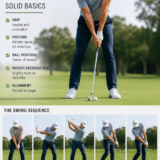
Respect for the game and its unwritten rules is a cornerstone of becoming a well-rounded golfer. This means playing by the rules, maintaining a steady pace, and showing respect to your fellow players. But the true test of a golfer’s character lies in the dedication to personal betterment. To refine your swing, start with the basics: grip, stanceand posture.
For beginners, focus on a neutral grip and a slight knee flex for stability. Advanced players might want to experiment with grip variations to find the one that best fits their swing path. A key aspect of improving your swing is mastering the backswing and downswing movements that influence ball direction and distance.
One useful drill is the one-plane swing drill. Start by addressing the ball with your feet shoulder-width apart.Then, slowly raise the club to the top of your backswing while maintaining your spine angle and keeping the club parallel to the ground. This drill helps develop a consistent, repeatable motion. Beginners may find it helpful to use a mirror or video feedback to ensure proper form. Advanced players can work on integrating this technique into their full swing, focusing on fluid transitions from backswing to downswing.
Improving your short game and course management strategies are equally crucial. Effective short-game practice should include drills that simulate actual game situations, like chip shots over sand, pitches around the greenand crucial putting under pressure. One such exercise is the two-tee chip drill. Set up two tees, one just behind the ball and another about a yard in front, then practice chipping the ball over the rear tee and stopping it before the front tee. This drill enhances your ability to control distance, which is crucial for scoring from shorter distances.
Course management involves decision-making about club selection, shot shapingand strategy around hazards and difficult lies.As an example, the approach shot to a green protected by a deep bunker requires different thinking compared to a straightforward approach. When you encounter a challenging lie, assess the distance to the pin and determine the safest angle of approach. Advanced players can incorporate wind conditions and green terrain to add depth to their strategy. For beginners, simply identifying the safest route to get the ball on the green is a significant start. Remember, the game of golf is about making smart choices and being mentally prepared, as well as technically proficient.
The Art of Commitment in Every Putting Stroke
In golf, the putting stroke plays a pivotal role in scoring, often determining the outcome of the game.The core of a successful putting stroke lies in the golfer’s ability to commit fully to each swing. Golfers frequently enough falter at the moment of decision, hesitating or worrying about the ball’s path. This hesitation is often reflected in a loss of form or an inconsistent tempo.To overcome this, one must cultivate a deep, unwavering confidence in their setup and execution.
Begin by setting up your stance so the ball aligns slightly forward, ensuring your eyes are directly over the ball on shorter puttsand more behind the ball on longer ones. This slight alteration in ball position helps regulate the path and direction of the putt. Place your feet shoulder-width apart and slightly open to the intended line so that you maintain a solid base without crowding the ball. Focus on grounding your feet and locking in your stance, which sets the stage for a committed stroke.
A hallmark of a confident putting stroke is a consistent tempo and rhythm. Golfers tend to accelerate through the ball, especially under pressure, which disrupts the stroke’s flow and accuracy.A simple yet effective drill to improve consistency involves using a metronome or your watch to maintain a steady beat. Set up on a short, close putt and practice stroking the ball in time with your timing device. The goal is to groove a consistent rhythm that doesn’t speed up or slow down as the putter travels back and through. This mechanical precision helps ingrain a reliable tempo for both short putts and longer ones.
While physical technique is crucial, mental fortitude is equally important in delivering a committed putting stroke. On the golf course, each putt can feel like a critical moment, leading to tension and doubt. Picture successful putts during practice sessions to build confidence and trust in your technique. Before each putt on the course, take a moment to focus, breathe, and envision the ball rolling perfectly into the hole. This mental rehearsal enhances your belief and commitment to execute your setup and stroke perfectly, reducing the chance of hesitation under pressure. Remember, every successful putt begins with the confidence and commitment to see it through.
Driving with Precision and a Purposeful Heart
Driving involves more than just hitting the ball straight and far. It encapsulates the mindset of strategy, controland the ability to adapt to various course conditions. The first step is ensuring your setup aligns with your goals. For beginners, the key is in the grip width and posture. Place your feet shoulder-width apart with your arms hanging naturally, forming a relaxed, athletic stance. Adjust your grip on the club until you feel cozy and in control. This setup establishes the foundation for precision.
Once you’re set up correctly, focus on the mechanics of your backswing. It’s crucial to turn your shoulders and hips together, aiming to achieve about 90 degrees of shoulder turn, which creates torque and power. Many golfers neglect the rotational aspect, rather lifting their arms too early. To correct this, visualize yourself reaching the backswing position as if you’re touching your back pocket. This visualization helps ensure a full shoulder turn and optimal club head position at the top of your swing. Advanced players can focus on refining the timing of this rotation for even greater control.
After a successful backswing, the downswing is equally critical. Initiate the downswing with your lower body, allowing your hips to guide the rotation before turning your shoulders to complete the motion. A common mistake is to lead with the arms or upper body, which can cause loss of control and accuracy. To address this, practice a drill where you focus on feeling the weight shift and hip turn before your hands move. This sequence promotes a more natural and powerful stroke, integrating the lower body into the swing. Beginners should try this drill slowly to build muscle memory, while more experienced golfers can incorporate it into their short game to improve overall consistency.
the follow-through is where you confirm your aim and stability. Finish with your weight on your front foot and your belt buckle facing the target. This ensures full completion of the swing and helps in maintaining balance. On the course, visualize your target before swinging, allowing your heart to guide your intent. Whether you’re looking to add yards to your drives or simply improve accuracy,this holistic approach to driving integrates physical technique with mental awareness. By mastering these elements, both recreational and competitive golfers can achieve more consistent and satisfying results on the fairway.