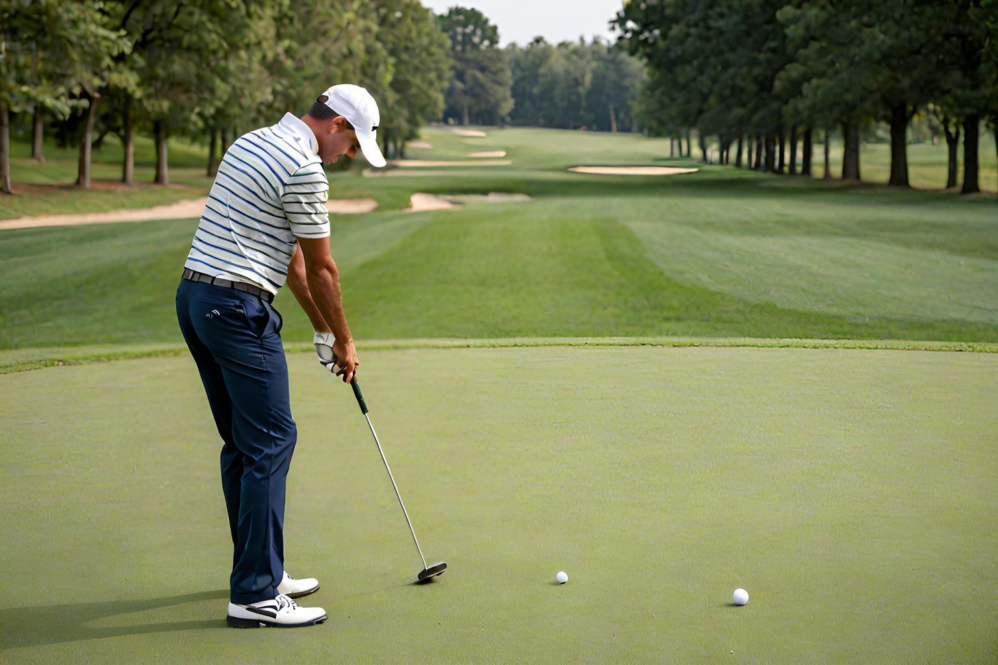
Navigating The Mud Without Losing Your Mind: Strategies For Stroke-and-Distance Penalties
Stroke-and-distance penalties in golf can be frustrating, especially when your round is going smoothly. However, navigating through these situations with composure and intelligence is crucial for maintaining a low-stress round and keeping your scorecard clean. When you decide to take stroke-and-distance relief, the key is understanding the rules and planning your next move carefully. Adding one penalty stroke before the next shot counts is non-negotiable, but managing your approach and ball placement can save you more than a couple of strokes.
Let’s start with the setup. When faced with an area like mud that compromises your stance or ball flight, begin by marking your ball’s position with a tee or another marker. Take a moment to visualize where your ball will rest after taking your relief. A good rule of thumb is to place your ball at least two club lengths away from the original point, as the rules mandate. For beginners, a consistent and reliable approach is to use your ball marker and tee as tools to measure the exact two-club distance precisely.
Once your ball is replanted in an optimal spot, the next step is to assess your lie. Are you on a downslope or an upslope? How does the grass feel underfoot, and how is it affecting your grip and stance? For an accurate assessment, you might want to take a practice swing or two without swinging through to familiarize yourself with the terrain. This preparatory swing helps you gauge your balance and find the best stance for optimal ball flight.
Properly gripping your club is a minor detail that can make a big difference. If you’re in a muddy area and dealing with wet grass, consider using a grip tape or spray to keep your hands dry and your grip secure. Another alternative is to change clubs to one that gives you more control, such as a higher lofted iron or a hybrid. For instance, a 3-iron might be too unpredictable, whereas a 5-iron or even a 6-iron with a cleaner face can help you achieve better contact and greater accuracy.
At this point, your focus should be on executing a solid, clean shot rather than trying to impress your playing partners with a tricky shot. A common mistake here is attempting to force the shot when conditions are not ideal. Instead, aim for a safer, more manageable target. If you’re on the rough and your ball is sitting down, look for the high point in the grass. Align your stance so that you can make a full swing without getting too deep into the turf. This alignment adjustment might feel counterintuitive, but it can significantly improve your ball flight, leading to a better approach and a lower chance of another penalty.
Lastly, consider the mental aspect of stroke-and-distance penalties. These situations test your composure and decision-making under pressure. If you make a mistake, use it as a learning opportunity. For example, if you find yourself in a similar situation frequently, practice your tee shots from various angles and distances after a round. This way, you gain experience in dealing with the challenges that muddy terrain can present. Remember, every penalty is a chance to grow as a golfer, and understanding how to manage these situations effectively is a valuable lesson in itself.
When A Drop Is More Than Just A Drink: Mastering The Art Of Fixing Your Score After Penalties
Golf is a game that rewards accuracy and precision, but it also demands flexibility and an ability to recover from mistakes. One such common issue in golf is dealing with penalties, particularly when a drop is more than just a drink. Understanding how to fix your score after penalties can mean the difference between a respectable round and a frustrating one. Let’s explore the intricacies of penalty relief and how to navigate these situations with poise and skill.
When you find yourself in a situation where you must take penalty relief, such as dropping a ball in a bunker or beyond a penalty area, remember to add that extra penalty stroke before your next stroke is counted. This seemingly small detail can have a significant impact on your scorecard at the end of the round. The key is to approach these situations with a clear and focused mindset. Visualize the process beforehand, and prepare yourself for the necessary steps.
Begin by understanding the rules and distances involved in taking a drop. The Rules of Golf specify that from a relief area, you must drop the ball within two club-lengths and no nearer the hole, and the ball must be dropped from knee height. To ensure you do this accurately, practice how far a club-length is when you’re setting up for a drop. Stand the club on the ground and step off the distance while visualizing the drop area. This will make the real scenario less stressful and more routine.
Another critical aspect of dealing with penalties is the mental approach. Imagine you’re taking a drop outside a water hazard. The stress of losing a stroke can be overwhelming, but it’s crucial to stay calm. Visualize a successful drop and the next shot, and remind yourself that penalty relief is part of the game’s fairness and strategic depth. A composed demeanor helps maintain focus and composure throughout the round.
To hone your ability to drop accurately, set up a practice area where you can simulate different drop scenarios. Choose a section of the putting green and mark penalty spots. Use cones to represent the edge of a hazard, and practice taking drops within the stipulated distance, aiming to drop the ball as close to the ideal playing spot as possible. This kind of targeted practice will build confidence and reliability when you face real-world situations.
Finally, consider the broader impact on your game strategy. Once you’re aware of how to handle drops and understand the penalties involved, you can start planning your shots more effectively. During a round, if you’re faced with a difficult lie near a penalty area, your decision-making can shift from just trying to avoid the penalty and the added stroke, to considering the risk-versus-reward balance. This strategic thinking can lead to smarter play, whether you end up taking a penalty or playing conservatively to avoid it.
By mastering the art of penalty relief and understanding the nuances it requires, you can transform a weakness into an opportunity to sharpen your game. With consistent practice and mental fortitude, handling penalties can become a standard part of your golfing repertoire, rather than a source of anxiety. Focus on the process, trust in your preparation, and you’ll find yourself adapting to all the challenges that the golf course throws your way.