Master Your Swing with Biomechanical Precision for Consistent power
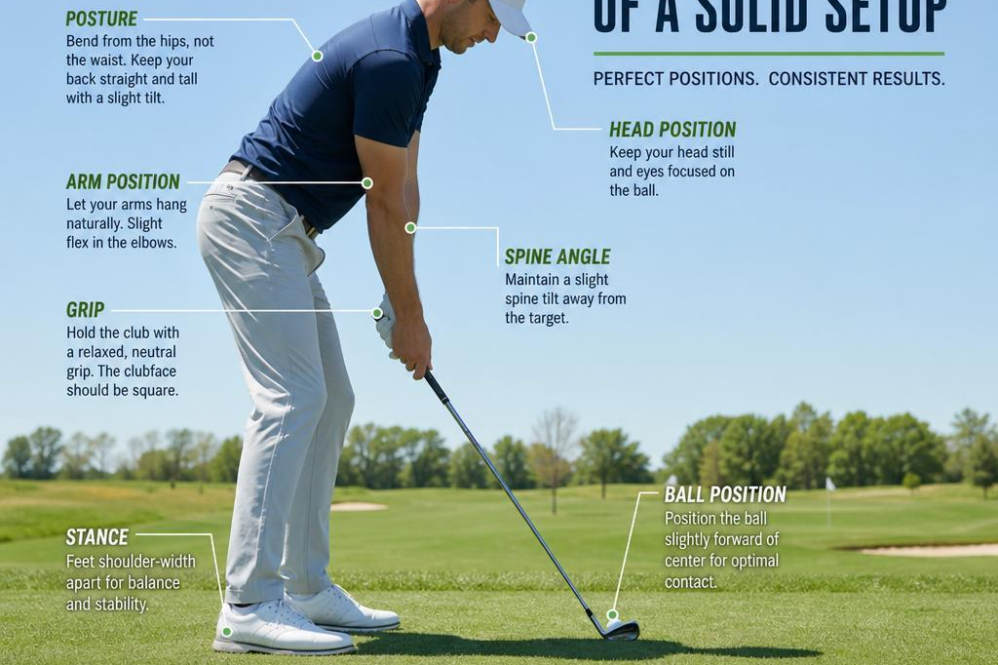
Achieving consistent power in your swing begins with a solid foundation in biomechanical precision, which emphasizes efficient body movement and optimal club path.Start by focusing on the setup fundamentals: ensure your feet are shoulder-width apart, knees slightly flexedand the spine tilted forward about 15 degrees from vertical to promote balance and stability. A common mistake is over-rotating the hips too early, which disrupts sequencing and leads to loss of power. To develop proper sequencing, practice initiating the downswing with a controlled transfer of weight from the back foot to the front foot while maintaining a stable head position. Incorporate drills such as the step-through drill to promote balance through impact and improve weight shift. Using launch monitors or swing analysis apps can provide measurable feedback on clubhead speed, attack angleand swing plane, allowing you to set tangible goals for advancement like achieving a consistent downward angle of attack close to -3 degrees with irons for crisp ball striking.
Integrating course strategy into your swing growth amplifies scoring potential by aligning technical mechanics with situational awareness. Such as, on windy days, controlling the trajectory with a slightly steeper swing plane and a compact takeaway can reduce the ball’s flight height, managing wind resistance and improving accuracy. Beginners can benefit from focusing on the five-step pre-shot routine to improve consistency – addressing the ball, taking practice swings, visualizing the shot, aligning feet parallel to the target lineand controlled breathing. Low handicappers might refine their swing by experimenting with club selection to maximize distance without sacrificing control, such as dialing in a higher tee height for drivers to increase launch angle near 12-14 degrees. Incorporating these strategic considerations ensures biomechanical improvements translate into smarter club choices and shot execution under varied conditions, driving lower scores on the course.
Unlock Putting Success through Targeted Drills and Mental Focus
Achieving precision in putting begins with a consistent setup that facilitates a stable, repeatable stroke. Start by positioning your feet shoulder-width apart, ensuring your shoulders and eyes are parallel and square to the target line to improve alignment accuracy. Maintain a slight flex in your knees and hinge forward at the hips so your eyes sit directly over the ball, which naturally promotes a pendulum-like motion with minimal wrist breakdown. Focus on a putting stroke that emphasizes a smooth backstroke and follow-through with a controlled tempo-ideally spanning a total stroke length of about 18 to 24 inches. This allows for better distance control and rhythm.Incorporate drills such as the “gate drill,” where two tees or objects are placed just wider than your putter head along the stroke path. This feedback tool helps minimize excessive face rotation and promotes a straight path through impact. In real course conditions, pay attention to slope reading and grain direction, which can considerably affect ball speed and break; consistently practicing green reading enhances your ability to predict and adjust your stroke accordingly.
Beyond physical technique, mastering putting requires developing mental resilience and focus to maintain confidence across various pressure situations. Start by integrating pre-shot routines, such as visualizing the ball’s path and focusing on a specific target area rather than the hole itself, which helps reduce anxiety and promotes a positive outcome expectation.When practicing, employ drills like the “clock drill,” where you place balls in a circle around the hole at different distances (3, 6, and 9 feet) to build consistency from multiple angles and distances, simulating on-course pressure. For golfers of all skill levels, breaking down complex green reads into actionable micro-adjustments-adjusting speed to counter uphill or downhill slopes, for example-helps make putting a reliable scoring tool. Additionally, consider the impact of putter design features such as face insert materials and shaft length, which can be customized to your stroke type for enhanced feedback and stability. Ultimately, refining these technical and mental components fosters improved stroke mechanics, better distance controland increased confidence, all of which translate into lower scores and more consistent performance around the greens.
Drive Longer and Straighter by Perfecting Your Technique and Course Strategy
To consistently drive longer and straighter, golfers must focus on refining their swing mechanics while integrating intelligent course strategy. Fundamentally, a powerful and accurate drive begins with a balanced setup. Ensure your feet are shoulder-width apart with a slight knee flex, and position the ball just inside your front heel to promote an upward strike on the ball. This launch angle, ideally between 12 to 15 degrees, maximizes carry distance and reduces spin for straighter shots. Incorporate a smooth tempo with a controlled backswing that reaches approximately 90 degrees of shoulder turn while maintaining a stable lower body. Many beginners overswing or sway their hips, leading to inconsistent contact and loss of control; practice drills such as swinging with feet close together can help stabilize your base and promote a more connected, repeatable swing. Additionally, use alignment rods during practice to ensure your hips, shouldersand clubface are square to the target line, which is critical to avoid slices or hooks. Advanced players should experiment with varying tee heights-generally around 1.5 to 2 inches above the driver face-to optimize launch conditions based on their swing speed and ball flight tendencies.
Beyond perfecting technique, course strategy is equally essential to maximize distance and accuracy off the tee. Begin by analyzing each hole’s layout, wind conditionsand hazard placement before deciding between a driver, 3-woodor hybrid. Such as,on tight fairways flanked by bunkers or water hazards,consider strategically opting for a less-than-driver club to prioritize accuracy and position for your next shot,emphasizing smart risk-reward decision making. Incorporating target-oriented tee shots-focusing not just on the fairway but aiming toward the safe side with room to miss-can lower your score significantly by reducing penalty strokes. Practice routines should include hitting controlled fades and draws,as mastering shot shaping allows you to navigate doglegs and sidestep obstacles effectively. Specific drills, such as placing cones on the driving range to simulate fairway width and practicing controlled swings within that corridor, build precision under pressure. Remember, maintaining a consistent pre-shot routine, including visualization and controlled breathing, enhances focus and shot execution irrespective of skill level.By combining these technical refinements with thoughtful course management, golfers can drive the ball both longer and straighter, ultimately improving scoring opportunities and overall confidence on the course.
Integrate Measurable Metrics to Track Progress and Elevate Your Game
Tracking key performance metrics like fairways hit, greens in regulation (GIR), and putts per round offers invaluable feedback for golfers aiming to elevate their game systematically. Start by recording baseline stats during practice rounds-note your fairway accuracy percentage and average distance to the hole on approach shots. This data helps identify weaknesses, whether in driving accuracy or wedge distance control, allowing you to tailor practice efficiently. For example, if your GIR is below 50%, focusing on iron shot precision through drills involving consistent ball contact and trajectory control can foster improvement. Employing a launch monitor or a swing analysis app provides measurable insights into swing speed, attack angle, and club path, bridging the gap between subjective feel and objective data. By setting incremental goals such as improving fairway hit percentage by 10% over six weeks, golfers develop both motivation and a clear framework for progress assessment.
Integrating these metrics with course strategy reinforces better decision-making under varying conditions. For instance, consider your average approach shot distance when selecting targets on challenging holes or adapting club choice on windy days. Employ practice routines that simulate on-course pressure, such as scoring games based on GIR or scrambling percentage, to enhance both technical skills and mental resilience.Short game improvement benefits from measurable drills like counting three-putt avoidance or up-and-down conversion rates, achievable through dedicated practice around the greens using varied lies and slopes. Also, scrutinize setup fundamentals by video-recording swings to check alignment, posture, and ball position – subtle adjustments here can translate to consistently straighter shots.Ultimately, grounding your improvement efforts in quantifiable feedback not only sharpens swing mechanics and course management but also cultivates a focused, data-driven mindset essential for sustained scoring advancement.