Choosing the Right Clubs to Build Confidence and Control
Selecting the proper golf clubs is foundational to developing both confidence and control on the course, as it directly influences swing mechanics and shot consistency. when evaluating your club set, prioritize clubs that offer a forgiving design and appropriate loft angles to suit your swing speed and playing style. For instance, cavity-back irons with perimeter weighting are ideal for beginners aiming to enhance forgiveness, while players with lower handicaps might prefer muscle-back irons or forged blades for precision and shot shaping ability. Additionally, pay attention to shaft flex and length-too stiff or too long can disrupt timing and lead to erratic ball striking. Proper lie angle adjustment ensures the clubface sits squarely at impact, promoting a straighter ball flight and reducing compensatory swing faults. Practicing with clubs that fit your current skill level allows you to build consistent contact patterns, a crucial step before transitioning to more specialized equipment.Integrate a routine where you rotate through these clubs on the driving range, focusing on controlled swings at incremental speeds to internalize swing tempo and improve muscle memory.
Beyond individual club selection, adapting your gear usage to different course conditions and strategic goals amplifies your course management skills. For example, in windy or wet situations, selecting a lower-lofted hybrid or long iron instead of a driver can enhance control, minimizing the risk of errant shots and lowering your scoring potential. Incorporating wedges with varied bounce angles into your bag supports versatile short game shots, enabling effective responses to tight lies or fluffy sand, which frequently arise during tournament play. To cultivate confidence, establish pre-shot routines that include evaluating lie, wind directionand pin placement, then choose clubs that align with manageable distances-aim for incremental targets such as 75%, 85%and 95% swing lengths to maintain shot predictability. Practice drills like hitting partial swings with wedges or simulated pressure shots using mid-irons under timed conditions can accelerate skill acquisition for golfers at all levels. By connecting precise club choice with thoughtful course strategy and practicing under varied scenarios, you enhance not only physical technique but also mental preparedness, ultimately leading to smarter decisions and improved scoring consistency.
Essential Accessories That Make Practice Feel Like Play
Incorporating the right accessories into your practice sessions can transform routine drills into engaging, game-like experiences that accelerate skill advancement. For instance, using alignment sticks during your setup helps establish a consistent swing plane and target line, which are crucial for accurate ball striking and effective course management. Begin each practice by laying two sticks parallel to your intended target line: one for the clubface alignment and the other for foot positioning. This simple visual cue reinforces proper setup fundamentals, reducing common mistakes like open clubfaces or closed stances that lead to pulls and pushes. Additionally, incorporating a launch monitor or a simple swing analyzer provides real-time feedback on critical swing metrics like clubhead speed, attack angleand ball spin. Tracking these details helps golfers of all levels identify mechanical flaws and set measurable goals,such as achieving a consistent attack angle of around 3 to 5 degrees upward with a driver to optimize launch conditions.By linking these data-driven insights to physical drills-such as weighted club swings for tempo or face control exercises with a short iron-players can fine-tune their mechanics while maintaining high engagement.
Beyond swing fundamentals, the right training aids also enhance short game precision and mental readiness, key pillars of lowering scores on the course. A putting mirror, for example, encourages a stable eye position and centered putter stroke, addressing subtle breakdowns in setup that cause missed putts, especially from 10 to 20 feet where green reading and stroke consistency converge. Pair this with a portable chipping net or simulator mat and practice varying trajectories and shot shapes-like bump-and-runs or high flop shots-to adapt to differing course conditions such as tight lies or uneven lies around the green. Mastering these adaptable shot techniques requires repeated practice under changing situations, so incorporate drills that simulate slopes and grain direction to build feel and confidence. Remember, integrating these accessories into varied practice routines supports course strategy by reinforcing how and when to execute specific shots under pressure. to keep practice enjoyable and mentally stimulating, rotate between equipment and focus areas regularly, fostering resilience and a growth mindset that contribute just as much to scoring improvement as technique alone.
Finding Your Perfect Grip and Stance with Expert-Recommended Tools
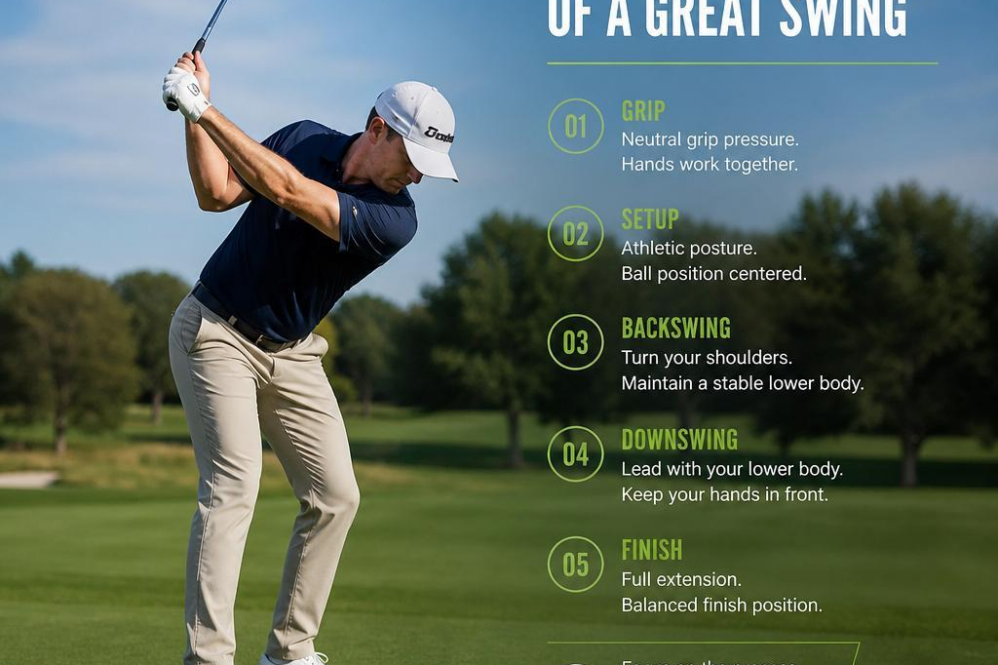
Establishing a consistent grip and stance forms the bedrock of an effective golf swing and ultimately enhances shot precision and power. When gripping the club, ensure your hands work as a unified lever by positioning the left hand (for right-handed golfers) so the club rests diagonally across the fingers, with the thumb pointing slightly right of centre on the shaft. The right hand should then comfortably close around the club, placing the lifeline over the left thumb or slightly overlapping, interlocking, or using the ten-finger (baseball) grip based on personal comfort and control needs. Tools like a grip pressure sensor or alignment sticks from the Top 8 Essential Gear can help beginners avoid excessive tension and maintain consistent grip pressure-ideally around 5 to 6 on a 10-point scale-promoting fluid wrist hinge and release throughout the swing. Parallel to grip setup, stance width should reflect club selection and shot intention: a narrower stance (~12-14 inches between feet) benefits delicate wedge shots, enhancing control, while a wider stance (~18-22 inches) stabilizes drives, accommodating rotational force. Leveraging tools such as a stance mat or laser alignment aids during practice helps ingrain proper foot positioning aligned to the target line, encouraging greater swing path consistency and reducing slices or hooks in real-course scenarios.
To further refine your setup, focus on the interplay between posture and ball position, which directly influences strike quality and trajectory control. Adopt a spine tilt of approximately 15 degrees away from the target with a slight knee flex to optimize weight transfer and maintain balance throughout the golf swing. Ball position varies by club: position the ball just inside the left heel for drivers to facilitate sweeping contact and maximum launch angle, but move it progressively toward the center of your stance as clubs shorten to promote a descending strike.Practice drills incorporating foot spray or impact tape on clubfaces can provide instant feedback on contact location, crucial for improving shot consistency and trajectory manipulation. It’s also critically important to adapt your stance and grip subtly based on course conditions-the firmness of the fairway or the presence of wind can necessitate a more closed stance or firmer grip to counteract shot dispersion. By cultivating this intimate awareness through step-by-step adjustments and structured practice sessions, golfers of all levels can significantly enhance their accuracy, lower their stroke averageand gain a strategic edge during competition.
Putting Essentials That Turn Missed Shots into Sinks
Mastering the delicate art of putting begins with establishing a solid setup, as this foundation frequently enough determines the difference between a missed putt and a confident sink. Start by aligning your eyes directly over the ball, ensuring your stance is shoulder-width apart for stability. Use a putter with a balanced face, such as a mallet-style or blade, that suits your stroke type-whether a straight-back-and-through or a slight arc. This equipment choice, highlighted in the Top 8 Essential Gear for First-Time Golfers, significantly impacts feel and consistency on varied green speeds.When addressing the ball, maintain a relaxed grip pressure-about a 3 out of 10-to promote fluid motion and reduce tension. from here,imagine a pendulum swing where the shoulders drive the putter head,keeping wrists firm but not locked. Incorporating this technique during practice can be enhanced with drills like the “Gate Drill,” which uses two tees to simulate the putter path,helping you develop a square face through impact. Real-course scenarios, such as navigating subtle breaks on bentgrass or poa annua greens, demand that you train your green reading by walking around the putt line to observe grain direction and slope under different light conditions, incorporating this into your pre-putt routine.
Refining your feel for distance control is equally crucial and relies heavily on rhythm and tempo, especially when considerating various lies and green firmness. An effective approach is to calibrate your stroke length to specific yardages, for example, a 12-18 inch backstroke for 10-foot putts, and increasing proportionally. To build this, practice at home or on the practice green using alignment sticks or marked yardages; focus on producing consistent ball roll and speed. When faced with uphill or downhill putts, adjust your backswing length accordingly and anticipate break by reading the slope early-a technique that minimizes guesswork and builds confidence.Don’t overlook the power of mental routines: visualizing the line and speed before the stroke reduces anxiety and improves focus under pressure. Engage drills like the “Clock Drill,” where you place balls around the hole at fixed distances to enhance touch and concentration. For golfers across all skill levels, combining these technical and strategic elements with the right putter (consider shaft length and grip size tailored to your stroke) transforms putting from a source of frustration into a reliable scoring tool, manifesting in tangible lower scores and sharper short game performance.