Unlock the Fluid Motion Behind Billy Casper’s Effortless Swing
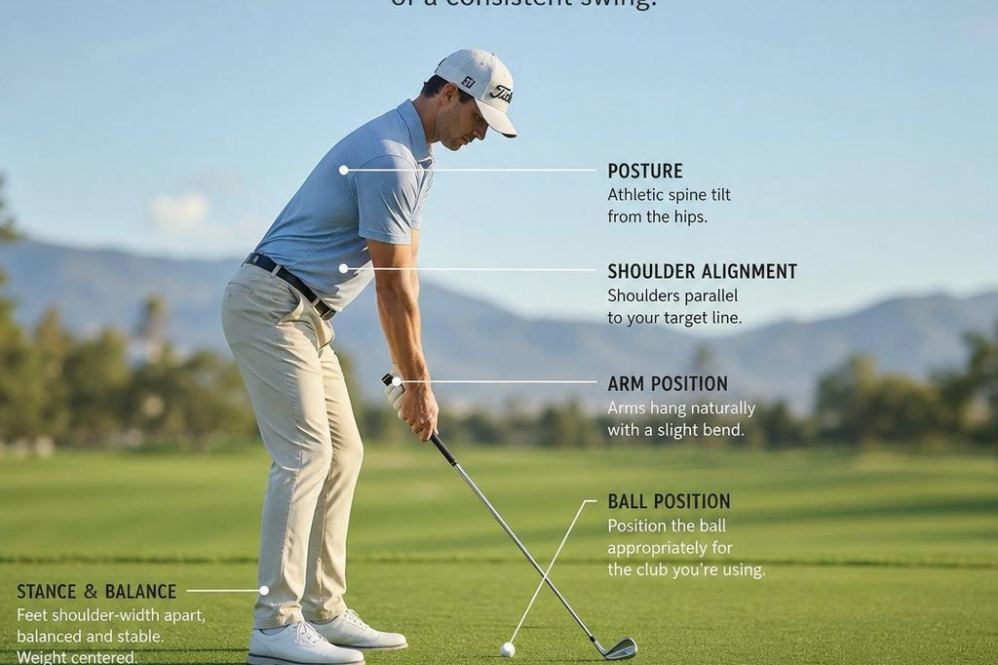
To emulate the fluidity of Billy Casper’s swing, one must first focus on establishing a balanced setup with a slightly wider-than-shoulder-width stance and a moderate ball position just inside the lead heel for the driver or center of stance for irons. Casper’s motion is characterized by a smooth tempo and a low, controlled backswing roughly 75 degrees on the shoulder turn, which preserves power while encouraging accuracy. To foster this, golfers shoudl practice a drill where they pause momentarily at the top of their backswing, ensuring the clubface is square to the target line and the wrists remain hinged rather than cupped. From this position,initiate the downswing with a subtle weight shift to the lead foot and a coordinated rotation of the hips toward the target. This sequencing replicates Casper’s signature effortless transfer of energy and helps players avoid common pitfalls like casting or early extension, which often lead to inconsistent ball striking. Incorporating slow-motion swings during practice sessions cultivates muscle memory that aligns with his economy of motion, promoting precision and consistent contact regardless of swing speed or physical stature.
Beyond mechanics, Casper’s approach to course management reveals critical lessons for shot shaping and strategizing under different conditions.He was renowned for his ability to play the percentages-opting for controlled, low-trajectory shots into firm greens to maximize roll and minimize wind interference, especially on links-style courses or in breezy environments. To apply this, golfers should experiment with ball position and tee height adjustments during practice to produce penetrating draws or fades as needed, utilizing clubs with slightly closed or open clubfaces aligned with target-oriented alignment sticks. Additionally, mastering partial shots with wedges-such as a 60-70% controlled swing targeting a precise landing zone within 15 feet of the pin-helps recreate Casper’s deft touch around the green.For beginners, breaking these skills into manageable drills like hitting progressively longer chips or pitch shots can yield swift confidence gains. Simultaneously occurring, advanced players might track shot dispersion patterns and adjust tactics based on wind speed, pin placementor lie angle. integrating Billy Casper’s harmonious blend of swing fluidity and strategic foresight equips golfers of all levels to refine their technique and tactically navigate any course for lower scores.
Discover How Precision Putting Transformed Casper’s Game
Mastering the fundamentals of precision putting was a game-changer for Billy Casperand golfers can achieve similar results by focusing on setup and stroke mechanics. Casper emphasized the importance of a consistent putting stance where feet are shoulder-width apartand eyes align directly over or slightly inside the ball to promote accurate aim. Developing a pendulum-like stroke hinges on keeping the wrists firm throughout the putt, using the shoulders to drive the movement smoothly back and forth. Golfers should strive to maintain a putter face angle square to the target line at impact, which can be practiced using alignment rods or laser aids on the practice green. A recommended drill to build this muscle memory involves placing tees just outside the putter’s path and stroking back and forth without touching them, encouraging a straight, controlled stroke. Additionally, controlling the length of the backswing relative to the desired putt distance-such as a 6-inch backswing for a 6-foot putt-helps regulate pace, reducing three-putt chances.These setup checkpoints and stroke refinements are valuable for players at every skill level seeking to sharpen their short game accuracy.
Beyond technical execution, Casper’s approach integrated bright course management strategies tailored to the putting surface. He taught golfers to read subtle breaks in the green by observing grass grain, slope anglesand surrounding terrain relief, helping anticipate ball roll behavior in varying conditions. Such as, when facing an uphill putt on a grain-running downhill slope, reducing stroke speed compensates for expected roll acceleration. Incorporating a methodical pre-putt routine-such as lining up several practice strokes aimed at marking tape or a distant reference point-builds both confidence and focused execution. Casual golfers and low handicappers alike can benefit from analyzing green contours visually and with their feet, crouching behind the ball to evaluate angles before addressing the ball. Additionally, students should practice lag putting techniques that emphasize distance control over aggressive attempts to hole long-range putts, minimizing costly three-putts. By blending these mental strategies with sound mechanics, golfers optimize their scoring potential, transforming their putting from tentative to reliable and confident under pressure.
Master Driving Techniques That Deliver Power and Control
Developing driving power and control begins with a solid understanding of swing mechanics and setup fundamentals. To generate consistent distance off the tee, focus on establishing a balanced and athletic stance with feet shoulder-width apart, knees slightly flexedand weight evenly distributed near the balls of yoru feet. Align the ball position just inside your left heel (for right-handed golfers) to allow a sweeping upward strike, maximizing launch angle and reducing spin. During the takeaway, emphasize a smooth, one-piece motion where your shoulders and hips initiate the swing, avoiding excessive hand manipulation that can cause an inconsistent path. Incorporate drills such as the “gate drill,” setting up two tees slightly wider than the clubhead to train on-axis club path and prevent slicing or hooking. by understanding and controlling the clubface through impact-aiming for a square face angle at contact-you can significantly improve directional accuracy and driving consistency. Billy Casper’s insights highlight the importance of engaging the ground reaction forces during the downswing; a intentional weight shift toward the front foot through impact can add measurable power without sacrificing control.
Strategically, mastering driving also involves adapting technique to various course conditions and situational play. In windy or firm fairway conditions, consider optimizing ball flight by adjusting your tee height and angle of attack to produce a more penetrating trajectory that resists wind drift. Practice drills such as the “pause-and-go” can help refine tempo,ensuring you maintain rhythm regardless of external conditions. Additionally, integrating course management principles encourages thoughtful placement off the tee, such as favoring the safer side of the fairway to avoid trouble hazards, even if it demands sacrificing some distance. For beginners, focus on smooth acceleration through impact, while advanced players can experiment with controlled fades or draws to access tough pin positions effectively. Maintaining mental composure and visualization pre-shot, as emphasized in Casper’s methods, rounds out the driving technique by enhancing confidence and focus under pressure. Through consistent practice of these biomechanical and strategic elements,golfers at all skill levels can achieve measurable improvements in power,accuracy,and overall scoring potential from the tee.
Bring Casper’s Winning Mental Approach to Your Golf Routine
Developing a winning mental approach begins with cultivating focus and confidence under pressure, foundational principles Billy Casper emphasized throughout his teaching career. to start, implement routine pre-shot rituals that anchor your mind before each swing-such as taking a deep breath, visualizing your target lineand rehearsing the swing path mechanically. This mental checklist prepares you to execute shots with intention rather than reaction. When outdoors, adapt these rituals to changing course conditions; for example, on windy days, incorporate an extra moment to gauge wind direction and adjust club selection accordingly. Casper advocated breaking down holes strategically: assess each shot for risk versus reward, then commit fully to your decision. Practice drills that build this mental toughness,such as playing “pressure” rounds where you simulate tournament stakes or keeping a detailed shot log to track progress under different scenarios. For beginners, start by focusing on one mental technique at a time, like maintaining positive self-talk, while advanced players can layer visualization and course management principles for incremental gains.
Course strategy and club selection underlie Casper’s philosophy of optimizing scores through intelligent play rather than mere power. Begin by mastering your setup fundamentals to build consistency-maintain a balanced stance with feet shoulder-width apart and position the ball according to the club: for example,for mid-irons,place it slightly forward of center to promote a crisp downward strike. During practice, work on controlling swing plane angles between 45 to 60 degrees on the back swing to enhance shot accuracy and maintain a repeatable motion. On the course,use Casper’s approach to evaluate risk by considering hazards,pin placement,and green slopes to choose safer landing zones instead of always attacking pins directly. Drill suggestions to internalize this include playing “lay-up” practice holes focusing on precision over distance and spending additional time chipping and putting with different ball lies to improve adaptability. By consistently applying these strategies and refining setup and swing mechanics, golfers across skill levels learn to leverage mental acuity and technical skills for lower scores and a confident golf routine.