Unlock the Foundations of Roberto De Vicenzo’s effortless Swing and How It Transforms Your Game
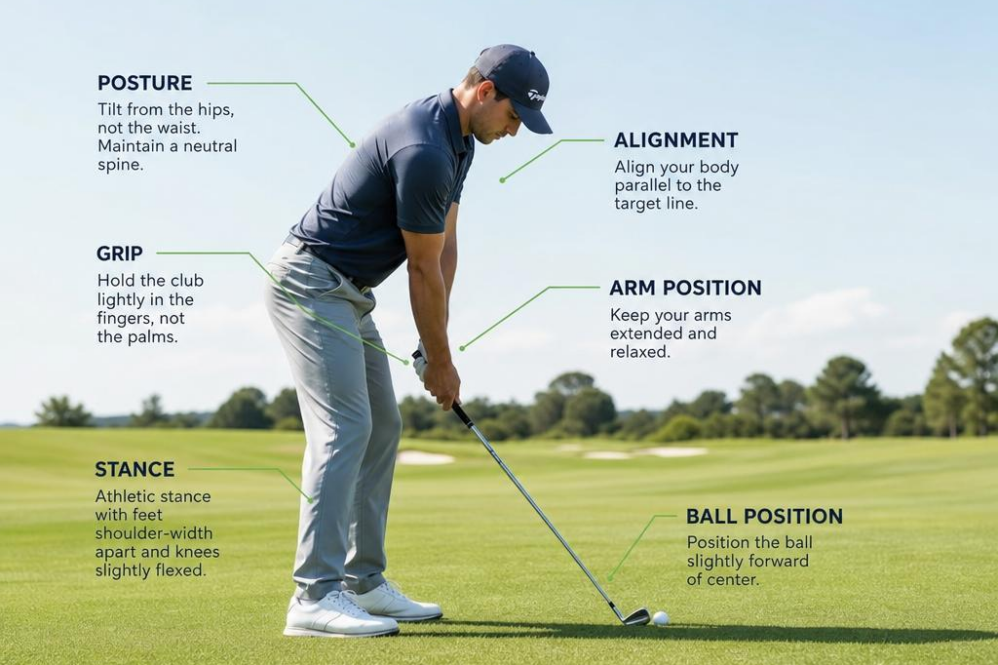
Achieving Roberto De Vicenzo’s effortless swing begins with mastering a fundamentally sound setup that promotes balance,rhythm,and power.Start by positioning your feet shoulder-width apart with a slight knee flex-this stance provides stability throughout the motion. Emphasize a 52-56 degree shoulder turn during your backswing to generate sufficient coil without tension, which facilitates a smooth transition into the downswing. A signature aspect of De Vicenzo’s technique is his relaxed grip pressure-applying just enough force to maintain control helps prevent tension that can lead to erratic clubface alignment. Incorporate a gradual weight shift from your back foot to front foot, finishing with 60-70% of your weight on the lead foot at impact. When practicing, focus on drills that reinforce tempo and sequencing, such as swinging with a metronome or pausing briefly at the top of the backswing. These exercises cultivate the feel of effortless power and improve consistency, making them ideal for beginners and advanced players alike. Additionally, understanding how different lofts and shaft flexibilities in your clubs influence ball flight allows you to tailor equipment to complement your swing dynamics, further enhancing precision and distance.
Translating this technique into real-course performance requires integrating strategic course management and situational adaptability, much like De Vicenzo exemplified. As a notable example, when navigating firm fairways or windy conditions, prioritize a lower ball trajectory by adjusting your ball position slightly back in your stance and employing a shallower attack angle-this reduces spin and keeps shots under the wind. Short game finesse also stems from de Vicenzo’s principle of controlled rhythm, which applies to chipping and putting strokes. Employ drills that focus on consistent tempo, such as the “clock drill” for putting, where you stroke putts from varying distances around the hole using the same backswing length. In pressure situations, anchor your pre-shot routine by visualizing ideal shot shape and selecting conservative targets to minimize risk-this mental approach complements technical execution to reduce costly errors. by targeting measurable goals, like improving fairways hit percentage by 10% or reducing three-putts per round, golfers can progressively integrate De Vicenzo’s effortless swing ideology into their own game, ultimately lowering scores across varied playing conditions and skill levels.
Discover the Putting Techniques That Made De Vicenzo a Master on the Greens
Mastering the greens requires a delicate balance of precision, touchand mental focus, all elements Roberto De Vicenzo championed throughout his storied career. To emulate his putting success,start with a solid foundation by focusing on your setup fundamentals. Position your feet shoulder-width apart with the ball slightly forward in your stance to promote a natural pendulum stroke. De Vicenzo emphasized maintaining a consistent stroke arc between 2 to 4 degrees inside the target line, ensuring your putter face remains square through impact for a true roll.Incorporate subtle shoulder hinge movements while keeping your wrists firm to minimize wrist breakdown – a common putting flaw that leads to inconsistent distance control. During practice sessions, use drills like the “gate drill” where two tees form a narrow path for the putter head to travel through, encouraging a straight-back, straight-through stroke path essential for accurate aim. Additionally,learning to read greens effectively-taking into account slope angle,grain direction,and speed measured in Stimp meter ratings-can dramatically improve your break recognition and pace control. De Vicenzo’s approach reminds golfers to marry technical precision with an intuitive feel for green nuances, adapting their stroke accordingly in varied course conditions.
Beyond mechanics, De Vicenzo’s putting philosophy incorporated strategic course management directly tied to mental resilience and situational awareness.He advocated for practicing lag putts from 20 to 40 feet to build trust in your distance control-an essential skill for avoiding three-putts under pressure. When confronting tricky slopes or fast greens, he recommended visualizing a target zone rather than a single hole, allowing for slight margin of error and reducing anxiety. To refine touch, try the “clock drill” by placing balls at incremental distances around the hole, encouraging confident strokes from all angles and improving spatial feel. For players struggling with nervousness during competitive rounds, De Vicenzo suggested a pre-putt routine emphasizing rhythmic breathing and focusing solely on the process, not the outcome. This mental cue helps maintain a smooth tempo and sidestep overthinking. Integrating these elements-mechanical consistency, strategic green-readingand mental composure-forms a comprehensive approach to putting that both beginners and low handicappers can apply. By routinely tracking your putting stats, such as putts per round and one-putt percentages, you can set measurable improvement goals aligned with De Vicenzo’s methodical, yet adaptable, style of play.
Master De Vicenzo’s Driving Secrets to Gain distance and Accuracy Every Time
Optimizing your driving technique by focusing on the fundamentals of stance, gripand alignment sets the foundation for both distance and accuracy, a concept emphasized by Roberto De Vicenzo’s teaching philosophy. Begin with a slightly wider than shoulder-width stance to promote stability throughout your swing.Positioning the ball just inside your left heel helps facilitate an upward strike on the ball, maximizing launch angle and reducing spin. Pay particular attention to grip pressure; gripping the club too tightly can restrict wrist hinge and inhibit clubhead speed. De Vicenzo advocated a neutral grip aligned with the clubface to maintain consistent ball flight and avoid slices or hooks. From there, initiate your takeaway with a smooth, one-piece motion using your shoulders rather than your hands, ensuring the club follows a shallow inside path through the downswing. Practicing slow-motion swings with a video camera or mirror can provide visual feedback to self-correct deviations from this path, effectively eliminating common errors such as an over-the-top move or steep angle of attack.
To translate these mechanics into on-course success, de Vicenzo emphasized strategic course management combined with physical consistency. When driving, consider factors such as wind conditions, fairway widthand hazard placement to select an optimal target line rather than simply aiming for maximum distance. Integrate specific drills like hitting half-swings focusing on hip rotation and weight transfer to enhance timing and generate power efficiently. For more advanced players, using a launch monitor to measure launch angles around 12 to 15 degrees with a spin rate under 3000 RPM aligns with De Vicenzo’s metrics for effective long drives. Additionally,regular practice routines should include tempo drills set to consistent counts (e.g., 3-count backswing, 1-count downswing) to ingrain rhythm, which is critical under varying course pressures. By combining these biomechanical principles with tactical decision-making, golfers can replicate De Vicenzo’s hallmark blend of distance and precision, boosting confidence and lowering scores across all skill levels.
How to Incorporate De Vicenzo’s timeless Tips Into Your Daily Practice for Consistent Improvement
integrating Roberto De Vicenzo’s teachings into your daily practice begins with a focused approach on fundamental swing mechanics and setup.de Vicenzo emphasized the importance of a balanced, repeatable swing that maximizes power while maintaining control.To achieve this, start each practice session by checking your posture and grip alignment: ensure your spine angle is around 30-35 degrees from vertical and your grip pressure is firm but relaxed, roughly equating to holding a tube of toothpaste without squeezing it. Incorporate drills such as slow-motion swinging to internalize the correct swing plane and tempo, which De Vicenzo advocated as the cornerstone of consistency. Pay particular attention to the transition from backswing to downswing, striving for a smooth shift of weight to your lead foot while keeping your hands passive until the club reaches the top of your backswing. This technique helps avoid common pitfalls like early casting or over-the-top moves. By practicing these foundational elements repeatedly, golfers at all levels can build a reliable swing that adapts to various course conditions and weather variations, improving both distance and accuracy.
Beyond the full swing, De Vicenzo’s insights into short game precision and strategic course management offer actionable tools for lowering scores. Focus on practicing distance control and green reading drills for putting and chipping, as he believed mastering the short game was crucial for scoring improvement. Use target drills that simulate pressure situations, such as attempting to lag putts within a three-foot radius to develop feel and confidence. In real-course play, apply De Vicenzo’s principle of playing smarter, not harder: analyze risk versus reward on each hole and select shots that maintain position without needless aggression. This involves understanding lies, wind conditions, and pin placements better, adjusting your club selection and shot shape accordingly. Consistent practice routines combining controlled swings, short game finesseand situational strategy will foster measurable improvement in scoring averages. For example, setting a goal to reduce three-putts from the average of 2.5 per round to 1.5 or fewer turns technical practice into tangible progress, reflecting the timeless wisdom of Roberto De Vicenzo’s approach to golf mastery.