Unlock Your Best Game by Perfecting Your Swing Mechanics
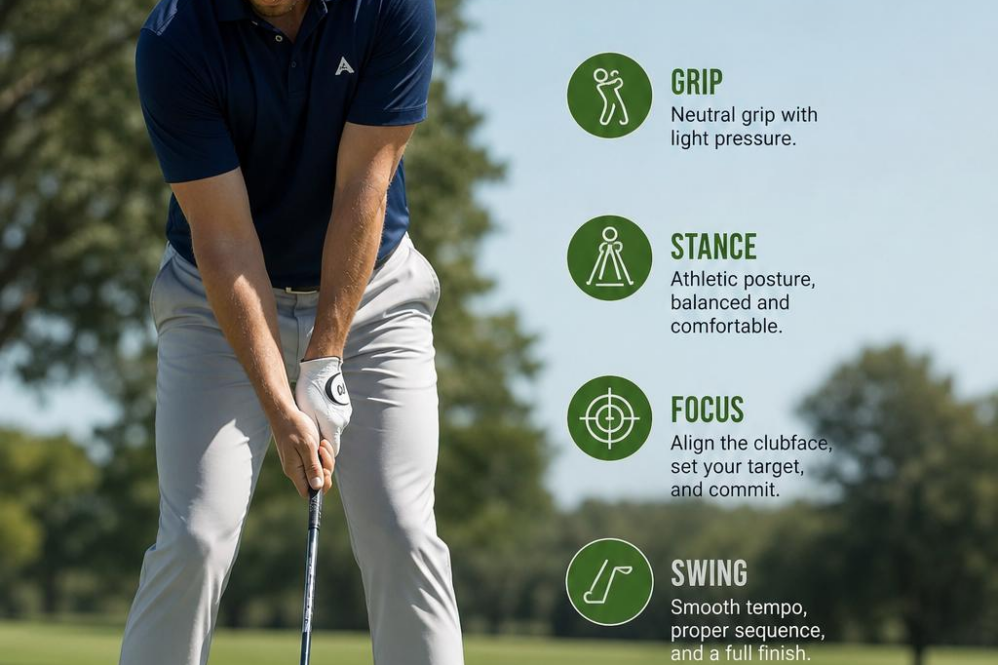
Mastering the fundamentals of your swing mechanics is the cornerstone of unlocking your best golf game. Start by focusing on a consistent setup position, ensuring your feet are shoulder-width apart with a slight knee flex, and that your spine angle maintains a balanced tilt around 15 degrees forward from the hips. This posture promotes a stable base and efficient rotation. When initiating the backswing, emphasize a smooth takeaway by engaging the shoulders early while keeping the clubhead low to the ground, allowing you to achieve a controlled swing arc. A critical measurement to monitor is the clubshaft tilt at the top of the backswing, ideally creating an 80 to 90-degree angle between the lead arm and the club, wich enables optimal coil and power generation. Incorporate drills such as the slow-motion takeaway drill and pause-at-the-top practice to develop proprioception and timing. For golfers with limited mobility, adjusting the swing width and reducing excessive wrist movement can prevent common errors like casting or early release.
Integrating precise swing mechanics with intelligent course management amplifies scoring potential. For example, understanding when to play conservatively versus attacking pins depends heavily on the reliability of your shot shape and distance control. When approaching a water hazard or a narrow fairway,choose a club that promotes accuracy-such as a 5-iron or hybrid-even if it means sacrificing carry distance. Practice drills like hitting to specific targets at various distances and working with alignment rods to fine-tune your aim and ball flight pattern. additionally, real-course scenarios-such as managing wind direction or choosing higher trajectory shots to soften ball landing-require applying technical knowledge in dynamic conditions. By achieving a repeatable swing that produces predictable spin rates and launch angles, you enable smarter shot selection and reduce penalty risks. Ultimately, blending swing proficiency with thoughtful strategy results in lower scores and greater confidence, regardless of your handicap level.
Elevate Your Putting Skills with Precision Techniques and Mental Focus
Mastering putting requires a harmonious blend of technical precision and mental clarity to consistently read greens and execute accurate strokes. Begin by focusing on your setup fundamentals: position the ball slightly forward of center in your stance, ensuring your eyes are directly over or just inside the ball line to promote a straight-back, straight-through stroke path. Maintain a pendulum-like putting stroke with minimal wrist breakdown, using your shoulders to control the motion for improved stability and distance control. To refine green reading, incorporate the “fall line” technique-assess the slope by observing the natural contours and water drainage patterns on the course. Stand behind the ball and pick a target line a few feet past the hole, then square your putter face to that line. Practice rolling putts over a designated line during drills, concentrating on speed control by adjusting the length of your backswing and follow-through. Use a 3-to-6 foot putt drill to calibrate your feel-focus on stopping the ball within a 6-inch radius of the hole to build confidence in your distance judgment.
Beyond mechanics, developing strong mental focus enhances your putting under pressure, especially on challenging greens like those at Pebble Beach or Augusta National, where subtle breaks and grain direction significantly influence ball behavior. Cultivate a routine that includes visualization of the ball’s path and a consistent pre-putt breathing exercise to reduce tension and improve concentration. Integrate purpose-driven practice drills such as the ladder drill to improve aim and the clock drill to boost consistency on multiple putt lengths.For players of all levels, equipment choices such as selecting a mallet or blade putter with proper alignment aids can complement your stroke style and increase confidence. Remember to adapt your speed and line judgment during varying weather conditions, as faster greens amplify errors in distance control. By combining targeted technical adjustments with strategic green reading and mental discipline, golfers will not only elevate their putting skills but also lower scores and gain an invaluable edge on the course.
Drive Longer and Straighter with Proven Power and Accuracy Tips
Achieving greater distance and accuracy from the tee begins with optimizing your setup and swing mechanics to harness maximum power efficiently. start by positioning the golf ball just inside your lead heel-this placement promotes an upward angle of attack, allowing you to launch the ball higher with reduced spin for longer carry distances. Your stance should be slightly wider than shoulder-width to provide stability, and ensure your weight is balanced evenly, with a slight tilt away from the target to encourage an inside-out swing path. As you initiate the backswing, focus on creating a full shoulder turn while keeping your lower body grounded to store torque in your core. During the downswing, initiate ground force by driving off the inside of your rear foot, transferring energy smoothly through your hips and torso. Maintaining a lag in your wrists until just before impact maximizes clubhead speed and results in more powerful, straighter shots. Additionally, integrating a consistent tempo-neither to fast to lose control nor too slow to sacrifice momentum-helps synchronize your body movements for repeatable results. Regularly using a launch monitor during practice sessions can definitely help you track your clubhead speed, smash factor, and launch angle, aiming for a clubhead speed of 90-110 mph for intermediate players to improve carry distances effectively.
Beyond mechanics, strategic tee shot placement plays a critical role in enhancing accuracy and setting up easier approach shots. Familiarize yourself with course layouts, including hazards, doglegs, and prevailing wind conditions, to make informed decisions under pressure. such as, on a tight fairway bordered by bunkers or water hazards, opting for a controlled 80-90% swing with a 3-wood or hybrid may yield a safer, more precise result than a driver. Employ visualization techniques, picturing the ideal shot shape-whether a subtle fade to avoid trees or a draw to cut distance-and practice these shapes on the range by adjusting grip pressure, clubface angle, and swing path accordingly.To reinforce consistency and control,incorporate drills such as the “gate drill” with alignment sticks to guide swing path or the “pause at the top” drill to develop better timing and sequencing. Emphasize mental resilience by practicing pre-shot routines that include deep breathing and positive self-talk, preparing you to maintain focus during competitive rounds. By systematically combining these physical and cognitive strategies, golfers of all levels can drive farther with increased accuracy, ultimately lowering stroke counts and enhancing overall scoring potential.
Integrate Course Strategy to Maximize Your Performance on Every Hole
Mastering course strategy begins with a thorough analysis of each hole’s layout, hazards, and green contours.Start by visualizing the hole from tee to green, identifying key target zones and potential trouble spots, such as bunkers, water hazards, or out-of-bounds areas. For beginners, focus on conservative shot placement by aiming for the wider, safer sections of the fairway to maintain confidence and consistency. Intermediate and low handicap golfers should incorporate club selection based on wind conditions and lie angles,adjusting their trajectory to avoid hazards and create optimal approach angles. For example, on dogleg holes, consider the risk-reward of cutting the corner versus laying up to the bend-taking into account your shot shape preferences and average carry distances. A useful practical drill is to walk the course pre-round, noting distances with a rangefinder and planning multiple shot sequences, which helps refine decision-making under various course conditions.
Beyond pre-shot strategy, integrating mental focus with physical execution maximizes performance on every hole. Before each shot, take a purposeful practice swing with an emphasis on consistent tempo and alignment fundamentals, ensuring your setup directs the clubface toward your intended target. Emphasize short game proficiency as a critical complement to course management; knowing when to play aggressive chip shots versus safely bumping and running can shave valuable strokes. To sharpen this skill, incorporate drills that simulate pressure scenarios, such as hitting to targets within 15 feet around the green under timed conditions.Additionally, remain adaptable by monitoring weather impacts like wind strength or green firmness-adjust your shot shape (fade, draw, punch) accordingly to maintain control.Ultimately, disciplined planning combined with precise execution reduces errors, allowing all golfers to lower scores and confidently handle diverse on-course challenges.