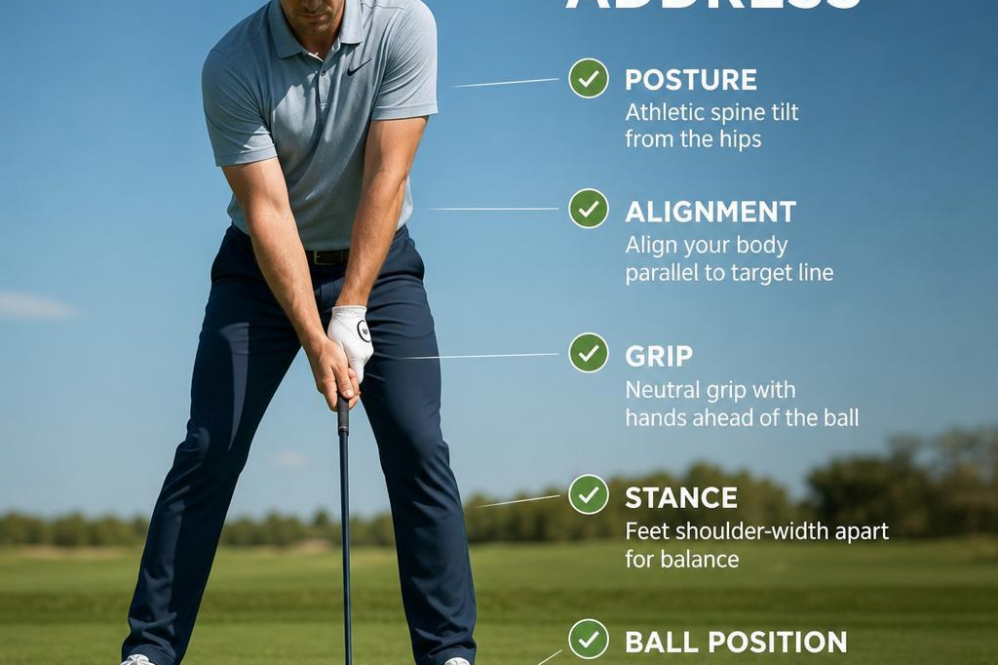
Unlocking the Secrets of a Powerful and Consistent Golf Swing
Developing a powerful and consistent golf swing begins wiht mastering the fundamental setup. Start by positioning your feet shoulder-width apart, aligning the ball slightly forward of center for most irons and more forward for drivers to encourage an upward strike. Your spine angle should be tilted approximately 15 degrees from vertical, maintaining a relaxed posture that allows rotation without tension.Grip pressure plays a crucial role as well; aim for a firm yet comfortable hold-about a 5 on a 1-to-10 scale-to ensure control without restricting your wrist hinge.Focusing on these setup essentials sets the foundation for a repeatable swing and increases your potential to consistently deliver powerful contact.
Next,hone your swing mechanics by breaking down the motion into manageable phases,focusing on controlled tempo and precise sequencing.Initiate the backswing with a smooth takeaway,keeping the clubhead low to the ground for the first few feet,while rotating your shoulders fully-approximately 90 degrees-for sufficient coil. The downswing should shift weight dynamically from the trail foot to the lead foot, aiming for about a 70% weight distribution at impact to maximize power transfer. Maintain a firm left wrist through impact to prevent flippingand ensure your follow-through finishes balanced with hips fully rotated toward the target. To cultivate this, practice drills like the pause-and-go or slow-motion swings help ingrain muscle memory, while video analysis can provide direct visual feedback on your swing plane and club path. Avoid common pitfalls such as early release or over-rotating, which often result in inconsistent strikes and loss of distance.
integrating course strategy and environmental awareness can elevate your swing’s effectiveness under real-world conditions. Recognize that factors like wind, slope, and lie will influence club selection and shot execution. Such as, into a strong headwind, focus on a more compact swing with a slightly abbreviated follow-through to maintain control and prevent ballooning the ball. Short game proficiency complements your swing by emphasizing precision and touch around the greens-incorporate drills targeting lag putting distances under 10 feet and controlled chip shots from varied lies to lower your scores. Utilize measurable objectives, such as consistently striking at least 80% of fairways and greens in regulation, to track progress. By coupling solid technique with strategic shot-making decisions and course management, your swing not only becomes mechanically sound but also adaptable, enhancing your scoring potential and overall consistency on the course.
Putting Like a Pro Enhancing Precision and Confidence on the Greens
Mastering the art of putting begins with establishing a solid setup routine that promotes consistency and alignment. Start by positioning your eyes directly over the ball or slightly inside the ball-to-target line to improve depth perception, which is crucial for reading subtle greens breaks. Your feet should be shoulder-width apart, with a slight knee flex to maintain balance throughout the stroke. A common mistake is gripping the putter too tightly, which can inhibit the pendulum motion; instead, hold the putter with a light but secure grip. Focus on a smooth,rhythmic stroke using your shoulders and forearms,minimizing wrist breakdown to ensure a stable face through impact. Incorporating a pre-putt routine that includes visualizing the ball’s path boosts confidence and mental clarity before each attempt.
Elevating your green reading skills requires understanding both the slope and grain direction to accurately judge the ball’s break and speed. Begin by walking around the hole from multiple angles to observe changes in elevation and the orientation of the grass blades, which can affect roll speed. On windy days, account for the extra resistance by slightly increasing your stroke length or pace to maintain distance control. Integrate drills such as the clock drill,where you place balls at varying distances around the cup to practice lag putting and hone distance judgment. Additionally, the gate drill helps refine putter face control by ensuring a square impact through a narrow pathway, preventing common misses caused by open or closed faces.These techniques allow golfers, from beginners to low handicappers, to make smarter strokes that reduce three-putts and lower overall scores.
Course management on the green involves selecting the right putter and adjusting tactics to match the conditions. For example,on fast,undulating surfaces,using a heavier putter head can stabilize the stroke and improve roll quality,while a lighter putter suits slower greens and touch shots. When facing long putts, embrace a controlled backswing and focus on maintaining an even tempo, avoiding the temptation to “hit” the ball too hard-which frequently enough leads to directional errors.To troubleshoot common issues like pulling putts or topping the ball,check that your setup emphasizes a slight forward press with the hands to correctly compress the ball and promote a forward roll. mental resilience is key-visualize successful putts and practice calming breathing techniques to maintain confidence under pressure, transforming your putting performance into a reliable scoring weapon.
Driving Distance and Accuracy Techniques to Transform Your Game
Developing substantial driving distance without sacrificing accuracy requires a balance of mechanics, setupand effective course management.start by focusing on your stance width and ball position. For drivers, position the ball just inside your left heel (for right-handed golfers) to encourage an upward angle of attack, ideally between 3 to 5 degrees, which optimizes launch conditions for greater carry distance. Maintaining a wide stance helps stabilize your lower body, allowing efficient weight transfer through the swing-a key to generating power. Incorporate drills such as slow-motion swings emphasizing hip rotation and weight shift to engrain the proper sequencing.Remember, controlling clubface alignment at address and through impact is crucial: a slight open or closed face considerably impacts accuracy, leading to slices or hooks. Using alignment rods during practice can help reinforce correct setup and swing path, especially on uneven lies or windy conditions, ensuring your driver consistently launches the ball on your intended target line.
To further enhance driving accuracy, integrate shot-shaping techniques that allow you to adapt to course layouts and situational demands. Learning to intentionally shape shots-whether a controlled fade or draw-improves your ability to navigate doglegs, avoid hazardsand exploit favorable wind conditions.Focus on adjusting your clubface angle relative to your stance alignment: for a fade, slightly open the clubface and aim your body left of the target; for a draw, close the face and align your body right of the target. Practical drills include hitting grid targets on the driving range with intermediate markers for shape control and practicing swing path modifications with impact tape to visualize contact points. Additionally,incorporating launch monitor feedback can help quantify spin rates and ball flight parameters,enabling precise adjustments.For all skill levels, mastering these subtle adjustments fosters confident decision-making during rounds, transforming your driving from a gamble into a strategic weapon that complements overall course management.
Beyond swing mechanics and shot execution, optimizing your equipment and understanding environmental factors profoundly influences driving performance. Ensure your driver’s loft matches your swing speed: players with slower swings (below 90 mph) generally benefit from higher lofts (10.5°-12°) to maximize carry, while faster swingers might prefer lower lofts for reduced spin and enhanced roll. Experiment with shaft flex and length tailored to your tempo and release to maintain control without sacrificing distance.On-course, consider prevailing wind and elevation changes when selecting targets, adjusting clubface aimsor modifying your swing intensity. Incorporate mental routines such as visualization and controlled breathing to reduce tension and promote consistent tempo on tee shots. For beginners, breaking down complex concepts into manageable practice segments-like dedicated sessions focusing solely on driver setup or alignment-builds confidence methodically. By embracing these extensive driving strategies,golfers cultivate not just longer,but smarter tee shots that significantly lower scores and elevate enjoyment across all levels of play.