Unlock Your Best Swing by Understanding Your unique biomechanics
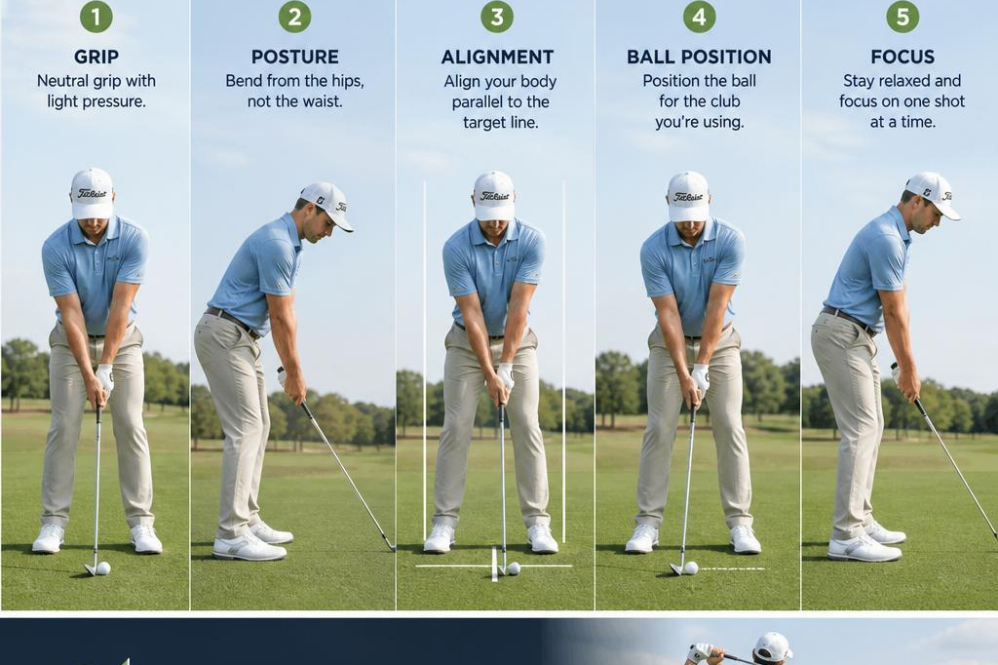
Understanding your unique biomechanics is essential for unlocking a consistent and powerful golf swing. Every golfer’s body moves differently, impacting swing plane, clubhead pathand impact position. To start, it is critical to analyze your natural stance and posture-ensure your spine angle is maintained throughout the swing, ideally around 30 to 35 degrees of forward tilt. This setup preserves balance and promotes efficient weight transfer. Next, evaluate your shoulder turn and hip rotation; a proper coil involves roughly 90 degrees of shoulder turn with a complementary 45-degree hip turn. To integrate these into your practice, begin with slow, controlled swings focusing on maintaining a steady head and rhythm, which fosters better sequencing between your upper and lower body. Incorporate drills such as the “step drill” or the “pause-and-go” drill to train coordination and timing. These methods help golfers of all levels understand and optimize their impact positions, critical for generating clubhead speed and solid contact, which directly contributes to distance and accuracy improvements.
beyond the mechanics of your swing,connecting biomechanics to course strategy and short game performance can considerably boost scoring. As an example, tailoring your putting stroke to your arm length and wrist hinge patterns ensures a repeatable and confident motion under pressure. A common mistake is excessive wrist breakdown, which disrupts clubface control; to correct this, practice the “gate drill” where you place tees on either side of the putter head to promote a straight-back, straight-through stroke. When it comes to driving, understanding your launch angle-ideally between 12 and 16 degrees with a spin rate of 1500 to 2500 RPM depending on conditions-allows you to select the optimal tee height and ball position, adapting as wind or elevation changes affect ball flight. Integrating measurable metrics like launch monitor data or video analysis into your practice helps translate technical improvements into real-course advantages, improving shot selection and confidence during play. By combining biomechanical insights with targeted drills and thoughtful club and course management, golfers can achieve greater consistency and lower scores.
Elevate your Putting Game with Precision Drills and Mental Focus
To improve putting precision, start with a consistent setup that emphasizes eye alignment directly over the ball and a slight forward shaft lean of about 2-4 degrees. This posture encourages a square putter face at impact, promoting a straighter roll. Incorporate a smooth, pendulum-like stroke utilizing the shoulder muscles rather than wrist action, maintaining a consistent tempo around 60-70 beats per minute. When practicing, use drills like the gate drill to ensure the putter path remains on-plane and check for face angle errors by placing alignment sticks parallel to the target line. Additionally, vary your drill distances from 3 to 20 feet to simulate real-course scenarios, focusing on controlling pace and reading greens based on slope and grain direction. Importantly, track your success rate over multiple sessions to measure betterment and adjust your setup or stroke mechanics accordingly.
On the course, mental focus complements technical skill by enabling better green reading and execution under pressure. Before each putt, take time to visualize the ball’s intended path factoring in subtle breaks from undulations or wind conditions. use a pre-putt routine that includes deep breaths and a brief challenge to identify a precise target spot on the green, narrowing your focus and increasing confidence. for golfers at all levels, implementing drills like the clock drill builds versatility in reading different distances and breaks, while advanced players can experiment with minimal grip pressure to enhance feel and control. Integrating these targeted practices within your routine fosters not only consistency in stroke mechanics but also a sharper strategic approach to lowering your score by capitalizing on every short putt opportunity.
Drive Longer and Straighter by Refining Technique and Power
To maximize distance and accuracy off the tee, focus first on refining your swing mechanics with an emphasis on proper sequencing and power generation. Begin by ensuring a fundamentally sound setup: position the ball just inside your front heel, maintain a shoulder-width stanceand align your shoulders parallel to the target line. During the takeaway, initiate the clubhead movement smoothly while keeping your wrists firm to create a wide, stable swing arc. A critical element is generating power through a coordinated hip rotation rather than relying solely on arm strength.This means allowing your hips to lead the downswing while maintaining a stable head position, which promotes a consistent low-to-high club path, optimizing launch angle near 12 to 15 degrees for drivers and maximizing carry distance. Incorporate drills such as the “Step Drill”-where you pause at the top of your backswing and step into your shot-to develop timing between the lower and upper body. For golfers at any level, emphasizing rhythm and tempo with a metronome app or slow-motion video feedback can dramatically improve swing consistency and power transfer.
Beyond swing mechanics, equipment choices and course strategy critically influence driving performance. experiment with driver lofts between 9° and 12° to find your ideal launch conditions, as this can vary depending on swing speed and angle of attack. Integrate adjustable drivers during practice rounds to evaluate how different settings affect ball flight and distance under varying course conditions,such as wind or firm fairways. On the course, smart tee shot placement frequently enough outweighs sheer distance-prioritize targeting wider fairway sections or angles that set up favorable approach shots rather than always aiming for maximum length. Practice drills like the “Fairway or foul” challenge-where you deliberately aim for narrower fairway corridors-help sharpen shot shaping skills, including fades and draws. Combining technical refinement with strategic tee shot decisions will not only increase your driver accuracy but also reduce penalty strokes and set a foundation for lower overall scores.
Integrate Course Strategy to Make Every Shot Count
Triumphant golf strategy hinges on the ability to visualize each hole as a series of calculated shot opportunities rather than simply focusing on distance. Start by assessing the layout and hazards-bunkers, water, and out-of-bounds areas-while keeping wind direction and elevation changes in mind.Such as, when facing an uphill approach shot, add approximately 10-15% to your usual club distance to compensate for the slope’s effect on ball flight. Align your stance and clubface to emphasize accuracy over power when navigating tight fairways or doglegs, as maintaining position frequently enough leads to lower scores than attempting risky drives.To practice these decision-making skills, incorporate course-mapping drills where you walk or use a GPS device to record distances and identify safe landing zones. Combining this with visualization exercises that simulate various weather conditions will also sharpen adaptability, connecting mental preparedness directly with physical execution.
Beyond shot selection, integrating smart course management means tailoring your strategy to your unique swing characteristics and current skill level. Beginners might focus on minimizing penalty strokes by choosing instead to lay up short of hazards,while advanced players can experiment with shot shaping-fading or drawing the ball-to exploit angles that reduce approach distances.Implement a pre-shot routine that includes a focused assessment of lie, stanceand wind factors, then select a target line using intermediate markers such as trees or shadows to guide alignment. consistent practice drills, such as hitting shots to targets within +/- 5 yards, help develop this precision. Additionally, understanding the rules around relief options-like taking free drops from casual water or ground under repair-can save valuable strokes and reinforce confidence when situations become complex.By methodically connecting equipment choices, such as club loft and shaft flex, with situational demands on the course, golfers create a cohesive strategy that makes every shot count toward lowering their handicap.