Swing Like the Legends: Lessons from John Henry Taylor’s Mastery
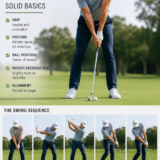
To emulate the skill and precision of 19th-century legend John Henry Taylor, start by focusing on the fundamental setup that underpins all great golf swings. Imagine standing on the first tee, the wind rustling through the trees, your grip firm yet relaxed. Taylor preached that a solid stance is the foundation of accurate ball striking.Start by positioning your feet shoulder-width apart and ensuring your hips are slightly narrower than your feet. Bend your knees slightly and let your arms hang naturally. Your spine should align with a slight tilt from your shoulders down to your knees, maintaining a straight line through your hips.
Once your stance is set, think about transitioning into the swing with the body’s natural rhythm and balance. A key component Taylor emphasized was the role of the lower body in generating power. As you shift into the backswing,keep your weight on the inside of your right foot (for right-handers),and allow your upper body to turn around your lower body. This separation creates the torque necessary for a powerful downswing. An excellent drill for beginners to grasp this concept is the ”shoulder turn” drill. Stand next to a wall with your shoulder touching it. Rotate your shoulder back and through, keeping the wall as a guide to maintain your posture and spine angle throughout.
Transitioning into the downswing and follow-through involves a coordinated release of the stored energy built up in the backswing. Maintain a focus on your core rather than just your arms and hands.As you transition, shift your weight onto your left side (for right-handers)and turn your hips through, leading with your lower body before your arms and club head catch up. A common mistake is rushing the downswing and losing the sequential movement initiated by the lower body first. To work on this, try using a mirror to observe your hip-to-shoulder-to-arms release sequence. Ensure the hips rotate first, followed by the shoulders and arms, maintaining the order and timing in your swing.
incorporating these technical aspects into your overall game strategy will lead to improved scores and enjoyment on the course. Consider the layout of the holes you’re playing-choosing the right trajectory, distance, and shot shape based on these factors can save strokes. Taylor’s approach to strategy also involved adapting his game to various weather conditions and course setups.Such as, when facing strong winds, focus on hitting higher, more penetrating shots by positioning the ball farther forward in your stance and swinging more aggressively from the top. For beginners, practicing different shots under simulated conditions-like hitting balls into a wind machine or near water traps-can provide valuable learning experiences.By integrating these lessons into your game, you’ll not only improve your technique but also your strategic thinking on the course.