
—
Finding Your Golf Sweet Spot with Neil Coles
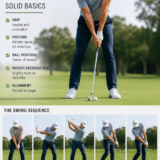
Golf is all about rhythm and precisionand finding that sweet spot in your swing can make the difference between a frustrating round and a memorable one. For beginners, the first step is understanding the importance of setup and alignment. Position your feet, hips, and shoulders parallel to your target line, but make sure it feels cozy and balanced. Neil Coles suggests taking a moment to assess your stance width and ball position, ensuring the ball is placed based on the club you’re using.For a standard driver, the ball should be slightly forward of center, promoting an upward strike. With shorter irons like a wedge,the ball should be more centered for a descending blow.
Once you have your setup, focus on maintaining a consistent spine angle throughout your swing. Many beginners tend to rise up out of the shot at contact, leading to inconsistent strikes. A simple drill is to practice with a ball suspended between your feet, aiming to hit it in three smooth hits without letting it touch the ground. This helps maintain a stable lower body and promotes a full turn through the ball. Advanced players might experiment with hitting balls from a bunker with an iron, focusing on keeping the club face square at impact, which is crucial for directional control.
Course management is another critical aspect of golf that can substantially influence your scorecard. Golfers should play to their strengths, but it’s also essential to plan for the challenges of the course ahead. Neil Coles emphasizes reading the green thoroughly, both before and after your approach shot, and deciding on your line of putt based on the most likely path the ball will take. Beginners should practice putting from various distances and angles to get a sense of pace and direction.Visualize the path the ball will take, imagining the arc of your putter’s head following through.On more challenging holes,a lower handicap player might opt for a play-it-safe strategy with shorter irons,aiming to set up easy birdie chances in subsequent shots.
The Art of Precision Putting Unveiled
Mastering the art of precision putting starts with understanding the fundamental setup and stroke mechanics. Begin by addressing your stance and posture, which are crucial for consistent ball striking. Place your feet slightly flared outwards to create a stable base, ensuring that your ball position aligns with the inside of your front foot for a consistent strike.Visualize your target and aim your putter face directly at the hole without relying on your body alignment. Your grip should feel relaxed yet secure; think of it as a light handshake with the club.This setup ensures a smooth, controlled stroke.
Once you’re set up correctly, focus on maintaining a steady, pendulum-like stroke-a technique championed by coaches like Neil Coles. The putter face should follow a straight line to the hole for optimal accuracy. Beginners often find it helpful to practice short, gentle strokes on the practice green to develop muscle memory. Imagine dividing the green into small zones and aiming for the center of these zones with small putts. Gradually increase the distance as you build confidence and consistency.This method sharpens your distance control and ensures your putter face is square at impact.
Course conditions play a pivotal role in putting, especially when considering green speeds and grain direction. Soft greens require a firmer grasp to generate enough power, while faster greens demand a lighter touch and more finesse. Pay attention to how the grass lies; it can significantly influence the ball’s direction and roll.Wind conditions also affect your putting distance and speed, requiring adjustments in your approach. Noting these factors enhances your performance, allowing you to anticipate and adapt during tough rounds. On challenging holes, consider stepping off a few paces from the hole to judge the distance accurately. This routine helps build situational awareness and confidence, crucial components for consistent putting.
Driving Distance Secrets for Every Golfer
many golfers underestimate their actual performance, often overestimating the length of their drives. Neil Coles advises golfers to analyze their current clubfitting and setup. A club that’s either too long or too short can significantly impact your driving distance. Neil Coles suggests aiming to achieve at least one club’s worth of distance enhancement through your setup and mechanical adjustments.
To enhance your driving distance, begin with a thorough analysis of your swing plane and ball positioning. Your swing plane forms the foundation for generating power and distance. A common mistake beginners make is setting up too closed or too open, which can reduce your efficiency and consistency. Correctly align your feet parallel to the target line, and place your ball in the correct position, typically between the inner and outer edges of your stance for maximum distance. Practicing with a mirror or video recording will help you see your setup flaws and correct them. Start with a half-swing drill to focus on quality of contact and clean strikes, gradually incorporating more power. This builds solid fundamentals before increasing your speed and length.
Once you master the setup and basic swing mechanics, focus on optimizing your follow-through and club head speed. Use a driving range to practice full swings,aiming for consistent distance gaps between clubs. Consistency and control are equally meaningful as hitting longer shots; hitting the sweet spot repeatedly is key to both. Incorporate exercises to strengthen your lower body and core to generate more power from your rotation and leg drive. Neil Coles recommends drills like medicine ball throws or resistance band exercises to build the necessary muscles. remember that mental focus plays a significant role. Visualizing powerful swings and staying relaxed to avoid tension can dramatically improve your performance on the course.
—