
Discover The Secret Behind Dustin Johnson’s Dominant Drives
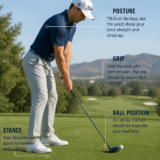
Dustin Johnson’s approach to golf instruction centers around the principle of empowerment through understanding the fundamentals. One of the most critical aspects of his teaching is the focus on the swing mechanics that enable powerful drives. To start, Johnson emphasizes proper setup, where the ball position is key. For a powerful drive, the ball should be positioned at mid-to-inner heel for most players, which allows for the natural weight transfer and extension through the shot.This position maximizes the use of the lower body for power generation, a critical aspect that Johnson frequently enough highlights.
When it comes to the actual swing, Johnson encourages a full and aggressive motion that engages the entire body, not just the arms and hands. He stresses the importance of maintaining a strong grip with palms facing each other and the hands gripping the club at a moderate width apart. This setup allows for better control over the clubface and swing path during impact. Beginners and intermediate players can benefit from practicing with a mirror to check their stance and grip alignment, ensuring they align their body and clubface correctly for optimal ball flight.
Common mistakes Johnson addresses include grip issues, such as holding the club too tightly or misaligning palms, which can inhibit fluid swing motion and increase tension. To correct this, he suggests a series of grip strength exercises and visualizations where players mentally reinforce the proper grip without ever swinging. Another area of focus is the follow-through, which many players neglect but Johnson considers vital for maintaining balance and generating follow-through power. The ideal finish sees the hips square to the target line, the club shaft behind the headand the body weight shifted to the front foot.
Dustin Johnson’s approach to game enhancement doesn’t stop at the driving range; it seamlessly extends onto the course. One of his key strategies involves adapting to course conditions. For example, in windy conditions, he instructs players to aim downwind slightly to allow for natural curve correction. This strategy, coupled with understanding how to adjust club selection based on the wind’s direction and strength, can make a important difference in scores. His instruction also highlights the importance of mental planning, encouraging players to visualize successful shots in different scenarios before taking their stance. By integrating these elements of mental fortitude with technical skills,golfers can better manage pressure situations and improve consistency on the course.
Maximize Distance With The Pro’s Consistent Pre-Shot Routine
Before ever hitting the ball, a pro’s pre-shot routine can be the key to maximizing distance and consistency. Golfers often underestimate the importance of this preparatory phase,but it sets the tone for a successful shot. Dustin Johnson, with his smooth and powerful swing, often attributes his long drives to his pre-shot focus and routine. Begin by taking a moment to assess the green and imagine the ball’s flight path and landing spot. This mental rehearsal primes the brain for execution, helping you to align your body and stance for optimal ball striking.
Once you’ve visualized the shot, set up with your feet shoulder-width apart and aimed at your target.Ensure your weight is evenly distributed between the balls of your feet and your heels, not too far forward or backward. Your grip should feel agreeable, not too tight or loose, allowing for natural club movement. As you hold the club,make sure your grip pressure is firm enough to maintain control,yet relaxed enough to allow the arms and hands to move freely. This setup is crucial for generating the necessary swing mechanics that create power and distance.
Before swinging, take a deep breath to calm your mind and body. A focused, centered mindset can prevent flinching or tensing up, both of which can detract from a smooth, fluid swing. As you begin your swing, pay close attention to your spine angle, keeping your back straight to maintain balance and power from your lower body. This is where many amateurs falter; they often try to generate power from their arms alone, which leads to loss of distance and control. Instead, hinge at the hips first, using your legs to start the downswing and your core to rotate efficiently. This sequence is what professionals like Dustin Johnson use to create the explosive power in their drives.
To further enhance your pre-shot routine, incorporating small adjustments can be highly beneficial. Use alignment sticks or a club on the ground to ensure your feet and shoulders are square to the line of play.This alignment helps direct the ball’s trajectory properly, ensuring it stays straight or curves as intended. Practice these small tweaks regularly on the driving range or at home. As an example,set up a marker on the grass,take your stance,and check your alignment before each shot. This drill will help build muscle memory for consistent performance during actual play. Remember, mastering the nuances of your pre-shot routine can transform how you approach each tee shot, leading to bigger drives and lower scores.
Crafting The Perfect Backswing For Unmatched Power And Precision
Mastering the backswing is like finding the right key to unlock your potential on the golf course. The key here is rotation, the core mover of your swing. Take a cue from pros like Dustin Johnson, who exemplify this concept with their powerful backswings. The essence of a successful backswing is in the loading phase, where your hands lift the club and the body rotates, coiling up like a spring. Beginners often struggle with keeping their swing in line with their posture, but a simple helicopter drill can provide clarity. Picture your arms as helicopter blades. Keep them level with your shoulders as you rotate, turning away from the target.This drill helps reinforce staying low and maintaining posture, two critical aspects that prevent the common mistake of lifting the upper body.
Rotation is not just about the shoulder; it involves a full body turning motion that includes the hips and, believe it or not, the feet as well. Think of your feet as the base of your spring mechanism - they pivot, not lift. This footwork ensures that your body remains balanced and connected throughout the swing.Advanced golfers may find that they already know these fundamentals, but they might need help in understanding how to fine-tune their rotation for added distance without compromising accuracy. An effective exercise involves marking a circle on the ground and practicing rotations within it. This helps in maintaining balance and staying centered, which is crucial for generating speed and power without losing control over the golf ball.
Now, let’s talk about how this impacts your overall golf game. Once you’ve mastered the backswing rotation, it’s time to transition that newfound power into the downswing. Proper rotation also aids in the forward swing, allowing you to hit the ball accurately with more force. A common challenge for golfers at all levels is the tendency to let the lead arm straighten too early in the downswing, robbing the swing of its full potential. By focusing on the coiled spring image, you can better understand how to harness the stored energy and release it smoothly at impact. Imagine you’re squeezing a stress ball stored deep in your backswing; now, let that ball expand as you swing through - this is how you use the energy stored in your body rotations.
The transition from the backswing to the downswing is a critical moment, frequently enough referred to as the change of direction. This is when the tension you’ve built up in your body begins to be released, transferring from the rear to the front. To practice this, one method is to visualize hitting a ball buried under the lip of a bunker. As the ball would be low, the player must focus on getting under the ball and driving through it, keeping the arms connected and the body tight to promote the best possible transfer of energy. This visualization can enhance your concentration and help you feel the proper sequence of movement.Remember, the goal is not just to hit it far, but to hit it straight, solid, and consistently well.By mastering the backswing and its rotation elements, you equip yourself with the tools to perform these precise strikes with confidence.
Unlocking The Mystery Of His Seamless Transition And Follow-Through
Dustin Johnson’s swing is renowned for its fluidity and power. One of the key components that sets Johnson apart from other players is his seamless transition and follow-through. This aspect of the golf swing is crucial for generating speed and consistency, which in turn contributes considerably to lower scores. The transition phase of the golf swing marks the end of the backswing and the movement toward the target. A tight, compact transition ensures that the power generated in the backswing is efficiently transferred to the downswing and the ball.
Avoiding common pitfalls such as excessive hip rotation or shoulder movement out of sync with the hands is essential for maintaining balance and stability. These movements can cause a loss of power and accuracy. Beginners should focus on developing a stable lower body that allows for a smooth transition. One effective way to improve your transition is by practicing the swing without the club, focusing on your body’s movement.Start by simply initiating the downswing with a slight hip turn,followed by the shoulders and then the arms and club. This sequence helps build a strong foundation for a seamless transition.
For intermediate and advanced players, it’s important to work on the speed and timing of the transition. This can be achieved through a series of drills designed to enhance both your balance and coordination.One drill that can be notably helpful is to place two tees three to four inches apart in the grass, just below your feet at address. As you swing, work on crossing over the top of the tees as you start the downswing. This drill forces you to keep your transition compact, reinforcing the proper muscle memory for a consistent, powerful swing. Remember, it’s all about timing and balance rather than force and brute strength.
Connecting the transition and follow-through to overall golf improvement involves making adjustments based on the course and weather conditions. On windy days, a smoother transition can prevent shots from being blown off-line, ensuring your ball lands closer to intended targets. Conversely, on firm and fast conditions, a more aggressive transition might be needed to optimize roll and distance. The key is to be adaptable but consistent with your transition, allowing you to maintain form under varying conditions. Practicing these techniques consistently will not only improve your swing mechanics but also enhance your adaptability, which is crucial for success on the golf course.