Unlock the Magic of Phil Mickelson’s Putting Technique and Read the Green Like a Pro
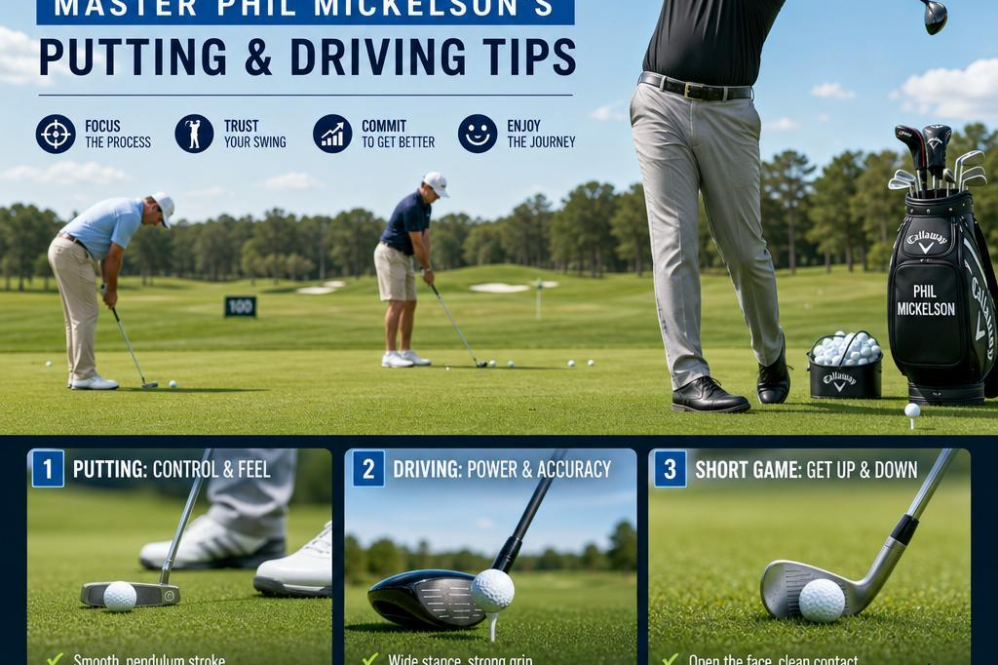
Mastering Phil Mickelson’s putting technique begins with a fundamental setup emphasizing stability and alignment.Phil consistently positions his feet shoulder-width apart with a slight knee flex to promote balance, while aligning his shoulders and eyes directly over the target line. This setup is crucial for reading greens accurately and delivering a smooth stroke. His grip, often a variation of the reverse overlap, allows for precise control and feel, especially on delicate lag putts. When addressing the ball, focus on maintaining a pendulum-like motion by minimizing wrist action-this enhances consistency and distance control. Mickelson advocates for an inside-square-inside path with the putter head, ensuring the face remains square through impact to prevent common mishits like pushed or pulled putts. Practicing with a chalk line or putting alignment aids can help replicate this stroke pattern, making measurable improvements in both accuracy and speed control. Additionally, Mickelson teaches golfers to consciously adjust their backswing length relative to the break and distance, promoting a reliable setup-to-impact connection that translates well across different greens and course conditions.
Reading the green like Phil involves more than just visual assessment-it requires a strategic combination of slope analysis, grain observationand environmental awareness. Mickelson approaches this by walking around the hole to view breaks from multiple angles, calculating the severity and direction of the slope before selecting the target line. Understanding that subtle elevation changes can influence ball roll by several degrees is key when aiming putts over 10 feet. He also emphasizes paying attention to the grass grain; putts hit against the grain slow the ball,whereas with-the-grain strikes speed it up,affecting how you judge speed and break.To develop this skill, golfers should incorporate drills such as “green reading walks” and “speed variation drills,” where they practice gauging distance and slope under different conditions, making note of how the ball reacts. For golfers struggling with nerves on the green, Mickelson’s technique includes a simple pre-putt routine-visualize the ball’s path and take intentional deep breaths to cultivate mental calmness. This mental resilience complements the technical execution,allowing players to commit fully to the stroke and capitalize on scoring opportunities during competitive rounds.
Discover Driving Secrets That Give You Distance and Control with Phil’s Proven Approach
Achieving greater distance and control off the tee begins with mastering the fundamentals of setup and swing mechanics that phil Mickelson champions. Start by positioning the golf ball just inside your left heel (for right-handed golfers), which helps promote a sweeping, upward strike essential for maximizing launch angle and minimizing spin. Emulate phil’s emphasis on a balanced, athletic stance-feet shoulder-width apart with a slight knee flex-to provide stability throughout the swing. As you initiate the takeaway, maintain a wide arc by fully extending your lead arm, allowing the clubhead to move behind you rather than lifting it excessively. this creates a powerful lever system that stores energy to be released through impact. Phil often stresses the importance of a smooth tempo rather than a fast backswing; this encourages consistent sequencing and clubhead speed. Incorporate drills such as the “slow-motion swing,” where you gradually increase swing speed while retaining control and balance, to ingrain muscle memory. Aim for a swing path slightly inside-out to reduce slices and promote a controlled draw shot, enhancing both distance and directional accuracy. Pay special attention to wrist hinge and release timing, as premature unhinging can rob speed and cause mis-hits.
Phil’s course strategy integrates technical mastery with situational awareness, which is crucial for optimizing driving performance under varying conditions. Such as, on tight fairways or windy days, he advocates adjusting your setup to a more neutral stance and positioning the ball slightly back to lower your launch and increase roll-out, reducing risk without losing significant distance. When aiming down longer par-4s or reachable par-5s, he encourages focusing on controlled aggression-prioritizing accuracy over raw power to set up favorable approach shots. use this strategic mindset by visualizing your target line and pre-selecting a specific landing area rather than just aiming down the center of the fairway. Practice drills like the “fairway finder,” where you target progressively smaller landing zones during practice rounds, can build confidence and sharpen shot-shaping skills. Additionally, consider shaft flex and driver loft adjustments to match your swing speed and course demands-Phil often tests equipment changes to fine-tune launch conditions and ball flight. By combining these biomechanical insights and on-course tactics, golfers at all levels can emulate Phil’s ability to drive with both distance and precision, ultimately lowering scores and enhancing enjoyment of the game.
Master the Art of Swing Tempo and Rhythm to Elevate your Game Consistently
Developing a consistent swing tempo and rhythm is foundational to producing reliable ball striking and improving overall scoring. Begin by focusing on the relationship between backswing and downswing timing, aiming for a smooth ratio of approximately 3:1, where the backswing takes roughly three times provided that the downswing. This balance promotes fluidity and reduces tension,essential for controlling clubhead speed and maintaining accuracy.To cultivate this,utilize drills such as swinging with a metronome set at 60-72 beats per minute,aligning your takeaway,transition,and follow-through to the tempo pulse. Phil Mickelson emphasizes feeling the transition from backswing to downswing as a key rhythm checkpoint,advising players to avoid rushing the downswing to prevent casting or early release errors. Incorporate video analysis to observe how your clubhead and body move in unison, focusing on maintaining a steady tempo through the impact zone, which can be further enhanced with weighted clubs or tempo-specific training aids.
Beyond mechanics, integrating swing tempo mastery into course strategy transforms how you navigate varied playing conditions. Understanding when to temper your rhythm, such as on wet turf or firm fairways, allows for adaptive shotmaking that minimizes risk and optimizes distance control. For example, on nerve-wracking par 5 approach shots, steadying your tempo enables precise distance judgment and cleaner contact, crucial for setting up manageable birdie putts. Drills designed to regulate tempo include practice swings with pauses at the top to develop patience,and deliberately slower starts to the downswing to promote sequencing from the lower body. beginners can focus on matching their breathing patterns to their swing cadence, while advanced players may experiment with micro-adjustments in tempo to chip away at shot dispersion. consistent tempo training improves mental resilience by embedding a reliable rhythm under pressure, fostering confidence in swing execution that transcends varying golf environments and enhances the integration of your short game, puttingand driving for holistic performance enhancement.
Bring It All Together: Practical Drills to Embed Phil Mickelson’s Tips into Your Practice Routine
To effectively integrate Phil Mickelson’s short game mastery into your practice routine, begin by focusing on setup fundamentals that promote consistency and control.Emulate Mickelson’s trademark open stance and clubface alignment for chips and pitches by positioning the ball slightly back in your stance, with your weight favoring the front foot-usually around a 60/40 distribution. This encourages a downward strike and engages the leading edge of the club, leading to cleaner contact and predictable ball flight.Incorporate drills such as the Gate Drill, where two tees frame the sweet spot of your wedge to help you develop precise swing path and reduce fat or thin shots. Additionally, practice varied trajectory and distance control by altering the length of your backswing with a focus on keeping your wrists firm and hinge timing consistent, mirroring Mickelson’s fluid but controlled short swing. By gradually progressing from 5-yard chips to 30-yard pitches, you’ll cultivate versatility crucial for navigating different course conditions and lie types, deepening your feel and touch around the greens.
Beyond swing mechanics, course management and mental resilience are pivotal pillars of Mickelson’s instruction that can transform practice into performance. Employ simulated pressure drills such as the Two-Ball Drill, where you place two balls on the green at varying distances and practice holing out both consecutively, reinforcing focus and routine under stress. This approach develops confidence that translates directly to real competition. Additionally, integrate visualization techniques into your routines-prior to each shot, take a moment to picture the ideal trajectory, spinand landing zone, a strategy Mickelson often credits for controlling anxiety and maintaining composure. When working on full swings, use alignment sticks to ensure your clubface and body lines are parallel to the target, while practicing with different ball positions to adjust trajectory and shot shape as conditions demand. This hands-on course strategy empowers you to adapt to wind, slopeand hazards effectively, ultimately improving your decision-making and lowering scores. By combining mechanical precision with mental fortitude and bright practice design, you embrace the essence of Mickelson’s teaching-holistic improvement that elevates your entire game.