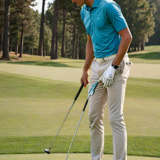
Choosing the Right Ball Can Revolutionize Your Game
Golf equipment plays a crucial role in your performance, and one often overlooked aspect is the selection of your golf ball. The right ball can enhance your swing mechanics, improve your short game accuracy, and optimize your overall score. When choosing a golf ball, consider your swing speed, the desired level of control, and the distance you aim to achieve. Beginners and higher handicappers might benefit from softer balls that offer more spin for better control around the greens, while players with faster swing speeds can take advantage of harder balls designed to maximize distance off the tee.
Swing Mechanics and Ball Choice: The golf ball’s construction influences how it responds to your clubface and the conditions of your swing. Players with a slightly open or closed stance can adjust their ball choice to mitigate off-center hits and improve overall consistency. For instance, if you struggle with slicing, a ball with less spin can help reduce the severity of your slice. Experiment with different types of balls, focusing on how they feel during your backswing and through the impact. Pay attention to the sound and feel at impact; a ball that feels right at that moment can provide valuable feedback about the quality of your strike.
the ball’s performance around the greens should align with your skill level and playing conditions. For beginners, a ball that offers maximum spin and control can help you fine-tune your chips and pitch shots. Practice with these balls on various green speeds and slopes to understand how they react in different scenarios. More experienced golfers might use balls with less spin for a flatter roll and better control over the distance. Incorporating balls of varying spin characteristics into your practice routine can help you adapt your short game to course-specific challenges.
Course Strategy and Adjustments: On the course, your ball choice can also influence your approach to various lies, hazards, and wind conditions. If you often find yourself in tough lies around the greens, softer balls can help you generate lift and spin to navigate these situations more effectively. Conversely, when playing in windy conditions, consider using a ball that offers more stability and less spin to maintain accuracy. Adjust your ball selection according to the prevailing weather and course setup challenges to stay ahead of the competition.
In summary, selecting the right golf ball is more than just picking a brand; it’s about optimizing your game based on your skills, equipment, and playing conditions. Engage in regular testing and experimentation to find the balls that enhance your performance in both practice and tournament settings. As you gain experience and understanding of your game, your choice of ball will become a more deliberate and informed process, contributing to consistent and measurable improvements in your scores.
Discover How Ball Selection Affects Your Swing and Performance
Ball selection might seem like a small detail in the grand scheme of your golf game, but it can have a significant impact on your swing mechanics, consistency, and overall performance on the course. The right ball choice can complement your swing speed and trajectory, which can lead to more accurate and reliable shots. For instance, golfers with high swing speeds might benefit from lower spin balls that provide more distance, while those with moderate swing speeds might prefer high spin balls for better control and feel.
When selecting a golf ball, consider your swing characteristics and the conditions you face on the golf course. High-compression balls are designed for players with faster swing speeds and can offer less spin, which means longer but straighter drives. Conversely, low-compression balls are ideal for those with slower swings, maximizing distance and control. Understanding the unique features of different ball types can help you tailor your equipment to match your personal strengths and weaknesses.
Another crucial aspect of ball selection is how the ball feels in your hands. Golfers often underestimate the importance of the physical interaction between them and the golf ball. Experiment with various brands and models to find the one that resonates with you. The feel of the golf ball plays a critical role in your grip, tempo, and overall confidence. For example, some golf balls are designed with soft covers that provide a softer feel, perfect for putting and approach shots, while others are made with a firmer cover that enhances driving distance. Choose a ball that feels right and offers a sense of comfort during your swing.
To integrate ball selection into your practice routine, start by testing out different ball brands and models on the driving range. Observe how each ball reacts when you take swings and how it feels when you hit the ball.
- Start with 10-20 practice shots with your current ball
- Then, switch to a similar ball with a different compression or cover technology
- Play around with your driver and irons, paying close attention to distance and accuracy
Pay attention to your ball’s behavior at impact and how it travels in the air and on the ground. These practical drills will help you understand which ball suits your swing style and conditions better.
Ultimately, the goal of ball selection is to enhance your consistency and lower your scores. By understanding the technical nuances of different golf balls and experimenting with them during practice, you can find the right match that will elevate your performance on the course. Remember, the relationship between your swing and the golf ball is unique to you, so it’s essential to keep searching until you find the right fit. Once you’ve found your ideal golf ball, stick with it and let it become an extension of your unique swing.
Tailoring Your Equipment: Finding the Perfect Ball for Your Swing
Choosing the right golf ball can significantly enhance your performance on the course. It’s not just about picking based on brand popularity but understanding how the ball’s characteristics interact with your swing. For instance, a ball with a softer core might suit players who need to generate more spin for better control around the greens, while a firmer core could offer more distance for players with a powerful swing.
To start your journey in finding the perfect ball, begin by assessing your current game. Do you struggle with hitting consistent drives? Are you better with short irons or putts? Focus on your strengths and weaknesses. If you have a mid-handicap and frequently miss greens in regulation, a ball with a softer cover might improve your touch around the green, helping you recover better from tough lies. Conversely, if distance is your primary concern, exploring a range of distance-centric models could be beneficial.
A good starting point is to test a few different ball types during your practice rounds. Pay attention to how the ball reacts once it leaves your clubface and rolls on the fairway. Notice any changes in feel and sound. Do you hear a thud or a satisfying click at impact? Is the ball’s flight consistent or does it vary based on your swing’s dynamics? These observations will guide you towards a ball that feels natural in your hands and performs well under your unique swing conditions.
Once you’ve narrowed down your choices, take your testing to the course. Observe differences in ball speed and trajectory. For example, if you have a consistent 8-iron shot that typically flies 160 yards, check if a different type of ball adds or reduces distance. evaluate your short game performance with each ball type. How do you handle uphill or downhill putts? Do you lose more shots due to excessive distance or inaccurate landings with certain models?
Ultimately, trust your instincts and data from on-course play. Refine your selection based on feedback from your rounds and practice sessions. Consider keeping a simple scorecard or notebook to track how each ball type affects your game. Over time, you’ll develop a clearer sense of which ball features align best with your game’s needs. Remember, the perfect ball is one that works seamlessly with your unique swing and skill set, ultimately making your rounds more enjoyable and rewarding.