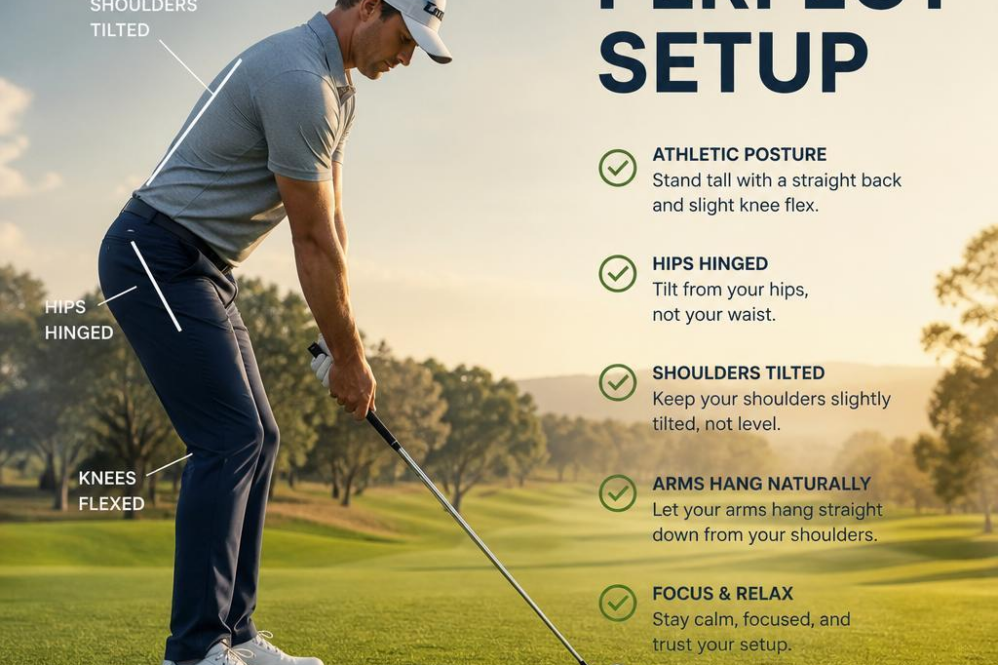
A Vijay Singh golf lesson is less about copying every position in his swing than borrowing the qualities that made his game so reliable: patience, balance, purposeful practice, and smart decisions. His motion has always looked powerful without appearing rushed. That is a useful model for golfers of any level. start by building a swing you can repeat, then carry the same calm rhythm to your putting and course management.
Build a repeatable swing
Begin with a smooth takeaway. Let your hands,arms,and torso move away together instead of flicking the club back with your wrists. With a driver, play the ball just inside your lead heel, stand a little wider than shoulder widthand allow a slight tilt away from the target. Your grip should be firm enough to control the club,but not so tight that your forearms tense up.
For irons, move the ball closer to the middle of your stance and narrow your base slightly.Let your hands sit just ahead of the ball at address. The first part of the backswing matters more than many players realize. Keep it wide and unhurried for the first foot or so, then make a comfortable shoulder turn while pressure moves into the inside of your trail foot. You want to turn, not drift away from the ball.
From the top, resist the urge to throw the clubhead at the ball.Start down by shifting pressure toward your lead foot and allowing the arms to fall into place. With irons,the goal is ball first,then turf. A shallow divot beginning just ahead of the ball is usually a good sign. With the driver, the strike should feel more sweeping, with the club traveling level to slightly upward through impact.
If you tend to slice,check your alignment before changing your swing. For a right-handed golfer, your feet, hipsand shoulders should be parallel to the target line, not aimed directly at the target. Then make controlled half-swings and focus on returning the clubface without leaving it open. If you hook the ball, your grip may be too strong or your body may be stopping through impact. Try softening the grip slightly and keep turning until your chest faces the target.
think rhythm before force. On a tight driving hole, that might mean choosing a fairway wood or hybrid instead of trying to force a driver into a narrow landing area. The best swing for the hole is often the one that leaves you in play.
Find your own tempo
One of the most useful things to take from watching Singh is his sense of pace. You do not need to match his tempo. You need a tempo that lets you strike the ball solidly and finish in balance.
Try making a few practice swings with a simple count: “one-two-three” going back, then a smooth “one” through the ball. Do not obsess over making the count exact. It is simply a way to keep the backswing under control and prevent a rushed transition. Many poor shots come from trying to hit from the top before the body has started moving toward the target.
A 7-iron is a good club for this drill. Make waist-high swings at first, then hold your finish for three seconds. If you cannot stay balanced, the swing was probably too hard or too fast. Better players can film a face-on view to check for excessive head movement or a trail foot that stays stuck to the ground too long after impact.
Practice at something closer to 60 or 70 percent effort for a while. pick a fairway-width target and note how often the ball finishes in a playable area.Hold every finish until the ball lands. It is simple feedback: a balanced finish usually means you gave yourself a better chance to deliver the club consistently.
Take that same pace onto the course. On a narrow par 4, choose the club that leaves a comfortable approach rather than automatically reaching for driver. Into a headwind, take more club and make your normal swing rather of trying to overpower the wind. Trying to swing harder often adds spin, hurts contactand sends the ball farther off line.
This idea applies around the green as well. For a basic low chip, place the ball slightly back of center, favor your lead footand let your chest and arms move together. Avoid a quick jab at the ball. the stroke should feel like a small version of your full swing: compact, connected, and balanced.
Make putting simpler
Good putting starts before the putter moves. Read the putt from behind the ball, choose a starting line, make one or two rehearsal strokes while looking at the hole, then step in and trust what you saw. Too many golfers keep reading and rereading until they create doubt.
Set the putterface behind the ball before placing your feet. Your eyes should be roughly over the ball line or just inside it, with the ball slightly forward of center. Keep your lower body quiet and let your shoulders rock the putter back and through. Active wrists can make it difficult to control both face angle and speed.
A useful practice drill for short putts is to place two tees 12 to 18 inches in front of the ball, just wide enough for the ball to pass through. Roll putts from three to six feet and focus on starting them through the gate. That tells you more about your stroke than weather a single putt happens to fall.
For distance control,spend time on longer putts too. Roll several from around 20 feet and try to leave them within a comfortable tap-in range rather than trying to make every one. On a fast downhill putt, especially on a sloping green, a safe first putt that stays near the hole is often the right result. On an uphill putt, you can be a little more positive, but avoid treating “past the hole” as a fixed rule. Green speed and slope matter.
A Vijay Singh golf lesson on putting should also include commitment. Do your reading before you address the ball. Once you are over it, make a relaxed stroke and accept the result. A steady routine is more valuable than searching for a perfect stroke on every putt.
Play the hole in front of you
Good golf is not just about swing mechanics. Before every tee shot, identify the widest part of the fairway, the trouble that brings the biggest penaltyand the side of the fairway that gives you the best angle into the green. Play to your own pattern, not to the club your playing partner pulls from the bag.
If driver brings water, out-of-bounds, or a deep bunker into play, a 3-wood, hybrid, or long iron may be the better choice. A longer approach from the fairway is usually easier than a short approach from trees, roughor sand. Keep track of which clubs produce your most playable misses. Distance is useful, but position matters more when the hole is demanding.
On approach shots, give yourself room for the front edge of the green, windand firm ground. A tucked flag is not always an invitation to attack.If a front bunker guards the pin or the green is firm, aiming toward the center with an extra club and a controlled swing may leave a far easier next shot.
Around the green, choose the simplest shot your lie allows. From a clean lie with plenty of green between you and the hole, a low chip with a 9-iron or pitching wedge is often safer than trying to hit a high, soft lob. if you are in rough or need to carry a bunker, open the clubface as needed and keep your chest rotating through the strike so the club does not dig.
That is the practical value of this approach: fewer forced shots, more balanced swingsand more chances to make routine pars. Practice with a purpose, choose targets that suit your gameand let your tempo hold up when the round gets tense. Over time, those habits can do more for your score than chasing one perfect swing thought.