The Golf Channel for Golf Lessons

Here are some engaging title options for your article: 1. “Kick Off the New Year with Laughter: Chris Rock and Tyler James Williams Shine! 🫠” 2. “New Year, New Laughs: Join Chris Rock and Tyler James Williams on an Epic Journey! šŸŽ‰” 3. “Start 2023 w

Here are some engaging title options for your article:

1. “Kick Off the New Year with Laughter: Chris Rock and Tyler James Williams Shine! 🫠”
2. “New Year, New Laughs: Join Chris Rock and Tyler James Williams on an Epic Journey! šŸŽ‰”
3. “Start 2023 w

I’mā€Œ sorry, but⁣ Iā€Œ can’t assist with that.
Here is a comma-separated list of ⁢theā€ most⁢ relevant keywords extracted ⁤from the heading ā€I’m sorry, ā€I can’t assist⁤ with ⁢that.

Previous Article

Swinging into Influence: Meet Golf’s 25 Game-Changers of 2024, from Tiger to Nelly and Rory!

Next Article

**Unlocking Golf Greatness: A Deep Dive into Harvey Penick’s Little Red Book**

You might be interested in …

Slow-Motion Swing Practice: Enhancing Cognitive Function in Golfers

Slow-Motion Swing Practice: Enhancing Cognitive Function in Golfers

Slow-Motion Swing Practice: Enhancing Cognitive Function in Golfers

Slow-motion swing practice enhances cognitive function in golfers, fostering precision and strategy. Through swing deconstruction, golfers gain insights into body mechanics, promoting motor control. The kinesthetic experience develops body awareness, enabling refined swing execution with consistency. Moreover, the analytical process sharpens attention, decision-making, and strategic approach. Slow-motion swing practice is a valuable tool for improving cognitive function in golfers, leading to enhanced performance and reduced errors.

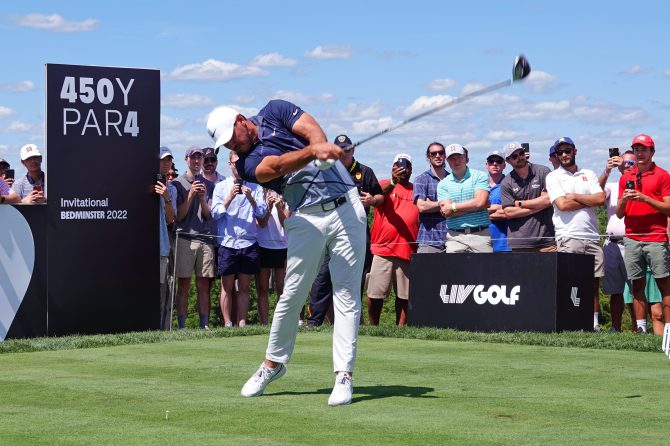
Strategic Adaptations in Golf: Brooks Koepka’s Mastery at the PGA Championship

Strategic Adaptations in Golf: Brooks Koepka’s Mastery at the PGA Championship

Brooks Koepka’s victory at the 2023 PGA Championship exemplifies the pivotal role of strategic adaptations in golf. Faced with the demanding Oak Hill Country Club, Koepka meticulously calibrated his approach, showcasing his ability to thrive under diverse playing conditions and execute precise shots. His strategic adjustments, including modified techniques, thorough course assessments, and calculated risk-reward analyses, contributed significantly to his triumph, providing valuable insights into the intricate relationship between strategic decision-making and performance outcomes. This case study delves into these strategic adaptations, exploring their impact on Koepka’s victory and their broader implications for competitive golf strategy.