
Discover How Jim Barnes Transforms Your Golf Swing Into a Powerful Weapon
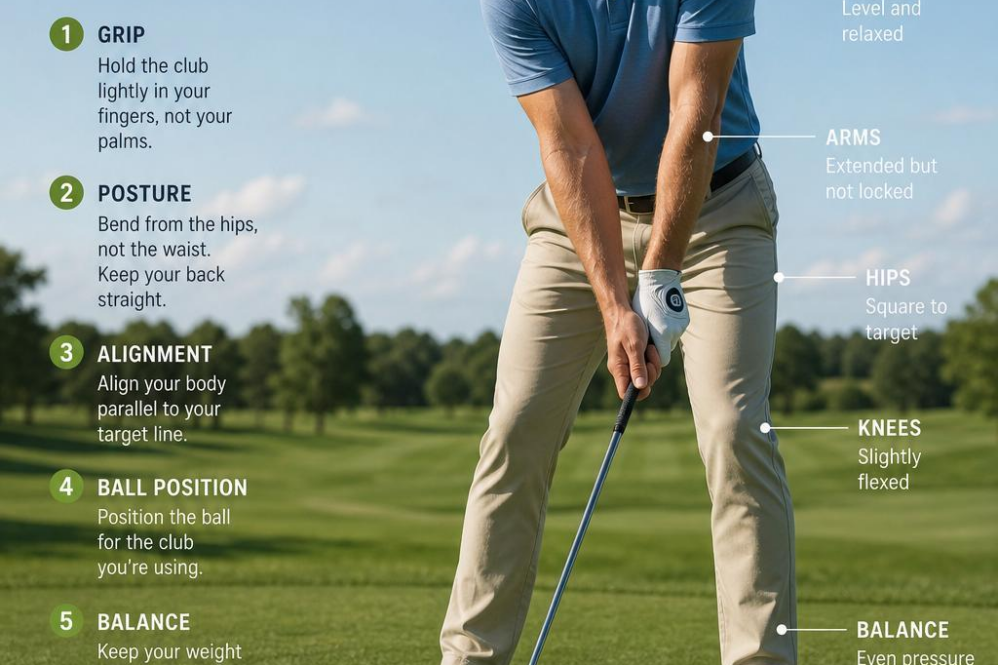
To build a swing that delivers consistent power and precision, Jim Barnes emphasizes mastering the basic setup and swing mechanics before advancing to course strategy. At address, maintaining a neutral grip with the “V” shapes pointing between the chin and right shoulder sets the stage for efficient clubface control throughout the swing. Beginners should focus on achieving a balanced stance roughly shoulder-width apart with knees slightly flexed and weight evenly distributed, promoting athletic stability and enabling a full turn. As you initiate the backswing, Barnes teaches the importance of a smooth takeaway while maintaining the triangle formed by your arms and shoulders, which helps create a consistent swing plane. A hallmark of his instruction is the cue to complete a full shoulder turn of approximately 90 degrees while keeping the lower body controlled, which generates torque and stores power without sacrificing balance. Practicing with alignment rods or mirror feedback can reinforce these essentials. For your downswing, focus on initiating the motion with the lower body by shifting your weight to the front foot and using a 45-degree hip rotation, which leads the upper body and club through impact. Barnes’ drills such as the “step-through drill” promote sequencing and timing, crucial for developing a swing that not only hits far but also enables directional control, a vital skill to apply on varying course layouts and weather conditions.
Beyond full swing mechanics, Barnes integrates course management and short game strategies to turn your golf swing into a powerful weapon that adapts to real play scenarios. As a notable example, understanding when to employ a controlled punch shot by adjusting ball position slightly back of center in your stance and maintaining a shorter follow-through can definitely help you navigate low-hanging branches or windy conditions without losing distance. Within 100 yards, his instruction highlights the significance of mastering chipping and pitching, focusing on using the bounce of the wedge to glide smoothly through turf and produce consistent contact. A recommended drill involves placing towels just in front of the leading edge during practice to prevent digging and encourage proper attack angle, typically around 4 to 6 degrees negative angle of attack. Barnes also stresses reading green slopes accurately and planning chip trajectories accordingly, emphasizing that mental planning and decisiveness are as critical as stroke mechanics in lowering scores. By blending these tactical insights with sound setup and swing fundamentals, golfers at all levels can develop confidence in shot selection, manage risk effectively, and ultimately produce repeatable, high-quality strikes that enhance scoring opportunities and resilience through the round.
The Putting Techniques Jim Barnes swears By for Consistent Green Success
Mastering putting requires a blend of precise mechanics and keen green reading, and Jim Barnes emphasizes the importance of establishing a fundamentally sound setup as the foundation for consistency. He advocates starting with a neutral stance aligned parallel to the target line, positioning the ball slightly forward of center in your stance to encourage a smooth, pendulum-like stroke. Barnes stresses that the eyes should be directly over or just inside the ball to improve depth perception and ensure accurate reading of the putt’s break.To enhance feel, he recommends a relaxed grip pressure-about a 4 out of 10 on the tension scale-which helps maintain stroke fluidity and prevent jerky wrists action. Incorporating a subtle forward press with the lead hand can promote a steady, downward strike that reduces skidding and promotes early roll. Importantly, Barnes teaches players to rehearse a consistent backswing length relative to the putt’s distance, transforming this into a reliable “yardage gauge” that improves pace control across varying green speeds and slopes.
Beyond setup and stroke mechanics, Barnes highlights strategic green reading as a vital component for lowering scores, notably in tournament or competitive play. He encourages golfers to train themselves to identify subtle contours, grain direction, and elevation changes from multiple vantage points-both behind the ball and at the hole-to predict the break and speed before committing to a stroke. To practice this skill, Barnes suggests drills such as putting from different distances around a cup with a deviation target, focusing on consistent speed control regardless of the break’s severity. He stresses that understanding how wind, grass type, and moisture affect ball roll is crucial for making informed adjustments during play. Additionally,Barnes imparts the value of maintaining composure and visualization techniques to create confidence over every putt,reminding players that mental focus complements mechanical precision. By integrating these targeted drills and strategic insights, golfers from beginners to low handicappers can develop a repeatable putting routine that consistently yields lower scores and stronger trust on the greens.
Drive Like a Pro Jim Barnes’ Approach to Maximizing Distance and Accuracy
Maximizing distance and accuracy begins with mastering the fundamentals of setup and swing mechanics, following the principles championed by Jim Barnes. A solid stance with feet shoulder-width apart, knees slightly flexed, and balanced weight distribution sets the stage for a powerful and controlled drive. Barnes emphasized the importance of a full shoulder turn-ideally reaching a 90-degree rotation-with the lead arm remaining straight to create maximum width in the backswing. This wide arc generates greater clubhead speed,translating to more distance off the tee. Maintaining a consistent swing plane through impact minimizes slices and hooks, helping golfers find fairways more reliably. To build these mechanics, start with drills that promote tempo and sequencing, such as the “pause at the top” drill to ensure a smooth transition and prevent rushing the downswing.Aligning the driver face square to the target line and encouraging a slightly upward angle of attack-about 2 to 4 degrees-can increase launch angle and reduce spin, producing longer, straighter drives suited to varying course conditions like wind or elevation changes.
Course strategy plays a crucial role in how you apply these technical skills under real playing scenarios. Barnes advocated for intelligent tee selection and shot shaping to navigate hazards and position the ball for optimal approach shots. For example, on a tight fairway guarded by bunkers, executing a controlled cut or draw-using grip adjustments and subtle wrist hinge variations-can avoid trouble and place the ball in the preferred hitting zone. When practicing, golfers should incorporate target-based drills such as driving toward marked fairway zones at different distances to develop precision alongside power.Equipment choice also factors heavily; selecting a driver with adjustable loft and shaft flex tailored to your swing speed enables fine-tuning trajectory and control. For beginners, focus on hitting consistent drives rather than maximum distance, building confidence before experimenting with shot shapes. integrating mental rehearsal techniques like visualizing the target line and shot shape before each tee shot enhances focus and reduces pressure, aligning your technical preparation with the strategic demands of the course for tangible score improvement.
Unleashing Your True Potential with Jim Barnes’ Practical Golfing Tips
Building on foundational swing mechanics, Jim Barnes’ practical tips emphasize the crucial role of consistent setup fundamentals to unlock your true potential. Begin with a balanced stance, ensuring your feet are shoulder-width apart and your weight evenly distributed at approximately 50/50. Barnes advocates for a slight knee flex and a relaxed grip pressure, around 4 to 5 on a 10-point scale, to promote fluid wrist hinge and natural clubhead release.Transitioning into the swing, focus on a smooth takeaway while maintaining the clubhead outside your hands, fostering an inside-to-square-to-inside swing path. For improved shot shaping, he encourages golfers to experiment with subtle adjustments in grip rotation and ball position – moving the ball slightly forward in the stance to promote a fade, or back for a draw. Incorporate drills such as slow-motion swings with impact tape on the clubface to visually confirm centered contact and path alignment, which can translate directly to enhanced accuracy and distance control on the course.
Beyond technique, Barnes places equal importance on strategic course management and short game precision, especially under varying weather and terrain conditions. His instructional approach highlights the value of pre-shot routines that include analyzing break angles and green slopes to master green reading. Utilize a step-by-step method: first, identify the highest point of the green; second, visualize the ball’s likely path considering grain and wind; and third, commit to a target spot below the hole to ensure a confident, controlled putt.In practical scenarios, he advises conservative shot selection, such as laying up to avoid hazards or playing to the widest part of the fairway, which aligns with his ideology of minimizing needless risks. Incorporate practice drills like chipping to targets at incremental distances, focusing on achieving consistent landing zones and rollout, as well as experiment with various wedges to learn how bounce angles and loft affect shot trajectory and spin. By integrating these technical and strategic insights, golfers from beginners to low handicappers can sharpen their skill set, optimize decision-making, and systematically reduce scores.


