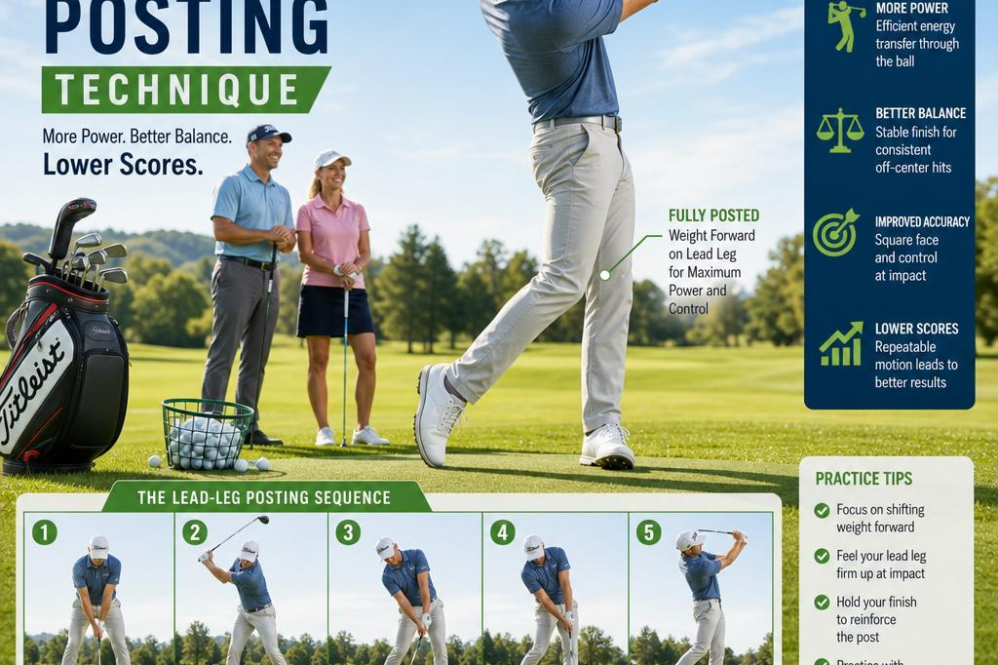
Master the Role of the Lead-Leg in Stabilizing Your Swing
The lead leg plays a pivotal role in stabilizing your golf swing by forming the foundation during the downswing and impact phases. As you transition from the backswing to the downswing, the lead leg should gradually straighten, providing a solid base that resists lateral movement and enables powerful weight transfer. Ideally, the lead knee moves slightly inward (approximately 5-10 degrees) without locking out completely, which promotes stability while maintaining athletic flexibility. To achieve this, focus on maintaining a slight flex in the lead knee during setup, with hips aligned square to the target line and weight evenly distributed between both feet. This setup allows the lead leg to “post” effectively,absorbing ground reaction forces and restricting excessive upper body sway. Without a properly engaged lead leg, golfers often experience balance issues, inconsistent contactand diminished driving distance.
Integrating the lead-leg posting technique into your practice routine can directly improve swing consistency and shot accuracy. Practice drills such as the “lead Leg Wall Drill,” where you stand with your lead side near a wall, encourage minimal lateral head and hip movement by feeling the lead leg grounding firmly against resistance. Another effective method is the “Slow Motion Impact Drill,” emphasizing controlled straightening of the lead leg just prior to impact, which promotes solid compression and optimized launch angles. Track progress by monitoring ball flight patterns and increasing the percentage of clean strikes. For beginners, focusing on simple feel-based cues-such as imagining pushing the lead foot into the ground-helps build awareness without overthinking. Low handicappers can refine this technique by incorporating motion capture feedback or biomechanical analysis, ensuring that the knee trajectory and hip rotation generate ideal torque for maximum distance and control.
On the course, adapting your lead-leg engagement to varying turf conditions, wind directionand shot type is crucial to effective course management. For instance, when playing from firm fairways or tight lies, a stable lead leg reduces unwanted lateral slide, aiding in crisp iron strikes and precise wedge shots. In windy conditions, a strongly posted lead leg increases overall balance, helping resist external forces and maintain swing plane integrity. Additionally, during recovery shots or partial swings around the green, a lightly flexed but grounded lead leg supports delicate touch and finesse in your putting and chipping strokes. By linking this biomechanical insight with mental focus-emphasizing commitment to stability during each shot-you enhance both your technical execution and on-course confidence. Ultimately, mastering lead-leg mechanics connects to improved consistency, smoother sequencing in your swingand measurable improvements in scoring averages.
Unlock Greater Power and Control Through Effective Lead-Leg Posting
Mastering the ability to effectively post the lead leg against the ground during the downswing is fundamental for unlocking greater power and control in your golf swing.This technique serves as a critical pivot point, enabling efficient energy transfer from the lower body through to the club head. When the lead leg – typically the left leg for right-handed golfers – is properly braced, it creates a stable base that naturally resists lateral movement, allowing the hips to rotate freely. To achieve this, aim to have your lead knee slightly flexed at approximately 20 to 30 degrees at impact, while the lead foot remains firmly planted with the heel down. Practicing this setup in slow, controlled swings can definitely help golfers internalize the sensation of a solid lead-leg post.Beginners should focus on drills like making half-swings while exaggerating lead-leg pressure to build awareness, while advanced players can monitor lead-leg stability using video analysis to detect any unwanted collapse or sway that commonly reduces power and shot consistency.
Understanding how to apply lead-leg posting in various course conditions enhances your ability to adapt strategically. Such as, when playing on uneven lies or firm fairways, a firmer lead-leg foundation compensates for instability, maintaining balance and shot precision even when your feet lack perfect footing. Conversely, in soft turf or wet conditions, too rigid a lead leg can impede weight transfer, so a slight increase in knee flexion and dynamic ground interaction is beneficial. Consider these setup checkpoints before each shot:
- Weight distribution: Aim to have about 60-70% of your weight over the lead foot at impact.
- Knee alignment: Ensure the lead knee points slightly inward, resisting lateral drift toward the ball.
- Foot pressure: Maintain heel contact with the ground to maximize ground reaction forces.
This nuanced control not only boosts clubhead speed but also improves directional accuracy, fundamentally enhancing ball striking and distance control irrespective of your handicap.
To integrate effective lead-leg posting into your practice routine, incorporate drills that strengthen both the muscles responsible for stability and the neuromuscular coordination required for timing. Practical exercises such as the “step-through drill” help golfers feel the difference between an anchored versus a sliding lead leg by initiating swings from a narrow stance and stepping into the finish position. Additionally, balance-focused exercises off the course – like single-leg squats or stability ball workouts – support lead-leg endurance and responsiveness throughout the round. Mentally, focusing on a lead-leg “brace point” during your downswing encourages consistent repetition, reducing swing thoughts and improving confidence under pressure. By actively linking this technical skill to your overall game strategy – such as trusting your lead-leg stability on longer approach shots or windy days – you create a solid foundation for more powerful, repeatable swings and ultimately, lower scores.
Common Mistakes in Lead-Leg Posting and How to Correct Them
One of the most frequent errors golfers make with lead-leg posting is applying excessive stiffness too early in the downswing.This often disrupts the natural sequencing of the swing, causing loss of power and rhythm. Instead of locking the lead knee rigidly at impact,aim for a controlled firming,maintaining a slight flex of about 15-20 degrees to allow proper rotation of the hips and torso. Beginners can practice this by performing slow drills where they focus solely on feeling the lead leg’s pressure into the ground without straightening it fully, using a mirror or video feedback to observe leg angle changes through impact. Advanced players should monitor ground reaction forces using a pressure mat if available, ensuring weight shifts smoothly to the lead foot without early tension buildup, which could steal clubhead speed and promote slicing or fat shots.
Another common issue involves improper alignment and balance during lead-leg posting, often seen when players drift their upper bodies over the ball or let their weight move too far forward post-impact. This misalignment causes inconsistent contact and poor directional control. Golfers should practice setting up with their lead knee tracking slightly behind the ball line, with the weight centered over the arch of the foot rather than the toes, promoting stability throughout the swing. Incorporating a setup checkpoint routine helps, including:
- Using alignment sticks to confirm parallel foot and knee positioning
- Performing partial swings focusing on maintaining balanced pressure on the lead foot
- Practicing holding finish positions to build muscle memory for proper lead-leg engagement
An effective on-course strategy is to consciously adjust stance width and lead-leg angle on uneven lies or with sidehill slopes to preserve consistent leg posting and swing plane integrity.
Lastly, many golfers neglect integrating lead-leg posting adjustments into their short game, where subtle leg action influences finesse shots significantly. Poor lead-leg stability can result in deceleration or loss of control during chips and pitches. To refine this, incorporate drills that emphasize lead-leg pressure retention through the strike, with a target of applying at least 60% of body weight to the lead foot by impact. One helpful routine is the “lead-leg hold” drill: execute several chip shots focusing on maintaining firm contact with the ground via the lead leg and avoiding any swing “flip” at contact. This teaches feel for consistent ball-striking and trajectory control,especially when playing delicate shots around the green. For low handicappers and beginners alike, combining these adjustments with course management tactics-such as choosing less lofted clubs and avoiding hazards by reigning in overly aggressive swings-dramatically improves scoring and confidence on approach shots and saves.
Incorporating Lead-Leg Techniques into Your Driving for Longer, Straighter Shots
Developing a solid lead-leg posting technique is essential for generating both power and accuracy off the tee.As you initiate downswing, focus on transferring your weight smoothly onto your lead leg, typically around 70% of your body weight at impact. this shift stabilizes your lower body and creates a firm base to resist the rotational forces of the swing. Begin by setting up with a slightly wider stance to promote balanceand gently flex your lead knee to absorb impact forces without locking it out. Practicing this weight transfer in slow motion during drills helps engrain the muscle memory needed to post efficiently. For beginners, simple step drills-like hitting shots with feet together then gradually widening stance-can reinforce how weight shifts naturally, while advanced players can use video analysis to monitor lead knee flexion angles, ideally aiming for approximately 20-30 degrees at impact for optimal power delivery.
Once weight is securely posted on your lead leg, maintaining this position through impact supports straighter, more controlled drives by minimizing lateral swaying or “early extension.” A common fault is allowing the lead leg to collapse or straighten too quickly, which frequently enough results in inconsistent strike patterns and loss of clubhead speed. Integrate lead-leg stability drills into your practice, such as performing half-swings focusing on holding knee flexion after contactor using resistance bands around the legs to build muscular endurance specific to posting. Additionally, applying this technique in strategic course scenarios-like hitting into a slight uphill lie or against crosswinds-can definitely help you sustain balance and shot shape, crucial for navigating challenging fairway conditions. remember, adaption is key; a firm yet relaxed lead leg reduces tension and encourages a natural release of the clubhead, producing longer, straighter shots that stay on target.
Incorporating the lead-leg technique should be paired with thoughtful equipment choices and consistent setup fundamentals to maximize results.Make sure your driver fitting supports your natural swing path and promotes efficient energy transfer-clubs that are too stiff or heavy can disrupt your ability to post effectively. During setup, check alignment carefully and ensure your hips are slightly open relative to your target line, which facilitates proper rotation around the lead leg during the downswing. Effective practice routines might include alternating between full swings on driving range days and focused impact drills-like hitting into impact tape or foam mats-to feel the precise moment and position where lead-leg posting stabilizes your strike. Integrating this technique into your overall golf strategy isn’t just about power; it’s about confidence,consistency,and ultimately lowering your scores by hitting the fairway more often and setting up easier second shots.