Master the Pressure Chip Drill to Sharpen Your Short Game Precision
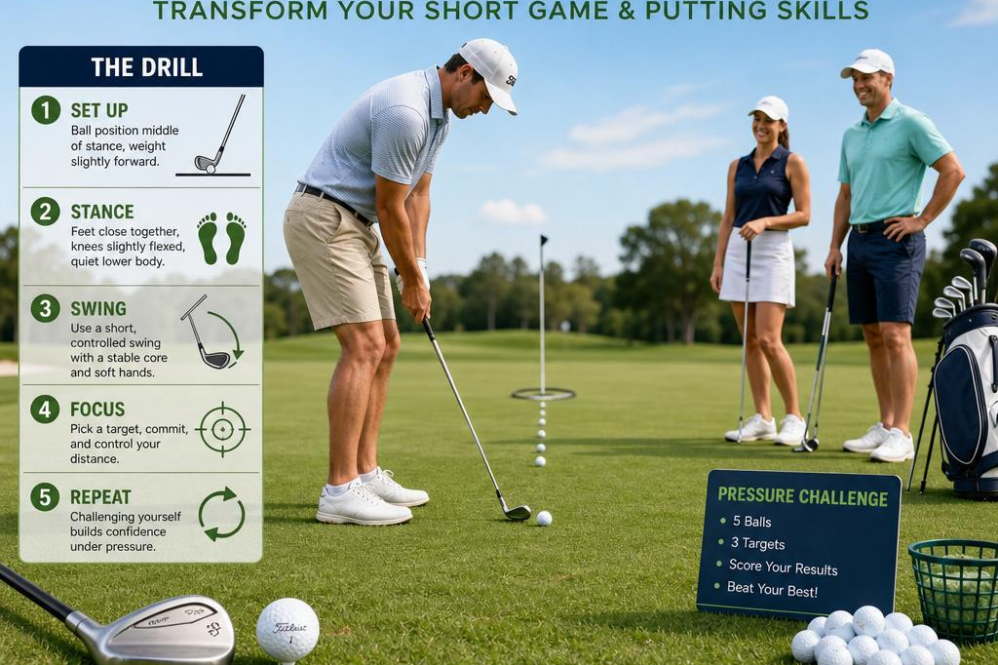
To enhance short game precision, begin by establishing a consistent setup characterized by a narrow stance, feet approximately shoulder-width apartand the ball positioned slightly back of center in your stance.This setup promotes controlled contact and minimizes needless wrist hinge.When executing the chip shot, focus on a pendulum-like stroke using primarily your shoulders, maintaining a firm yet relaxed grip to ensure the clubface remains square through impact. Pay close attention to tempo, aiming for a smooth acceleration without deceleration, which helps create a consistent launch angle between 20-30 degrees. incorporate a series of chips to targets at various distances,emphasizing soft landings within a three-foot radius of the hole to develop touch and control. This biomechanical precision reduces fat and thin shots that commonly result from excessive hand action or improper weight distribution.
Implementing the pressure chip drill on the range or practice green advances both your technical execution and mental resilience.Create scenarios that mimic on-course pressure, such as setting incremental goals where you must chip consecutively inside a pre-measured 5-foot circle around the hole. Use alignment sticks or chalk lines to reinforce your swing path, ensuring it remains slightly inside-out to encourage solid contact with minimal bounce. Progressively vary your lies – including tight fairway grass, light roughand uphill/downhill slopes – to simulate real course conditions, adapting club selection mainly with wedges between 48 and 60 degrees loft depending on distance and desired trajectory. Tracking success rates and stroke counts over multiple sessions offers measurable feedback, reinforcing stroke consistency and confidence under pressure.
To fully capitalize on the pressure chip drill’s benefits,integrate strategic course management practices focusing on risk-reward evaluations around the green. Recognize when an aggressive chip shot is appropriate versus a safer bump-and-run based on green contours, pin placementand wind conditions. For instance, in windy situations, lower trajectory chips with more roll reduce the risk of ball flight affected by gusts. Additionally,tackle common pitfalls by reviewing through video playback or coach feedback to identify tendencies like early wrist release or inconsistent ball position.Advanced players can refine swing nuances by experimenting with grip pressure and stance width, while beginners should emphasize simple mechanics and feel drills. Ultimately, mastering these short game techniques via targeted drills enhances scoring potential and builds the mental edge needed to execute confidently during tournament pressure moments.
Unlock Winning Putting Techniques by Integrating Pressure Chip Practice
Effective integration of the pressure chip practice into your putting routine begins with understanding the biomechanical and psychological demands of short,controlled strokes. To start, focus on maintaining a consistent pendulum motion with your wrists locked and the putter swinging smoothly from the shoulders. This rhythmical action helps eliminate wrist breakdown, which is a common cause of inconsistency in speed control. When incorporating the pressure chip drill, set targets at incremental distances-such as 3, 6and 9 feet-to simulate real-course putting scenarios under added stress. This graduated approach teaches you to dial in both pace and alignment, critical elements in reducing three-putts and improving lag putting accuracy. Regularly practicing this drill encourages muscle memory development, enabling your stroke to stay repeatable even when under tournament pressure.
From a course management outlook, pressure chip practice also helps refine your touch around the greens by emphasizing the importance of trajectory control and landing spot selection. Use a slight forward press with your hands to ensure the putter face remains square at impact, which reduces skidding and promotes a cleaner roll over the green. Experiment during practice by adjusting your aim point on the ball and altering your stance width to find the most balanced and stable setup-typically shoulder-width apart-for steady contact.As you progress, integrate situational drills where you simulate uphill, downhilland sidehill putts, accounting for green slope and grain direction. This prepares you to make smarter reads by understanding how break and speed interact and gives you the confidence needed to execute clutch putts in pressure situations.
Advanced golfers can further benefit from pressure chip routines by layering mental resilience techniques with technical refinement, transitioning smoothly from putting practice into competitive play.Prioritize maintaining a pre-shot routine involving deep,controlled breathing and visualization to calm nerves and sharpen focus before each putt. Employ feedback devices such as laser alignment guides or impact tape to objectively analyze stroke path and contact quality, ensuring continual improvement. Additionally, to address common errors like deceleration through the ball or inconsistent tempo, use a metronome or count aloud during practice strokes to maintain even timing. By systematically linking physical repetition with mental discipline, you transform putting from a hit-or-miss element into a reliable scoring tool, ultimately lowering your handicap and boosting overall course performance.
elevate Consistency and Confidence with Targeted Short Game Drills
Building precision and confidence around the greens begins with a solid setup and controlled swing mechanics specifically tailored for the short game. Position your ball slightly back in your stance when chipping to encourage a descending strike, essential for clean contact and consistent turf interaction. Your hands should be ahead of the ball at address, promoting a forward shaft lean that helps control trajectory and spin. Additionally, focus on maintaining a stable lower body throughout the stroke; avoid excessive hip rotation, which can lead to inconsistent contact. Incorporate the Pressure Chip Drill by practicing short chips while placing a tee or coin just behind the ball-if you hit the marker,it signals a need to refine your downswing angle. This drill simulates the mental pressure of course conditions,encouraging focus on swing path and clubface control under stress,ultimately enhancing muscle memory and confidence.
Course management plays a critical role in short game success,especially when navigating varied lies and green contours. Understanding how to adapt your technique to factors such as slope, grain directionand wind can lower scores dramatically. For example, when chipping from a tight lie with the ball below your feet, adjust your stance by widening it slightly and leaning your weight 70% onto your lead foot to promote cleaner contact. Select clubs purposefully to control roll-out distance; a 7-iron chip will typically produce less roll than a pitching wedge. Utilize a practice routine that includes varying shot lengths and trajectories-such as low runners vs. higher flop shots-to build versatility. This approach enables you to read the course strategically rather than relying on a one-size-fits-all chip technique,equipping you to handle diverse conditions and make smarter,confidence-boosting decisions around the greens.
To reinforce consistency and elevate confidence,integrate targeted drills that emphasize rhythm,tempo,and touch,crucial elements for all golfers aiming to improve their scoring. One effective routine involves setting up landing zones on the practice green at distances of 5,10,and 15 feet from a hole to develop distance control and pace judgment. Use varied clubs during this drill and track proximity to the target, aiming to land within a two-foot radius consistently. Additionally, focusing on maintaining a smooth, repeatable tempo-frequently enough utilizing a metronome or count routine-helps alleviate tension and prevents jerky, rushed swings. For higher-handicap players, breaking down the stroke into manageable movements while emphasizing follow-through can drive improvement, while low handicappers may refine shot shaping and spin control. Ultimately, these drills foster mental resilience by simulating pressure situations and teaching golfers to trust their technique, resulting in purposeful shots that bolster scoring opportunities during competitive play.