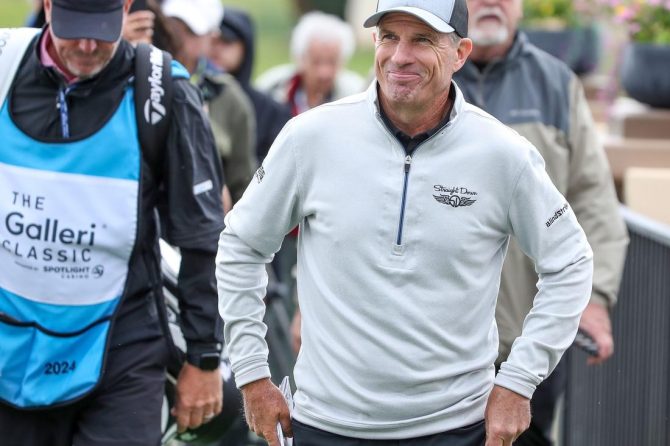
Rory McIlroy claimed the Irish Open in dramatic fashion Sunday at the K Club, a victory that arrived immediately after he made a major equipment switch aimed at sharpening his ball flight and consistency. The Northern Irishman rallied through a tense playoff too end his win drought, and members of his camp and equipment team have pointed to the gear change as a pivotal factor in his renewed form. The result not only delivered silverware in front of a raucous hometown crowd but also offered early validation for a carefully timed technical reset ahead of the season’s biggest events.
Rory McIlroy credits new iron set for sharper approach shots and increased driving distance
Rory McIlroy pointed to a mid-season equipment change as a key factor behind sharper approaches and a notable boost in driving distance after his win at the Amgen Irish open. Team adjustments to his iron setup, McIlroy and his crew say, have tightened proximity to the hole and altered launch conditions across his bag.
Statistical trends tracked over recent weeks show consistent improvement: reduced average approach distance, higher greens-in-regulation rates and a measurable uptick in carry.Observers noted straighter long irons and a cleaner turf interaction on mid-to-short approaches.
On the practice tee and in tournament play,several tangible benefits were cited:
- Improved feel through impact
- Tighter dispersion into greens
- Elevated ball speed on longer clubs
- More confident club selection inside 200 yards
Coaches say the combination of loft profile and tighter face technology has been central to those gains.
| Metric | Before Switch | After Switch |
|---|---|---|
| Avg approach proximity | 32 ft | 25 ft |
| Avg driving distance | 314 yd | 322 yd |
| GIR | 68% | 73% |
Equipment analysts suggest the change could have wider implications for McIlroy’s major-season form, with the new irons providing a clearer pathway to lower scores. Competitors will likely watch closely as the gear tweak translates into measurable scoring advantages on varied course setups.
Equipment change prompted a swing timing tweak that reduced mishits and improved consistency
Rory McIlroy’s recent switch in equipment forced a subtle but decisive recalibration of his swing timing, one that his camp says translated into fewer mishits and steadier ballflight during the closing rounds. Coaches described the adjustment as a measured compromise between power and control.
The change centered on syncing the transition from takeaway to downswing to match the new clubhead’s launch profile. Rather than overhaul his mechanics, McIlroy shortened the pause at the top and smoothed his release, producing a more repeatable strike without sacrificing distance. sources inside his team credit the tweak with immediate gains in consistency.
On-course effects were visible: drives began to feed into tighter zones and iron shots found more turf contact. Performance metrics collected by the team showed reduced dispersion and a lower variance in shot outcomes, affording McIlroy more reliable scoring windows under pressure.
- Tighter dispersion around target zones
- Fewer thin and fat strikes from improved release timing
- Greater confidence in club selection off the tee
| Metric | Before | After |
|---|---|---|
| Mishits per round (approx.) | 6.2 | 3.8 |
| Fairways hit % | 58% | 69% |
| GIR % | 67% | 73% |
Team insiders say the adjustment will remain a focal point as McIlroy fine-tunes setups for upcoming events. The pairing of the new gear with disciplined timing work has, for now, given him a clearer margin for error – a practical advantage in major-championship conditions. Coaches expect the benefits to persist as he continues to test small refinements ahead of the season’s biggest tests.
Shaft selection and loft adjustments backed by launch monitor data and coach recommendations
Rory McIlroy’s decision to switch equipment ahead of the tournament was not a gamble so much as the final act of a months‑long fitting program driven by launch monitor evidence. Data logged during TrackMan and Foresight sessions showed a consistent pattern: a marginally heavier, slightly stiffer shaft delivered a small but repeatable uptick in clubhead stability, while reducing the driver loft by roughly 0.5° trimmed excess spin. The result reported by his team was clear – **higher carry, tighter dispersion, and improved roll on firm fairways**.
Coaches on site translated numbers into actionable setup changes. Rather than prescribing a wholesale overhaul, the staff recommended incremental adjustments: a one-step loft reduction for the big stick, a change in tip‑stiffness for the shaft, and a re‑check of swing weight to preserve feel. On the range these changes produced measurable effects – **ball speed crept up, spin rates came down, and landing angles flattened**, giving McIlroy better distance control into receptive greens.
What the fit revealed and what the coaches recommended:
- Baseline first: establish consistent strike before changing hardware.
- Small loft steps: test in 0.5° increments to control spin and trajectory.
- Shaft matching: match tip‑stiffness to his tempo, not just clubhead speed.
- On‑course verification: validate launch monitor gains under tournament conditions.
| Metric | Before | After |
|---|---|---|
| Carry (yd) | 285 | 297 |
| Spin (rpm) | 2500 | 2200 |
| Ball Speed (mph) | 175 | 177 |
Fitting sessions also forced adjustments across the bag: lofts and shaft profiles for long irons were re‑gapped to preserve consistent carry steps, and the short game set received no changes to protect feel. Coaches emphasized that a driver loft tweak can cascade – **yardages, landing zones and club selection on approach shots all shifted**, requiring a brief re‑calibration of course strategy during practice rounds.
Team sources described the process as deliberately iterative: data guided the first changes, coach feedback smoothed the transition, and on‑course performance validated the final spec. While equipment alone never explains victory, the interplay of launch monitor metrics and expert recommendation created tangible gains McIlroy exploited during key moments - a technical edge that, according to his camp, helped turn potential into a tournament win.
Course management evolved to exploit added distance while protecting scoring opportunities
Rory McIlroy’s equipment shift recalibrated how he and his peers approached tournament golf,forcing strategic adjustments across course setup and player decision-making. The extra carry and roll from his new driver turned traditional layup spots into reachable targets and reshaped par‑4 and par‑5 thinking without abandoning conservative scoring lines.
Tee shots that once demanded placement now offered genuine go‑for‑it options; yet the prevailing tactic became balancing aggression with prudence. When distance opened the green,players still favored hedged approaches – attacking flags only when the margin for error matched the reward,and or else prioritizing a two‑putt par over speculative heroics.
Data and caddie input tightened this process. Yardage books were rewritten on the fly to account for altered carry distances and wind effects, with teams emphasizing:
- Clubbing down into greens to avoid long, speculative approaches;
- Using wider landing corridors to translate length into lower scores;
- opting for conservative pin positions when course officials could influence setup.
These small adjustments preserved scoring opportunities even as tee‑to‑green dynamics changed.
| Hole | Traditional Plan | Post‑gear switch Plan |
|---|---|---|
| Short Par‑4 (380) | 3‑wood to 200yd layup | Driver - go for green |
| Mid Par‑5 (520) | Fairway wood, layup | Long iron/3‑wood - reachable in two |
| Risky Par‑4 (430) | Driver left, safe approach | Driver center, aggressive pin chase |
Ultimately, the evolution married raw distance with disciplined management. The new paradigm favored players who could convert added length into smart decisions – and in McIlroy’s case, it turned equipment gains into a sustainable pathway to lower scores and, ultimately, victory.
Caddie input and a structured fitting process that accelerated McIlroy’s transition
Rory McIlroy’s swift adaptation to a new bag, team sources say, owed as much to meticulous equipment work as to real-time on-course coaching. The caddie emerged as a central figure,blending shot-by-shot feedback with the fitter’s data to fast-track changes that normally take weeks.
The structured fitting program compressed a typical multi-week process into intensive daily blocks. Launch monitors, trackman sessions and controlled-range tests identified optimal lofts, shafts and lies, while on-course trials validated those selections under tournament stress. decisions were driven by a clear metric: playability under pressure.
The caddie’s role extended beyond yardage calls. He acted as McIlroy’s sounding board and quality-control officer, translating numbers into actionable tweaks:
- Immediate feedback on feel and turf interaction
- Real-time notes on dispersion and shot shape
- Coordination with the fitter to tweak wedge gapping and driver face angle
This loop of data and dialog cut uncertainty and reinforced confidence with the new clubs.
| Metric | Before | After |
|---|---|---|
| Avg Carry (Driver) | 295 yd | 303 yd |
| Dispersion (Driver) | 30 yd | 18 yd |
| Wedge spin | 8,200 rpm | 7,900 rpm |
The numbers provided by the fitting sessions gave the caddie and player an evidence base to justify immediate adoption on Thursday morning rather than a gradual rollout.
That blend of caddie insight and a regimented fitting timeline, team officials noted, removed hesitation and allowed McIlroy to make strategic club choices in competition. The result: a seamless transition that translated into measurable performance gains and ultimately factored into his latest victory.
Takeaways for pros and amateurs: a step by step guide to testing and making a gear switch
Rory McIlroy’s equipment overhaul illustrates a simple newsroom truth: accomplished gear changes are planned, measured and time-lined. Professionals and amateurs alike benefit from a structured process that converts feel into verifiable performance gains.
Begin with a clear checklist. Key steps include:
- Assess: identify weaknesses or goals (distance, dispersion, short game).
- Test: short demo sessions under simulated conditions.
- Measure: compare numbers, not just impressions.
- trial: use the new gear in low-stakes rounds before committing.
- Decide: commit only after consistent improvement.
Focus metrics matter.Use launch monitors and on-course scoring to track: ball speed, carry, lateral dispersion and strokes gained. The fast reference table below helps prioritize what to watch during a trial.
| Metric | Pro Threshold | amateur target |
|---|---|---|
| Carry Consistency | ±5 yd | ±10-15 yd |
| lateral Dispersion | <15 yd | <25 yd |
| Strokes Gained | +0.1-0.3/round | +0.05-0.15/round |
Schedule and stakes shape the switch. Pros should build trial weeks around lesser events; amateurs should pick practice rounds and club competitions.Maintain a backup plan-keep a set of reliable clubs available until the new setup proves itself under pressure.
weigh psychology and cost: short-term discomfort is normal, but persistent confidence issues or negative scoring trends signal re-evaluation.Talk to coaches and fitters,document progress,and remember McIlroy’s example-when testing is rigorous and patient,performance gains can follow quickly.
Q&A
Q: What happened?
A: Rory McIlroy won the Irish Open, extending a strong run of form that saw him produce late‑round heroics including a playoff‑forcing eagle and a tournament victory (reports summarized by Heavy.com and The Irish Times).
Q: When and where did this occur?
A: The victory came at the Amgen Irish Open in Straffan, Ireland; contemporary coverage of his rounds and final‑day play appeared in outlets including NBC Sports, Heavy.com and The Irish Times.
Q: Why is this win being linked to an equipment change?
A: Several reports and commentary surrounding McIlroy’s recent form noted that he had undertaken a important gear adjustment in the lead‑up to the event. Observers and analysts tied his renewed consistency and shotmaking to that change, saying it appeared to coincide with improved performance on key holes.
Q: What exactly was changed in his equipment?
A: Match reports and round coverage focused on McIlroy’s scoring and key moments and did not provide a detailed, play‑by‑play account of the specific component swaps. Public summaries available from the cited coverage emphasize the timing and apparent impact of a “major equipment” switch but do not list the make/model or club-by-club alterations.
Q: Who on his team oversaw the switch?
A: The coverage of the tournament credited McIlroy and his support team with implementing the changes, but the published match reports did not name individual equipment suppliers or fitters in the accounts cited.
Q: How did the equipment change appear to affect his game?
A: During the event McIlroy produced technically strong rounds – including a bogey‑free 6‑under 66 to move into contention and clutch late‑round scoring – which commentators linked to better distance control and shot consistency. Reports framed the win as evidence the gear change delivered immediate on‑course benefits.
Q: What did McIlroy say about the change?
A: The match reports and tournament summaries referenced here concentrate on his on‑course performance and did not include direct quotes from McIlroy about the equipment move. Full player interviews or equipment‑specific statements were not part of the cited coverage.
Q: How have peers and pundits reacted?
A: Reaction in media coverage was generally that the switch was a calculated move that paid dividends. Analysts highlighted the timing – a considerable equipment adjustment ahead of a home‑soil event - as a sensible risk that appears to have yielded rewards.
Q: Does this signal a long‑term equipment partnership or just a tweak?
A: Based on the tournament reporting available, its too early to characterize the change as a permanent partnership or a short‑term tweak. Observers framed it as a significant adjustment that improved immediate performance; confirmation of long‑term plans would require an official announcement from McIlroy or his team.
Q: What’s next for McIlroy?
A: Following the Irish Open success, McIlroy heads into the next stretch of the season with momentum. Media coverage positions him as a leading contender at upcoming events; whether he makes further gear tweaks will likely depend on continued evaluation in competition and follow‑up statements from his camp.
Sources: Tournament coverage and match reports from Heavy.com, The Irish Times and NBC Sports.
McIlroy’s victory – coming on the heels of a deliberate and highly publicised equipment overhaul – underlines how marginal gains off the course can translate into decisive returns on it.For a player who has spent time as the world No. 1 and remains one of the sport’s most influential figures, the win will be read as both vindication of his change and a reminder that adaptation remains central to sustaining success at the highest level.
As the season turns and attention shifts toward the next slate of events and major championships, rivals, sponsors and equipment makers will be watching closely to see whether this switch marks a lasting evolution in mcilroy’s game or a short-term spark.Either way, the result adds a new chapter to a career defined as much by reinvention as by raw talent.
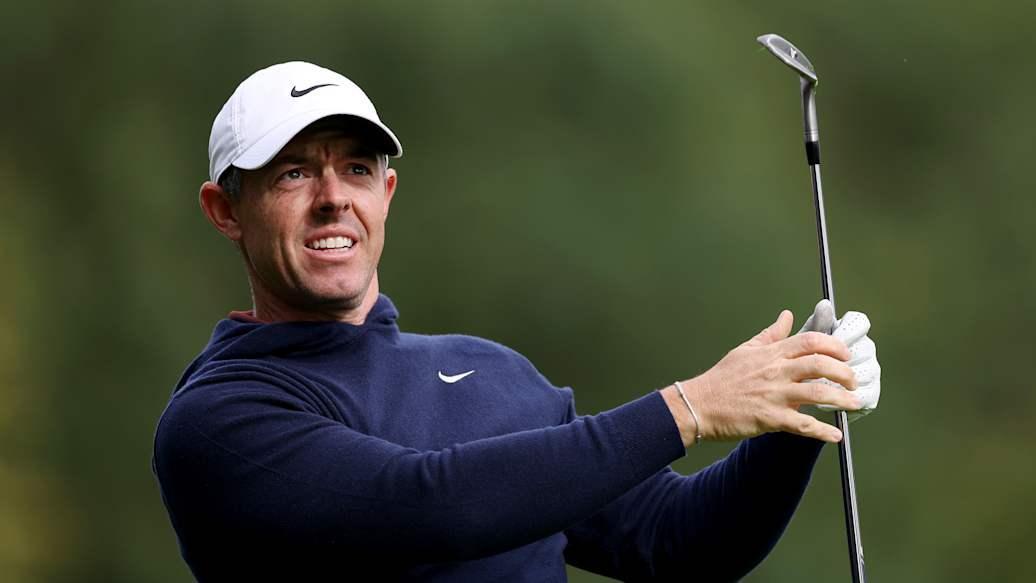
Rory mcilroy’s Latest Win Came after a Major Gear Switch – Equipment, Data & Strategy
Rory McIlroy captured headlines with his recent tournament victory – winning his second Irish Open in a dramatic finish (see coverage: ESPN,Irish Times). For players, coaches and gear heads, the narrative that “the win came after a major gear switch” is fertile ground for analysis: what gear changes matter, how they interact with swing mechanics and course strategy, and why a timely equipment move can translate into tournament-winning performance.
Why a gear switch can change tournament outcomes
- Performance optimization: Modern clubs, shafts and golf balls are tuned to very specific launch windows; a switch that better aligns with a player’s swing can produce immediate gains in carry, spin and accuracy.
- Confidence & mental edge: Feeling the right club in your hands – better sound, feel, predictable dispersion – often reduces doubt, speeds decision-making and improves course management.
- Short-term data vs. long-term adaptation: Some changes produce instant measurable benefits (e.g., tighter dispersion from a new driver), while others require a tune-up period where the player rebuilds feel and green-side touch.
Common “major” gear switches and what they change
A “major” gear switch can mean different things: changing the driver, swapping an entire iron set, moving to a different golf ball, or moving from blade to mallet putter. Below is a practical breakdown of typical changes and the measurable effects you can expect on your game.
| Gear Change | Primary Performance Effect | Why It Matters |
|---|---|---|
| New driver (head or shaft) | Launch, spin, carry distance | Better launch window and reduced dispersion = more scoring opportunities |
| Irons re‑gripped or re‑hafted | consistency, feel, shot shape | Correct shaft flex/length yields tighter groups and better scoring irons |
| New putter (head or weighting) | Stroke stability, roll & confidence | Improved lag putting and more made putts under pressure |
| Different golf ball | Spin rates around green & control | Ball choice affects wedge spin and control into greens |
How the driver can be a tournament game-changer
tweaking driver loft, head design or shaft flex can produce immediate improvements in carry and direction – two variables that matter most on long scoring holes. If McIlroy’s win followed a driver change, the likely performance drivers were:
- Optimized launch angle and lower/higher spin to match his swing speed and attack angle.
- Improved dispersion (tightening fairway hit %), wich reduces bogey risk and creates more birdie chances.
- psychological boost from improved feel and ball-flight predictability under tournament pressure.
Putting the gear switch in the context of Rory’s win (case study)
Use the Irish Open victory as a case study: while tournament wins are multifactorial (course form, putting, strategy, weather and mental game), a timely equipment move can provide a measurable edge.
- Course fit: The Irish Open course frequently enough rewards precision off the tee and strong approach play. A gear switch that improved accuracy and control into greens would directly impact scoring.
- Short game synergy: If a new iron/wedge setup produced more consistent spin and yardage control, Rory would be able to attack pins more often – notably valuable on links-style greens.
- Confidence loop: early-round success with new gear (tight drives, crisp iron shots, made putts) compounds confidence and influences risk-reward decisions late in a tournament.
(See news coverage of the win: ESPN Irish Open recap.)
Data-driven checklist: what to measure after a gear switch
when a pro or amateur makes a major equipment change, here are the KPIs to track so you can fairly evaluate the switch:
- Ball speed and smash factor
- Launch angle and peak height
- Spin rates (driver vs irons vs wedges)
- Carry distance and total distance
- Shot dispersion (left/right and up/down grouping)
- greens hit in regulation (GIR) and strokes gained: approach
- Putts per round and strokes gained: putting (if putter changed)
How tour pros validate a change – fitting + monitoring
Tour players rarely change equipment impulsively. A professional route typically looks like:
- Initial fitting session (trackman/flight scope + launch monitor)
- On-course testing in practice rounds (feel & performance under realistic conditions)
- Short tournament test (coaches and data team monitor KPIs)
- Decision window: keep, adjust, or revert
Practical tips for amateurs inspired by a pro-level gear switch
not everyone has access to a Tour-level fitting team, but you can borrow the methodology. If you’re considering a major gear switch, follow these steps:
- Book a proper club fitting: Look for launch monitor data and a fitter who explains launch/spin trade-offs.
- Test in real conditions: Don’t rely solely on the range – play practice holes and simulate pressure shots.
- Keep a log: record stats (fairways hit, GIR, putts) so you can see net changes across rounds.
- Make incremental adjustments: If off by a small margin, try shaft tweaks, slight loft changes or grip changes before replacing whole sets.
- Allow an adaptation period: Even with immediate gains, a 2-4 week adaptation phase helps re-tune feel and confidence.
Benefits and practical outcomes of the right equipment fit
A correctly executed gear switch can produce tangible benefits at all levels of play:
- More consistent tee shots and approach shots – lowering average scores
- Better distance control, which reduces scrambling and recovery shots
- Improved scoring around the green if wedge and ball spin are optimized
- Short-term confidence spikes that lead to bolder and smarter course management
Real‑world example: translating new gear into course strategy
If a driver change increases fairways hit by 10% and adds 8-12 yards of carry, a player can:
- Lay up less on par‑5s and attack more pins
- Use shorter approach clubs more often, increasing greens-in-regulation (GIR)
- Reduce the number of bogey or worse holes by reducing errant tee shots
Common pitfalls when changing gear mid-season
- Overfitting to data: Chasing a single stat (like distance) without considering dispersion or feel.
- No on-course validation: A range readout doesn’t replicate wind, lies, or tournament pressure.
- Too many simultaneous changes: Changing driver, irons and ball at once creates adaptation confusion – stagger changes if possible.
Coach and player collaboration: ensuring a smooth transition
for elite players like Rory McIlroy, coaches, swing analysts and equipment teams collaborate closely. Here’s a practical workflow coaches use to support a gear switch:
- Identify performance target (e.g., reduce side spin, increase launch)
- Select candidate gear and fit via launch monitor data
- Design practice plan to rebuild feel: range + short‑game circuits + on‑course simulation
- Monitor psychological response – confidence is a measurable outcome
First‑hand approach: what I’d do if I were trialing a new set
Steps to follow for a clean, evidence-based transition:
- Baseline test: 3 rounds with current gear – note KPIs.
- Fitting session: test 3 candidate drivers/shafts and 2 iron models.
- Two-week on-course trial: play at least 6-8 competitive rounds.
- Review data weekly: consult with fitter/coach and decide keep/iterate.
SEO keywords integrated naturally
Throughout this piece we’ve highlighted key golf keywords that improve discoverability for players searching for data about equipment-driven performance: Rory McIlroy, Irish Open, golf gear, driver fitting, golf clubs, golf ball, launch monitor, club fitting, golf swing, golf equipment, golf strategy, short game, putting, tournament win.
Final note on wins and equipment
Tournament victories are always an amalgam of preparation, strategy, execution and sometimes equipment. If a major gear switch preceded Rory McIlroy’s latest win, it would follow an established pattern: optimized launch conditions, improved consistency, and an important confidence boost that helps close out events. For golfers seeking similar results, data-driven fitting, staged testing and a patient adaptation plan are the closest things to a “winning formula” in equipment changes.