Unlocking the Smooth Rhythm Behind Arnold Palmer’s Legendary Swing
Achieving the effortless flow that defined Arnold Palmer’s legendary swing begins with understanding the critical role of rhythm and tempo in generating power and consistency. Palmer’s swing exemplifies a smooth transition from backswing to downswing, maintained by a steady 3:1 timing ratio, where the backswing takes roughly three times longer than the downswing. To emulate this, golfers should practice a metronome drill, setting a tempo that allows for a fluid, unhurried takeaway and a controlled acceleration through impact. At setup, emphasize a relaxed grip pressure-approximately a 5 on a scale of 10-to avoid tension that disrupts swing rhythm. Begin your swing with a deliberate shoulder turn of about 90 degrees while keeping the head steady, mirroring Palmer’s posture, and ensure your weight shift moves naturally from 55% on the back foot to 70% on the front foot during the downswing. This sequence not only promotes accuracy but enhances the clubhead speed necessary for long, penetrating drives-crucial in course management scenarios where precise tee shot placement can dictate scoring opportunities.
Building on rhythmic mechanics, incorporating Palmer’s approach to short game finesse transforms scoring potential around the greens. His command over trajectory manipulation-adjusting loft face and swing length-allowed for delicate chips and precise pitch shots, strategically avoiding hazards like bunkers or water. Golfers should refine this by practicing a clock drill around the green, where varied swing arc lengths correspond to specific distance control. Focus on striking the ball with a slightly open clubface, typically around 3 to 5 degrees loft increase, to generate soft spin and check release on fast or uphill greens. Moreover, adopting Palmer’s course strategy means reading greens not only for slope but grain direction and wind conditions, using subtle putt breaks to adjust aimpoints. Incorporate regular visualization exercises before shots, correlating mental focus with Palmer’s confident shot execution. By combining rhythmic swing sequences with tactical short game adjustments, golfers across all skill levels can measurably reduce strokes and elevate their proficiency on diverse courses and conditions.
How to Harness Power and Precision in Your Driving Like arnold Palmer
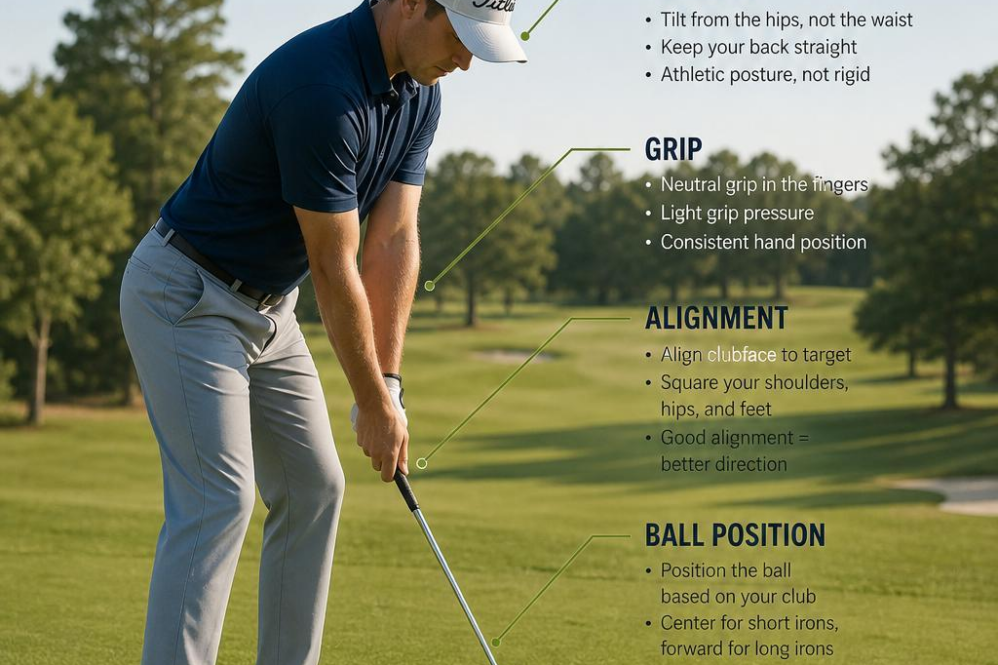
Harnessing power and precision in your driving, as Arnold palmer taught, begins with establishing a solid setup that maximizes efficiency and control. Start by positioning the ball just inside your left heel (for right-handed golfers), which helps promote an upward angle of attack – a critical factor in generating optimal launch conditions and distance. Maintain a wide stance roughly shoulder-width apart to create a stable base, allowing your hips to rotate freely and store energy through the backswing. As Palmer emphasized, the takeaway should be smooth and on-plane, with the clubhead traveling low and slow for the first few feet; this prevents casting and promotes a powerful coil at the top of your swing. Transitioning into the downswing, focus on initiating hip rotation before the arms, creating leverage that unleashes clubhead speed through impact. A useful drill here is to practice hitting half swings with a focus on hip movement and balance, using a mirror or video feedback to ensure your torso leads the downswing while maintaining your head steady. Remember, the ideal driver impact position features a slightly closed clubface with a shallow angle of attack around +2 to +5 degrees, producing a penetrating ball flight and minimizing slice tendencies.
Incorporating course strategy into your driving approach is just as important as mechanical precision. Palmer famously advised adapting your shot shape and target selection based on course conditions and hazards, blending power with smart positioning. Such as, when playing a narrow fairway or into a prevailing wind, aim for controlled, lower trajectory drives by adjusting your tee height ¼ inch lower and focusing on a more descending blow, rather than attempting maximum distance with a high launch. conversely, when the fairway is wide open, allow yourself to swing more freely to maximize carry and roll, capitalizing on favorable turf conditions. To practice this, alternate between full drives aimed at a distant target and controlled “punch” shots aimed safely down the center, tracking dispersion patterns to understand your natural shot tendencies.This adaptability, combined with Palmer’s teaching to maintain mental composure and trust your routine under pressure, helps golfers of any level gain both confidence and scoring advantage off the tee, ultimately translating your improved mechanics into consistent, tournament-ready performance.
Putting Secrets from the King of Golf that Will Lower Your Score
Mastering the delicate art of putting requires more than consistent stroke mechanics; it demands a keen understanding of green reading and subtle judgment honed by focused practice. Arnold Palmer, known as the King of Golf, emphasized starting with a solid setup position: feet shoulder-width apart, eyes directly over the ball, and a slight knee flex to promote smooth pendulum motion in the shoulders. A common pitfall to avoid is gripping the putter too tightly, which introduces tension and disrupts tempo. Instead, maintain a relaxed grip pressure-approximately 2 to 3 pounds-to encourage fluidity.Palmer taught his students to visualize the putt’s intended line by observing the grain of the green and considering slope gradients, integrating the rule of thumb that putts breaking downhill line will roll faster and break less. For practical drills, use alignment rods or chalk lines on practice greens to reinforce correct face angle through impact and develop confidence in reading subtle breaks under various lighting and weather conditions.
beyond stroke technique, Palmer’s approach stresses the strategic importance of distance control and mental resilience. To refine distance judgement,he recommended practicing lag putting with targets set at 20 to 40 feet,focusing on a smooth acceleration through the ball to avoid deceleration that causes pulls or heavy hits. Incorporating pre-putt routines-such as a few gentle practice strokes while visualizing the ball’s path-helps maintain focus and reduce nerves on the course.In real-course scenarios,Palmer advised players to consider the green’s firmness and wind conditions before choosing how firmly to strike,linking this insight to overall course management. For all golfers, combining these technical elements with repeated, mindful practice will not only lower scores but also build confidence to attack the cup with authority. Practice drills such as the clock drill (putting from 1 meter around the hole in a circle) can effectively sharpen touch and boost mental sharpness under pressure.
Course Management Tips Inspired by Arnold palmer for Smarter Play
Arnold Palmer’s approach to course management exemplifies the marriage of fearless shot-making and smart strategy,making his insights invaluable for players aiming to enhance scoring consistency. Central to his beliefs is the concept of playing to your strengths while respecting course hazards. When approaching any hole, take a moment to analyze the layout from the tee: consider the placement of bunkers, water hazards, and doglegs in relation to your driver’s typical shot shape and carry distance. For instance, if your driver naturally fades the ball, aim slightly left of a right dogleg fairway to position your ball for an open second shot. This anticipatory planning reduces risk and amplifies reward. Incorporate drills that reinforce this mindset by practicing tee shots with varying targets rather than just distance, emphasizing control over maximum power. Establish a pre-shot routine that includes visualizing safe zones and optimal landing areas, targeting a 10-15 yard margin within the fairway to account for shot dispersion.For beginners, start with irons off the tee on tight fairways to build confidence in accuracy, gradually reintroducing the driver as proficiency grows. Arnold Palmer’s balanced aggression encourages you to be bold but deliberate-an essential strategy that translates to better scoring opportunities by minimizing errant shots and maximizing favorable lies.
Complementing tee shot strategy is Palmer’s mastery in short game and approach shot tactics, underscoring the importance of tactical shot selection based on green contours and pin placement. He advocated for reading greens thoughtfully - factoring in slope gradients, grain direction, and green speed measured on the stimpmeter scale – before committing to chip and pitch shots.This means adjusting your setup and club choice (typically lob or gap wedges) to execute the desired trajectory and spin. Begin with setup fundamentals: maintain weight slightly favoring the front foot (60%) and align your clubface aimed at the intended landing spot, rather than directly at the hole. To enhance these skills, practice drills such as landing the ball on a towel placed at various distances from the green to perfect precision and spin control. Furthermore, palmer’s smart course management involved choosing conservative aiming points on the green to avoid hazards and difficult recovery shots. For example, when the pin is tucked near a bunker, target the wider, safer side of the green to ensure two-putt opportunities rather than risking a three-putt or penalty. This approach encourages players of all levels to blend risk assessment with technical execution, ultimately lowering strokes by improving proximity to the hole and reducing penalty risks.