
Unlock Your Full Potential with Biomechanical Swing analysis
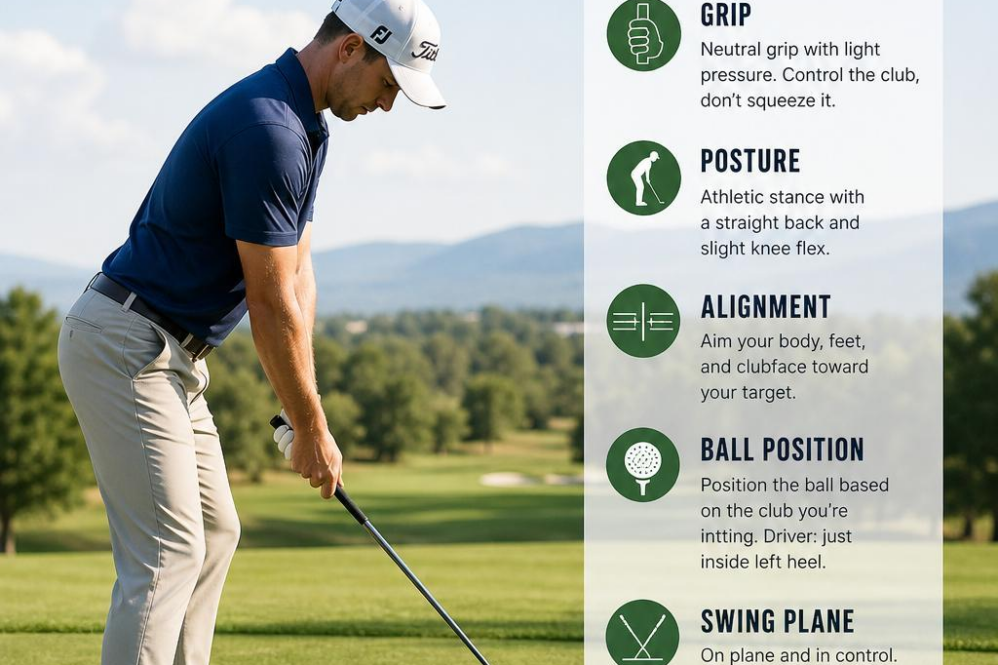
Developing a fundamentally sound golf swing begins with understanding key biomechanical principles that govern efficient motion. Focus first on establishing a stable and athletic setup: maintain a spine angle of approximately 45 degrees with slight knee flexion and balanced weight distribution between the balls of your feet and heels. This posture enables a natural coil during the backswing, promoting power and consistency. As you initiate the swing, emphasize a smooth takeaway with the clubhead moving back on a shallow plane, allowing your shoulders to rotate fully without excessive lateral head movement. Integrating drills such as the “Pause and Feel” exercise helps golfers internalize the correct transition by briefly halting at the top of the backswing to ensure proper wrist hinge (approximately 90 degrees of wrist lag) and weight shift to the trail leg. For those progressing into advanced refinement, pay attention to maintaining a consistent swing tempo, ideally around 3:1 ratio of backswing to downswing duration, to enhance timing and strike quality. Correcting common faults-like early extension or casting the club-can be achieved thru targeted mirror work and video analysis, enabling players at all skill levels to visualize and adjust their movements in real time.
Translating biomechanical insights into measurable on-course improvements requires integrating your swing mechanics with strategic decision-making and physical conditioning. When driving, for example, optimizing launch conditions involves achieving a dynamic loft between 12 to 15 degrees and a spin rate near 2500 to 3000 RPM, which maximizes distance while maintaining control. To facilitate this, practice drills focusing on ground force application-such as explosive step drills or resisted swings with bands-build core stability and lower body strength essential for powerful yet balanced swings under varying course conditions. Moreover, understanding how environmental factors like wind or firm fairways can effect ball flight enables you to select appropriate trajectories and club choices, thereby reducing scoring risks. Emphasize course management techniques such as targeting safe landing zones rather than always aiming for maximum yardage, a principle that benefits all golfers from beginners to low handicappers by lowering stress and improving shot confidence. Combined with mental focus exercises-breath control and pre-shot routines-this biomechanical approach empowers you to unlock more consistent ball striking, improved distance control, and smarter play, ultimately lowering your scores and enhancing your enjoyment on the course.
Putting Precision Made Simple Through Targeted Drills
Achieving consistent putting accuracy begins with mastering setup fundamentals and stroke mechanics tailored to both individual feel and green conditions.Start by aligning your eyes directly over the ball-this perspective is crucial for properly reading breaks and evaluating the putt’s intended path. Ensure a stable stance with feet shoulder-width apart and knees slightly flexed to promote balance and fluidity. Maintain a slight forward shaft lean of approximately 5 to 10 degrees to encourage a downward stroke,facilitating cleaner ball contact and preventing skidding. When addressing the ball, use a pendulum-like motion driven primarily by the shoulders rather than the wrists, which helps maintain a square clubface through impact and enhances directional control. To internalize this, incorporate drills such as the “Gate Drill,” which places two tees just wider than your putter’s head on the putting surface, forcing a straight-back-and-through swing. This exercise is effective for all skill levels and helps eradicate common mistakes like casting or flipping the wrists at impact, which can cause erratic putting results.
Building upon these technical foundations,it’s essential to practice with purpose by simulating real-course scenarios that challenge your green reading and speed control. Utilize drills like “Clock Drill” around the hole at varying distances-3, 6, and 9 feet-to hone your touch and enhance your feel for speed under different slip conditions and grain directions. concentrate on controlling your backswing length, which directly affects distance; for instance, a 12-inch backswing typically corresponds to a 10-foot putt on a medium-speed green. Additionally, engage in situational putting exercises where you assess the break, slope percentage, and wind effect, refining your ability to visualize the correct line and pace. Integrating golf fitness insights such as core stability and flexible hip rotation can optimize your posture and reduce fatigue during prolonged rounds, sustaining precision throughout play. By combining these structured drills with a mental routine that fosters confidence and focus-like a consistent pre-putt visualization or a rhythmic breath pattern-you bridge the gap between practice and tournament effectiveness, ultimately lowering your scores through sharper, more reliable putting performance.
Drive Longer and Straighter by Integrating Fitness and Technique
Achieving longer and straighter drives starts with a balanced integration of fitness and technique that addresses both the biomechanics of the golf swing and the physical conditioning required to execute it efficiently. Proper setup fundamentals are essential: ensure your stance width is about shoulder-width apart, with your spine tilted slightly away from the target to promote an upward angle of attack, typically between 3° to 5° for optimal launch conditions. From there, focus on the sequencing of your swing by initiating movement from the ground up-engaging your hip rotation before the upper body allows for a powerful coil and efficient energy transfer through the clubhead. Strengthening the core, hips, and forearms via targeted fitness routines will improve your ability to maintain posture and generate clubhead speed consistently. For example, incorporating medicine ball rotational throws or cable woodchoppers into your exercise regimen can enhance explosive strength and rotational power, leading to drives that not only travel farther but also maintain accuracy through controlled swing paths.
To translate these physical improvements into better course management, consider how external factors like wind direction and course layout inform your technical approach. Practicing drills such as paused transition swings helps develop rhythm and control, curbing common faults like over-swinging or early extension that often cause hooks or slices.Beginners should focus on developing a smooth tempo using lighter clubs before gradually increasing swing speed, while advanced players can incorporate feedback devices like launch monitors to analyze spin rates and smash factor, aiming for an optimal spin rate between 2,000 and 2,500 rpm depending on conditions. Additionally, smart club selection based on shot shaping-fading or drawing the ball around hazards-becomes feasible when fitness enables repeatable technique under pressure. Combining targeted fitness drills with situational practice rounds, where you deliberately simulate different course scenarios, leads to measurable improvements in both distance and precision, ultimately lowering scores through confident, strategic play.
Tailoring Your Golf Fitness Routine to Match Your Skill Level
Developing a golf fitness routine that aligns with your skill level is essential to building a consistent, efficient swing and maintaining endurance throughout your round.Beginners should focus on foundational exercises that improve core stability, flexibility, and balance-key components that underpin proper swing mechanics. Incorporating dynamic stretches targeting the shoulders, hips, and thoracic spine helps enhance range of motion, allowing for fuller backswing and follow-through arcs without tension. Core-strengthening drills such as planks and rotational medicine ball throws build the muscular control necessary to sustain a steady pelvis position and prevent sway, which often leads to inconsistent ball striking. For those new to fitness routines, practicing posture alignment and grip pressure alongside these exercises will reinforce setup fundamentals and promote better clubface control at impact. As a practical application, beginners can perform a simple drill pairing a 10-minute warm-up of stretches with a set of 15 controlled swings using a weighted club to ingrain muscle memory and improve swing tempo before moving on to the course.
More experienced golfers and low handicappers benefit from a tailored regimen that not only preserves flexibility but also enhances power generation and injury prevention. At this stage, focusing on explosive hip rotation, precise weight transfer, and maintaining a centered axis during swing phases is critical. Advanced drills like cable rotations that emphasize a 45-degree shoulder turn while keeping hips stable or single-leg balance exercises performed on uneven surfaces mimic on-course dynamic conditions such as uneven lies or wet grass, boosting proprioception and shot adaptability. Strong glute and hamstring activation supports faster downswing sequences and helps produce higher clubhead speed without sacrificing control-crucial for shaping shots to navigate hazards or control spin on approach shots. Integrating slow-motion swing analysis complemented by video feedback ensures that any subtle swing faults, such as an early release or over-the-top move, are corrected early.Additionally, maintaining cardiovascular fitness allows players to stay mentally sharp and physically resilient during long tournaments, directly contributing to improved course management and strategic decision-making under pressure.
- For beginners: Emphasize stability, flexibility, and basic balance with short, consistent workouts focusing on posture and smooth tempo.
- For intermediate and advanced golfers: Incorporate rotational power exercises, proprioception training, and flexibility drills tailored to maintain swing precision at higher swing speeds.
- Practice drills: Use weighted club swings, cable rotations, and single-leg balances to translate fitness gains directly into improved shot consistency and control.




