Discover the Power of Slow Motion to Sharpen Your Mental Focus
When practicing your swing in slow motion, you harness a powerful tool for refining both your mechanical precision and mental focus. Taking your swing through its motions at roughly 40-60% of full speed helps engrain the correct sequencing of your body segments, from the hip turn to wrist hinge, enabling you to feel key positions like a 45-degree shaft lean at impact and a proper weight shift onto the lead foot. This deliberate pace unveils hidden flaws frequently enough masked in faster swings, such as early release or improper clubface alignment. To translate these benefits to the course,integrate slow-motion swings into your warm-up routine,emphasizing checkpoint positions: top of backswing,halfway down to impact,and follow-through finish. Beginners benefit by clearly understanding club path and body posture, while advanced players can fine-tune transition timing and release mechanics.Additionally, experienced golfers should combine this method with mental rehearsal techniques, visualizing target lines to enhance shot consistency under pressure. This integration strengthens neural pathways, making quality swing patterns more automatic during competitive play.
Beyond mechanics, slow-motion practice cultivates mental resilience by encouraging focused breathing and mindfulness, key components for controlling on-course anxiety and managing tricky course conditions such as gusty winds or elevated greens. As you work through slow-motion swings, incorporate visualization drills-imagine executing precise shots around hazards or navigating tight fairways, syncing your physical rhythm with strategic intent. Use this approach to experimentally adjust grip pressure or stance width, noting how subtle changes affect balance and swing path without rushing. Such as, try a narrower stance with a slightly closed clubface setup to improve control on punch shots out of trouble. Making these adjustments consciously at a slower tempo helps solidify adaptive skills so you can confidently implement them during tournament rounds.A practical drill is to perform sets of 10 slow swings with a 7-iron,focusing on a smooth transition and centered impact,then gradually increase speed while maintaining the same mechanics. This layered challenge builds both muscle memory and course management savvy, ultimately lowering scores by blending technical soundness with strategic thinking.
How Breaking Down Your Swing Enhances Precision and Confidence
Understanding and dissecting your golf swing into its fundamental components provides a powerful pathway to both precision and confidence on the course. Start by focusing on key angles such as the 90-degree wrist hinge at the top of the backswing and the ideal 45-degree shaft lean at impact. These measurable benchmarks act as clear goals, helping you avoid common pitfalls like casting or early release. Integrate slow-motion swing practice into your routine, as it cultivates enhanced muscle memory and allows you to physically feel the correct positions without rushing. This mindful repetition not only polishes mechanics but also supports mental resilience, as it encourages patience and focus-critical traits when navigating pressure shots during competition. For beginners, breaking down your swing into stages (address, takeaway, top, downswing, impact, and follow-through) allows you to isolate specific elements without overwhelm, while more advanced players benefit from video analysis paired with swing plane drills to refine subtle nuances such as clubface alignment and weight transfer.
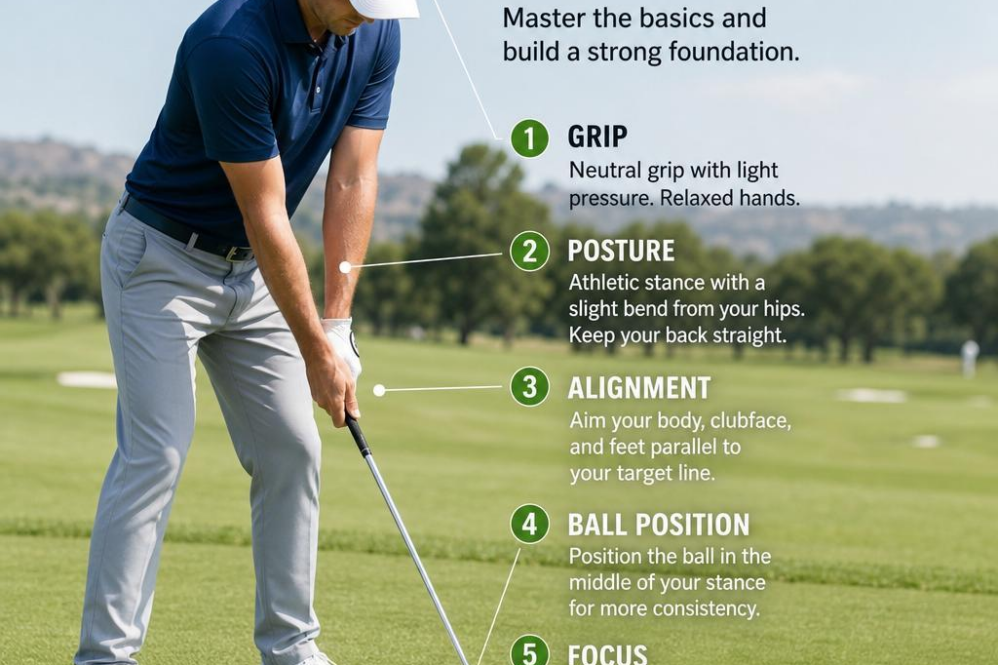
Beyond mechanics, breaking down the swing fosters strategic course management by aligning your technical strengths with situational demands. For instance, consistently achieving an impact position with a slightly closed clubface and forward shaft lean can enhance shot control around hazards or windy conditions, enabling you to intentionally shape shots-like hitting a fade to avoid out-of-bounds or a draw to navigate doglegs.Consider incorporating drills such as impact bag work to train a solid, compressive strike, or alignment stick exercises to develop consistent setup and swing path. Remember to check your ball position relative to your stance-commonly, ball placement just inside the lead heel for drivers and near mid-stance for irons ensures optimized launch and trajectory. By internalizing these technical details during practice sessions,you create a mental blueprint that translates directly to better shot selection,solid contact,and lower scores under varied course conditions. This methodical approach transforms your swing from a complex motion into a reliable tool, systematically enhancing your golf performance.
Simple Slow Motion Drills to Transform Your Driving and Putting
Developing a consistent and powerful driving motion begins with deliberate slow-motion practice that heightens body awareness and refines swing mechanics.Start by addressing your setup fundamentals: position the ball just inside your front heel, shoulder-width stance, and maintain a slight knee flex for optimal balance. In slow motion, focus on initiating the takeaway by rotating your shoulders smoothly while keeping your lead arm approximately 90 degrees from the spine at the top of your backswing. This controlled tempo allows you to internalize the correct sequencing of hip rotation preceding the downswing, which is critical to maximizing clubhead speed and hitting the ball with a square clubface.Incorporate drills such as the “Pause at the Top,” where you hold your backswing position for 3-5 seconds to check wrist hinge and weight transfer. Over time, these deliberate movements reinforce muscle memory, enabling you to reproduce an efficient and repeatable drive under pressure. Remember to monitor your head position-avoid excessive lateral movement during your swing to maintain solid contact and greater driving accuracy.
When transitioning to putting, slow-motion drills offer invaluable mental and technical benefits that enhance touch and green reading skills. Begin by setting up with your eyes directly over the ball and your wrists comfortably hinged, ensuring that the putter face stays square throughout the stroke.In a slow, exaggerated stroke, emphasize a pendulum-like motion generated primarily from your shoulders, keeping your lower body still to maintain stability. Practice isometric holds at various points in the stroke-such as halfway back and halfway through the forward stroke-to increase muscle control and develop a consistent tempo that supports distance control on different green speeds. incorporate drills like the “gate Drill,” where two tees flank the putter path to encourage a straight-back,straight-through stroke. On the course, use these slow-motion learned tempos to manage nerves and maintain rhythm in pressure situations, improving your ability to read breaks and control pace reliably.By merging biomechanical precision with mindful mental rehearsal, golfers of all levels can effectively reduce three-putts and lower their overall scoring averages.
Creating a Mindful Routine That Sticks Beyond the Practice Range
Developing a mindful routine that transcends the practice range hinges on integrating deliberate focus and purposeful movement into every aspect of your golf preparation. Start by establishing a consistent pre-shot sequence that mirrors tournament pressure – this might include stepping behind the ball to visualize your shot shape, aligning your feet to the target line at a precise 45-degree stance angleand rehearsing your takeaway in slow motion.Slow-motion swing practice, supported by the concept of The Mental Benefits of Practicing Your Swing in Slow Motion, enhances proprioception, helping the nervous system encode efficient motor patterns that transfer seamlessly to the course. For beginners, emphasizing a balanced setup with a slightly flexed knee angle (~15 degrees) and proper spine tilt (~7 to 10 degrees) fosters a solid foundation.Low handicappers can fine-tune weight distribution-maintaining approximately 60% on the front foot at impact-to promote crisp ball striking and consistent contact.Incorporate drills such as the “Pause at the top” where you hold the club at the apex of your backswing for 2-3 seconds, then execute a controlled downswing, to cultivate a rhythm that curbs rushed shots and enhances shot predictability.
To cement these habits beyond practice, embed them within varied course management scenarios that challenge decision-making under pressure.For example, after evaluating hazards and wind direction, use your routine to commit confidently to a strategy-whether laying up short of a bunker or shaping a fade around trees-and replicate the same mindful cadence despite fluctuating environmental factors. Integrate short game practice into your routine by dedicating 20% of practice time to chipping and pitching drills, such as “landing zone” exercises where you aim for target areas 5 to 15 yards from the hole, focusing on clubface control and varying loft angles for different lies. When working on wedge setup, consistently check that your hands are slightly ahead of the ball (~half an inch) to encourage descending strikes that produce crisp contact.Maintaining this dual focus on swing mechanics and tactical execution, supported by deliberate mental rehearsals during practice, ensures your performance remains sharp under actual play conditions. By reinforcing measurable goals-such as achieving a three-shot improvement in scrambling percentage or reducing double bogeys via smarter shot choices-you create a feedback loop that keeps your routine purposeful, adaptable, and deeply ingrained.