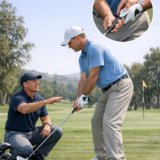
Achieving reliable, high-level performance on championship-caliber golf courses demands more than isolated technical adjustments; it requires an integrated approach that combines biomechanical precision, targeted skill progression, quantifiable performance metrics, and informed on-course strategy.This article synthesizes contemporary biomechanical research with practical, level-specific drills to refine both the full swing and the short game-particularly putting-so that improvements made on the practice tee translate into lower scores under tournament conditions.
First, foundational movement principles that govern efficient energy transfer, repeatable kinematics, and injury risk mitigation are reviewed to establish objective benchmarks for swing and stroke quality. Second, the discussion translates these principles into progressive drill curricula tailored to skill level, emphasizing measurable outcomes (e.g., clubhead speed, launch conditions, stroke consistency, green-reading accuracy) and the instrumentation and protocols used to obtain them. Third, the manuscript examines how course architecture, green variability, and competitive pressures modify technical and tactical choices, and offers strategies for adapting technique and decision-making to the demands of top golf venues.Intended for coaches, performance scientists, and serious players seeking evidence-based pathways to consistent scoring, the article concludes with guidelines for integrating practice, data-driven feedback, and periodized training into a sustainable performance plan. Where available, recommendations are anchored to peer-reviewed findings and standardized measurement approaches to facilitate objective skill development and long-term monitoring.
Integrating Biomechanics and Motor control to Optimize the Full Swing on Championship Layouts
Effective full-swing refinement begins with a biomechanically sound setup that promotes repeatable motor control. Establish a stable base with a shoulder-width stance for irons and a slightly wider stance for the driver, and set a spine tilt of approximately 10-15° away from the target to allow a natural shoulder turn; aim for a shoulder turn of 80-100° and a pelvic rotation of 40-50° in the backswing. Integrate the classic kinematic sequence – pelvis → torso → arms → club – to maximize efficient energy transfer and reduce compensatory hand action; a clear cue is to initiate the downswing with a subtle lateral shift of the hips toward the target while maintaining a stable head position. For setup and pre-shot checkpoints, train with these speedy checks:
- Grip pressure: light-to-moderate (about 4-5/10) to allow wrist hinge and clubface feel;
- ball position: centered to slightly forward for long irons and driver (forward for higher launch);
- Shaft lean at address: 2-4° forward for short irons to ensure crisp compression.
Common mistakes include over-rotating the lower body early (causing a loss of lag) and excessive casting of the wrists on the downswing; correct these by practicing a slow-motion downswing where the right hip leads and the hands remain passive for the first 20% of the downswing to preserve lag and compress the ball consistently.
Translating mechanical improvements to championship layouts requires deliberate control of launch, trajectory, and dispersion under varied conditions. On firm, wind-affected courses and elevated greens-such as those encountered in high-level tournament setups-prioritize trajectory management by adjusting ball position, club selection, and angle of attack: for most players an iron attack angle of approximately −3° to −6° creates desirable spin and compression, whereas an optimized driver setup often seeks a slightly positive attack (+2° to +4°) to maximize launch and reduce spin. Use these practical in-round adjustments:
- Into a headwind, play a shorter club and lower trajectory by moving the ball back in the stance and reducing shoulder turn slightly;
- On uphill approaches, add loft by opening the clubface or selecting a club with 3-5° more loft to ensure carry to the receptive area;
- When target greens are narrow or guarded, prioritize landing angle and spin – small increases in loft or a quarter-inch ball-forward adjustment can add 500-1,000 rpm of spin on short irons, improving holdability.
Additionally, equipment considerations such as proper shaft flex and loft gapping are critical on tight championship tees: verify that your longest irons/utility clubs produce predictable launch windows and that your driver loft and shaft profile match your optimal spin/launch pairing when tested on a launch monitor.
blend motor learning principles, progressive practice routines, and mental rehearsal to make technical gains reliable under pressure. Structure training with a mix of blocked repetitions to ingrain feel and random/variable practice to promote adaptability on course; such as,a weekly plan might include focused biomechanics sessions (30 minutes) followed by on-course simulation (60 minutes) that forces club selection and trajectory decisions. Use measurable goals and targeted drills:
- Impact-bag drill: three sets of 10 reps to ingrain forward shaft lean and compress the ball;
- Step-and-swing drill: starts with right foot back then step through to promote sequencing and ground reaction force timing;
- Feet-together half-swings: 3 sets of 12 to improve balance and clubface control at impact.
Track progress with objective metrics-percentage of center-face strikes, dispersion radius (e.g., 80% of shots within a 20-yard circle at 150 yards), and clubhead speed gains (a realistic target is +2-4 mph over 6-8 weeks with strength and technique work). integrate a consistent pre-shot routine and pressure simulations (match-play drills, small-stakes wagers, or timed rounds) to connect technical improvements to scoring under tournament-like conditions, ensuring that biomechanical efficiency and motor control translate into lower scores on championship layouts.

Objective Metrics and Technology for Swing assessment: Clubhead Speed, Tempo, Kinematic Sequence and data Driven Targets
Objective performance assessment begins with quantifying the swing using repeatable, measurable metrics: clubhead speed, tempo ratio (backswing time : downswing time), attack angle, and the kinematic sequence (pelvis → torso → arms → hands).for practical benchmarking, set baseline measurements with a reliable launch monitor (e.g., TrackMan, FlightScope) or radar: most male recreational drivers average ~80-95 mph, club-fit and low-handicap players often exceed 100-110+ mph, while women commonly range 65-85 mph; use these values only as relative guides. Tempo is commonly optimized near a 3:1 ratio (backswing roughly three times the duration of the downswing); however, some elite players function at 2.5:1-3.5:1 depending on swing style. The kinematic sequence should show proximal-to-distal energy transfer (hips initiating rotation, then thorax, then arms and club) to maximize efficiency and smash factor. Together these objective metrics-measured without subjective bias-allow instructors and players to set specific numeric targets (e.g., +5 mph clubhead speed, increase smash factor to >1.45,normalize tempo to 3:1) and to monitor progress across lessons and practice sessions.
To translate data into technique improvement, employ technology-driven drills and progressive training protocols that respect anatomy and equipment. begin each session with a quick, measurable warm-up sequence: 10 slow swings focusing on hip lead, 10 swings at 75% speed for sequencing, then 20 full swings with a launch monitor recording clubhead speed, attack angle, spin, and carry.use the following practice elements to address common faults and produce measurable change:
- overspeed training with lighter clubs or speed tubes to safely raise clubhead speed (+2-6 mph over 6-8 weeks when programmed correctly).
- Tempo metronome drill set to a 3:1 rhythm (e.g., 3 beats backswing, 1 beat downswing) to internalize timing and reduce casting or early release.
- Separation/coil drill (step-through or pause-at-top) to train the kinematic sequence, emphasizing a 15°-25° hip rotation differential ahead of the shoulders through transition.
- Impact-bag and toe-up drills to improve shaft lean, compress the ball, and produce consistent attack angles: aim for +2° to +4° attack with driver and -2° to -6° with irons depending on loft and turf conditions.
Instructors should pair video analysis at 240+ fps with launch monitor data to correlate visible kinematic faults (e.g., casting, reverse pivot, early extension) with objective numbers and then prescribe targeted corrective progressions. Equipment factors-shaft flex/stiffness, loft, head design-must be considered in the same data set because a fitter can often unlock 2-6 mph or improve launch/spin enough to yield as many strokes as a swing change.
integrate data-driven targets into course strategy and short-game planning so technical gains convert to lower scores. Use dispersion and carry-distance statistics from practice to set conservative aiming points on the course: for example, if 85% of your carries with a 7-iron fall within a 10-12 m radius, place the target 10-15 yards short of hazards on a narrow green at St andrews style links or aim for the safe side on firm, low-cut bentgrass approaches when wind is prevalent. Apply the following management and troubleshooting checkpoints on the course:
- Pre-shot process – consult your launch/range data (carry, spin, preferred attack angle) and pick an intermediate target (landing zone) rather than a pin-seeking mindset; this reduces risk and penalty strokes.
- Short-game calibration – use 20-30 ball wedge sessions to dial in trajectory and spin for different grains and turf (e.g., Bermuda grain up/down affects run and stopping). Aim for repeatable release points and a consistent clubhead speed for each distance (mark distances in 5-yard increments).
- Troubleshooting - if dispersion increases under pressure, revert to process goals (tempo, setup checkpoints: ball position, shaft lean: 2-4° forward for irons) and use simplified pre-shot routines to maintain rhythm.
By linking quantified swing metrics to on-course decisions and repeatable practice protocols,golfers-beginners to low handicappers-can pursue incremental,measurable targets (e.g., +3-5 mph clubhead speed, 10% tighter dispersion, consistent 3:1 tempo) that reliably translate into improved accuracy, better course management, and lower scores while preserving sound technique and minimizing injury risk.
Progressive Drill Protocols for Skill Acquisition: Level Specific Prescriptions from Novice Fundamentals to Advanced Shot Shaping
Begin with a systematic foundation that converts practice time into repeatable ball-striking: set up with neutral grip, shoulders parallel to the target line, and 55/45 weight distribution favoring the trail foot at address for most full irons; maintain a spine tilt of approximately 5° away from the target to promote a downward iron attack. For ball position use center to one ball forward of center for mid-irons and progressively forward for long clubs; for the driver use a tee height that positions the equator of the ball even with the top of the driver face. To translate these fundamentals into measurable improvement, set performance goals such as 80% center-face contact on 30 ball-feet tests, iron dispersion less than 20 yards at 150 yards, and a repeatable pre-shot routine of 10-15 seconds. Practice progression should follow a stepwise model: (1) slow, mirror-guided motion to ingrain positions, (2) half-swings with impact-focus, and (3) full-speed swings with feedback. Use these focused drills to build fundamentals:
- alignment-stick gate drill: create a narrow gap at impact to rehearse in-to-out or square paths and promote square face alignment.
- Impact bag or towel drill: emphasize compression and low point control for consistent strike and reduced thin fat shots.
- Tempo ladder: 10 swings at 50%, 10 at 75%, 10 at 100% to train rhythm and transition sequencing.
Common mistakes include excessive lateral sway (correct with feet-together half-swings), lifting the head early (correct with chin-line checkpoints), and inconsistent ball position (use clubs laid on ground as visual guides).
Transitioning to the short game, prioritize distance control, face loft management, and green-reading fundamentals because these shots produce the greatest scoring variance. For chips and pitches, match the club’s loft to the desired roll: use a 56° sand wedge with 10-12° bounce for soft sand and higher-trajectory bunker exits, but select a 50° gap wedge with 6-8° bounce for firmer lies to avoid digging. Practice routines should be specific and measurable; such as, perform a landing-zone ladder with targets at 10 ft, 20 ft, and 30 ft from the hole and record proximity to each target across sets of 12 shots until the median distance to target falls under 6 feet. Always remember the Rules of Golf in play situations: do not ground the club in a hazard (bunker) before making a stroke, and use allowable practice only on the practice area. Recommended short-game drills include:
- Clock-face chipping drill: place tees in a circle around a hole at 3-10 yards to teach trajectory control and landing spots.
- two-tier green practice: replicate slope by landing shots on the upper tier to feed the hole, improving green-reading and pace.
- Lag putting drill: 40-60 foot putts to an island green (3-4 foot radius) to reduce three-putts; record one-putt percentage goal of 50%+ from 20-40 feet.
Include routine checks on equipment-grip size for control, loft/gap sequencing for consistent yardage gapping-and adapt practice to course conditions (e.g., firm greens require lower trajectory and more roll; into-wind shots lose roughly 10-20% carry depending on wind speed).
integrate advanced shot-shaping mechanics with tactical course strategy to lower scores under real-course pressure. Train the relationship between face angle and swing path: a controlled fade generally requires an open face of 2-4° relative to the path, while a controlled draw requires a closed face of 2-4°; practice these with the gate drill at multiple tee distances to quantify lateral curvature. Work on attack angle targets-+1° to +3° with the driver for optimal launch and spin, and -2° to -6° with mid/short irons to ensure crisp compression-and verify with a launch monitor or video capture. Apply course-management prescriptions: when facing a narrow tree-lined par 4 or gusty links hole, choose a lower-lofted 3‑wood or an iron off the tee to keep the ball under the wind and leave a preferred approach distance (e.g., a 120-140 yard wedge shot), rather than forcing risk for marginal gain. Advanced drills and mental strategies include:
- Shot-planning simulations: play practice rounds where you must hit only predetermined yardage windows to reinforce decision-making and club-selection discipline.
- Variable-practice shaping drill: alternate 10 fades and 10 draws to the same target to develop control and adaptability.
- Pre-shot script and visualization: rehearse one consistent routine to reduce indecision; target a commitment threshold such as ”if I choose to attack, commit to the exact landing zone.”
By following a progressive hierarchy-from reproducible setup and impact mechanics to precise short-game control and deliberate on-course strategy-players of all levels can convert practiced skills into measurable score reductions and improved competitive resilience.
Driving for Distance and Accuracy on Variable Course conditions: Wind Management, Launch Angle Tactics and Ground Interaction
Wind demands a disciplined, reproducible setup and shot-selection protocol.Begin by assessing wind direction and strength for at least 10-15 seconds before choosing a target: headwind reduces carry and increases air time, while tailwind increases roll; crosswinds require lateral aim adjustments equal to the wind’s strength and expected time-in-air. For practical request on a seaside links hole (for example, a coastal par‑4), move the ball 1-2 inches back in your stance and slightly narrow your base to de‑loft the club by about 2°-4° when you need a lower trajectory into a headwind; conversely, tee the ball higher and open your stance slightly into a tailwind to allow more launch and rollout. use the following quick-check list on the tee to manage wind consistently:
- Visualize time-in-air: reduce it to limit wind exposure (three-quarter swings or a controlled lower finish).
- Club up or down: choose a club that gives the carry you need given current wind and target elevation rather than exact yardage.
- Use course features: favor ground running on firm fairways or aim for sheltered landing areas when wind is strong.
These habits help players of all levels make repeatable choices under variable weather and ensure strategic play rather than guessing.
Optimizing launch angle and spin is central to maximizing both distance and accuracy; therefore, integrate equipment checks and measurable tuning into practice. On a launch monitor, aim for a driver launch angle of approximately 10°-14° with spin between 1,800-3,000 rpm for most players, and an attack angle of +1° to +3° (hitting up) for efficient driver performance; if the attack angle is negative, expect high spin and reduced roll. With long irons expect a negative attack angle of −2° to −6° and correspondingly lower launch. If numbers are off, adjust loft, ball position, or shaft (stiffer flex or lower torque to reduce excessive spin). Practice drills that translate these metrics into feel include:
- Launch‑monitor block: 30‑shot sets aiming to reduce spin in 50 rpm increments and record carry/roll.
- Ball‑position drill: move the ball incrementally 1 inch forward/back and note launch change to internalize visual cues.
- Three‑quarter control swings: for windy days,practice abbreviated swings that create a lower apex without sacrificing face control.
Beginner golfers should focus on consistent ball position and a stable spine angle; low handicappers should use these readings to refine loft/shaft setup or to request a custom fitting.
Ground interaction-how club meets turf and how the ball reacts after landing-connects swing mechanics to scoring decisions. For long irons and wedges, strive for a divot that begins 2-3 inches past the ball to ensure a descending blow that produces optimal spin; for drivers, aim for minimal or no divot and a slightly upward (positive) attack angle to maximize launch and reduce spin. When conditions are soft (e.g., rainy links or a dew‑covered morning at a parkland course), expect deeper divots and less rollout; thus, select a tighter landing area and factor extra carry. Correct common mistakes with targeted drills:
- Scoop correction: place a tee or headcover a few inches behind the ball and practice hitting the ball without contacting the obstacle to eliminate early flip.
- Early extension drill: practice hitting shots with a chair or alignment stick against your hips to maintain posture through impact.
- Bounce‑awareness routine: use three wedge shots with progressively shallower angles of attack to feel how bounce and sole geometry affect interaction and spin.
integrate the mental component by rehearsing 30‑second pre‑shot routines that include wind checks,launch‑angle targets,and a contingency plan (e.g., play left of the pin into a crosswind); this builds deliberate decision‑making that reduces errors and lowers scores across a variety of course conditions.
Precision Putting Mechanics and Speed Control: Face Angle, Stroke Path, Green Reading and Evidence Based Practice Routines
Precision begins with the interaction between putter face orientation and the stroke path; small angular errors create large lateral misses. To quantify this, use the simple geometry rule that lateral deviation ≈ distance × tan(face error). Such as, a 1° face-open error at impact produces roughly a 2.1‑inch miss on a 10‑foot putt, so achieving a square face at impact is essential for consistency. Begin with a repeatable setup: eyes over or just inside the ball, shoulders parallel to the intended line, and a putting grip that allows a natural hinge at the shoulders rather than active wrists. Then match your stroke style to the putter: face‑balanced heads favor a straight-back/straight-through stroke, while toe‑hang heads perform optimally with a small arcing path. As practical checkpoints,use the following setup and stroke checklist:
- Alignment - clubface aimed to target,body and feet parallel to target line;
- Loft – typical putter loft of 3°-4° to promote smooth forward roll;
- stroke arc – keep path within ±2° for short putts,and maintain a stable head arc for longer lag putts;
- Tempo – target a consistent backswing:forward‑swing ratio (start with 2:1 and adjust to feel).
Common errors include excessive wrist action (creates face rotation), aiming the feet instead of the putter face, and over‑gripping; correct these with slow‑motion mirror drills and impact tape to confirm square contact.
Speed control and green reading are inseparable: distance control defines the shape of the line you must read. Begin by assessing the green speed using the course’s Stimp value (many municipal greens run 8-10 Stimp, championship bentgrass can be 11-13). Use a practical rule of thumb when estimating break: on a moderate green,a 1% grade typically introduces about 1-2 inches of break over 10 feet,while a 3% grade will produce roughly 3-6 inches – adjust more on heavy grain such as Bermudagrass where the ball can be deflected considerably. For on-course application, read from behind the ball and then from the low side; confirm with a quick practice putt to feel speed and grain effect. Below are reproducible speed drills to calibrate touch and reading:
- Ladder drill – putt to markers at 6, 12, 18, 24 feet focusing on leaving the ball within a 3‑foot circle; record percentages and aim for incremental improvements (e.g., 70% success within 3 ft at 24 ft as a 6‑week goal).
- Gate and mirror drill – set tees 2-3 inches wider than the head to ingrain a square face at impact.
- Grain comparison – on different grasses, roll identical 15‑foot putts to perceive how grain/temperature change ball speed and break.
In windy, wet, or frosty conditions, prioritize speed (a firmer stroke) because reduced roll or added surface friction exaggerates misreads; conversely, on fast, dry championship greens play softer lines and reduce face opening/closing.
Maximize transfer to scoring through evidence‑based practice routines and course management integration. Research on motor learning supports a hybrid approach: begin sessions with blocked technical work to engrain a square face and stable path (mirror, impact tape, and 5-10 minute tempo drills), then progress to variable/random practice that simulates course pressure (mixed distances, varying breaks, and competitive constraints). Example weekly microcycle: three 30-40 minute sessions (one technical,one speed calibration,one situational/random) with measurable targets such as making 80% of 6-8 ft putts and leaving 70% of 30-50 ft putts within 3 ft after six weeks. Additionally,incorporate feedback tools – slow‑motion video to check face angle at impact,a Stimp meter for green speed,and a simple outcome log – and adapt equipment only after technique is consistent (adjust loft or lie if persistent miss patterns remain). integrate a concise pre‑putt routine (3-7 seconds) to align visual, technical, and mental cues: read from multiple angles, pick a target line, commit to a speed, and execute with controlled grip pressure (around 3-4/10). This combined technical, perceptual, and tactical program reduces three‑putts, improves lag efficiency, and translates practice improvements directly into lower scores on undulating, fast, or grainy greens.
Transfer Oriented Practice and Pressure simulation: Measuring Consistency Through Statistical Feedback and Practice Designs
Begin by establishing objective, repeatable metrics that quantify transfer from the range to the course: track GIR (greens in regulation), fairways hit, proximity to hole (feet) on approach shots, scrambling percentage, and penalty strokes (out-of-bounds, water). Use a simple spreadsheet or app to record each stat by hole and by club; for example, measure 30 approach shots from mixed distances (50-170 yards) and record the mean and standard deviation of proximity to the hole in feet. Set progressive,measurable goals (beginners: reduce average proximity by 2-4 ft/month; intermediate: 1-2 ft/month; low handicap: target <25 ft average). In addition, capture situational data - wind direction, green speed (stimpmeter or subjective scale), and lie (tight, plugged, fairway) – because the rules of Golf and common penalty scenarios (water hazards and OB) affect strategic choices; this contextual data allows you to separate technical inconsistency from poor decision-making under course conditions.
Next, design practice that emphasizes transfer and pressure simulation using structured variability and realistic stressors so skills generalize to on-course play. Progress from blocked practice to randomized and interleaved patterns: after warm-up, perform a variable-distance ladder (e.g., 10, 30, 50, 80, 120, 150 yards) repeated twice with target circles of 10 ft, 20 ft, and 30 ft around the hole to measure dispersion; then simulate course holes by choosing a par-3, par-4, and par-5 target sequence and play them consecutively on the range with realistic club selection and yardage gaps.Integrate pressure by adding objective stakes and time constraints: for putting, require 8/10 makes from 6 ft under a 20-second pre-shot clock, or run a knockout format where a miss eliminates a practice partner; for long game, impose a outcome (additional 5 push-ups or a 10‑second timeout) for shots missing the target circle. Useful drills and checkpoints include:
- Proximity drill: 30 approaches from mixed distances,log feet to hole
- Pressure putting: make 8/10 from 6 ft or 15/20 from 10 ft with a 20s clock
- Shot-shape ladder: deliberately hit 6 fades and 6 draws at 150 yards to simulate wind adjustments
These designs force adaptive decision-making and provide the statistical feedback necessary to quantify consistency changes over time.
connect technical refinement, equipment choices, and course strategy to the statistical feedback so practice becomes purposeful. Use setup fundamentals (stance width: shoulder‑width for mid‑irons, 1.1-1.5× shoulder for driver; knee flex 10-20°; spine tilt 15-25°) and apply measurable swing checkpoints (e.g., maintain a shoulder turn of 90-100° for full shots, reduce range to 60-70% to control trajectory into firm greens). Address common mistakes with corrective steps: if dispersion shows a consistent pull-slice, check that the clubface is not open at impact and work on a toolbox drill - place an alignment rod along the toe path, practice swinging along the rod for 20 reps, then make 10 swings with an exaggerated release to square the face. Consider equipment: select wedge bounce based on turf (tight/firm = 4-6° bounce; soft/landing in sand = 10-14°) and adjust loft gaps so approach distances have 10-15 yard spreads between clubs. embed a concise mental routine (visualize target, commit to trajectory, 3 deep breaths, pre-shot waggle) and track changes in heart-rate or perceived stress during pressure drills; if performance drops more than one standard deviation under stress, incorporate graduated exposure (start low-pressure, increase stakes) until statistical measures (GIR, proximity, putting %) return to baseline or better under simulated pressure. this integrated, evidence-driven approach ensures that technical work, practice design, and on-course strategy produce measurable scoring gains for golfers at every level.
Course Management and Club Selection to translate Technical Gains into Lower Scores: Risk Reward Analysis and Putting Zone strategy
Effective scoring begins with disciplined pre-shot course management and precise club selection that translate technical gains into repeatable outcomes. Start by quantifying the shot: use yardage books, GPS, or laser rangefinders to determine exact carry and landing distances, then adjust for elevation (approximately 3-4 yards per 10 feet of elevation change) and wind (a steady 10 mph headwind can reduce carry by 10-20 yards, depending on ball speed). Next, match the required launch conditions to the equipment - for example, choose a club that produces the necessary loft and spin to achieve a descent angle of roughly 45-50° for approach shots into receptive bentgrass greens, or flatter descent into firm, sandy coastal links where rollout is expected. in practice, establish a pre-shot checklist to standardize decisions:
- Target (specific point on the fairway/green)
- Required carry & landing (yards and margin for error)
- Shot shape & trajectory (fade/draw, high/low)
- contingency (preferred layup landing and next club)
Drills to hone these decisions include targeted distance control sessions (hit 10 shots to 120, 140, 160 yards and record dispersion) and simulated course management on the range (play three different holes from a practice tee using only three clubs to refine club-selection discipline). These measurable drills reduce impulsive decision-making and improve greens in regulation percentages by aligning technical improvements with on-course realities.
Short-game and putting-zone strategy close the loop between technical execution and scoring. Define a putting zone radius – as an example, 10-12 feet from the hole as the primary three-putt elimination zone – and adapt approach strategy to place the ball inside that radius whenever reasonable. Consider green speed (measured by a Stimpmeter; recreational courses often run 8-10 ft, tournament setups 11-13 ft or higher) when selecting club and landing angle: faster greens demand lower-trajectory approaches to control rollout, whereas slower greens allow for higher, softer landings with more spin.For turf- and grain-specific play, note that Bermuda grain will influence break and putt speed more than bentgrass; account for this on both approach spin and green reading.Practice routines:
- Putting: concentric-ring drill - make 10 putts from 6, 12, and 18 feet to target 85%+ make/miss close accuracy from 6 ft and consistent speed control at longer ranges.
- Chipping: landing-zone drill – place towels at 6-10 yards and practice landing the ball on the towel to control rollout.
- Pitching: variable-length ladder – pitch to 20, 30, and 40 yards focusing on consistent strike and launch to achieve target descent angles.
common faults such as excessive backspin expectation on firm greens or misreading visible surface slope can be corrected by rehearsing pre-shot reads, practicing bump-and-run vs. flop variations,and setting quantifiable goals (e.g., reduce three-putts by 40% within eight weeks through focused speed drills).
integrate risk-reward analysis with shot-shaping mechanics and mental strategy to convert technical gains into lower scores.use a simple expected-value framework on the course: estimate the probability of a successful aggressive line (such as, a 15% penalty risk when carrying a pot bunker or water to reach a tucked green) versus the consistent par-saving probability from the conservative play (laying up to 90-120 yards and relying on wedge accuracy and two-putt). Translate these probabilities into action by applying concrete swing adjustments for the chosen outcome: to hit a controlled draw, move ball position slightly back, close the stance by ~1-2 inches, and promote an inside-to-out path with a slightly stronger grip to create 2-4° more face-to-path closure at impact; conversely, for a fade, open the clubface 1-3° and aim path out-to-in. Equipment considerations – loft choice, wedge grind for turf interaction, and ball compression – should be rehearsed in practice under varying weather (wind, wet vs. dry fairways) to understand how trajectory and spin change. Troubleshooting steps:
- If dispersion increases under pressure: simplify the pre-shot routine and reduce club choice options.
- if approach shots run through greens on firm days: lower trajectory and select an extra club to bump-and-run or aim for the back of the green to use runoff safely.
- For repeated short-game misses: isolate contact drills to improve strike and check bounce interaction by varying ball position and weight distribution.
By combining quantified decision-making, deliberate practice of specific shot shapes, and situational mental strategies (match play vs. stroke play considerations, weather-driven conservatism), golfers of all levels can reliably convert technical improvements into measurable reductions in scores.
Q&A
Note on search results
– The provided web search results refer to an “Unlock” home equity product and related pages (financial services). They do not return content for the golf article title you requested. Below I therefore provide a self-contained, academically styled Q&A addressing the topic “Unlock Peak Performance: Master Swing & Putting on Top Golf Courses.” A brief,separate Q&A about the Unlock home-equity product (based on the provided results) follows at the end.
Q&A - Unlock peak Performance: Master Swing & Putting on Top Golf Courses
1.What is the central objective of the article?
Answer: The article aims to synthesize evidence-based biomechanical principles, level-specific practice progressions, objective performance metrics, and course-strategy integration to improve swing, putting, and driving consistency on championship- and resort-caliber golf courses. The emphasis is on measurable improvement, transfer from practice to play, and optimizing decision-making under course constraints.
2. Which biomechanical principles underpin a repeatable golf swing?
Answer: Key principles include kinematic sequencing (proximal-to-distal energy transfer), effective pelvis-torso dissociation, maintenance of a stable base and postural integrity, consistent wrist and forearm mechanics at impact (to control face angle), and swing-plane consistency. These principles maximize transfer of energy to the ball while minimizing variability in face-to-path relationships that drive dispersion.
3. How should putting biomechanics be conceptualized from an evidence-based viewpoint?
Answer: Putting should be treated as a motor-control task emphasizing repeatable alignment, consistent low-variance stroke arc/pendulum action, and stable putter-face orientation through impact. Effective distance control arises from coordinated stroke length and tempo; green-reading and visual-motor calibration are integrated components affecting outcome variability.
4. What level-specific priorities should coaches adopt for beginners, intermediates, and advanced players?
Answer:
– Beginners: prioritize fundamentals – grip, stance, posture, alignment, basic swing path, and simple putting stroke. Use high-frequency, low-complexity drills and immediate augmented feedback (video, mirrors).
- Intermediates: Emphasize sequencing, tempo, shot-shaping capability, and deliberate practice on distance control for putting. Introduce variability in practice and moderate use of technology (launch monitor) for objective feedback.
– Advanced players: Focus on small-variance refinements (face control, angle of attack, spin optimization), competitive simulation, pressure training, and integration of course-strategy variables such as pin placements and lie-dependent shot selection.
5.Which drills are evidence-based and appropriate for each skill level (swing, driving, putting)?
Answer:
– Swing (Beginner): Alignment-rod gate drill to establish consistent takeaway and path; slow-motion mirror drill for posture and shoulder turn.
– Swing (Intermediate): Impact-bag drill for maintaining forward shaft lean and compressing the ball; step-through or weight-transfer drill to ingrain sequencing.
- Swing (Advanced): One-handed tempo drills to isolate release timing; weighted-club acceleration sets to optimize clubhead speed without sacrificing control.
- Driving: Tee-height and forward-stance drills to practice angle of attack; targeted fairway landing drills to manage spin and carry.
– Putting (Beginner): Gate drill at the head to ensure face square-through; short putt repetition (3-6 feet) to build confidence and alignment.
– Putting (Intermediate): Ladder distance-control drill (3-6-9-12 feet increments); breaking-putt practice using the same arc on multiple breaks.
– Putting (Advanced): Pressure-simulation blocks (e.g., make X of Y before progressing); visual-quantification drills using markers for launch and face rotation metrics.
6.What objective metrics should players and coaches monitor?
Answer: Key metrics include clubhead speed, ball speed, smash factor, launch angle, spin rate (driver and irons), angle of attack, face angle at impact, swing path, carry distance, lateral dispersion (standard deviation), greens in regulation (GIR), strokes gained (approach, putting), up-and-down percentage, putt distance deviation, and putt-face rotation at impact. For putting, also monitor stroke length, backswing-to-follow-through ratio, and impact location on the putter face.
7. How can launch-monitor data be interpreted to inform practice?
Answer: Use launch-monitor data to identify the main source of dispersion (face angle vs. path), optimize launch/spin trade-offs for distance control, and verify that training changes produce consistent shifts in ball-flight parameters. Establish baseline metrics, set specific targets (e.g., reduce lateral dispersion by X meters or lower spin variability), and monitor standard deviation over multiple swings to assess consistency.
8. What thresholds or target ranges are realistic for amateurs vs. elite players?
Answer: Rather than prescribing exact universal numbers, it is recommended to establish individualized baselines and pursue relative improvements. Typical observations: elite male professionals have higher clubhead speeds and lower dispersion than most amateurs; however,key goals for amateurs should be reducing variability (e.g., lateral dispersion SD), improving smash factor for efficiency, and increasing GIR and strokes gained relative to baseline. Use percentile-based targets (e.g., move from 40th to 60th percentile in clubhead-speed group).
9. How should practice be structured to maximize transfer to on-course performance?
Answer: Adopt deliberate practice principles: distributed sessions, variable practice to promote adaptability, context-rich drills that simulate on-course scenarios, and periodic blocked practice to consolidate new motor patterns. Include pressure inoculation (competitive tasks, consequence-based drills), and incorporate pre-shot routines identical to on-course behavior to facilitate transfer.
10.How can coaches quantify putting improvement beyond simple make percentage?
answer: Analyze putt distance control (mean absolute error from intended target), face rotation and impact location consistency, repeatability of stroke length and tempo, left-right miss distribution, and strokes gained: putting metric. Use multi-distance testing and compute standard deviation across repeated putts to quantify consistency improvements.
11. How should golfers integrate swing & putting practice with course strategy?
Answer: Practice should include hole-specific simulations: approach-shot targets contingent on typical pin placements and hazards, pairing tee shots with subsequent approach opportunities, and putting from common green speeds and slopes found on target courses. Emphasize decision matrices that include wind, lie, and risk-reward analysis to align technical capabilities with tactical choices.
12. What role does pre-shot routine and cognitive strategy play in performance consistency?
Answer: A consistent pre-shot routine reduces cognitive variability, stabilizes arousal, and constrains motor variability by channeling attention. Cognitive strategies include explicit planning (target and shot shape), cue words for tempo, and visual pre-performance imagery. Training routines should be practiced to automaticity so that they are robust under pressure.13. How should players periodize training across a season or before a specific tournament?
Answer: Use macrocycles (season), mesocycles (planning, competition, transition), and microcycles (weekly).Emphasize general physical conditioning and technical acquisition in the preparatory phase, maintenance and competition simulation in the in-season phase, and rest/rehabilitation in transition.Taper technical volume and increase specificity in the week before competition, prioritizing quality over quantity.
14. What injury-prevention considerations are relevant when increasing swing or driving intensity?
Answer: Maintain joint mobility (thoracic spine, hips, shoulders), trunk and hip strength, and neuromuscular control to support higher speeds. Implement progressive overload when increasing swing velocity, ensure adequate warm-up protocols, and monitor pain or abnormal movement patterns with a qualified medical/fitness professional.
15. How can progress be measured reliably over time?
Answer: Use repeated standardized testing (e.g., 30-shot dispersion tests, 10-putt distance-control tests) under consistent environmental conditions and with the same equipment. track both central tendency (mean carry, mean putt distance) and variability (standard deviation). Combine objective metrics with performance outcomes (GIR,scoring average,strokes gained).
16. Which errors are most common and how are they corrected?
Answer: Common errors: inconsistent face angle at impact (produces slices/hooks), early extension or collapse of posture (loss of power and direction), and poor distance control in putting. Corrections: targeted drills (impact-bag for forward shaft lean; alignment/path drills for takeaway), video/biomechanical feedback for posture, and calibrated distance-control drills for putting. Progress corrections incrementally and validate with objective data.
17. How should equipment (clubs, ball, putter) be integrated into the performance plan?
Answer: Equipment must be fit to the player’s swing characteristics (shaft flex, length, lie, loft) and situational priorities (control vs. distance). For putting, putter length, lie and head design influence stroke mechanics. Fit changes should be considered after technical stability has been established to prevent confounding training effects.
18. How can one design pressure-simulated practice to enhance on-course putting and swing performance?
answer: introduce constrained outcomes and consequences (e.g., monetary stakes, competition with peers), graded difficulty under time pressure, and decision-making elements similar to course play (e.g., must save par from specific lies).Combine with physiological arousal monitoring (heart rate) to ensure training covers a range of competitive states.
19. What is the recommended assessment battery for a comprehensive performance baseline?
Answer: A baseline battery could include: 30-driver test (clubhead speed, carry, dispersion), 30-iron approach test (proximity to hole), short game up-and-down success rate from standard lies, 20-putt distance-control test at multiple ranges (3, 6, 12, 20 feet), and fitness screens for mobility/power. Record strokes-gained components on subsequent rounds for ecological validity.
20. How can coaches and players ensure ethical and reproducible measurement and reporting?
Answer: Use standardized protocols, calibrate measurement devices, anonymize and document participant data, report both central tendency and variability, and use repeated measures to demonstrate effect over time. Clearly document intervention specifics so others can reproduce practice protocols.
21. What immediate actionable plan can a player follow for the next eight weeks to improve swing and putting?
Answer: Week 1-2: Baseline testing and technical fundamentals (daily 20-minute putting drills; 2×45-minute swing sessions focusing on setup and takeaway). Weeks 3-4: Introduce sequencing and tempo drills; start launch-monitor sessions once per week. Weeks 5-6: Increase variability and pressure simulations; integrate course-based practice (playing practice holes). Weeks 7-8: Taper volume, increase specificity to planned tournament/course, and re-test baseline metrics for comparison. Maintain strength/mobility work throughout.
22.What are limitations of biomechanical and metric-driven approaches?
Answer: Overreliance on numbers can neglect perceptual-motor skills, decision-making, and psychological factors. Environmental variability on courses (wind, turf, slope) can reduce direct transfer from controlled-range metrics. Thus, metrics should inform but not replace context-rich practice and cognitive training.
Q&A – Unlock (home equity product) based on provided search results
1. What is Unlock’s Home Equity Agreement (HEA)?
Answer: According to the provided pages,Unlock’s HEA is a financial product that provides a lump sum in exchange for a share of a home’s future value appreciation. It is presented as an alternative to conventional loans or lines of credit, structuring the transaction as a performance-based equity agreement rather than debt.
2. How is the HEA secured?
Answer: The HEA is secured by placing a lien on the property, either as a ”performance deed of trust” or a “performance mortgage,” depending on state-specific requirements, per the provided site pages.
3. What determines the cost of an Unlock HEA?
Answer: The cost to the homeowner is based on how much the home appreciates during the HEA term (which can be up to 10 years), rather than fixed interest. The longer or more the property appreciates, the larger the settlement owed at the end of the term.
If you would like, I can:
– Expand any of the Q&A answers with citations to peer-reviewed research and practical coaching protocols.
– Produce printable practice templates and metric-tracking sheets for swing and putting.
– Create a session-by-session 8-12 week plan customized to a specific handicap, age, or physical profile.
attaining peak performance on premier golf courses requires an integrated approach that synthesizes biomechanical precision, targeted putting methodology, and contextual course strategy. Mastery of the swing and putting stroke is not an end in itself but a component of holistic performance-one that must be quantified through objective metrics (e.g., clubhead kinematics, launch conditions, green-reading accuracy) and iteratively refined through level-specific drills and feedback loops.
Practically, players and coaches should prioritize evidence-based interventions: diagnostic assessment to identify individual movement drivers, progressive motor-learning protocols to consolidate repeatable mechanics, and scenario-based practice that simulates the complex environmental and strategic demands of top courses.Regular performance monitoring and adaptation-using measurable outcomes such as stroke gain, dispersion patterns, and putt conversion rates-will accelerate transfer from practice to competitive rounds.
unlocking and sustaining peak performance is an ongoing scientific and tactical endeavour.By combining rigorous assessment, disciplined practice, and course-aware decision-making, golfers at every level can systematically improve consistency, lower scores, and more reliably perform under the unique pressures of elite venues.