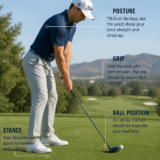

To draw the ball effectively,focus on creating an out-to-in path with your swing. This means positioning the ball slightly forward in your stance, especially if you’re right-handed, placing it under your left heel. This setup helps create the necessary outside-to-inside club path for a draw. Beginners might find it easier to start with a neutral grip and then gradually make adjustments.
During the swing, maintain your spine angle and core rotation. This ensures the club follows a smooth, inside-to-outside-to-inside path. A common mistake is flipping the wrists prematurely, which can cause a slice or a chunky shot. To avoid this, concentrate on using your hips and shoulders to guide the club. The downswing should feel rotational,like the club is wrapping around your body to finish in a position where the clubface is open but pointing back towards the target.
Once you’ve internalized the mechanics and setup of a draw, it’s time to put them into practice on the course. A classic situation where a draw can save the round is when you’re fighting a left-to-right breeze. Rather of overpowering the wind with a fade, opt for a well-hit draw. This shot shape will minimize the negative gust and add carry to your ball flight, allowing you to place the ball safely on the green.
Practicing the draw can boost your confidence and accuracy. Drills like hitting a series of draw shots off the range, using tees to mark a specific angle of attack, can help ingrain the feel of the draw into your muscle memory. Beginners might want to start with half swings or partial shots to feel the control needed for the draw without the full force of a full swing. For more advanced players, aim to hit draws from challenging spots, like tight lies or downhill lies, to build the skill and muscle memory.
From Practice to Course: Implementing the Draw in Real-World Scenarios
Understanding how to draw the ball is essential for golfers looking to navigate tight fairways and avoid hazards. The draw is primarily a result of the clubface starting left of the target at impact, followed by an outward path that sweeps across the ball from right to left. Beginners frequently enough struggle with this shot due to the need to counter their natural inclination to hit the ball directly at the target.
To implement a draw from practice to the course, start by examining your setup. Position the ball slightly forward in your stance, placing it under your left heel if you’re right-handed. This helps create the necessary outside-to-inside club path for a draw. Your hips and shoulders should be aimed left of your target,promoting a natural inside-out takeaway and swing.
Practicing the draw can be as simple as hitting balls off a tee on the range. Begin each repetition by focusing on the proper setup: left foot forward if right-handed, slightly open stance, and ball position in the sweet spot of your stance. A key technique is to rotate your shoulders and hips so you’re aiming left of your intended target line, which sets up the natural out-to-in swing path.
On the course, the draw comes in handy when you need to bring the ball back into trouble-considering the wind direction as well. For instance,a left-to-right wind can be worked with by hitting a draw,allowing you to push the ball out against the wind to land softly and safely. The draw can also be your go-to shot when you’re playing a dogleg right hole and need to shape the ball around the bend. Visualize your target, and aim slightly left of it, allowing the left side of your body to work toward your intended line.
remember the draw is a shot that requires precision and control. Start by practicing moderate amounts of draw to build trust in your technique. You can increase the draw’s intensity as you grow more pleasant. it’s vital to know your limits. If you find yourself consistently hitting the ball too far right or too far left, reassess your swing or setup for consistency.The draw is not just a rescue shot; it’s also a strategic play to shape your ball precisely around the course. Incorporating the draw into your repertoire of shots will enhance your adaptability and help lower your scores.
Fine-Tuning Your Touch: Consistent Draw Shots for Added Control and Confidence
Mastering the consistent draw shot is a pathway to added control and confidence on the course. For those struggling with a slice or the occasional fade, learning to draw the ball offers a refreshing solution. Drawing the ball involves understanding how to shape the shot to take full advantage of the course layout.
The cornerstone of mastering the draw lies in your setup and grip. Start by positioning the ball slightly forward in your stance, ensuring the clubface is slightly open to the target at address. This setup subtly positions your hands ahead of the ball, promoting an inside-to-outside swing path. Make sure your grip is firm and your hands remain slightly ahead of the ball at the top of your backswing. This forward hand positioning is critical for generating the draw, as it encourages a more in-to-out swing trajectory.
During the downswing, focus on three key movements. First, keep your shoulders rotating through the ball and avoid any excess lateral shifts. Next, extend your lead arm and use your wrists to release the club through impact. Lastly, consciously square the clubface at the point of contact. By doing this, you can achieve a draw with less spin and more roll, which is particularly beneficial on Bermuda grass or other fast surfaces. Avoid over-swinging or rushing through your follow-through, as this tends to introduce more slice-inducing loft at impact.
To reinforce these draw fundamentals, consider integrating the shot shaping drill into your regular practice routine. For beginners, start with a simple alignment exercise on the driving range. Place tees down the fairway at different points to hit targets, forcing your swings to be purposeful and controlled. For more advanced players, try alternating between draw and straight shots with the same club, which will sharpen your ability to make mid-swing adjustments based on the lie or wind conditions. This not only sharpens your technical skills but also improves your mental acuity under pressure.
Mastering the draw shot isn’t isolated to the driving range; it’s a crucial skill for tackling challenging layouts. Picture driving off a par 4 dogleg with a slight draw shaping the ball around a tight corner. Or sinking a long iron shot to a green guarded by bunkers on the left side,where the draw can save you from disaster. The ability to consistently draw the ball gives you the adaptability to play multiple shots from one tee box, allowing you to creatively navigate the course and strategically place the ball in play. Remember, a consistent draw shot is not just an remarkable physical feat; it’s a pivotal component in improving your overall game and lowering your scores.
By focusing on your setup,swing mechanics,and regular practice,you can dramatically enhance your ability to draw the ball. The result is a stronger, more dynamic game that will serve you well on and off the course. Happy swinging!