Unlock Your Best Score by Perfecting Your Golf Swing Technique
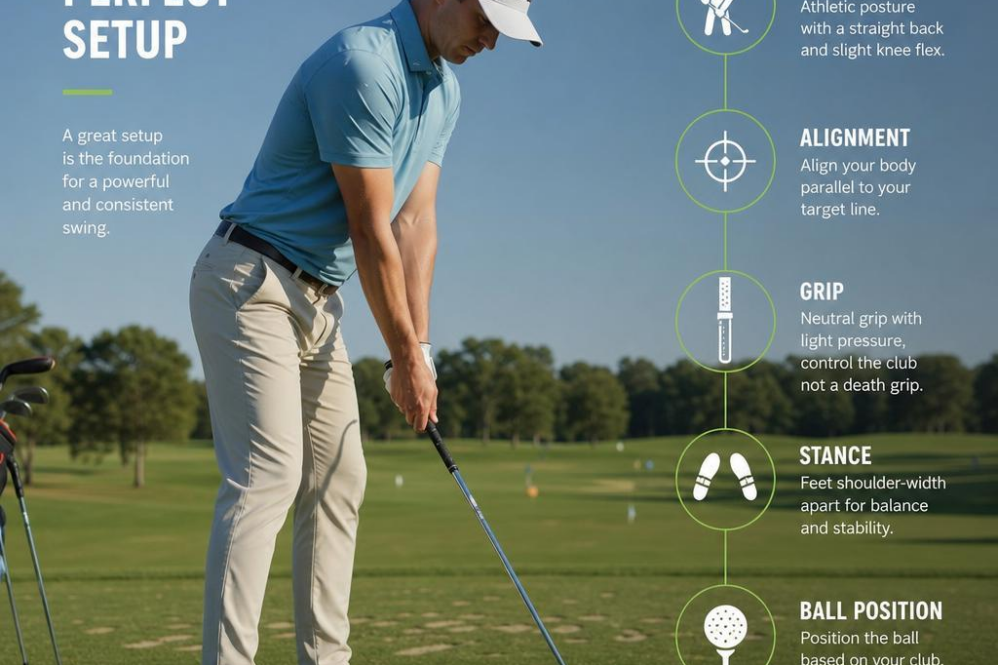
Mastering the golf swing requires a keen focus on both biomechanics and consistent practise routines. Begin by ensuring your setup fundamentals are solid: position your feet shoulder-width apart with a slight knee flex to promote balance, and align your body parallel to the target line. From this foundation, emphasize the importance of a smooth takeaway, keeping the clubhead low to the ground for the first few feet to encourage a wide swing arc. In the backswing, aim for a 45-degree shoulder turn-this measurement can be checked visually or with a golf training aid-and maintain a relaxed grip pressure around 5 out of 10 to facilitate fluid motion. As you transition into the downswing,focus on initiating movement from the hips rather than the arms,promoting proper sequencing that generates clubhead speed and consistent impact. For beginners, practicing with alignment sticks and mirror drills can help instill these fundamentals, while advanced players might incorporate high-speed video analysis or launch monitors to fine-tune angles of attack and clubface orientation at impact, crucial for maximizing distance and accuracy.
Integrating swing technique with strategic course management can dramatically improve your scoring potential. For example, understanding how different wind conditions and green speeds affect ball flight and roll allows you to adjust your swing path and club selection proactively. When shaping shots, such as executing a controlled draw or fade, consciously alter your swing plane by slightly opening or closing the clubface and adjusting your stance alignment accordingly. This precision not only helps navigate around hazards but also sets up more favorable approach angles to the green, making birdie opportunities more attainable.Incorporating short game drills-like lag putting exercises to control distance or pitch-and-run practices to enhance touch around the greens-complements full swing improvements by reducing three-putts and scrambling effectively. Regularly tracking your strokes gained statistics on approach, putting, and around the green provides measurable goals and highlights areas needing attention, ultimately fostering a thorough skill set that supports steady score advancement from tee to green.
How to Develop Consistent Putting Skills That Save Strokes
Developing consistent putting skills begins with mastering proper setup fundamentals and stroke mechanics.Start by ensuring your eyes are directly over or slightly inside the ball line, which allows for an accurate read of the target line. Your grip should be relaxed yet firm, avoiding excessive tension that can cause jerky putting strokes. Employ a pendulum motion using your shoulders rather than your wrists to create a smooth, controlled stroke-it enhances both distance control and directional accuracy. to refine your stroke path, practice with alignment aids on your putter or training mats that promote a square clubface at impact. Incorporating drills like the “gate drill”-where two tees are set slightly wider than your putter head-helps prevent an outside-inside swing arc, encouraging a straight or slightly inside path. Also, focus on maintaining a stable lower body throughout the stroke to avoid inconsistent strike patterns that lead to missed putts. Setting incremental goals,such as reducing three-putts per round by half,provides measurable feedback to track progress effectively.
Once the fundamentals are established, green reading and pace control become vital to saving strokes effectively. Learn to analyze the grain direction, slope angles, and subtle undulations by observing the green texture and moisture during your round. Position yourself behind the ball and extend the putter shaft to visualize the intended target line. Combine this visualization with a decisive pre-putt routine, incorporating a few practice strokes to gauge the required force-remember, a putt running too short will often break more dramatically. Adapting to varying course conditions, such as faster greens in dry weather or slower surfaces after rain, requires adjusting the length and force of your stroke accordingly. For more advanced players, developing the ability to “lag” putts from 20-30 feet reduces the risk of three-putting by leaving a manageable tap-in. Mental focus also plays a crucial role; maintaining calmness and trusting your stroke prevents rushed execution under pressure. Regularly practicing distance drills and breaking reads enhances both confidence and efficiency, ultimately lowering your overall score by saving crucial strokes on the greens.
Driving Tips That Add distance Without Sacrificing Accuracy
Maximizing driving distance while maintaining accuracy starts with a solid setup and efficient swing mechanics. Begin by ensuring a balanced stance with shoulder-width alignment and positioning the ball just inside your front heel to encourage an upward strike, which helps increase launch angle and reduce spin-both critical for longer drives. A slight tilt of the spine away from the target at address can promote a sweeping motion,allowing the driver’s clubhead to make contact with the ball on the upswing.Additionally, focusing on generating power from the ground up by engaging the hips and core in a smooth coil-and-uncoil sequence helps maintain swing tempo and prevents reaching or casting, a common error that reduces both distance and control. Incorporating a controlled wrist hinge early in the backswing can also store energy that releases through impact, boosting clubhead speed without compromising precision. To translate these mechanics into improved scoring, practice hitting drives that find the fairway, which statistically leads to better approach shots and more birdie opportunities on par 4s and 5s.
Beyond technique, course management is vital when aiming to add yards responsibly. Instead of always going for maximum distance, evaluate hole layouts, hazards, and prevailing wind conditions to decide on optimal shot shape and trajectory. For instance, on a narrow fairway with trouble on the right side, developing a reliable fade can keep the ball safely in play and avoid penalty strokes, helping to maintain or lower your handicap. Practice drills such as the “swing Path Jar Drill” can definitely help fix slice tendencies by promoting an inside-out swing path, which encourages a draw shape favored by many professionals for both distance and accuracy. Equipment choices also influence driving success; experimenting with driver lofts between 9 to 12 degrees can tailor launch conditions to your swing speed, while adjusting the club’s face angle with a fitting tool can correct hooks or pushes.integrating mental strategies such as visualization and pre-shot routines reinforces confidence and focus, enabling you to apply these technical improvements under pressure. By blending mechanical precision, strategic thinking, and consistent practice, golfers at every level can drive longer, straighter, and ultimately lower their scores on the course.
Bringing it All Together for a Confident Round Every Time
Mastering a confident round begins with integrating your swing mechanics, short game precision, and course management into a seamless strategy. Start by establishing a consistent setup, emphasizing neutral grip pressure-around 5 to 6 on a 10-point scale-to promote fluid motion and reduce tension. Align your feet parallel to the target line with a stance width roughly equal to shoulder width for full swings, narrowing slightly for chips and pitches to enhance control. During the swing, focus on maintaining a steady head position and a consistent tempo with a smooth takeaway, using a 3:1 rhythm ratio between backswing and downswing to optimize power and accuracy. for the short game, practice landing your chip shots within 1 to 2 feet of the hole to promote one-putt opportunities and sharpen your feels through drills like the “clock drill,” which involves chipping to targets arranged in a circle around the hole. continually refine your ball striking using impact tape or foam balls during practice to identify contact consistency and shot dispersion patterns.
Equally crucial is developing an intelligent course management approach tailored to your strengths and local conditions. Before each hole,analyze hazards,green slopes,and prevailing wind to make informed decisions that lower your risk of costly mistakes. For example, when facing a green with a severe left-to-right slope, opt for a shot shape that gently fades with a 15 to 20-degree open clubface angle to align ball flight with the break, improving your putting chances. Employ the strategy of playing “to the middle” of greens when pin positions are risky-this reduces penalty strokes and maintains solid scoring momentum. Incorporate mental rehearsal techniques by visualizing the intended shot trajectory and landing zone, reinforcing confidence and execution under pressure. For golfers aiming to break 90 consistently, emphasize minimizing three-putts through dedicated lag putting routines focusing on pace control, such as practicing putts from 30 to 50 feet aiming to leave the ball within a two-foot circle.by tying together technical proficiency and tactical savvy, you cultivate a resilient mindset and repeatable skills that translate into lower scores and more enjoyable rounds.