Unlock Your Natural Swing rhythm with Simple Biomechanics
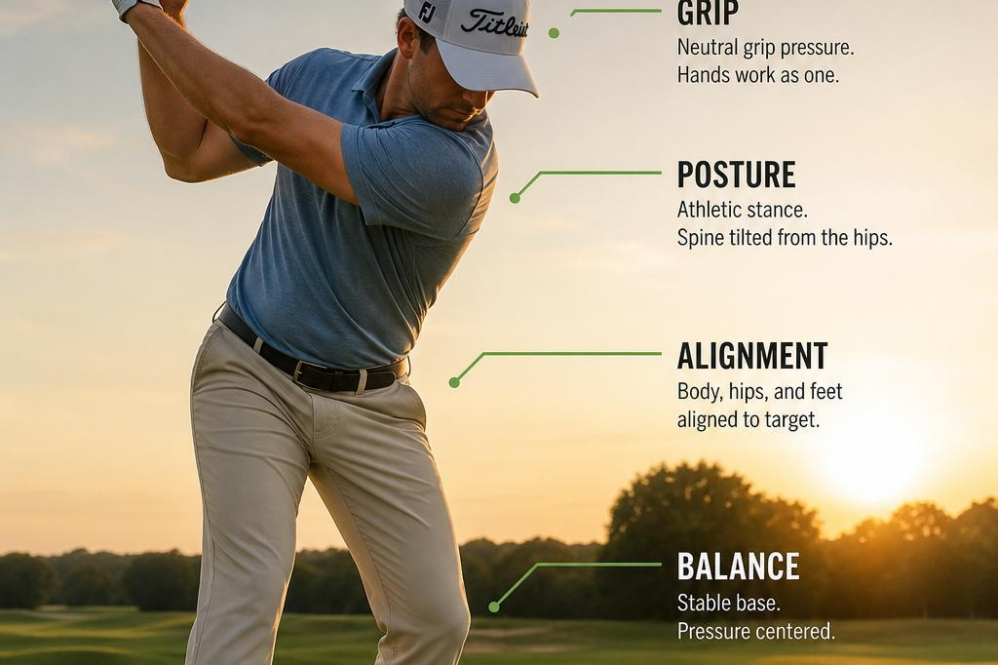
Achieving a fluid swing rhythm begins with understanding the body’s natural biomechanics and how they influence tempo and timing. Start by focusing on a smooth takeaway, where the clubhead moves back at a consistent pace, maintaining a 45-degree shoulder turn relative to your spine angle. This creates a solid coil without forcing tension, crucial for generating power and balance.Incorporate a controlled transition at the top of the backswing by pausing just long enough to feel the weight shift to your back foot, typically measured as less than one second, which fosters a seamless flow into the downswing. Practical drills like the “count-two” tempo exercise, where you count “one-two” during your backswing and “one-two” on the downswing, help internalize this rhythm for beginners and advanced players alike. Additionally,maintain a consistent clubhead speed thru impact by avoiding abrupt acceleration; instead,let your body’s rotational forces do the work,improving shot precision and distance control.
Integrating natural biomechanics into your swing also enhances your responsiveness to on-course variables such as wind or uneven lies. By adopting a slightly narrower stance-about 1.5 times shoulder width-you allow greater hip rotation, which is essential for rhythm and balance on challenging terrain. Focus on maintaining relaxed wrists and a firm but not rigid grip pressure around 6-7 on a 10-point scale, as excessive tension disrupts timing and clubface control. To reinforce these fundamentals, include practice drills like swinging with a weighted club or using an impact bag, which promote smooth acceleration and proper kinetic sequencing. When faced with pressure situations or tight fairways, this biomechanical consistency allows you to trust your natural tempo, leading to smarter shot selection and better scoring opportunities. Ultimately, mastering rhythm through biomechanics complements strategic course management, helping you adapt to various conditions while reducing errant shots and improving overall scoring potential.
Transform Your Putting Game with Precision and Confidence
Achieving consistent, confident putting starts with mastering a repeatable setup that optimizes alignment and stroke mechanics. Begin by positioning your eyes directly over the ball or slightly inside the target line to promote a square clubface at impact, crucial for accurate roll. Your grip pressure should be light to facilitate a smooth pendulum stroke, minimizing wrist breakdown and unwanted face rotation. Focus on maintaining a stroke length proportional to the putt distance, generally a backstroke and follow-through of 12 to 18 inches for short putts, gradually increasing for longer attempts. To build reliable tempo, use a metronome or count cadence aloud-aim for a 2:1 ratio of backswing to follow-through-ensuring consistent ball speed control. Practicing these fundamentals on flat indoor surfaces before transitioning outdoors can enhance muscle memory and confidence under real conditions.
Integrating course strategy and situational awareness elevates your short game beyond pure mechanics. Such as, when reading breaks, pay attention to subtle slopes and grain direction, especially on Bermuda or Bentgrass greens where moisture and sunlight shift ball roll. Visualize the target line well before your stroke, then rehearse strokes that mimic that speed and break on practice greens to calibrate your feel. Additionally, adopting a pre-putt routine that includes alignment checks, practice strokes, and breathing techniques helps reduce anxiety and maintain focus during pressure situations.To improve distance control on longer putts, incorporate drills like the ladder drill, where you place balls at progressively farther intervals and attempt to stop the ball within a 6-inch target circle. By addressing both stroke efficiency and smart course management, golfers of all skill levels can transform their putting from tentative to authoritative, resulting in lower scores and enhanced enjoyment on the course.
drive Longer and Straighter by Mastering the fundamentals
Achieving longer and straighter drives begins with a solid foundation in setup and swing mechanics. Start by ensuring a balanced, athletic posture with your feet shoulder-width apart and weight evenly distributed across the balls of your feet. The ball position should be just inside the left heel (for right-handed golfers) to promote an upward strike, optimizing launch angle and reducing spin for maximum carry distance. Maintain a slight forward tilt of about 5 degrees at the hips to encourage a descending blow on irons while allowing a sweeping driver strike. During the takeaway, focus on a smooth, one-piece motion keeping the clubhead low to the ground, which helps maintain the proper swing plane and prevents common errors like over-the-top moves. Additionally, emphasize maintaining a consistent wrist hinge angle-approximately 90 degrees at the top of the backswing-to store and release energy effectively through impact. Incorporate drills such as slow-motion swings with video feedback or alignment rod exercises to ingrain these positions.This foundation allows both beginners and low handicappers to develop repeatable mechanics that consistently produce tight, powerful drives, even in varied course conditions like firm fairways or windy days.
Translating these mechanical improvements into better course performance requires strategic practice and situational awareness. Integrate specific drills that enhance both distance and accuracy, such as the progressive tee drill, which encourages incremental increases in swing speed without sacrificing control. Pay attention to equipment factors, ensuring your driver shaft flex and loft-typically between 9° to 12°-match your swing speed and launch conditions for optimal ball flight. On the course, practicing shot shaping by swinging along different swing planes can help navigate doglegs or avoid hazards, emphasizing the connection between technical skill and smart course management. This means not always swinging for maximum distance but rather choosing targets and shot trajectories that increase scoring chances. Alongside physical drills, cultivate mental resilience by developing pre-shot routines and visualization techniques to consistently execute under pressure. By blending mechanical excellence with thoughtful strategy and practice, golfers at all levels can confidently drive longer and straighter, turning tee shots into scoring opportunities that lower their handicap over time.
Navigate Every Course Like a Pro with Smart Strategic Play
Prosperous course navigation hinges on the ability to blend precise shot execution with intelligent decision-making. Begin by mastering your setup fundamentals-focus on establishing a consistent stance width of about shoulder-width apart, with the ball positioned slightly forward of centre for your driver and progressively moving back as clubs shorten. This simple adjustment promotes optimal angle of attack and clubhead path, vital for controlling ball flight and maximizing distance. Incorporate routine practice drills such as the alignment stick drill, where placing alignment aids parallel to your target line helps ingrain accurate aim and body alignment. as you become more adept, refine your swing tempo to maintain a smooth 3:1 backswing to downswing ratio, ensuring balanced rhythm and improved shot consistency. These technical layers serve as the foundation for confident shot shaping and distance control, essential to tackling a variety of course challenges.
Course strategy is equally about mindset and adaptability as it is about physical skill. Train yourself to read the terrain carefully-consider slope, wind direction, and green contours during your pre-shot routine to plan your approach effectively. For example, if faced with a downhill lie and crosswind, adjust your clubface about 2-3 degrees closed and select a slightly stronger club to counteract wind drift. Additionally,practice lay-up drills that emphasize controlled partial swings and precise club selection,reinforcing the importance of shot placement over sheer distance in tighter fairway scenarios. embrace a conservative approach when hazards present high risk, opting for safer margins to avoid penalty strokes, but also develop the ability to execute aggressive plays when conditions favor high-reward opportunities. over time, this blend of technical proficiency and strategic acumen will lower scores, enhance course management skills, and build the confidence needed to navigate every hole with a professional’s savvy.