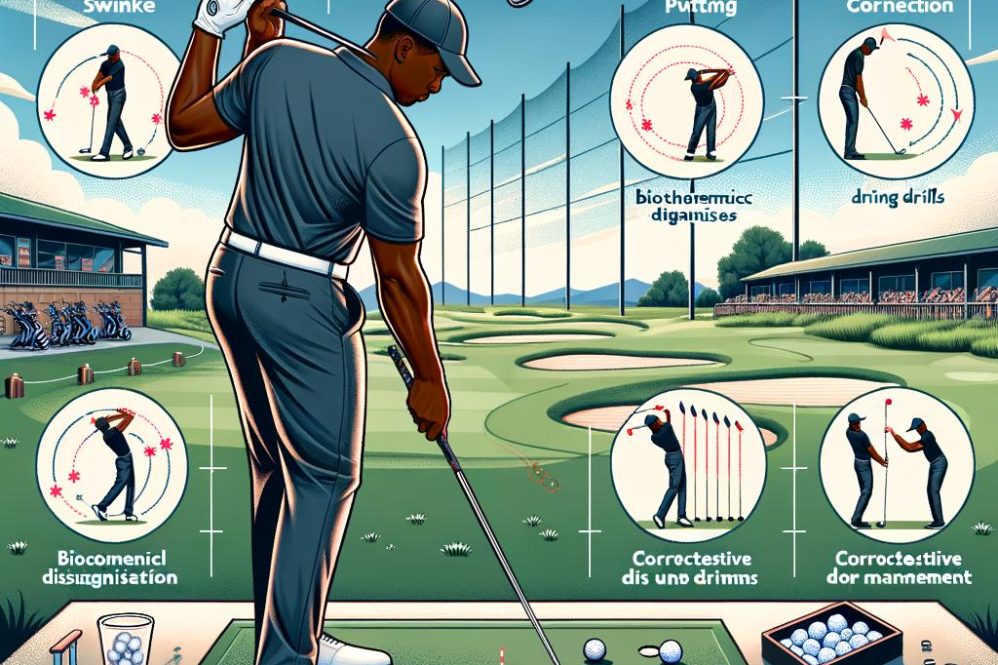
Persistent errors in the full swing, putting, and tee shots are major drivers of score volatility for beginner and mid-handicap golfers. These recurring faults not only add strokes but – as coaching literature and player-tracking data show – can produce disproportionately large setbacks during both casual rounds and competitive events. focusing on the most frequent technical and tactical failings therefore offers the greatest return for players seeking tangible score betterment.
This piece distills research and applied coaching into a concise review of eight high-impact faults that most commonly inflate scores. For each issue I provide a biomechanical clarification, evidence-informed corrective drills, and practical on-course tactics designed to convert practice gains into lower scores. The emphasis is on interventions that are realistic for typical weekend players and that support motor learning, stability under pressure, and smarter decisions during play.
By integrating movement science with straightforward course strategy and coachable practice progressions, the aim is to create a clear roadmap from fault detection to performance improvement. Readers will be given simple self-assessment cues,prioritized drills that promote transfer to play,and situational rules-of-thumb to reduce penalty strokes and errant shots.
Biomechanical Analysis of Common Swing Faults and Evidence Based Corrective Interventions
Resolving common swing breakdowns starts with a careful look at setup and movement sequencing: an overly tight grip, incorrect ball placement, insufficient spine angle, and restricted hip rotation are frequent culprits behind slices, hooks, fat strikes, and poor contact. Mechanically, aim for a light-to-neutral grip pressure roughly 4-6/10, position the ball about one clubhead inside the left heel for driver and just forward of center for irons (right‑handed players), and set a modest spine tilt toward the target (~5°) with a backswing shoulder turn near 90° and hip rotation in the 40-50° range. These baseline settings help prevent compensations such as early extension and casting. To fix an over‑the‑top path (outside‑to‑in), prioritize initiating the downswing with the lower body and train a ground‑up force transfer: sense the trail hip moving clear early in the downswing while preserving lag so the clubface arrives square at impact. Proven practice aids include an impact bag for forward shaft‑lean feedback, mirror or video review to check spine angle, and an alignment rod along the toe line to clarify body‑path relationships. On the course, when faced with a narrow fairway or strong wind, consider a controlled three‑quarter swing while checking these setup points to protect contact and keep the shot online.
Short‑game mechanics and transitional movements often influence scores more than pure distance does; therefore apply biomechanical specificity to chipping, pitching, and putting. For bump‑and‑run shots keep a compact wrist hinge and a stable lower body, restricting hip rotation to about 10-15°, while allowing more rotation for higher lob pitches.In bunkers adopt an open stance with slightly more weight forward, aim to enter the sand about 1-2 inches behind the ball, and use a steep attack to let the sand carry the ball. Putting improvements hinge on minimizing excess joint motion: lock the shoulders and use a wrist hinge only for very short putts; or else use a shoulder‑driven pendulum stroke with toe‑down to toe‑up path control of roughly 2-5°. Translate these intentions into repeatable skill using drills such as:
- Gate drill: set two tees to form a narrow corridor for the putter head, encouraging square‑face contact.
- Lag drill: practice long putts (50-80 ft) aiming to leave the ball inside a 3‑ft circle to cut three‑putts.
- Chip with towel: tuck a towel under both armpits to keep the chest and arms connected and stop flipping at contact.
Track outcomes from these exercises – for example, reductions in three‑putts per round, improved up‑and‑down rates from within 30 yards, and average proximity to the hole on approaches – to measure progress and refine practice.
Structure progressive practice sessions and on‑course strategies that respect each player’s physical limits and learning preferences. Start with a 5-10 minute mobility and tempo warm‑up, then use a 30/20/10 practice block: 30 minutes on short game, 20 minutes on mid‑iron and shot shaping, and 10 minutes on driver or simulated holes. Tempo tools (metronomes or simple counts like “1‑2”) help normalize rhythm and curb overswinging – one of the Top 8 common mistakes new golfers make. Equipment matters too: confirm shaft flex, lie angle, and grip diameter with a qualified clubfitter to avoid compensatory swings that create slices or hooks. On course, favor decisions that reduce skewed risk‑reward trades – lay up short of hazards instead of forcing a low‑probability recovery, and choose clubs that leave manageable up‑and‑down chances rather than attacking a fronting bunker on a firm day. Speedy troubleshooting checks:
- Ball consistently fading: test grip pressure (might be too weak), slightly close your stance, and feel for a shallower downswing.
- Fat or thin strikes: verify ball position and hold spine tilt; practice with an impact bag to learn forward shaft‑lean.
- Wind or faster/slower greens affecting control: shorten swing length, compact your stroke, and pick conservative targets.
Combining biomechanical corrections, measurable practice targets, and conservative course strategy helps golfers – from beginners to better players – cut common mistakes, hit more fairways and greens, and lower scores.
Technical Breakdown of Putting Errors with Targeted Drills to Improve Distance Control and Alignment
Start by separating mechanical from perceptual causes of missed putts: face angle at impact, stroke path, setup, grip tension, tempo, and green reading all play roles. As many putters have a nominal face loft of around 3-4°, the player’s aim is to either remove that loft or preserve it consistently through impact while keeping the face square to the intended start line. Small face‑or‑path deviations amplify into large directional misses at distance, so determine whether the ball’s start line or the subsequent break is the main problem. Common beginner tendencies – for example, standing with the body closed to the target – promote an open face at impact and pushed starts; similarly, gripping too tightly or manipulating the upper body can induce flipping and late changes in loft. Perceptual errors like misreading slope and grain (e.g., underestimating downhill speed on tightly cut surfaces) compound mechanical faults.Establish baseline metrics (make percentages at 6, 8, 12, and 20 ft and three‑putt frequency) so any technical adjustments can be judged against objective benchmarks.
Translate diagnosis into consistent motion with targeted routines and checkpoints. Use the following drills to address specific putting faults:
- Eye Exam / Line‑start drill: place a tee or string on the intended start line and practice starting the ball on that line; target ≥ 80% start‑line accuracy from 6-10 ft.
- Path Drill (gate/rail): put two tees or rods just wider than the putter head to enforce a square face and desired arc; progress from stationary reps to 3-4 ft putts at pace.
- Ladder / Distance control drill: feed putts from 6,10,15,20 ft into successively smaller landing zones; aim for ~80% of balls in the first zone at each distance.
- Foot‑up / Balance drill: raise one foot slightly to train a shoulder‑driven pendulum and steady tempo (use a ~60 bpm metronome or a 1:1 backswing‑downswing feel) to reduce wrist action.
Always verify setup before each stroke: place eyes roughly 1-2 inches inside the ball line or directly over the ball depending on dominance, balance weight ~50/50 to 60/40 slightly forward, keep shoulders level to the target, and set ball position just forward of center for a mild forward press or center for flat strokes. Equipment choices matter too – match putter toe‑hang to stroke (face‑balanced for straight strokes, ~10-20° toe‑hang for arcing strokes), experiment with grip thickness to curb wrist activity, and prefer face materials that provide clear feedback for feel training instead of only correcting distance.
Marry technique with course strategy and mental routines to convert practice gains into fewer strokes. On the course favor a lag putting strategy: for long attempts aim to leave an uphill 6-8 ft par save rather than aggressively trying to hole the long putt. Practical course goals include cutting three‑putts to one or fewer per round and increasing practice one‑putt rates inside 6 ft to >85%. Read greens using AimPoint, clock‑face methods, or similar systems, and remember environmental effects like temperature and wind (cold slows green speed; compensate with longer strokes). Offer multiple learning pathways: visual players benefit from alignment sticks and string lines, kinesthetic learners from feet‑together or foot‑up drills, and tempo learners from metronome cues. Troubleshooting on the practice green:
- if putts regularly start left: check face angle and alignment and run the gate drill.
- If putts start well but miss long/short: refine pendulum length with ladder work and build a stroke‑length vs roll‑distance chart (e.g., 1″ backswing ≈ 3-4 ft roll depending on speed).
- If pace breaks down under pressure: use a fixed pre‑shot routine (breath, visualize the line, one practice stroke) to bridge practice and performance.
Applied consistently, mechanical fixes combined with measurable drills and situational strategy create a reliable path from beginner faults to low‑handicap performance by reducing strokes and improving course management.
Driving errors that Compromise Launch Conditions and Practical Mechanical Remedies for consistent Ball Flight
Start by identifying the launch‑related faults that most frequently enough undermine driver performance: an open or shut face at impact, incorrect ball position or tee height, unfavorable attack angle, and poor sequencing/weight transfer. These typically originate in the same Top 8 mistakes – faulty grip pressure,wrong ball position,misalignment,casting,overswing,early extension,limited rotation,and inconsistent weight shift – each producing predictable launch signatures. Reasonable launch targets for many amateurs are a positive attack angle near +2° to +6°, a launch angle in the range of 12°-16° depending on speed and loft, and spin rates roughly 1800-3000 rpm for efficient carry and roll; use a launch monitor to dial these numbers for your game. To isolate causes on the range, use these checkpoints and drills:
- setup checkpoint: ball just forward of left heel (right‑handers) for an upward dynamic loft on driver; tee so the ball sits about 50-60% above the crown line.
- Grip and alignment check: neutral grip with shoulders square to the target – poor alignment often forces compensatory moves that alter face‑to‑path relationships.
- Impact signature: note where the face contacts the ball (high/low, toe/heel) and face‑to‑path angle to determine whether face control or path is the primary limiter.
Once you’ve diagnosed the issue, employ practical mechanical fixes that favor repeatable impact and efficient sequencing. To improve face control and path, rehearse an inside‑out takeaway using an alignment stick along the shaft plane and finish the backswing with the club toe slightly elevated to encourage a square face at transition. Train weight shift with a controlled drill that starts with ~60% weight on the trail leg at address and moves toward ~70% on the led leg at impact to help create a positive attack angle. To rebuild lag and the ideal impact position try:
- Impact‑bag drill – take half swings into a bag, feeling the hands ahead of the ball and a stable left wrist at impact.
- Towel‑under‑arm drill - hold a short towel under the lead armpit for multiple reps to enforce connected rotation and prevent casting.
- Step‑through drill – on slow swings step the trail foot through after impact to ingrain rotation and weight shift.
On equipment, consider a 1°-2° loft change or a shaft with a more suitable kick point to optimize launch for your speed; a target smash factor ≥ 1.45 is a useful efficiency benchmark on a launch monitor. Structure practice with measurable objectives – for example,30 minutes of tempo/sequence work followed by 30 tracked drives aimed at changing launch by +2° or cutting spin by 200 rpm - and combine subjective feel with objective data as you advance from basic drills to fine tuning.
Convert better launch consistency into smarter course choices to reduce scores. When a fairway is narrow or the wind is into you, consider a controlled tee shot with a three‑wood or 3‑hybrid to prioritize a predictable landing zone rather of risking a driver miss; in downwind conditions and firm fairways, maximizing roll with higher launch and lower spin can increase total distance - adjust loft and tee height accordingly. Use intermediate targets and a pre‑shot checklist that includes a quick launch check (visualize desired flight and attack angle) to avoid rushed mechanics under stress; short mental cues like “smooth weight shift” or “hands lead” help different learners. Practice under simulated pressure – alternate‑shot games, scoring consequences, or wind‑adjusted targets – and record carry, total distance, and dispersion to make data‑backed strategy decisions. Linking technical fixes, equipment choices, repeatable pre‑shot routines, and clear on‑course options lets players turn mechanical gains into consistent ball flight and measurable score reductions.
Integrated Motor Learning Progressions and practice Protocols for Durable Technique Change
Design practice around the three motor‑learning stages – cognitive, associative, and autonomous – so changes become lasting rather than fleeting. Begin by establishing setup basics that eliminate the most common beginner errors (grip tension, faulty alignment, wrong ball position, and rigid posture): adopt a neutral grip with light pressure (3-4/10), a forward spine tilt of about 10-15° from vertical, knee flex 15-20°, and an initial weight split of 55/45 (lead/trail) for irons; move the ball one ball‑width forward for fairway woods and two for driver. Use these checkpoints in short, focused cognitive‑stage drills: mirror checks for posture, alignment rods for aim, and slow half‑swings with a metronome to lock in tempo (a recommended 3:1 backswing‑to‑downswing rhythm or ~60 bpm with a 3‑beat backswing and 1‑beat transition). These approaches expose and quantify errors early, directly addressing several of the Top 8 mistakes.
Move into associative practice with targeted technique work and variable repetition to build robust movement patterns. Set measurable short‑game targets (such as, an up‑and‑down rate of 65% from 30 yards and fewer than one three‑putt per round) and use specific drills to correct scooping, early extension, and contact inconsistency. Useful drills include:
- landing‑spot drill (pitching): place a towel or coin at the intended landing spot and hit 10-15 shots from different distances (20,30,40 yards) to train trajectory and spin control;
- Gate drill (putting/impact): make a narrow gate with tees to encourage center face contact;
- Hinge‑and‑hold (bunker/chip): take a 50% backswing,maintain wrist hinge,and hold the impact position for two seconds to stop deceleration;
- Random yardage ladder (full swing transfer): hit mixed targets (e.g., 120-140-100-150 yards) to mimic course variability and sharpen decision making.
Match equipment to your stage: choose shaft flex and loft appropriate to swing speed (players under ~85 mph with the driver often benefit from a softer shaft and more loft) and select wedges with bounce suited to turf (low bounce ~4°-6° for tight lies; high bounce ~8°-12° for soft sand). Organize reps into 3 sets of 8-12 per drill followed by variable/random practice to improve retention and transfer to play.
embed autonomous‑stage drills into on‑course play and mental rehearsal so technical changes survive pressure and changing conditions. Translate practice into situational play: on par‑4s aim tee shots to the safe half of the fairway and concentrate on target‑centered landing zones rather than maximum carry; in wind choose a club that trims trajectory by 10-20% (e.g., one extra club with a lower flight) and visualize the flight in your pre‑shot routine. Use Rules of Golf knowledge when deciding relief or penalty options to minimize expected strokes. Set measurable course goals – cut penalty strokes by 1 per round, hit 10 GIR per 18 as an intermediate milestone – and schedule practice to support them: two technical range sessions, one short‑game session, and one simulated round weekly, plus one pressured performance test monthly.Address mental errors with a consistent pre‑shot ritual (visualize, breathe, commit) and coping strategies (progressive muscle relaxation or a count‑in). Offer alternatives for different bodies and learning styles, such as reduced swing arc drills, tempo‑only reps, or training with heavier clubs to build strength and proprioception. Together these staged progressions – clear setup, focused corrective drills, and on‑course application – produce lasting technique changes, better scoring, and dependable decision making under tournament stress.
Course Management and Tactical Decision Making to Translate Technique Improvements into Lower Scores
Good on‑course choices start with a repeatable pre‑shot routine that turns practice gains into scoring chances. First, build a dependable yardage and dispersion profile for every club in your bag – know average carry and total distance for your 7‑iron, hybrids, and driver, plus the standard deviation – and gather these numbers through range sessions or shot‑tracking (GPS or launch monitor). Combine those metrics with basic rules awareness: play a provisional when a ball might be lost, and remember the 14‑club limit when choosing what to carry. Adopt a conservative “target first, shape second” ideology: when a fairway bunker sits 260 yards out on a par‑4, prefer a controlled 3‑wood or long iron unless your dispersion profile gives >80% confidence of clearing the hazard. This replaces guesswork with quantifiable risk thresholds and reduces penalty strokes while improving scrambling odds.
As technique improves, transfer swing and short‑game adjustments into approach planning and green reading to lower scores. For instance, if coaching yields a more consistent low point and a marginally shallower attack angle, recalibrate wedge yardages by measuring carry and rollout on full and 3/4 swings, and set a practice target: ±5 yards accuracy for each wedge across five swing intensities.Drills to make this transfer reliable:
- Wedge ladder drill: hit five balls to 30, 50, 70, 90, and 110 yards, record carry, and adjust until carry is repeatable within ±5 yards.
- Lag putting ladder: from 30, 40, 50 ft finish within 3 ft of the hole to cut three‑putts; repeat 10 times at each distance.
- Shot‑shaping alignment drill: use two alignment sticks to create a corridor and practice controlled fade/draw shots with reduced speed to learn curve management.
These exercises combat common mistakes like deceleration on short approaches, under‑practiced green play, and inconsistent putting speed. When reading greens, use a two‑step routine: assess slope and grain from behind the ball and the stance path, then choose a line that errs conservatively (for example, expect 20-30% more break on wet or grain‑with surfaces). This links technical gains (better wedge control,refined attack angle,steadier putting stroke) to tangible scoring outcomes: closer approaches,higher up‑and‑down rates,and fewer penalty strokes.
Develop tactical adaptability and mental routines that match your physical capabilities and the day’s conditions. Begin rounds with a quick reconnaissance – note wind direction and speed (using a rangefinder or wind app), green firmness, and pin positions – then select a strategic approach such as aiming to gain strokes around the green by converting 60% of up‑and‑downs. Maintain setup fundamentals in play: a stance about shoulder‑width, spine tilt ~5-7° toward the target for long clubs, and progressive ball position forward for longer clubs so practice changes hold up under pressure.Troubleshooting common course problems:
- Compression/scooping: check low‑point and weight transfer with a towel drill; ensure hands lead at impact to avoid fat shots.
- Hook/slice tendencies: verify grip pressure and face alignment at address; use forgiving intermediates (hybrid vs long iron) while stabilizing path.
- Short‑game inconsistency: allocate ~40% of practice time to chips, pitches, and bunker work with measurable targets (e.g., 8/10 chips inside a 10‑ft circle).
By combining measurable practice results, equipment verification (shaft flex, loft/lie checks), and a decision hierarchy focusing on safety, approach angle, and recovery potential, players from beginners to low handicappers can reliably turn technical progress into lower scores while adapting to wind and course conditions.
objective assessment and Quantitative Tracking Methods to Monitor Progress and Inform Coaching Adjustments
Start with a baseline of objective,repeatable measures that connect swing mechanics to scoring. use a launch monitor and high‑speed video to capture clubhead speed (mph), ball speed (mph), launch angle (°), spin rate (rpm), and attack angle (°), then map these to carry and total distance for each club. Typical low‑handicap driver profiles frequently enough show launch 10°-16°, spin 1,800-3,000 rpm, and a mildly positive attack angle (+1° to +4°); long irons usually display a negative attack angle (≈ −3° to −6°) for solid compression. correlate these lab metrics with on‑course indicators like GIR (%), putts per GIR, scrambling %, and category‑specific strokes gained to pinpoint where technique work will most improve scoring.To tackle common beginner errors – grip, alignment, tempo, ball position – use targeted measures: lateral dispersion suggests grip/rotation issues or setup misalignments, while distance scatter points to inconsistent clubhead speed or attack angle variability. Practical drills include:
- 10‑ball club average: hit 10 shots per club and record mean carry and standard deviation to quantify dispersion.
- Impact tape/contact drill: use tape and slow‑motion video to reduce toe/heel hits and move contact toward the sweet spot.
- Tempo metronome drill: pursue a 3:1 backswing‑to‑downswing tempo and log consistency with wearable sensors if available.
Then build a tracking system that drives weekly coaching adjustments and measurable goals.Begin with repeatable baseline tests: a 20-30 ball target test at multiple distances to assess accuracy/dispersion, a 50‑shot short‑game scoring test to compute up‑and‑down rates, and a 50‑putt test across distance bands (3-6 ft, 10-15 ft, 20-30 ft) to get make percentages and three‑putt rates. Set progressive targets such as reducing 20‑ball iron dispersion to ±10 yards within 8 weeks, increasing GIR by 10 percentage points in 12 weeks, or lowering putts per round by 0.5 within 6 weeks. Use clear setup checkpoints and troubleshooting rules to guide drills and in‑session fixes:
- Setup checkpoints: neutral grip (thumbs down the shaft), stable spine angle, feet shoulder‑width for mid‑irons, ball ~1.5 ball widths inside left heel for driver, and center‑to‑slightly‑forward for short irons.
- Troubleshooting: if shots are pulled/pushed check alignment and contact location; if fat/thin strikes examine weight distribution and low‑point control; if distance is inconsistent measure clubhead speed variance and employ tempo work.
Translate lab numbers into course strategy and shot selection by building a club‑by‑club distance book listing average carry ± standard deviation, preferred shot shape, and an optimal target bias. For example, if your 7‑iron carries 150 yards ±8, choose a club that clears hazards plus a 10-15 yard safety margin. Practice in variable conditions and use scenario drills to link technique with strategy:
- Shot‑shaping ladder: from 100-180 yards hit fade, straight, and draw with the same club to learn face/stance adjustments and quantify lateral dispersion.
- Short‑game proximity challenge: from 30-60 yards place five targets and log proximity; aim to boost % inside 10 ft by 15% in 8 weeks.
- Decision‑making checklist: evaluate wind vector, lie, slope, and hazard carry – if wind cuts carry >10%, pick an extra club or lower trajectory.
Throughout, combine objective feedback (launch monitor, shot‑tracking apps, strokes‑gained reports) with video and coached observation to create a closed feedback loop. For players with different physical abilities or learning preferences offer multiple formats – video for visual learners, feel‑based exercises for kinesthetic learners, and auditory tempo cues – and measure progress with the same metrics so coaching changes remain data‑driven and linked to scoring.
Case Syntheses and Applied Recommendations demonstrating Scoring Benefits from Corrective Strategies
Corrective coaching starts with reproducible setup and swing fundamentals that translate on course. Begin with a consistent address: feet shoulder‑width,weight roughly 50/50 (slightly forward for longer clubs),spine tilt 5-10° away from the target,and hands 1-2 inches ahead of the ball for mid‑irons to encourage a descending strike. To remedy typical issues like grip errors,mislocated ball position,and early extension use the following checks and drills that reinforce correct kinematics and narrow dispersion:
- Alignment rod check: set a rod on the target line and one parallel to your feet to confirm square alignment and neutral spine.
- Towel‑under‑arms drill: hit 50 swings with a small towel between forearms to promote connection and prevent arm separation.
- Impact‑bag/half‑swing drill: take focused half swings into an impact bag to feel forward shaft lean and compress the ball - aim for a shallow divot starting just after the ball.
Measure improvement by targeting a 10-20 yard tightening of 5‑iron lateral dispersion over 6-8 weeks and track ball speed/launch with a launch monitor to confirm technique changes rather than relying on feel alone.
Short‑game adjustments often produce the quickest scoring gains when taught with specific landing targets, setup tweaks, and consistent strokes-especially for players who scoop chips, flip at impact, or misread greens. Use the landing‑spot method for chips and pitches: pick a landing area 6-15 yards from the hole depending on green slope and firmness, then select a club to carry to that spot and let the remainder roll.Bunker shots require an open face (often 10-20° of open loft) and a steep entry; practice with a feet‑together splash drill to learn sand interaction. Putting drills should prioritize pace and reading: the clock drill improves short‑range speed control and the gate drill sharpens face alignment and path.Example practice routine:
- 10 minutes of clock putting from 3-6 ft (3 reps per hour),
- 20 pitches/chips per session across three landing zones (short/medium/long),
- 15 bunker reps from varied lies focused on hitting 1-2 inches behind the ball.
Set measurable targets such as cutting three‑putts by 50% within eight weeks or raising scrambling percentage by 10 points, and track these stats to validate coaching interventions.
Pair technique gains with pragmatic course management and shot‑shaping to convert practice into lower scores. Play the percentages: when unsure, aim for the largest safe target (center of the green) to boost GIR and resist low‑probability heroic shots at tucked pins. When wind or elevation affects yardage, use technology (GPS or rangefinder) and a conservative rule of thumb - adjust by about one club per 10-15 yards of effective carry change – and reassess stance and ball position for uphill/downhill lies. Teach shot shape through simple face‑to‑path relationships: a draw comes from an inside‑out path with the face marginally closed to the path (≈ 2-5°),and a fade from an outside‑in path with the face slightly open to the path. Use on‑course drills that mimic scoring pressure – e.g., play a driverless hole that forces a lay‑up to a preferred approach or play the final three holes with a one‑shot penalty to hone decision making and routine. Reinforce the mental game with a short, consistent pre‑shot routine (about 6-10 seconds), commitment language, and controlled breathing to manage tension. Together these technical,tactical,and psychological elements deliver steadier scoring across skill levels,from novices consolidating fundamentals to better players refining risk management.
Q&A
Q: What is the purpose of this Q&A?
A: This Q&A condenses an evidence‑and‑practice synthesis of the eight most impactful swing, driving, and putting faults seen in novice golfers; it provides concise biomechanical explanations, corrective drills, staged practice progressions, and practical course‑management tips to limit score damage while skills are being rebuilt.
Q: Which eight mistakes does the synthesis identify?
A: The eight highest‑impact faults are:
1. Faulty setup and posture (alignment, ball position, spine angle).
2. Excessive grip pressure and incorrect grip mechanics.
3. Early release (casting / scooping / flipping) through impact.
4. Poor weight transfer (reverse pivot, sway, or insufficient lateral shift).
5. Out‑to‑in swing path and face misalignment causing a slice (especially with the driver).
6. Early extension and loss of posture through impact.
7. tempo and rhythm inconsistencies (overswinging, deceleration).
8. Putting faults: poor setup/alignment, inconsistent stroke path, variable pressure, and deficient green reading.
Q: How are these errors diagnosed biomechanically?
A: Short biomechanical summaries:
– Faulty setup/posture: incorrect ball position or spine tilt changes the swing plane and relative torso‑arm timing, increasing compensatory joint torques.
– Excessive grip pressure/incorrect grip: too much grip force restricts wrist and forearm rotation, reduces lag, and raises muscular co‑contraction, impairing speed and feel.
– Early release (casting/scooping): premature wrist uncocking dissipates elastic energy and results in higher loft and inconsistent strikes.
– poor weight transfer: inadequate lateral/rotational ground reaction forces or reverse pivot prevent effective lower‑to‑upper body sequencing, causing thin or fat shots.- Out‑to‑in path/face misalignment: the clubhead moves across the target line with an open face at impact, creating side spin and a slice; often linked to early forearm roll and lateral weight shift.
– Early extension: hips move toward the ball through impact, flattening the swing plane, reducing rotation, and creating thin/top strikes with wide dispersion.
– Tempo inconsistencies: variable timing between pelvis, thorax, and arms disrupts repeatable impact dynamics.
– Putting faults: misaligned eyes/shoulders, poor shaft lean, inconsistent grip pressure, and variable stroke path cause start‑line and pace errors.
Q: What corrective drills address faulty setup and posture?
A: Drills:
- Alignment‑stick frame: lay two sticks on the ground for feet/target lines and one along the spine at address; practice returning to the same spine angle and ball position.
– mirror/phone setup check: record front and down‑the‑line stills to confirm neutral spine and shoulder alignment.
– posture‑to‑swing drill: from correct setup perform small half‑swings while preserving spine angle; only progress to full swings when retention is consistent.
Course strategy: play conservatively with clubs that forgive setup flaws (hybrid vs long iron) and prioritize center of the fairway/green.
Q: How should grip pressure and grip mechanics be corrected?
A: Drills:
– Two‑finger top‑hand drill: hold the club with only two fingers on the top hand for 10-15 swings to feel lighter pressure and freer wrists, then return to a full grip keeping the lighter feel.
– Pressure scale self‑check: rate grip on 1-10 and aim for ~3-5 before each shot.
Course play: under nerves deliberately soften the grip and select shots that reduce wrist reliance (punch or 3/4 swings).
Q: What fixes help with early release (casting/scooping)?
A: Drills:
- Towel‑under‑arms: keep a towel between the armpits during swings to promote connection and delayed release.
- Impact bag drill: feel the clubhead meet the bag with hands slightly ahead to learn the correct release point.
– Lag‑pause drill: pause at the top briefly then swing down to develop lag and arrive at impact with wrists still slightly cocked.
Course tactic: use shorter swings or lower‑lofted clubs while timing stabilizes; avoid shots that encourage flipping.
Q: How can weight transfer and reverse pivot issues be corrected?
A: Drills:
– Step‑through drill: make shorter swings and step through toward the target to exaggerate weight shift.
– Feet‑together drill: swing with feet together to force balance and correct sequencing.
– Lead‑leg pressure drill: practice feeling pressure move to the front heel through impact using sensors or body awareness.
Course tactic: off the tee, favor fairway woods or hybrids for more forgiving centered strikes and straighter trajectories.
Q: What are practical fixes for an out‑to‑in path and a slicing driver?
A: Drills:
– Inside‑pull gate: set a gate and practice swinging from inside to square without hitting the gate, using slow motion to groove the path.
– tee height/ball position check: experiment with a slightly more forward ball and higher tee to promote an upward strike and inside path.
– Pause‑at‑top drill: pause at the top to remove casting and initiate the downswing with lower‑body rotation.
Course tactic: when driving is unreliable, use a 3‑wood or hybrid and aim for the safer side of the fairway.
Q: How do you fix early extension?
A: Drills:
– Chair‑behind‑hips: place a chair or pad behind your hips and practice keeping hips back through impact to avoid bumping into it.
– Wall‑turn drill: stand close to a wall and rotate the torso without contacting it to train rotation without extension.
Course tactic: choose controlled club options (3/4 swings) and avoid aggressive driver swings until rotation is restored.
Q: How should golfers address tempo and rhythm inconsistencies?
A: Drills:
– Metronome drill: use a metronome or app to establish a consistent backswing‑to‑downswing timing (commonly 3:1).
– Broom/long‑shaft pendulum: swing a long shaft like a pendulum to feel rhythm and limit overswing.
– Count‑and‑swing: use a simple internal count (e.g., “one‑two”) to manage transition timing.
Course tactic: under pressure shorten the swing to a dependable tempo and rely on pre‑shot routine to steady rhythm.
Q: What are evidence‑based corrections for common putting errors?
A: Biomechanical fixes and drills:
– setup/alignment: use string or alignment aids so shoulders, hips, and feet are parallel to the target; verify eye position with a mirror or camera.
– stroke path consistency: use a gate drill to enforce straight back‑and‑through or the desired arc, emphasize shoulder rotation over wrist action.
- Grip pressure and face control: practice light grip pressure (3-4/10) and control face angle through impact.
– Green reading: learn plumb‑bob and feel techniques and validate reads with practice putts at varying lengths and breaks.Course tactic: play the first putt to a position that yields a two‑putt, lag long putts to the same side to reduce comeback‑break risk.
Q: What practice frequency and progression produce measurable improvement?
A: Recommendations rooted in motor learning:
– Intentional practice: 20-40 minutes of focused work 3-5 times per week is generally more effective than longer unfocused sessions.- Block‑to‑random progression: begin with blocked repetitions for early control, then shift to random practice (mixing clubs, lies, and targets) to enhance transfer.
– Staged phases: (a) 2-4 weeks sensorimotor re‑education (slow, focused drills), (b) 3-6 weeks increasing speed and variability, (c) on‑course integration and decision making.
– timeline: many novices see noticeable strike and dispersion gains within 4-8 weeks; more durable motor patterns and scoring stability often require 8-16 weeks of consistent practice.
Q: How should improvement be measured objectively?
A: Metrics and methods:
– Track shot dispersion and contact quality (divots, ball flight) on the range.
– Use launch monitors or apps to log ball speed, launch angle, club path, and face angle when possible.
– For putting,record makes,one‑putt %,three‑putt frequency,and putts per hole.
– On‑course stats: fairways hit, GIR, average score vs par, scramble percentage.- Employ short test sessions (pre/post 10-15 minute drills) to quantify changes in accuracy and consistency.
Q: What short‑term course‑management strategies limit damage from these faults?
A: Practical tactics:
– Club selection: prefer higher‑MOI, forgiving clubs (hybrids, fairway woods) when execution is uncertain.
– Targeting: play to larger, safer landing areas on greens and fairways and avoid tight scoring lines.
– Conservative shot choice: favor punch or 3/4 swings when conditions or execution are marginal.
– Putting strategy: lag long putts to the inside circle and except an uphill tap‑in rather than aggressively risking a three‑putt.
Q: are there common misconceptions to avoid?
A: Clarifications:
– Don’t try to fix everything at once; sequentially address the highest‑impact faults first (setup, weight transfer, release).- Strength alone won’t compensate for poor sequencing - improved biomechanics and timing yield more consistent results than brute force.
– properly fit equipment enhances good technique but does not replace it.Q: When should a novice seek professional coaching or biomechanical analysis?
A: Indications:
– Persistent faults that don’t respond to structured drills after 6-8 weeks.
- Pain or discomfort during or after swings – stop and consult a medical professional and a coach.
- If you want to accelerate progress, instrumented biomechanical testing (motion capture, force platforms) can precisely identify sequencing deficits and guide targeted interventions.
Q: Summary – What are the key takeaways?
A: Key points:
– Eight common faults (setup, grip, early release, weight transfer, out‑to‑in path/slice, early extension, tempo, putting issues) explain a large portion of novice scoring variability.
– Each fault has a clear biomechanical basis; targeted drills, staged practice, and conservative course management reduce scoring damage while skills are being rebuilt.
- Many players notice measurable improvement within 4-8 weeks of deliberate practice; objective metrics and occasional professional coaching accelerate and clarify the learning process.
If helpful, this Q&A can be converted into a printable checklist, personalized drill progressions by handicap band, or short video scripts for each drill. Which would you prefer?
conclusion
This review combines biomechanical principles, putting science, driving mechanics, and practical course strategy into an actionable framework for addressing the eight faults that most commonly increase scores. Because “costly” describes outcomes that meaningfully worsen performance, attending to these faults is not merely cosmetic but central to recovering strokes. Corrections built on evidence - paired with level‑appropriate drills, objective metrics, and progressive benchmarks – provide a clear path to durable score reductions.
Practical next steps are threefold. First, make diagnostics routine: film swings and putts, capture launch/impact numbers where possible, and track on‑course stats (fairways, GIR, putts, strokes‑gained). Second, prescribe focused interventions with measurable targets - for example, reduce three‑putts to <1 per round, push GIR toward 60-70% for intermediate players, and pursue incremental gains in strokes‑gained categories - while using progressive drill loads to protect motor learning. Third, adopt a monitoring cadence: short‑cycle (4-6 week) checks to confirm technical change and longer seasonal comparisons to ensure transfer to competition.
Lowering scores requires an integrated approach to mechanics, feel, equipment, and strategy. Treat the eight faults here as testable hypotheses: use biomechanical measurement, repeatable drills, and statistical benchmarks to prioritize high‑return interventions. While ongoing research and longitudinal tracking will continue to refine best practices, these principles offer a practical, evidence‑informed starting point for unlocking lower scores.

8 Game-Changing Fixes: Eliminate Costly Golf Mistakes and Slash Your Scores
Target keywords: golf tips, lower scores, tee shot placement, green reading, short game, swing tempo, mental game, shot shaping, driving accuracy, course management.
Why these 8 fixes matter
Golfers at every level leak strokes through a handful of repeatable mistakes: misreads on the green, poor tee shot strategy, inconsistent short game, and mental lapses. Fix the root causes, and you’ll cut multiple strokes per round. The eight fixes below are prioritized for maximum impact on scoring, practice efficiency, and long-term improvement.
The 8 Game-Changing Fixes
Fix 1 – Strategic Tee Shot Placement (Not Just Distance)
Manny players chase distance and sacrifice driving accuracy. Prioritizing tee shot placement reduces penalty risk and shortens approach shots, improving greens-in-regulation and par saves.
- Actionable tip: Pick a visual target (fairway edge, sprinkler head, tree) and commit to one club that finds the short-to-mid fairway more frequently enough than a driver that misses left/right.
- Drill: On the range, hit 10 balls aiming at a 20-yard wide target at varying distances using 3 diffrent clubs.Record fairways found.
- Key metric: Driving accuracy % and average driver distance vs. scoring on par-4s/5s.
Fix 2 – Consistent Pre-Shot Routine & Tempo
Rushed or inconsistent pre-shot routines increase swing errors and mental doubt. A repeatable sequence reduces variance and improves your swing tempo-one of the fastest paths to lowering your handicap.
- Set a 6-8 second routine: align -> visualize -> waggle -> breathe -> execute.
- Tempo drill: Use a metronome app set to 60-70 bpm and match backswing to downswing rhythm (2:1 ratio feel).
- Measure improvement by tracking penalty strokes due to mis-hits and pre-shot indecision.
Fix 3 – Short Game Prioritization: 60% of Your Shots
Shots inside 100 yards and putting account for the majority of strokes. Focusing practice on wedges, chipping, sand play, and putting yields the fastest score reduction.
- Practice split: Spend 60% of practice time on shots <100 yards and putting; 40% on full swing and strategy.
- Wedge ladder drill: From 30, 50, 70 yards, hit 5 shots to a small circle; vary trajectories and landing spots.
- Putting drill: 3-foot,6-foot,and 12-foot ladder-make 10 of 12 at each distance before moving on.
Fix 4 – Sharpen Green Reading & speed Control
Two-putts are a baseline-one-putts create real gains. Focus on reading slopes and controlling pace to avoid costly three-putts.
- Read low-to-high and high-to-low lines; watch how ball breaks on practice greens for different speeds.
- Speed drill: lag from 40-60 feet to 6-8 feet, then make the shorter return putt. Repeat until lag percentages improve.
- Tip: Pick an intermediate target (a leaf, stick) to align your putt’s initial roll direction for better reads.
Fix 5 – Eliminate the Big Miss: Shot Shaping & recovery
Controlled shot shaping (draw/fade) and a reliable recovery plan from trouble (trees, deep rough, bunker) save strokes and reduce stress on the course.
- Practice basic shot shapes with mid-irons: small grip change or stance adjustment to produce controlled curvature.
- Recovery rule: If you can’t hit green safely, play to a position that leaves an easy short-game shot instead of heroic low-percentage shots.
- Metric: Track penalty strokes and “recovery saves” (scrambling %).
Fix 6 – Improve Alignment and Ball Position
Small alignment errors create big misses. Set up checks to ensure consistent ball position and body alignment for every club.
- Alignment drill: place a club on the ground pointing to target, then set feet parallel to it; repeat for short and long clubs.
- Ball position guideline: forward for driver/long irons, center for mid-irons, slightly back for wedges.
- Use impact tape or launch monitor feedback periodically to confirm consistent contact location.
Fix 7 – Course Management: Play Smart, Not Heroic
Course management is strategy-don’t let ego drive club selection. Play percentages, think 1-2 shots ahead, and eliminate hole-targeted gambling.
- Identify bail-out zones on each hole before playing: safest miss side, best layup yardage, preferred angles into greens.
- When behind in match play, avoid risky shot attempts that could cost multiple strokes.
- Keep a “go/no-go” decision rule: if the forced carry or green target is >75% of your pleasant range, choose the safer play.
Fix 8 – The Mental game: Focus, Resilience, and Short Memory
Confidence and emotional control determine if you’ll execute under pressure. A calm, short-memory mindset prevents one bad hole from ruining the round.
- Use a short-focus technique between shots: breathe, visualize, and reset. Limit post-shot analysis-note only one fast fix if needed.
- Pre-round mental checklist: goals (process vs. outcome), breathing cue, and a simple mantra.
- Practice pressure: create stakes in practice (betting small, penalty for missed targets) to simulate stress.
Practice Plan: 4-Week Cycle to embed These fixes
Follow this weekly template to turn each fix into automatic behavior.Each practice should be 60-90 minutes with focused, measurable goals.
- Week 1 – Tee shot placement & alignment (range + on-course tee decisions)
- Week 2 – Short game volume (wedges, chipping, bunker) + putting ladder
- week 3 – Tempo & pre-shot routine + green reading practice
- Week 4 – Course management sessions on-course + mental game drills
Practical Drills & Tools
- Range target practice: place alignment sticks, narrow targets, and vary lies.
- Pressure putting: 10 balls from 6 feet; miss = penalty. Repeat until make rate improves to 80%+.
- on-course simulation: play 9 holes with a ruleset (e.g., no driver off 2 greens) to enforce safe decisions.
- Use a launch monitor or phone apps for swing tempo and dispersion patterns.
Quick Reference table: Fix vs. Drill vs. KPIs
| Fix | Recommended Drill | Key KPI |
|---|---|---|
| tee Shot Placement | Target fairway zones (10 reps each) | Driving accuracy % |
| Pre-Shot Routine | Metronome tempo swings | Penalty strokes per round |
| Short Game | Wedge ladder & chip-to-3ft | Up-and-down % |
| Green Reading | Lag → make return putt | 3-putts per round |
Benefits and Practical tips
- Immediate benefits: fewer penalty strokes, better scramble rates, fewer three-putts, and improved confidence.
- Long-term gains: consistent lower scores,lower handicap,and more enjoyable rounds.
- tip: Track one or two KPIs per fix (e.g., driving accuracy, up-and-down %) and review weekly-data-driven practice beats random practice.
Case Study: From 18 Handicap to Single Digits (Practical Example)
Player A (18 handicap) focused 8 weeks on these fixes: 40% practice time on short game, committed to conservative tee shot targets on narrow holes, and implemented a 6-second routine. Results after 8 weeks:
- Driving accuracy up from 48% to 63%
- Up-and-down rate increased from 30% to 46%
- Average score reduced by 3.5 strokes per round
Realistic expectation: Many amateurs see a 2-5 stroke improvement within 6-12 weeks if practice is focused and measurable.
First-Hand Experience: Common pitfalls and How to Avoid Them
- Over-practicing full swings while neglecting putting-balance matters. Fix: adopt the 60/40 practice split.
- Chasing distance after a bad round-adhere to your course management plan rather of emotional decisions.
- Isolating one problem forever-when you fix one area, re-check the others; golf is a system of interdependent skills.
How to Measure Progress (Simple Scorecard KPIs)
- Driving accuracy % (fairways hit / total drives)
- GIR% (greens in regulation)
- scrambling % (up-and-downs success)
- Putts per round and 3-putt frequency
- Penalty strokes per round
SEO & Content Tips for Sharing This Article on WordPress
- Use the meta title and meta description above in your SEO plugin (Yoast RankMath). Keep meta title < 60 characters and meta description under 160 characters.
- Include internal links to related pages: “short game drills”, “course management tips”, “mental game strategies”.
- Use alt text for images with keywords: e.g., “golf putting drill improving green reading and speed control”.
- Structure with H2s for each major fix and H3s for drills-search engines and readers love scannable content.
Final Practical Checklist (Printable)
- Pre-shot routine established and timed
- Tee shot strategy set for each hole
- Short game practice scheduled 3× week
- Green reading drills on each practice day
- Weekly KPI review and one measurable goal
Adopt these game-changing fixes one at a time. Small, consistent adjustments eliminate costly mistakes and compound into meaningful score reduction. Use data, practice intentionally, and keep the mental game simple.