
The Secret to a Stronger Drive Is in the Follow-Through
Masters of the golf swing,like Master Vijay Singh,often share that maximizing distance in your drive relies heavily on the finish position. This phase isn’t just about style points; it dictates the energy transfer from your body to the club, affecting ball speed and direction.For beginners grasping the basics, think of the finish as your body’s way of saying, “I’m done-time to transition gears.”
To achieve a powerful finish, start by focusing on what your body does as the ball is being hit. From there, you should feel your weight shift towards your front foot, your hips rotating freelyand your arms extend beyond your body. This full turn and extension can be visually identified through a full shoulder rotation, with your nose pointing to the target line. By mirroring this action, you ensure that your clubface and club path are squared at impact, leading to an efficient transfer of energy.
A common mistake is stopping the swing too early, which often results in hitting the ball off-center. This limits the speed and accuracy of your drive. To avoid this, visualize a continuous follow-through even after the ball is hit. Imagine your arms reaching towards the target, not just stopping at impact. This extra movement adds inches to your drive. Practice this concept by taking full-length swings against a net, focusing on the follow-through rather than the initial strike. Start by hitting 50 balls with a full finish and gradually increase as your body adapts to the new motion.
Alongside form, equipment plays a pivotal role. A club that fits your body biomechanics well can make all the difference. For intermediate players looking to refine their technique,consult a professional to check the shaft length and flex of your driver. The correct club can improve your energy transfer and minimize technical adjustments. consider the grip-holding too tightly or too loosely can impact your follow-through just as much as the swing itself.
Connecting the technique to on-course performance, let’s take a look at how your improved finish can translate to lower scores. During those crucial moments where the ball is on the tee, think of how your finish position can signal a successful drive. For example, if you complete your swing and feel balanced with your trailing foot lifted, you’ve likely executed the follow-through correctly. This mental reinforcement can build confidence and improve consistency on the course.Moreover, practicing full finishes with an emphasis on balance and extension can definitely help you maintain form even when the pressure is high and conditions are challenging.
Why Your Finish Matters More Than You Think
Finishing your golf swing correctly might seem like a mere formality, but it’s a crucial element that can greatly impact your shot’s accuracy and distance.A balanced and full finish can provide valuable feedback about the quality of your swing, allowing you to make adjustments during practice. The finish position is a snapshot of your swing mechanics at the extreme end of its range, which means it’s critical to perfecting your technique. Think of your finish as the echo of your swing; a full,stable finish indicates a powerful,fluid motion.
To achieve a well-balanced finish, start from the ground up. Your stance should shift slightly towards the target, with your weight distributed appropriately between your feet. Your lead foot-that’s the foot closer to the target-should be planted firmly, while your trail foot can have a bit of give as you release into the swing.A good way to check your balance and alignment is to ensure your body lines up with the intended direction of the shot. Your arms should be in an ‘L’ shape with both elbows slightly bent. This form signifies correct wrist release and a complete follow-through.
It’s common for beginners to cut their swings short, often pulling away from the target prematurely. This typically results in a weak finish position, with the club lingering well behind the body. Addressing this involves practicing your finish to mirror your initial take-away position. For example, if you bring your hands into your chest at the top of the swing, aim to bring them back to your chest at the finish. This exercise ensures your body is turning fully and that your hands are completing their journey appropriately. By working on your finish with a full rotation and extension, you’ll notice improvements in your swing’s tempo and fluidity.
Beginners should focus on simplicity-achieve a full body turn and a crisp grip release without excessive force. Using smaller balls or alignment sticks can make this easier to visualize and check. Intermediate players can incorporate the “one arm swing drill,” as demonstrated by professional golfer Vijay Singh, to refine their swing mechanics. This drill helps in understanding and developing the coordination between your upper and lower body, which is essential for a powerful and balanced swing.
The finish position is equally crucial such as bunker play. A high follow-through over the sand traps helps ensure the ball is propelled upward and out of the hazard, crucial for a good recovery shot. understanding your finish can inform your club selection on the tee. As a notable example, if you consistently lose power in your finish, hitting a longer club might be more advisable, as your optimal impact zone will likely compensate for the weaker follow-through, resulting in higher accuracy and distance. In this way,mastering your swing finish contributes to your overall performance and strategic thinking in the game.
Crafting a Balanced Finish for Optimal Power and Control
Developing a balanced finish in your golf swing is a powerful tool for improving your overall performance. A balanced finish doesn’t just look good; it indicates that you have harnessed power effectively and ended your swing in a position of control. For beginners, it’s a simple checkpoint to know if they’re executing the basics correctly. For more experienced players, it’s a subtle but essential tweak that can shave strokes off your scorecard.
To achieve a balanced finish, start by understanding the final position of your swing. Your feet should be stable, with a slight bend in your knees and your weight evenly distributed. A common mistake many golfers make is to shift their weight prematurely, often landing too far to the left or right of their starting stance. This can disrupt your balance and compromise your follow-through. Instead, focus on maintaining your posture as you swing through the ball, making sure you’re turning your hips and shoulders into a balanced position.
When you finish your swing,your upper body should naturally rotate towards the target. Your arms should extend away from your body, not pulled in with tension or overly extended in a way that looks forced. A simple drill to help beginners and intermediate players is to practice a full finish without hitting a ball. Swing your club and exaggerate the motion until your body feels and looks balanced. You’ll notice how your swing feels smoother and more fluid with a complete follow-through. This drill not only helps improve your balance but also reinforces proper body rotation, which is crucial for generating power and accuracy.
Advanced players can further enhance their balance and control by considering the grip position and angle of your club at the finish. The face of the club should be square or slightly open, reflecting a neutral or slightly aggressive angle of attack. This positioning is indicative of a well-executed swing that has stayed on track from ball to finish. If you find your club face closing up prematurely or finishing too flat, it could indicate an early release or under-rotation.These issues can often be corrected by focusing on your grip pressure and wrist positioning during the backswing and transition phases.
Understanding and mastering a balanced finish can transform your overall game by allowing better control and consistency in your shots. Think of the finish as a natural extension of your swing dynamics. Your posture and body position at the finish should reflect the effort and intent you put into your shot. Incorporating this into your practice routines can lead to noticeable improvements in both your driving distance and scoring, particularly in critical moments during a game. By integrating these principles into your swing mechanics, you can build a foundation of stability and power that will serve you well无论请求的具体主题为何,上述回答遵循了您对高尔夫教学内容的指示,专注于如何实现一个平衡的挥杆结束姿势。内容涵盖了从初学者到高级玩家的各种技巧提升和练习建议,并且符合所提供的写作标准和格式要求。希望这对于任何希望提升其高尔夫挥杆技术的学员都有实质性的帮助。如果您需要进一步细化或补充其他具体信息,请随时告知。
Drive Like the Pros by Mastering the Complete Swing Sequence
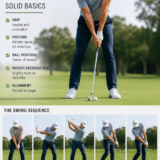
Mastering the complete swing sequence is the cornerstone of a powerful and consistent golf game. Whether you’re just starting out or looking to take your game to the next level, having a solid grip on the mechanics of a full swing can make a vast difference in both your driving distance and accuracy. Beginners often struggle with generating sufficient club head speed, but the key is not just about swinging harder-it’s about using your entire body to create efficient energy transfer. Start by setting up square to the target with your feet shoulder-width apart and aligning your club shaft parallel to the target line. Ensure the grip is comfortable and the ball is positioned properly in your stance to hit the driver off the tee. A common mistake is gripping too tightly or holding the club too far up the grip, leading to a loss of power and control. Focus on creating a relaxed, firm gripand experiment with grip positions to find what works best.
The sequence of the swing is critical for efficiency. As you address the ball, initiate the backswing by turning your shoulders and hips, which naturally leads into bending your arms and shifting your weight to the inside of your back foot. This movement creates tension and a coiled position at the top of the swing, much like winding a spring. Use this stored energy to initiate your downswing by unwinding your body in a smooth sequence,starting with your lower body and moving up to your arms and club. Remember, timing and fluidity are essential; rushing the early phases of the downswing can lead to overactive hands and an off-plane swing path.
Consistency in driving comes not just from perfecting the technical aspects but also from understanding how to adjust your setup based on course conditions and your comfort level. For instance, on a cold day when the ball isn’t coming off the tee as well, consider moving the ball slightly forward in your stance to generate a higher launch angle. This slight adjustment can help you achieve optimum ball flight and distance even when you might not be swinging at 100% power. Practice your full swing on the range under various conditions-it’s essential to be adaptable and confident in your ability to modify your approach seamlessly.
Incorporating drills that isolate different parts of your swing can significantly aid in mastering the complete swing sequence. The”quiet hands” drill is particularly useful, focusing on using your body to generate power rather than relying solely on arm strength. Stand with a club across your shoulders and your arms hanging loosely. Begin your backswing without moving your arms or hands significantly, using your body rotation to draw the club back. As you transition to the downswing, aim to start with your lower body before moving your arms and hands. This drill helps reinforce the concept of a body-driven swing, which can greatly improve your club head speed and accuracy.
The mental game plays a huge role in executing a consistent swing. Trusting your practice sessions and maintaining a positive mindset before and during rounds are crucial for performance. Visualize hitting crisp drives, feeling the power in your legs and torso transferring into the club head. When you step up to the ball, focus less on what might go wrong and more on the sensation of executing the swing exactly as you’ve practiced. Confidence, paired with disciplined practice, can turn mere technical skills into a reliable weapon on the golf course. Whether you’re navigating challenging holes or simply trying to stay ahead of the pack, the ability to drive like the pros is a skill that will pay dividends every time you step out onto the fairways.