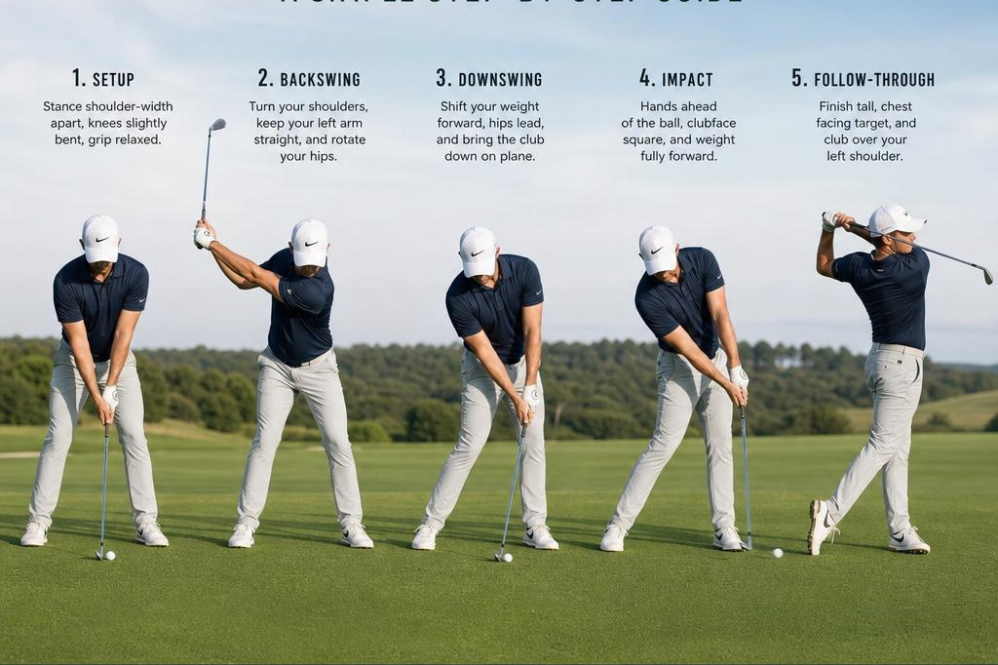
Unlock Your Golf Masters Swing with Precision Biomechanics
achieving a masterful golf swing begins with understanding the basic biomechanics that govern an efficient and repeatable motion. Key elements include maintaining a stable spine angle of approximately 45 degrees at address, which enables proper shoulder rotation without excessive lateral movement. Golfers should focus on a smooth weight transfer from the back foot during the backswing to the front foot through impact, promoting optimal power and control. To refine these mechanics, practice drills such as the “step-through drill” help synchronize lower body sequencing, ensuring the hips initiate the downswing while the arms follow in correct timing. Additionally, monitoring clubface alignment and swing plane using video feedback or alignment rods can prevent common faults like casting or over-the-top moves, which fatigue consistency. By embedding these biomechanical principles into your training routine, players from beginners to low handicappers can develop a more reliable swing that adapts seamlessly to varying course conditions and shot demands.
Beyond swing mechanics, effective course strategy and setup fundamentals further unlock superior golf performance. Begin each hole by assessing factors like wind direction, slopeand hazards to select the optimal club and shot shape – whether a controlled fade or a low-driving punch shot.Emphasizing precise setup checkpoints, such as a neutral grip, square shoulders to the target lineand a ball position slightly forward of center for longer irons, lays a solid foundation for consistent striking. Incorporating structured drills like “targeted chunk-and-run” putting practices and “distance control exercises” enable golfers to master the short game, which is critical for lowering scores. for improved course management, players should develop measurable goals such as maintaining fairway hits above 60% and greens in regulation near 70%, tracking progress to adjust tactics accordingly. As mental resilience is intertwined with technical execution, incorporating visualization techniques and pre-shot routines will enhance focus under pressure. Together, these integrated approaches transform raw swings into precision instruments capable of mastering any course challenge.
Perfect Your Putting Through Targeted Practice Drills
Developing a consistent and reliable putting stroke begins with a focused setup that supports both alignment and stroke mechanics. Start by positioning your feet shoulder-width apart with your eyes directly over or slightly inside the ball’s target line,promoting accurate visual feedback. Ensuring the putter face is square at address is critical; many golfers unknowingly open or close the face, leading to errant putts. Use a slight forward press with your hands to encourage a pendulum-like stroke driven by the shoulders rather than wrists, which should remain firm but relaxed. Practicing with alignment aids such as putting mats or gate drills can reinforce proper path and face angle, helping to ingrain muscle memory. Additionally, focusing on a smooth tempo-roughly a 2:1 backswing-to-forward stroke ratio-facilitates distance control, a key factor especially on varying green speeds encountered during course play.
Incorporating targeted drills sharpens touch and read capabilities that directly translate to improved scoring.For example, the “ladder drill” requires placing balls at incremental distances from 3 to 12 feet, encouraging mastery of pace and confidence within typical scoring ranges. Emphasize optimizing green reading by visualizing the ball’s break from multiple vantage points around the hole and factoring in wind or grain direction, as taught by top professionals. Monitoring strokes gained statistics during practice allows players to quantify progress and adjust routines accordingly. to adapt for various skill levels, beginners should focus on developing a repeatable stroke using slow-motion practice, while seasoned golfers can refine elevation control and uphill/downhill adjustments. Ultimately, by combining biomechanical precision with strategic green management, golfers enhance both consistency and lower their overall scores.
Drive Longer and Straighter with Proven Technique Adjustments
To achieve longer and straighter drives, a fundamental starting point is refining your setup and alignment. Begin by ensuring your feet are shoulder-width apart with a slight knee flex to maintain balance throughout the swing. Position the golf ball just inside your lead heel-this placement encourages an upward angle of attack, which is critical for maximizing launch angle and distance.A key focus is on spine tilt: incline your upper body slightly away from the target, about 5 to 7 degrees, to promote an ascending strike and reduce spin rates that cause slicing or hooking. Additionally, aligning your shoulders, hipsand feet parallel to the target line helps maintain a square clubface at impact, crucial for directional control. Regularly practice these setup checkpoints in front of a mirror or use alignment sticks on the practice range to ingrain muscle memory and correct misalignments before stepping onto the course.
Next, fine-tuning your swing mechanics can dramatically influence drive trajectory and consistency. Incorporate a controlled takeaway, keeping the clubhead low and slow for the first few feet to maintain a wide swing arc, which generates more clubhead speed. Experts advise focusing on maintaining wrist hinge through the backswing and initiating the downswing with lower body rotation-primarily the hips-to create powerful sequencing between the torso and arms. Golfers should work on drills such as the “pump drill,” where the downswing is paused halfway to promote proper sequencing and avoid casting the club early, a common cause of lost distance and accuracy. On-course awareness also plays a vital role: strategically selecting tee shot targets based on fairway width, hazards, and wind direction allows you to apply your enhanced technique effectively. As a notable example, when facing a crosswind, slightly closing the stance and aiming upwind can definitely help counteract ball deviation, facilitating straighter drives that set up scoring opportunities. Combining these refined mechanics with situational strategy empowers golfers at every level to boost confidence, reduce dispersionand see tangible improvements in driving performance.
Integrate Course Strategy to Elevate Your Overall Game
Successfully navigating a golf course requires more than just solid swing mechanics; it demands a strategic mindset informed by detailed course management. Start by assessing each hole with a clear focus on risk versus reward-identifying safe landing areas rather than aiming directly for the flag,especially when the pin is tucked near hazards or difficult slopes.Such as, when faced with a dogleg, aim your tee shot to a wider portion of the fairway to maximize your angle of approach, rather than attempting to cut the corner and risk out-of-bounds or thick rough. incorporating environmental factors like wind direction and green firmness can drastically alter club selection and shot trajectory, so always adjust your strategy accordingly. Utilize tools such as GPS rangefinders or yardage books to gain precise distance measurements-targeting carry distances and safe zones is crucial for minimizing errors. Practicing visualization drills where you imagine shot shapes and landings during practice rounds can improve decision-making under pressure and help develop a routine that adapts to any layout or condition.
Integrating intelligent course strategy into your game enhances not only scoring potential but also confidence and consistency across all skill levels. For beginners, emphasize mastering the fundamentals of club selection and shot shape control through practicing with gradual trajectory adjustments and controlled fades or draws, which can help navigate obstacles more effectively. Advanced players should focus on refining their approach by analyzing shot dispersion patterns and leveraging inherent swing tendencies to exploit course architecture-as an example, tailoring wedge shots to hold firm on receptive greens by adjusting spin rates and attack angles. Incorporate targeted practice sessions featuring pre-round routines that include simulated pressure shots from varied lie conditions and engaging in scenario-based drills like recovery shots from uneven lies or tight fairway rough. Remember, integrating mental discipline through focused breathing exercises and course planning enhances composure, allowing for smarter decisions and better execution. By systematically combining technical prowess with tactical thinking, golfers can lower scores and elevate their overall game performance dramatically.