
Unlock Your Swing Potential with Biomechanical Techniques
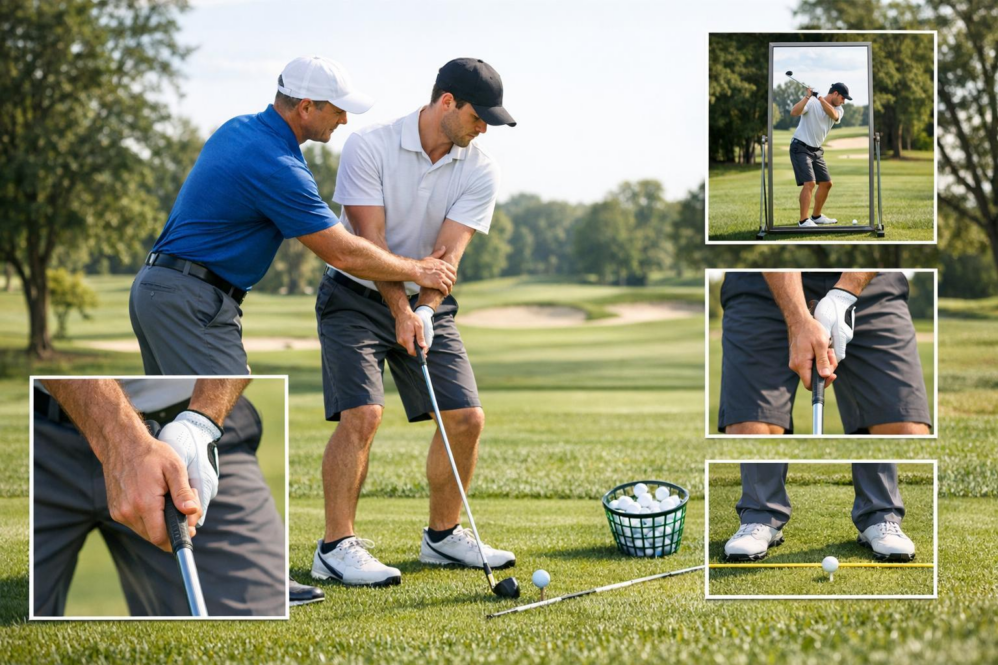
Understanding the biomechanical fundamentals of the golf swing is essential for players at every skill level aiming to enhance consistency and power. Start by focusing on the proper setup alignment, where the feet are shoulder-width apart and the spine angle is maintained at approximately 15 degrees forward tilt. This positioning promotes a natural, balanced stance and facilitates an efficient swing plane typically between 45 to 55 degrees. Integrating hip rotation with controlled shoulder turn helps generate torque while minimizing upper body sway. A highly effective drill is to practice swinging in front of a mirror or using video analysis to track your backswing depth and follow-thru extension.Setting measurable goals, such as increasing your clubhead speed by 5 mph over six weeks, can help track gradual progress, reinforcing that golf improvement is rarely linear and requires patience and persistence.
Developing precision in both the short game and full swing hinges on integrating biomechanical efficiency with purposeful practice. For example, when working on transition from backswing to downswing, focus on initiating with the lower body-specifically, a controlled weight shift onto the front foot-before the arms drop into the swing arc. This sequence maximizes kinetic chain efficiency and clubhead acceleration. Complement this by incorporating drills like the “pause at the top” where you briefly halt your swing at the apex to develop muscle memory for proper sequencing. Additionally, grip pressure should be balanced-not too tight to inhibit fluidity, nor too loose to lose control-with an ideal grip force rating of around a 4 out of 10. On-course, adjust your strategy according to conditions such as wind or firm fairways by selecting clubs that optimize launch angle and spin rate, reinforcing biomechanical adaptations to environmental factors to consistently lower scores.
Effective course management is the cornerstone that connects your swing mechanics and short game skills to tangible scoring improvements. Begin each hole by evaluating your lies, wind direction, and pin placement to make strategic club selections favoring higher-percentage shots over risky plays. incorporate a practice routine that drills various shot shapes-such as fades and draws-under simulated pressure to increase confidence during real-play situations. Utilize metrics like dispersion patterns to identify shot tendencies and adjust your aim points accordingly, helping you stay within course boundaries and avoid penalties. Importantly,embrace mental resilience techniques such as deep breathing and visualization between shots to maintain focus and mitigate frustration,as fluctuating conditions and the nonlinear nature of skill acquisition demand both technical and emotional adaptability for sustained game growth.
Elevate Your Putting Accuracy Through Precision Drills
Mastering putting accuracy begins with a solid setup and refined stroke mechanics. Start by ensuring your eyes are positioned directly over the ball, which promotes a straight-back, straight-through stroke-the foundation of consistent putting. Align your shoulders, hips, and feet parallel to your intended target line to reduce unwanted angular deviations during the stroke. Keep the putter face square to the target at impact, as even a slight open or closed angle can send the ball off line dramatically.Incorporate a pendulum motion driven by the shoulders rather than the wrists, which minimizes yips and promotes repeatable tempo. For measurable improvement, use alignment rods or laser guides during practice sessions to receive immediate feedback on stroke path and face angle, aiming for less than 2 degrees of face rotation at impact. By establishing these setup fundamentals, golfers at any level can build a reliable foundation to elevate their putting precision on varied green speeds.
Once the basics are mastered, integrating precision drills into your routine will sharpen your feel and distance control-a critical component of course management on the greens. For example, use the ladder drill, placing golf balls at incremental distances between 3 and 15 feet to practice consistent speed and release.Focusing on controlling the length of backstroke to dictate distance allows players to develop dependable distance control, which ofen differentiates low handicappers from higher ones. Additionally, practicing putts on different slopes replicates real-course scenarios where green reading and break judgment are essential. To interpret subtle breaks, study the grain direction under varied lighting conditions; putting against the grain reduces ball roll and increases break severity. Remember, improvements here are rarely linear-patience and repetition are key. Keeping a putting journal tracking drills, green conditions, and outcomes helps monitor progress and adjust practice focus, ensuring continuous growth toward lower scores.
course strategy also profoundly impacts putting success, so aligning technical skills with mental preparation is crucial. Before each green, conduct a thorough read by walking around the putt’s path to visualize break and speed.Identify the highest and lowest points on the green to anticipate ball movement realistically. During competition, risk management becomes essential; for longer putts, it’s frequently enough smarter to focus on pace control to leave a short, makeable comeback rather than aggressively chasing the hole and risking three-putts.For beginners, this means practicing lag putting drills emphasizing smooth acceleration through impact to avoid deceleration, which causes poor distance control. Advanced players can refine scoring by developing an arsenal of stroke lengths and speeds matched to green conditions, integrating tools like Stella or SAM PuttLab for biomechanical feedback. By combining technical precision, practical drills, and smart course management, golfers can steadily enhance putting accuracy, leading to meaningful reductions in their overall scores.
Drive Further and Straighter with Proven training Methods
To drive the ball further and straighter, mastering a consistent setup is essential. Begin with a balanced stance measuring approximately shoulder-width apart, ensuring even weight distribution to promote stability throughout the swing. Position the ball just inside the lead heel for a driver to optimize the launch angle, typically around 12 to 15 degrees, facilitating a powerful, upward strike on the ball. Incorporate a slight upward angle of attack by teeing the ball so that about half the ball is above the top edge of the driver face. This setup encourages higher launch and lower spin, key factors for increased distance and straighter ball flight. Common mistakes include excessive sway or a closed stance that can cause hooks or slices; regularly check alignment using clubs or alignment sticks during practice rounds to build accuracy from the ground up.
Improving swing mechanics involves focusing on the sequencing and timing of the golf swing, crucial for generating clubhead speed and controlling direction. Start by emphasizing a smooth takeaway where the clubhead moves back low and slow, maintaining a triangle formed by your arms and shoulders. At the top of the backswing, aim for a 90-degree shoulder turn while keeping your lead arm straight and wrists hinged approximately 90 degrees. From here, initiate the downswing with a weight shift toward the front foot combined with a controlled hip rotation to create lag, a critical factor in producing power without sacrificing control. For practice,perform slow-motion swings focusing on these positions,using video analysis to self-correct or seek instructor feedback. Also, implement drills such as the “pause and go” to improve transition timing. For golfers struggling with consistency, adopt drills that address common faults like coming over the top, which often results in slices, by practicing with a headcover outside the ball to promote an inside-out swing path.
Beyond mechanical proficiency, effective course strategy and mental focus play pivotal roles in maximizing driving distance and accuracy. Understand how environmental conditions such as wind, elevation, and fairway firmness influence ball flight and roll-out-adjust club selection and aim accordingly. As an example, playing into the wind may require a lower trajectory shot with more spin control, while open fairways favor aggressive play to capitalize on roll. Implementing pre-shot routines, including visualization and controlled breathing, can enhance focus and reduce tension, which commonly causes erratic shots.additionally, strategic tee placement to avoid trouble areas and favor wide landing zones lessens the penalty of imperfect strikes, helping maintain score momentum. Incorporate this strategic mindset into practice rounds by simulating course scenarios, such as aiming at narrower fairways to build confidence and adaptability, ultimately leading to measurable improvements in scoring and overall game performance.
Integrate Course Strategy to Maximize Your Scoring Consistency
Successfully navigating a golf course requires more than powerful drives and accurate putts; it demands a strategic mindset that balances risk and reward throughout each hole. Understanding your current skill set and tailoring your game plan accordingly is essential to maximize scoring consistency. Start by assessing hole layouts and identifying key target areas-such as safe landing zones off the tee or preferred angles into greens-that suit your shot-making capabilities. Utilize aerial maps or yardage books to note distances to hazards, bunkers, and trouble spots, then plan shots that minimize needless risks. For example, if you consistently struggle with long iron approaches, consider laying up short of hazards and relying on wedge shots where your precision is higher. This approach aligns with the principle that Golf improvement is rarely linear, by encouraging deliberate, manageable challenges that build confidence and reduce costly errors.
Effective course strategy also involves mastering the art of shot selection based on prevailing conditions and your equipment. Pay close attention to wind direction, green firmness, and elevation changes to inform club choice and swing adjustments. When approaching a green with subtle breaks, factor in rollout tendencies and position your approach shots to leave easier putts rather than always aiming directly for the flagstick.As an example, use a landing area 20 to 30 yards short and slightly off-center of the pin to allow for natural ball roll that leads closer to the hole. Additionally, integrating shot shaping, like controlled fades or draws, can definitely help navigate doglegs or avoid hazards while setting up optimal angles into greens. Practicing these techniques on the range-by hitting shots with intentional curvature and trajectory control-can transform course management from guesswork into informed decision-making. Remember,mastering course strategy synergizes with improving your swing mechanics and short game,creating a holistic improvement cycle.
To embed these strategic concepts into your routine, allocate practice sessions that emphasize decision-making under varied scenarios. Incorporate drills such as visualizing and mapping out holes before playing,then implementing the planned strategy during competitive rounds. Beginners might focus on consistently hitting conservative targets and managing hazards, while advanced players can challenge themselves by experimenting with aggressive lines or different shot shapes to lower scores incrementally. Regularly reviewing scorecards and shot data helps identify tendencies and areas to refine strategy. Most importantly,maintain flexibility-course conditions and personal form vary daily,so adapt your approach rather than rigidly adhering to preconceived plans. By integrating course strategy with technical skill development, golfers at every level can enhance scoring consistency, better navigate challenges, and enjoy measurable progress on the scorecard.




