
To measure success in chipping, aim to get your shots within a two- or three-foot circle around the hole, especially for short chips.Advanced players can set even tighter goals. One great drill is the short-sided chip drill, where you place several balls in a tight area and challenge yourself to hit each ball close to the hole. This helps you learn how to work the ball left and right, manage distance controland understand the impact of green speed.
Practicing in different scenarios can greatly improve your chipping ability.Course conditions like long grass or wet turf can affect how you approach your shots. Consider the lie and the wind to choose the right technique. Such as, if you’re chipping from high grass, you might need a slightly more open clubface and loft to lift the ball over the fringe. Keep your swing simple and clean, avoiding the urge to force the ball off the ground. Regular practice and attention to setup and mechanics will make your chip shots more reliable and effective.
Master the Perfect Ball Position for a Reliable Chip
Mastering the perfect ball position for a reliable chip shot is crucial in golf. It’s about getting the ball in the right spot so you can generate the desired trajectory with precision and consistency. Beginners often need straightforward guidance to build confidenceand even low handicappers can refine their technique.
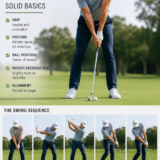
The first step is understanding where the ball should sit relative to your stance. For a short-sided chip, play the ball slightly forward of center, about two to three inches from your front foot. This forward ball placement encourages a descending blow, which is essential for getting under the ball to hit soft, controlled chipping shots. Place the ball just inside your left heel if you’re right-handed, maintaining this alignment nonetheless of the lie.
Setting up for the shot is the next critical component. Begin by addressing the ball with your weight slightly favoring the front foot, about 70% on your lead side. This balance provides the strength to use your hands and arms to compress and lift the ball cleanly without needing extra leg drive. Keep your feet narrower than your shoulders for stability and control. A narrow stance helps in creating a shallow swing arc, reducing the chance of a heavy or skulled chip. Remember, the goal is to generate enough loft and spin to bring the ball softly to a halt near the pin.
Swing mechanics then come into play, emphasizing a focused, compact motion. Swing the club back with a smooth, shallow wrist hinge, not lifting the club too high. The goal is to generate enough wrist action to hit up to the ball slightly at impact, but without a steep downward strike that risks a mishit. At address, you can use a practice method to ensure the clubface is properly aligned-place the butt end of the grip against your side, parallel to your body. When you set up, the grip end should be pointing at your left hip. This ensures that your hands are in front of the ball at address and set up for impact, ideal for a short-sided chip.
Practicing the short-sided chip drill on the course can help solidify this technique.You can do this at home in your yard or at a practice area with a hula hoop or similar marker. Place a hoop or circle on the green and position balls at varying distances, roughly five yards apart. Starting closest to the hoop, practice chipping the balls to land softly inside the hoop. Key here is maintaining a forward ball placementand adapting your stance and swing speed for distance control. The beauty of this drill is that it mimics short-side situations you face frequently, such as when the pin is cut behind a bunker or close to an edge of the green. By honing your ability to consistently make these short, precise chips, you’ll see lower scores as you approach the course more confidently.
Turning Chips into Makeable Putts with Confidence
Improving your short game is about more than just nailing chips in practice; it’s about gaining the confidence to trust your ability under pressure on real courses. One key technique is turning those chips into makeable putts. When you land a chip within one or two putts of the hole,you’re in a much better position for par or birdie. Start by setting up the ball correctly every time, regardless of the lie.
The setup is crucial. First, grip the club properly with your hands slightly ahead of the ball to encourage a downward strike. Your body alignment should parallel the target lineand your feet should be open to the target slightly. Adjust your posture so your hands are just below your shoulders. This alignment helps ensure that your swing path is along the intended line, reducing the chance for errant shots. Remember, the goal here isn’t to hit the ball a long way but to place it softly and accurately.
One drill to focus on is the short-sided chip. Place markers on the ground at your feet and the ball, ensuring that your set-up is consistent.Practice landing the ball just ahead of the hole without overshooting. You can use tees or markers placed at different distances to practice different lengths of chips.Focus on a consistent takeaway and follow-through, keeping the club head slightly ahead of the hands, which helps ensure the club is moving down and into the ball properly. The key is to let the club do the work while you move your body in sync with the shot.
Building on the basics, you can experiment with different loft shots to land the ball closer to the hole. A lower lob shot can land closer than a high-flying one, depending on the distance and the lie of the ball. Pay attention to how the grass and yardage affect your chip. On a short-side chip, the ball could be sitting in a tight lie or might have a downhill lean. In such conditions, use a lower-lofted club or even the putter to roll the ball onto the green and control its pace to arrive close to the hole. This versatility ensures you can handle a variety of tricky situations confidently.
To really cement these skills, practice on an actual course where you can experience different grass conditions, slopesand wind speeds. Use these on-course drills to refine your technique and build your confidence. A common mistake is to rush, leading to inconsistent shots. Slowing down and focusing on the setup can help immensely. Another frequent error is swinging too hard, which often results in poor contact or overstriking.Remember,you’re not trying to hit a chip into the hole but to get it close enough to make an easy putt. By keeping your shots measured and precise,you’ll start to turn those chips into makeable putts,a crucial element in lowering your scores and boosting your confidence on the course.