
Why Your Playing Handicap Might Be Better Than Your Course Handicap
Understanding your Playing Handicap and Course Handicap can offer you a fascinating look into your true golfing capability. The Playing Handicap reflects your score on a particular course, adjusted for the course rating. A Course Handicap, however, adjusts your Playing Handicap further based on the tee markers and course difficulty. The insight here is that playing on easier or par-for-your-handicap courses,your Playing Handicap may actually look better than your Course Handicap,as the latter frequently enough includes a competition allowance that toughens the challenge slightly.
For instance, if you’re a 14-handicap player, your Course Handicap might be set to ensure a challenge, perhaps around 12, to allow for a realistic score. This adjustment is made to maintain fair and competitive gameplay among players of different ability levels. Beginners might find this adjustment more noticeable, as it pushes their scores closer to their true capacity. To improve this scenario, players need to aim for consistent performance rather than focusing solely on hitting the ball further or aiming for lower handicaps.
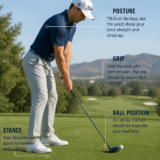
To bridge this gap, consider practicing your swing mechanics to achieve more consistent ball flight patterns. Begin by using a launch monitor or video analysis to check your swing. For beginners, focus on the basics: grip, stanceand alignment. Advanced players, on the other hand, might refine their club head speed and angle of attack. The objective is to hit the ball more accurately and consistently, which directly impacts your score.
Equally crucial is mastering course management, especially on tougher courses. This includes understanding green slopes and hazards. Such as, if you tend to pull your shots left off the tee, it might be helpful to tee the ball slightly to the right. Advanced golfers can use this to advantage by carefully choosing which areas of the fairway they prefer to land their tees for approach shots. Beginners might benefit from simpler advice: aim slightly right on holes with water left of the green.
Short game and putting are also critical for managing your Playing and Course Handicaps. For beginners, start by reducing the number of putts per hole.Practicing with a target of making a certain percentage of greens, even if it means taking two putts, can build confidence. For more advanced golfers, working on controlling your ball spin and trajectory can make a meaningful difference. Drills such as hitting bunker shots or chipping over different obstacles can sharpen these skills.
Mental strategy plays a role as well. On challenging courses, playing strategically by accepting higher targets on certain holes can prevent double bogeys that can quickly spike your course scoring. This can be tough to swallow but essential for maintaining a competitive level. Imagine a scenario where you’re faced with a 10-foot putt for an eagle on a par 5 you’ve already birdied. Instead of going for it, a conservative approach might be to aim for par, securing that lower Course Handicap. This tactical decision relies on a solid mental game, which is just as crucial as technical skills on the golf course.
In wrapping up, remember that improving your Playing and Course Handicaps involves a blend of skill development, course strategy, and mental preparation. Consistency in your golf game is key, whether through technical refinement or strategic adjustments during play. By approaching each round with a blend of technical practice and strategic planning, you’re positioning yourself for a lower handicap and a more enjoyable golfing experience.