Bethpage Black will host the 2025 Ryder Cup with live coverage across multiple platforms: NBC – alongside USA Network and Peacock - holds U.S. broadcast rights, offering extensive live and studio coverage, while Sky Sports (including Sky Sports Golf) will carry the action in the U.K. and Ireland.
Full weekend broadcast timetable and where to tune in for live coverage
Across the full weekend of play at Bethpage Black, viewers and students of the game should use live coverage as a structured learning tool: tune into the official broadcast partners listed on the Ryder Cup schedule and check live-score feeds such as ESPN for hole-by-hole updates and shot-tracking data. In addition,consult course guides like Golf Digest for hole layouts and yardage maps that pair with what you see on TV. As you watch,treat the telecast as a moving lesson – note setup,club selection,wind direction at tee markers,and how star players negotiate pin positions – then replicate those scenarios on the range or practice green in staged drills.
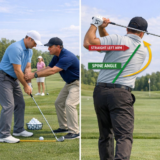
Begin with a technical breakdown of the swing using broadcast camera angles as a reference. First, evaluate setup: neutral posture with 5-10° of forward spine tilt, feet shoulder-width for mid-irons, and a ball position of roughly one ball left of center for a 7-iron. Next, observe backswing and rotation: aim for 45-60° of shoulder turn with limited lateral sway; at impact look for 2-6° of forward shaft lean on iron strikes to compress the ball. To practice, follow this step-by-step drill sequence:
- Slow-motion half-swings for timing (30-40% speed) focusing on the shoulder turn.
- Impact tape or spray on the clubface to confirm centered strikes.
- Progress to 3⁄4 and full swings while maintaining the same spine angle.
These measurable checkpoints let beginners focus on reproducible setup while low handicappers refine contact and dynamic loft for better shot control.
Short game and putting are often decisive over a broadcast weekend; use televised green footage to decode pace and break. When watching a putt, note the pin height relative to the hole and the slope across the green: estimate the break by eye and then test on your practice green with a stimpmeter reading – typical tournament speeds range 10-13 feet. Try these targeted drills:
- Distance ladder: place tees at 10, 20, 30 feet and make 10 putts at each to improve speed control.
- Gate drill for stroke path: set two tees just wider than your putter head to enforce square impact.
- Short-sided bunker recovery: practice 50 shots from 10-30 yards of sand using varied bounce angles.
Common mistakes to correct are picking line before reading pace and forcing a stroke that’s too wristy; rather, use a pendulum stroke from the shoulders and focus on accelerating through the ball.
Course management lessons are visible in every live pairing: note when players choose to lay up versus attack a hole, particularly under changing wind or firm greens at Bethpage. Translate that to your game by using target-oriented play – pick a 10-15 yard landing zone rather than just “hit it straight.” For example, when the wind is into you on a 420‑yard par 4, play one club longer into the wind and aim for the widest part of the fairway; when the hole funnels toward a bunker, aim to land 20-30 yards short and left to allow a controlled approach. Practice shot-shaping with these drills:
- Fade and draw corridor drill: place alignment sticks 10 yards apart and shape 20 triumphant shots each side from a fixed yardage.
- Wind-simulated range: use a fan or practice in breezy conditions, logging club choices for specific yardages (e.g., 8‑iron for 150 yd into 15 mph headwind).
These strategies reduce risk, lower your score expectation, and mirror the tactical decisions shown on the Ryder Cup broadcasts at bethpage.
convert viewing into measurable practice and mental-game gains: plan sessions around the broadcast timetable so you can watch strategic sequences live and promptly replicate them in controlled practice. Set performance goals such as reduce three-putts by 50% in 12 weeks or improve fairways hit by 10% over eight rounds, and use a weekly practice log that records drills, clubs used, and shot outcomes. For accessibility, offer multiple approaches – visual learners can freeze-frame televised swings and trace body lines; kinesthetic learners should mirror the movement with slow reps and video capture. Troubleshooting checkpoints include:
- Ball flight too high: add 1-2° less loft at address or shallow the angle of attack.
- Inconsistent short game: practice 50 reps from 30-50 yards focusing on acceleration through the shot.
- Nervous competition play: simulate pressure by playing alternate-shot or match-play formats in practice rounds.
use the weekend’s live coverage as a curriculum – combine broadcast analysis with targeted drills,measurable goals,and course-management templates to turn observation of the 2025 Ryder Cup at Bethpage into sustainable,score-lowering betterment.
Network and streaming rights explained for United States and international audiences
Broadcasters and streaming services determine how fans and students access elite-level instruction in real time, and in practical terms this affects how golfers study strategy and technique. In the United States, live rights for marquee events are typically held by major broadcast networks and affiliated subscription streaming platforms, while international audiences rely on regional sports networks and national broadcasters; use the 2025 Ryder Cup TV schedule: How to watch Bethpage matches on TV as a viewing map to time your study sessions around morning and afternoon coverage. For instruction, the critical takeaway is not the name of the network but the production tools they provide: slow‑motion replays, overhead flyovers, shot tracer telemetry and on‑screen yardage that reveal wind, lie, and pin locations. When watching, focus on these elements to translate pro decision‑making to practice – for example, pause the aerial line to pick an exact aiming point and then replicate that alignment on the range with the same target distance.
Starting with swing mechanics, break the motion into quantifiable checkpoints so improvements are measurable. Set up fundamentals first: feet shoulder‑width apart, shaft lean at address of 0-5° toward the target for irons, and a spine tilt that preserves rotational axis. During the backswing keep the club on plane with a shoulder rotation of approximately 90° for full shots, then transition with a shallow downswing to achieve an attack angle of about -2° to -4° for mid‑irons and a positive attack for the driver of +2° to +4°. To train these positions, use the following practice drills:
- Gate drill with alignment rods to fix takeaway and clubface path.
- Impact bag work to feel forward shaft lean and centered strike.
- Tempo counts (1-2) to stabilize transition and rhythm.
Progress from slow, intentional swings to full-speed reps only after you consistently reproduce the desired impact position.
Short game proficiency and green reading are the most efficient ways to lower scores, so prioritize pace and contact over flamboyant technique. For putting, use the clock drill to groove stroke length and speed control: aim to hole three 6‑footers, five 10‑footers, and ten 20‑foot lag putts per week with the measurable goal of reducing three‑putts to fewer than one per nine holes. For chips and pitches, practice trajectory control by changing hinge and wrist set: a low chip (bounce contact) requires an open clubface and minimal wrist hinge, while a soft pitch uses more loft and a higher swing arc with 50-75% of a full wrist hinge.In bunkers at a firm,windy layout like Bethpage Black,take an aggressive splash technique – open the face,aim to enter the sand 1-2 inches behind the ball,and accelerate through. Troubleshooting checklist:
- if you fat a chip, move the ball slightly back in stance and weight on front foot.
- If you thin bunker shots, increase sand entry point and accelerate more.
- If lag putts are short, lengthen backstroke and keep lower body silent.
Course management and shot shaping connect technical ability to scoring choices on actual holes. Start each hole with a pre‑shot plan: identify the safe side of the fairway, a carry yardage over hazards, and two bailout targets. At Bethpage during the Ryder cup coverage you can see professionals prioritize landing areas ahead of flags, often sacrificing green proximity for a favorable slope to feed the ball toward the hole – replicate this by choosing a club that leaves you with a preferred-type approach (e.g., choose a 7‑iron to leave a 110-120‑yard wedge into a back‑right pin rather than risking a long hybrid). For shot shaping,practice the two primary shapes-fade (open face,path left-to-right) and draw (closed face,path right-to-left)-with measured swing adjustments: rotate hands 3-5° at address for subtle face change or alter stance by 1-2″ to encourage the desired path. use situational drills on the range:
- Simulate wind by practicing into a headwind and dialing club up by 10-20% of normal yardage.
- Create target windows (10-15 yard wide) and force two‑club decisions to improve game management.
equipment, practice programming, and the mental game unite to sustain improvement across all levels. Begin with a fitting checklist: verify loft and lie, ensure gapping of roughly 10-15 yards between irons, and select shaft flex that produces consistent dispersion at your swing speed. A weekly practice template can look like this: 30 minutes range warm‑up and mechanics, 40 minutes short game (chipping, pitching, bunker), and 20-30 minutes on the putting green with pressure drills. Mental routines matter: establish a concise pre‑shot routine (visualize the line, take a deep breath, and pick a specific spot 1-2 feet in front of the ball for alignment), and after watching televised matches use replays not to mimic style but to extract tactical principles – for instance, how a player adapts launch conditions and spin for firm greens at Bethpage. For different learning styles and physical abilities, alternate visual feedback (video), feel drills (eyes closed putting), and objective metrics (launch monitor carry/dispersion numbers) so that every practice session yields measurable progress toward lower scores.
How to set up streaming, authentication tips and best devices to watch
The live-broadcast environment offers golfers a unique classroom, but first you must get the live feed right. Start by confirming the 2025 Ryder Cup TV schedule and your national rights holder well in advance so you can log into the correct service for the Bethpage matches; test the stream at least 30 minutes before tee times. From a technical standpoint, ensure a stable internet connection – 25 Mbps downstream is a practical baseline for single 4K sports streams, while 10-15 Mbps will suffice for 1080p. For reliable latency and consistent frame delivery, connect your viewing device via Ethernet or a 5 GHz Wi‑Fi band, position the router within line of sight, and disable unneeded background downloads. Troubleshooting checkpoints include:
- Confirming app updates and reboots of the streaming device;
- Verifying HDMI cable is rated for video format (prefer HDMI 2.0+ for 4K/60Hz);
- Running an internet speed test and closing competing devices if speeds drop.
These setup fundamentals reduce frame drops so you can observe swing sequence, ball flight, and green action without interruption.
Authentication is a simple step that often becomes the greatest barrier to uninterrupted instruction.First,create or update the account tied to the broadcast partner listed on the Ryder Cup schedule,and enroll in two‑factor authentication to protect access. If your broadcast uses a TV provider login, link the provider account to the streaming app ahead of match day and authorize commonly used devices so you avoid last‑minute sign‑ins. For international viewers, be aware of geo‑restrictions and prefer official partners to unofficial VPN routes; check the Ryder Cup’s official site for the validated broadcasters carrying Bethpage coverage. In addition, maintain a short checklist:
- Confirm credentials and save them securely (password manager recommended);
- Pre-authorize at least two devices in the app (one primary, one backup);
- Enable push notifications for match start, weather delays, and replay availability.
Following these steps keeps your access predictable so your analysis and practice windows remain uninterrupted.
when choosing a device to watch live golf for instruction, match the screen and playback capabilities to your learning needs. For in‑depth swing analysis and tactical study,a large smart TV or a monitor with 4K HDR and a minimum 60 Hz refresh rate reveals ball flight and face rotation clearly,while a tablet or laptop with frame‑by‑frame replay controls is best for close inspection of wrist set,hip rotation,and impact. Popular, reliable platforms include Apple TV, Chromecast with Google TV, Roku, and Amazon Fire TV; combine these with a secondary tablet (iPad/Android) for stat overlays and on‑demand clips. For audio‑visual fidelity that aids rhythm and tempo coaching, pair the display with a soundbar supporting clear midrange frequencies so you can hear club impact for timing cues. use DVR and instant‑replay features to capture specific sequences and save clips for swing comparison back at the range.
Watching Bethpage during the Ryder Cup provides real‑course scenarios you can immediately apply to practice. The Black course often punishes aggressive lines; observe professional players’ club selection and left/right bail‑out patterns, then recreate those scenarios at your practice ground. Specific,repeatable drills include:
- Shot‑shape replication: Use alignment sticks to create a 15‑yard gate and practice controlled draws/fades with a target landing area 100-150 yards out to match intermediate approach shots;
- Pitching to a precise landing zone: Pick a 10‑yard square on the practice green; hit 30-yard pitches with progressively tighter spin control until you can land inside the square 8 of 10 times;
- Match‑play course management: Simulate 3‑hole matches where par is a win-force decisions to play to the safe side of the green and measure up‑and‑down success rate.
these drills connect televised decision‑making to measurable practice outcomes: track your dispersion (shot grouping in yards), up‑and‑down percentage, and greens‑in‑regulation over a four‑week block to quantify improvement.
translate technical observation into long‑term scoring gains by fixing common faults and setting measurable goals.Beginners should concentrate on consistent contact and basic alignment: aim for a stride length that naturally sets the weight transfer, with the ball positioned one ball forward of center for a driver and centered for mid‑irons. Intermediate players should measure attack angle and spin – for many iron shots an attack angle of −3° to −1° produces solid compression – and practice a 20‑minute routine focused on face control and tempo. Low handicappers refine shot‑shaping margins and course strategy: set goals such as GIR 60-70% or reducing three‑putts to under 10% of holes played. Common mistakes and corrections:
- Over‑rotation on long shots → drill with a towel under the trail armpit to maintain connection;
- Misreading greens after watching televised putts → learn to read slope with the 1‑2‑3 circle drill and confirm by pitching balls from the apron to observe break angles;
- Forcing low‑percentage carry shots at Bethpage → adopt a conservative play line and practice the bailout chip to save pars.
In addition, use the Ryder Cup coverage to strengthen the mental game: note players’ pre‑shot routines and tension management, then rehearse a simplified routine on the range. Together, these step‑by‑step technical, tactical, and mental adjustments convert broadcast observation into quantifiable on‑course improvement.
Prime viewing windows to catch pivotal matches and recommended viewing strategy
Television coverage offers concentrated learning opportunities when you know where to look; prime windows to observe pivotal matches typically include the opening team sessions, the afternoon singles, and the closing final session – these are when match strategy and momentum shifts become most visible. To make broadcasts instructive, use the 2025 Ryder Cup TV schedule: How to watch Bethpage matches on TV to identify live windows in your time zone, then plan a focused watching session rather than passive viewing. First, scan the pairing sheets and leaderboard to select 1-2 key matches (such as, the top pairings or a local favorite) and note the hole stretches likely to decide the outcome – tee-to-green exchanges on par-4s and 5s, and the closing three holes are often decisive. Next,position yourself with a notepad or voice memo app to record specific moments: club choice,shot shape,lie conditions,and green-read cues. watch with intent for course-management decisions (aggressive line vs. conservative layup), as these teach risk-reward calculation applicable to all handicap levels.
Broadcast coverage is ideal for analyzing swing mechanics and shot shaping in context; when a player shapes a drive around trees or executes a knock-down iron into wind,pause and study the setup and impact. Pay attention to quantifiable details: clubhead speed (amateurs: driver ~85-110 mph), shaft lean at impact (typically slightly forward on irons), and attack angle (positive on drivers, negative on mid-irons, often −3° to −6°). Use the following practice checklist to convert observation into drills:
- Mirror drill: check spine angle and hand position at setup for 10 minutes daily.
- Path-and-face alignment: place an alignment rod two inches outside target line to rehearse an inside-out path for draws or outside-in for fades.
- Tempo ladder: swing at 50%, 70%, 90% speed to develop consistent sequencing; measure with a swing speed radar if available.
Transition from TV to range by replicating the exact shot shape and lie condition you observed, gradually adding pressure (e.g., hit three successful shaped shots into a target circle). This approach helps both beginners learn basic swing positions and low handicappers refine subtle face-path relationships.
Short game and putting sequences visible on television are coursework in green reading and touch – watch how elite players play downhill lies, how they use bounce in their wedges, and how they control pace on long lag putts. A technical way to quantify green reads is to estimate slope: a 2-3% grade over 10 feet can deflect a ball multiple inches; as a rule of thumb, expect about 1-2 inches of break per 10 feet for every 1% of green slope depending on grain and speed. Practice drills inspired by broadcasts:
- Ladder lag drill: putt to 15 ft,25 ft,35 ft targets to control speed; record three-out-of-five success as progression metric.
- Half-swing wedge touch: from 30-60 yards, focus on landing spot with an 80-90% swing to train trajectory and spin.
- Bump-and-run series: play to flag from 40-70 yards using lower-lofted clubs to simulate recovery shots seen around firm Bethpage greens.
When viewing, freeze-frame key putts to observe setup fundamentals-eyes over ball, minimal lateral head movement, and consistent shoulder rotation-and note any equipment cues like putter loft and lie that influence roll.
Understanding course strategy is best taught by observing decisions under pressure. Bethpage Black, with its narrow fairways, penal rough, and elevated, subtly contoured greens, rewards accurate positioning over sheer distance.From broadcasts, learn to identify situations where players choose to lay up (leave a agreeable wedge in) versus attacking the green: if the forced carry is >220 yards with crosswind, many will elect a layup to leave an 85-110 yard wedge approach. Apply these principles on your course: mark target landing zones, establish preferred yardages for layups (e.g., 150-175 yards to avoid hazards), and practice the specific wedge distances you will encounter. Common mistakes visible on TV-aiming too aggressively into crosswinds or misreading green speed-can be corrected by rehearsing the same decision-making under controlled practice conditions and tracking outcomes with a simple scorecard note: decision, execution, result.
convert viewing into measurable improvement by following a structured post-broadcast routine: select two technical and one strategic focus per viewing window, then implement a 4-week practice plan with clear targets. Such as, after watching a match where a player’s low punch into wind saved par, your weekly plan might include:
- Week 1: Mechanics-10 minutes daily mirror/tempo drills, target: consistent impact position 4/5 times per set.
- Week 2: Short game-30 minutes three times weekly on ladder lag and 30-60 yard half-wedges,target: reduce up-and-down attempts from 15 to 10 per round.
- Week 3-4: Course strategy-play nine holes emphasizing positional play and record two decision changes (e.g., layup vs. go-for-it) and outcomes; target: improve scoring average by 0.3 strokes per hole on trouble holes.
Also, account for environmental factors highlighted on TV-wind direction, firmness of greens, and temperature-which all alter club selection and shot shape. Use mental rehearsal techniques seen on-camera (pre-shot routines, breathing) to manage pressure. By rotating observational focus, practicing targeted drills, and measuring progress with clear metrics, viewers of the Ryder cup broadcasts can translate televised excellence at Bethpage into tangible gains on their own scorecards.
Radio coverage, highlights and on demand options for fans on the go
Broadcasters and digital platforms now deliver concise radio summaries, highlight reels and on‑demand clips that are ideal for the traveling golfer who wants to study technique between rounds. With the 2025 Ryder Cup TV schedule: How to watch Bethpage matches on TV guiding when live coverage and condensed replays are available,fans can earmark specific match windows to study strategic decisions and swing mechanics. To turn passive listening into active learning, follow this step‑by‑step approach: first select a clip that demonstrates a skill you want to learn (for example a low punch shot out of wind); second, note the club, lie and landing area called out by commentators; third, replay the clip and compare the pros’ setup and finish to your own fundamentals. This method works across skill levels because it links observable pro behavior to practical adjustments you can test on the range or practice green.
when focusing on swing mechanics,use live or recorded footage to analyze three measurable checkpoints: spine angle (approximately 30-45° at address),shoulder turn (80-100° for many male players,60-80° for many female players),and tempo ratio (commonly 3:1 backswing to downswing). start with a single element and practice it in short reps: mirror the pro’s takeaway for 20 swings, then slot in the lower body rotation for 20 more. Drills to reinforce these mechanics include:
- Gate drill – place two tees just outside the clubhead path to promote a square takeaway and impact.
- Pause at waist height – swing to waist high, hold 2 seconds, then complete to ingrain the correct plane.
- Tempo metronome - use a 3:1 beat (three ticks back, one through) to stabilize timing.
Short game and putting improvements are best practiced with measurable goals tied to what you hear and see in broadcasts. For putting, listen to commentators describe green speed and watch how pros react to the same pace; then set a practice target such as reduce three‑putts by 50% in six weeks by practicing 30 lag putts per session from 20-40 feet, striking for a consistent roll and measuring distance control. Key setup checkpoints include:
- Eye line – just inside or directly over the ball for a straight stroke.
- Shoulder tilt - 3-6° to promote a slight arc for typical putter designs.
- Grip pressure - light, about 4-6/10, to allow feel through impact.
For chips and pitches,practice the landing‑zone method: identify a spot on the green from the broadcast,then hit 10 balls focusing on landing within a 3‑yard radius of that zone to learn trajectory control and spin rates.
Course management and shot shaping are often the decisive factors at venues like Bethpage, where pin positions, wind and penal rough change strategic choices. Use televised hole‑by‑hole coverage to catalogue preferred landing zones and bailout areas; then apply the following tactical rules: if a fairway bunker lies at 260-280 yards, choose a 3‑wood or controlled hybrid to avoid the hazard even if it sacrifices distance, and when wind is gusty, lower trajectory by reducing loft 3-6° at address and shortening the backswing to create a knockdown. Troubleshooting steps for shaping include:
- Open or close the clubface 1-3° relative to the target to promote a controlled fade or draw.
- Adjust ball position half an inch forward or back to influence launch angle and spin.
- Practice low punch shots by moving the ball back in stance and maintaining 60-70% of your normal swing length.
convert observation into a structured practice plan that fits a busy schedule and leverages on‑demand content. Create a weekly cycle linked to broadcasts: watch one 15‑minute highlight each evening, extract one technique to practice the next day, and keep a log with measurable targets (e.g., hit 70% greens in regulation in six weeks or “lower mid‑iron dispersion to 15 yards” on a standard driving range). Equipment and rules considerations should be part of this plan – confirm club loft and lie are measured professionally if dispersion persists and review Rule 16 for relief options when practicing bunker and penalty area scenarios. Mental routine practice is equally significant: use short, focused breathing exercises before shots and listen to key radio commentary during walks between holes to reinforce decision‑making under pressure. By combining on‑demand Ryder Cup insights from Bethpage coverage with targeted drills and clear metrics, golfers of all levels can translate observation into consistent, measurable improvement.
Troubleshooting common streaming issues and tips to improve picture and audio
Watching live instruction and tournament coverage demands both reliable streams and an eye for technical detail, as picture and audio quality directly affect a golfer’s ability to analyze swings, read greens, and learn course strategy. Start by securing a stable internet connection: use a wired Ethernet connection when possible, or position your device within range of a 5GHz Wi‑Fi band to reduce interference. For broadcast clarity, aim for 5-8 Mbps for 1080p/30fps and 15-25 Mbps for 4K/60fps streaming; if you see macro-blocking or motion blur during a Bethpage match replay, lower the bitrate or switch to adaptive streaming temporarily. In addition, enable closed captions and on-screen statistics when available to capture yardages, club selections, and live shot-tracer data that inform course management decisions and practice priorities.
When picture problems occur-freezing, buffering, or compression artifacts-follow this prioritized checklist to restore usable video quickly:
- Test your available bandwidth with a speed test and close bandwidth-heavy apps or devices.
- Restart your router and streaming device to clear caches and re-negotiate quality.
- switch from Wi‑Fi to Ethernet or move the router to line-of-sight and reduce interference from microwaves/cordless phones.
- Lower the stream resolution or enable a low-latency mode to reduce lag and improve motion clarity for swing analysis.
These troubleshooting steps preserve critical visual cues-clubface angle at impact, head position, and ball flight-that golfers use to diagnose faults like early release or an out-to-in path.
Audio fidelity is equally important because commentary, player conversations, and subtle on-course sounds (club strike, green feedback) inform technique and mental routines.To fix common audio issues,first confirm the output device (TV speakers,soundbar,or headphones) and,if available,use optical or HDMI ARC outputs for the cleanest signal. If lip‑sync is off, adjust the audio delay in your receiver or app by increments of 50-100 ms until picture and sound match. For live match study-for example during the 2025 Ryder Cup Bethpage coverage-use headphones to isolate player cadence and pre-shot routines, or a calibrated soundbar to preserve crowd dynamics that affect on-course decision-making. use the stream’s replay and slow-motion tools to count rhythm and tempo: aim for a swing tempo of approximately 3:1 (backswing:downswing) and practice with a metronome set between 60-80 BPM to internalize that feel.
Turn viewing into training by extracting measurable metrics and converting them into practice drills. Use freeze-frame and slow-motion of televised swings to estimate impact positions: for most mid-irons dynamic loft should be ~18-22° and a slight forward shaft lean at impact of about 5-15° increases compression. Translate observations into drills:
- Impact bag drill to feel forward shaft lean and clubhead deceleration.
- Gate drill at mid-stance with a narrow alignment to correct over-the-top paths.
- Towel under the armpit drill to maintain connection and prevent casting.
For putting, when TV shows green grain at Bethpage, practice lag-putting to specific measurable targets-strike 10 balls aiming to finish within 6-8 feet of a hole at distances of 40-60 feet-and track make percentage to set improvement goals.
integrate technical fixes and filmed analysis into on-course strategy and the mental game. After troubleshooting your stream and capturing clean audio/video, assign focused homework: watch a 10-15 minute segment of match play, identify three tactical choices (e.g., lay-up lines, pin-seeking vs. safe side), then replicate relevant swing or short-game motions for 20 minutes on the range or practice green. For golfers of all levels, use progressive goals-beginners: achieve consistent contact in 50% of range shots; mid-handicappers: reduce three-putts by 30% in two weeks; low-handicappers: eliminate one major miss pattern (hook or slice) within 10 practice sessions-while also applying situational rules and match-play tactics seen during the Ryder Cup. By combining reliable streaming, precise audiovisual analysis, and targeted practice routines, players can convert televised insights into measurable scoring gains on courses like Bethpage and beyond.
Q&A
2025 Ryder Cup TV schedule: How to watch Bethpage matches on TV – Q&A
Q: When and where is the 2025 ryder Cup being played?
A: The 45th Ryder Cup is at Bethpage Black in Farmingdale, New York. The event runs late September,with match play beginning the weekend of Sept. 26 (team sessions and exact daily tee times are published in advance) [3].
Q: Which U.S. broadcasters have the rights to the 2025 Ryder Cup?
A: NBC and USA Network hold the linear TV rights for the event in the United States, with extensive studio and live match coverage across their networks [1].
Q: can I stream the Ryder Cup live online?
A: Yes. Peacock will stream live coverage and studio programming in the U.S., in addition to the NBC/USA linear telecasts. NBCUniversal is offering more than 100 hours of live tournament and studio coverage across its platforms for the Bethpage week [1].
Q: Where can I find the full TV schedule and tee times for each session?
A: Major golf and sports outlets publish full schedules and tee times as they’re finalized. For a session-by-session TV guide and tee-time listings,see outlets such as GolfMagic and Golf.com, which maintain up-to-date tee times, TV listings and streaming windows for each day of the Ryder Cup [2][4].
Q: How is coverage split across NBC and USA Network?
A: Coverage is split to provide continuous live golf across the week: NBC typically handles marquee windows and weekend coverage while USA Network provides additional live feeds and lead-in coverage. Peacock supplements both with concurrent streaming streams and on-demand content [1].
Q: How much live coverage can viewers expect?
A: Broadcasters are scheduling more than 100 total hours of live tournament and studio coverage across NBC, USA Network and Peacock for the ryder Cup week at Bethpage [1].
Q: How do I watch if I don’t have cable?
A: Stream via Peacock (subscription required for full live access). Live TV streaming services that carry NBC/USA Network will also carry the telecasts; confirm availability with your preferred streaming provider. International viewers should check local rights holders and sports networks in their territory.
Q: Will there be alternate or featured-group telecasts?
A: Yes – networks commonly offer alternate streams and featured-group coverage on Peacock or secondary channels, as part of multi-platform coverage that lets viewers follow specific groups or formats in real time [1].
Q: where can I get highlights, replays and on-demand coverage?
A: Peacock and the broadcasters’ apps/websites will provide replays and highlight packages. Sports websites and social media channels (including official Ryder Cup accounts) will post clips and condensed highlights during and after sessions.
Q: how can I plan viewing around time-zone and schedule changes?
A: Tee times and ticketed session schedules are posted by organizers and updated by broadcasters; check reputable schedule pages (GolfMagic, Golf.com, Golf Digest) and the NBC/Peacock guide for session start times and any last-minute changes [2][4][1].
Q: Who should I follow for the most up-to-date TV and streaming information?
A: Follow the official Ryder Cup channels, NBC Sports, Peacock and the major golf outlets (Golf Digest, Golf.com, GolfMagic) for the latest broadcast windows, streaming links and schedule adjustments [1][2][4].
If you need a direct, session-by-session TV timetable or streaming link, tell me which day or session (opening ceremony, fourballs, foursomes, singles) you want and I’ll pull the latest published times and channels.
Coverage of the 45th Ryder Cup at Bethpage Black runs Sept. 26-28; US viewers can watch across NBC, USA Network and Peacock, while Sky Sports carries the action in the UK and Ireland. Check local listings and the official Ryder Cup site for exact start times, streaming access and any last‑minute schedule updates as teams prepare for what promises to be a closely watched contest.