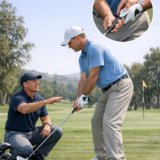
Golf club fitters adn industry observers now stress four principal elements players should prioritise when choosing a driver: matching loft to launch, selecting the correct shaft flex and mass, understanding clubhead geometry, and pursuing a player-centred fitting process.With bespoke fittings becoming more common, concentrating on these areas can yield noticeable gains in both yardage and accuracy across handicaps.
Align loft and spin to your measured launch window
Testing of golfers at all levels confirms that optimising loft and spin to an individual’s launch profile is the quickest path to improved driving. start by capturing precise measurements: use a launch monitor to log clubhead speed, ball speed, launch angle and spin rate (rpm) over a consistent set of 10-20 solid strikes. Practical target zones for many players are launch 10°-14°, spin 1,800-3,000 rpm and a smash factor ≥1.45. Generally, golfers swinging the driver at 105+ mph often do best with 8°-10.5° loft and heads built for lower spin; players below 90 mph frequently require around 10.5°-14° loft to achieve an effective launch.In short: measure first, then match loft and spin to the swing-don’t guess that simply changing loft will cure accuracy issues.
Once you have numbers, link them to the swing causes behind them. The main swing variables are swing speed,angle of attack (AoA),face‑to‑path and the shaft’s launch/flex profile-together these are the four keys to finding the right driver for your game. As an example, a slightly positive AoA (about +2° to +4°) generally increases launch and reduces spin; a steep negative AoA does the opposite, raising spin and reducing carry. To influence AoA and path, try these practical drills and checkpoints:
- Tee‑height check: raise the tee until you can visibly make contact on the upswing-an easy cue for producing a positive AoA.
- Gate/alignment exercise: place tees just outside your swing arc to encourage a cleaner face‑to‑path relationship and lower side spin.
- Tempo counting: use a 1-2-3 rhythm to stabilise sequencing and improve smash factor consistency.
Move from practice to play by changing only one variable at a time (for example, adjust tee height only, or swap a single shaft), then re‑check launch monitor readings.
Equipment choices must reflect both your data and the conditions you play in. Use adjustable hosels to fine‑tune loft by roughly ±2° and tweak face angles until the monitor shows a preferred launch/spin pairing; if spin is above 3,000 rpm, consider a low‑spin head, and vice versa. Match shaft traits as well: heavier profiles (around 50-60g) can steady tempo for more powerful swingers, while lighter, higher‑launch shafts (about 40-50g) often aid slower players. An efficient fitting sequence looks like this:
- Record a baseline with your current driver and average the key metrics.
- Compare 2-3 head designs (for example, low‑spin vs high‑MOI) each with 2-3 shaft options.
- Tweak loft/face settings and aim for roughly a ±5% improvement in carry or dispersion before deciding.
Remember tournament rules: set adjustable features prior to play and avoid on‑course tinkering during a round.
Pair practice with measurable targets and link technical work to short‑game and course management. A sample weekly plan coudl include 30-40 minutes on launch‑monitor routines (50 swings: 30 technical, 20 pressure), 20 minutes of alignment/tempo drills, and 20 minutes of short‑game recovery. Useful goals are to reduce driver dispersion to ±15 yards for mid‑handicappers and ±7 yards for low handicappers, or to add 10 yards to carry in six weeks. Course context matters: into a narrow, windy fairway prioritise a lower‑launch, lower‑spin setup or elect a 3‑wood to manage risk; on a downhill tee allow a touch more loft to take advantage of roll. Those practical choices turn technical improvements into lower scores.
Anticipate frequent mistakes and adopt troubleshooting approaches tailored to how you learn. Common issues are trying to cure dispersion by changing loft alone,excess hand action through impact,and an inconsistent address routine.Fixes are pragmatic: simplify setup (ball forward, slight bias to the front foot), use one clear swing thought (such as, release width or an aiming line), and rely on video or launch‑monitor feedback for objective data. For the mental side, build a concise pre‑shot routine (practice under simulated pressure such as pleasant wagers or match play) to reduce nervousness in competition.If you plateau, consult a certified fitter or instructor who can correlate swing video with launch data-small, measurable steps beat large unfocused overhauls.

How to choose shaft flex, weight and length: practical profiles
Manufacturers and coaches agree the shaft decision should start with four pragmatic considerations: launch conditions, spin control, accuracy/dispersion, and feel & timing. Begin by measuring driver clubhead speed with a launch monitor and use a broad rule‑of‑thumb classification: L (Ladies): <70 mph; A (Senior): 70-80 mph; R (Regular): 80-95 mph; S (stiff): 95-110 mph; X (Extra Stiff): >110 mph. match shaft mass ranges to your strength and tempo: roughly 40-50 g (ultra‑light),50-60 g (midweight),and 60-75 g (heavy). Standard length baselines remain about 45.0 inches for modern men’s drivers and around 44.0 inches for women-shorten for better control,lengthen cautiously for extra speed.On the monitor aim for a generally positive attack and a launch near ~10°-14° with spin below ~3,000 rpm as sensible starting points.
Mechanically, shaft flex influences release timing and the dynamic loft the club presents at impact. Early release and a slice often point to a shaft that is too soft or too light; a low, stuck ball with leftward misses can indicate an overly stiff or heavy shaft. A systematic fitting drill helps: first, hit ten shots with your current driver and note smash factor and dispersion; second, test a shaft one flex softer and one flex stiffer while keeping grip, ball position and tee height identical; third, compare spin and side‑spin differences.Helpful practice tools include:
- Tempo metronome work (around 60-64 bpm) to smooth transition timing;
- Impact bag sessions to feel shaft loading and the sensation of lag;
- Half‑swing reps using a metronome to reduce casting and improve release.
These drills tie equipment selection to tangible feel and measurable launch outcomes, useful for novices and advanced players alike.
shaft length affects both speed potential and control. A rough expectation is +1-2 mph clubhead speed per 0.5-1.0 inch of additional length for many golfers, but longer shafts frequently enough increase dispersion. Use these recommended profiles:
- Beginner/High handicap: slightly shorter than standard (~44.0-44.5″), lighter (~40-55 g), more flexible (A-R) to prioritise contact and repeatability;
- Mid handicap/Committed amateur: near standard length (~44.5-45.0″), midweight (50-60 g), R-S flex to balance distance and control;
- Low handicap/Single digit: customise length to tempo (~44.5-45.5″), heavier shafts (60-75 g), S-X flex to refine shot shape and lower spin.
When testing on the course, recreate real‑world shots-try a par‑4 tee into a crosswind and note which setup keeps you in play. Those controlled comparisons generate practical course management data.
Shaft traits affect shot shape and strategy almost as much as grip and swing path. A stiffer/heavier shaft resists twisting, tending to lower spin and support a firmer fade or penetrating draw-useful in windy or links-style conditions; a lighter, softer shaft may allow the club to release and square the face for more draw when that’s required. Use these checkpoints when troubleshooting:
- Verify ball position and spine tilt-small misalignments can change effective loft by degrees;
- Measure attack angle-target +2° to +6° for players seeking added launch and carry (advanced players can fine‑tune);
- Run a 15‑ball grouping test to log lateral dispersion and change shaft profile if side spread exceeds your accepted margin.
A frequent error is chasing distance with an overly long shaft and tolerating wider misses; if that happens, shorten the shaft by 0.5-1.0 inch and retest to see if scoring improves on tighter tracks.
Weave mental routines and measurable targets into equipment choices to turn practice into lower scores. Set objectives like increase average driver carry by 5-10 yards in six weeks or cut 15‑shot lateral dispersion by 15-20 yards. Structure practice into blocks-warm‑up (10 balls), calibration (15 balls), pressure simulation (9 holes with a single setup).Suggested drills for all levels include:
- Alignment‑stick corridor to ingrain path and face control;
- Split‑hand half‑swings to help slower swingers time the release;
- Weighted tempo drills (for example heavier mallet swings) for stronger players wanting smoother transition.
aim to complete a professional fitting that records at least 6-12 tracked shots per shaft option on a launch monitor, then validate choices on course. When shaft flex, weight and length are combined with disciplined swing work, short‑game practice and smart course management, measurable improvements in accuracy and scoring follow.
Using adjustable hosels and movable weights to dial ball flight
Most modern drivers feature adjustable hosels and moveable mass to let players fine‑tune launch and curvature, and instructors increasingly use those features as precision tools during fittings and practice. Treat a tuning session like a diagnostic: establish a baseline,gather data,then make incremental changes. Record carry, launch and spin with a launch monitor or a calibrated range reference before altering settings. Also confirm any changes conform to the Rules of Golf for competition and check local event restrictions if you play tournaments. Typically the hosel changes loft by roughly ±1-2° and can shift face angle slightly, while moving weights alters the center of gravity to influence spin and bias-these are the mechanical levers for tuning launch and shape.
Tuning should focus on the four keys to finding the right driver for your game: effective loft, shaft flex and length, centre of gravity (weight placement), and adjustability (hosel/weights). targets to test include launch angle (aiming between 10°-16° depending on speed), spin rate (generally 1,800-3,000 rpm), optimal carry, and lateral dispersion. Use this practical checklist when tuning:
- Loft check: if launch is low and spin high,raise loft by about 1°; if launch is excessively high with too much spin,lower loft slightly.
- Shaft check: swap a shaft one flex softer or stiffer and try 0.5-1.0″ changes to balance control vs ball speed.
- Weight/CG check: move mass forward to reduce spin and lower launch; move it rearward to increase MOI and forgiveness.
- hosel/face check: neutral/open/closed settings allow a bias toward fade or draw without instant swing changes.
These diagnostics translate directly to on‑course decision making.
After measuring, adopt a stepwise tuning routine that marries swing mechanics with equipment settings.Start with a consistent setup: ball just inside the left heel for right‑handers, stance roughly shoulder‑width plus a little, and tee height so the ball sits about half above the crown to encourage an upward strike. Next, swing with intent: for a draw bias feel a slightly inside‑out path with the face a touch closed to the path; for a fade bias feel a shallow outside‑in path with the face slightly open. change only one parameter at a time-adjust the hosel by 1° increments or move a weight a single position-and hit 10-15 tracked shots to evaluate effect. Useful isolation drills include:
- Gate drill for path control using alignment sticks.
- 9‑to‑3 half‑swings to explore low vs high launch sensations before committing to full speed swings.
- Weighted‑setting routine: 10 shots per weight position to quantify dispersion and carry differences.
A systematic approach enables repeatable setups across ability levels.
translate tuning into course strategy. In a crosswind, as an example, close the face one hosel step and move a weight forward to reduce spin and keep the ball flight lower; on a dogleg left where a draw is required, shift weight rearward toward the heel and adopt a slightly closed face to encourage right‑to‑left movement aimed at the corner. Make objective goals-target ±10 yards lateral dispersion on preferred tee shots and a carry within ±5 yards of your range averages. For risk management, use adjustable settings to create a bias rather than forcing last‑minute swing changes-this is especially valuable in match play or windy conditions. Younger and newer players should favour higher loft and rearward CG for more forgiveness, while low‑handicap players often prefer slightly forward CG, lower spin and stiffer shafts to tighten dispersion and increase rollout.
Spot and fix common tuning errors and convert adjustments into practice plans. Avoid changing hosel and weight at the same time without data, and don’t pick a driver length purely for distance at the expense of control; if control is lost, shorten the shaft by 0.5-1.0 inch and reassess dispersion.Troubleshooting examples:
- If shots balloon with high spin: lower loft by ~1° and shift weight forward; practice low‑launch half swings to train a shallower attack.
- If shots hook uncontrollably: move weights toward the toe or neutral and open the face by half to one hosel setting; reinforce path correction with the gate drill.
- If dispersion is wide but carry is acceptable: try a stiffer or shorter shaft and tighten alignment checks at address.
Finish tuning sessions with a structured practice plan-three 30‑minute blocks focusing on baseline work, adjustments, and on‑course simulation-and keep a log (launch, spin, carry, left/right bias) so you can objectively track progress and convert tuning into lower scores.
How head shape,CG location and forgiveness influence dispersion
instructors and fitters point to driver head geometry as a primary factor in dispersion: the shape of the head,where the centre of gravity sits,and the forgiveness (often represented by high moment of inertia,or MOI) determine how resilient a club is to off‑centre hits. Typically, a modern 460cc head with a low‑back centre of gravity (CG) and high MOI launches easier and tolerates spin variance better-helping tighten dispersion for mid‑ and high‑handicappers. A head with a forward CG lowers spin and enhances shot shaping for skilled players, but can increase lateral error on mishits.Remember most legal drivers conform to USGA limits; manufacturer specs (frequently 8°-13° loft ranges and adjustable face angles) should guide but not dictate your final choice in a fitting.
CG positioning relative to the face and heel‑to‑toe axis influences launch angle, spin and start direction-three elements that directly affect dispersion. Such as, a low‑and‑back CG will generally raise launch by about 1-3° and can add a few hundred rpm of spin, aiding carry but potentially reducing rollout on firm turf.shifting CG forward tends to cut spin by roughly 200-600 rpm and tighten side‑to‑side dispersion for players who strike the ball near the face centre. To take advantage of head design, confirm these basic setup checkpoints:
- Ball position: just inside the left heel (for right‑handers) to encourage an upward strike.
- Attack angle: aim for a modest positive attack (about +1° to +4°) to increase driver efficiency.
- Face awareness: use alignment practice and a slow takeaway to improve face squareness through the top and into impact.
Those habits establish the platform needed for a head’s intended launch and dispersion traits to take effect.
When evaluating drivers on the range and course, apply the four keys to finding the right driver for your game: 1) loft/face angle, 2) CG location/head shape, 3) shaft length/flex, and 4) forgiveness/MOI. For tight, tree‑lined holes into a prevailing crosswind, a player seeking forgiveness (key 4) should opt for a high‑MOI, low‑back CG head and shorten the shaft by around 0.25-0.5 inches to tame dispersion. Conversely, on a wide, firm hole where rollout is valuable, a low‑spin forward‑CG head (key 2) paired with a stiffer shaft (key 3) and slightly less loft (key 1) can yield more roll and workable shaping. To quantify changes, run a 25‑ball dispersion test from the tee and log carry, total distance and lateral deviation; aim to cut lateral spread by about 10 yards after appropriate equipment or setup changes.
Practical drills lock head characteristics into reliable mechanics for every level. Beginners should start with impact consistency and attack angle drills-try the towel‑under‑arm drill and a backswing‑pause drill on the launch monitor to promote a shallow takeaway and positive AoA. Intermediate and low‑handicap players should focus on face control and shaping:
- Gate drill: use tees to train a square path through impact.
- Three‑target practice: pick fairway targets at 190, 220 and 250 yards to practice carry control and shape under pressure.
- spin control: alter loft by ±1-2° during a session and record the monitor’s launch/spin responses.
Set measurable objectives-improve fairway hit percentage by 10% in four weeks or reduce mean lateral deviation by 5-10 yards. Correct typical faults-too narrow a stance, ball too far back, or an excessively open face at impact-by progressing through setup tweaks, slow‑speed alignment work, then gradually adding speed while preserving the pattern.
Blend CG and forgiveness understanding into course decision making and the mental game to shave strokes. When accuracy outweighs distance (tight hole, wet fairways, strong headwind), select a forgiving 3‑wood or a driver with slightly higher loft (+1-2°) and greater MOI to limit misses. Where reward justifies risk (short par‑5s with firm fairways), a forward‑CG, low‑spin driver can be the correct play. Use this quick on‑course checklist:
- Assess wind and landing area width.
- Choose the head/loft that produces the shot shape you can reliably repeat.
- Commit to a pre‑shot routine emphasising tempo and impact location.
combining head‑shape and CG awareness with targeted practice and course management helps players turn technical gains into tangible scoring improvements.
Launch‑monitor metrics to track during a fitting and sensible targets
At a launch‑monitor fitting capture a comprehensive set of objective metrics to direct both equipment and technique changes: clubhead speed, ball speed, smash factor, launch angle, spin rate (total and side spin), attack angle, face angle/face‑to‑path, and carry & total distance. These data points tell the real story-ball speed tends to be about 1.45-1.50× clubhead speed, and a well‑struck driver usually reaches a smash factor in the 1.45-1.48 range for many players. Use the following target bands as practical starting points: for clubhead speeds under 90 mph aim for 14°-18° launch and 2,200-3,000 rpm spin; between 90-105 mph target 12°-15° launch and 1,800-2,500 rpm spin; above 105 mph aim for 10°-13° launch and 1,500-2,200 rpm. Those ranges help separate swing faults from equipment mismatches and provide measurable improvement aims.
Convert monitor output into the four keys to finding the right driver for your game: the optimum launch/spin pairing, appropriate loft, shaft length/flex/torque, and the head’s CG/adjustability.If you see excessive spin with good ball speed, consider a lower‑spin head or less loft; if launch is low with low spin, try more loft or a shaft that yields higher dynamic loft. If dispersion is mainly a face‑to‑path problem (greater than ±5°), look at adjustable head settings and a shaft that improves timing rather than merely adding length. For instance, when playing seaside into wind you might seek a window near 10°-12° launch with spin around 1,600-1,800 rpm to avoid ballooning; on calm inland tracks a slightly higher launch and more spin can produce greater carry and softer landings.Make changes in 1° loft steps, test varied shaft flexes, and use real‑time monitor feedback to validate outcomes.
Use specific monitor outputs to drive technique work. If attack angle is steeply negative (e.g., -3° to -5°) and spin is high, practise moves that encourage a shallower, slightly upward impact:
- Tee‑forward alignment drill-place the ball off the left heel and rehearse sweeping the ball rather than hitting down;
- Step‑through finish-step toward the target to promote weight transfer and a positive vertical launch;
- Impact tape & half‑swing checks-track strike location and smash factor.
Set progressive goals such as increasing smash factor by 0.02-0.05 per week or adding 5-7 mph of clubhead speed over a month through technique and conditioning. Advanced players should target face‑to‑path within ±2°-3° to tighten dispersion; beginners should prioritise consistent centre‑face contact and a repeatable launch window over ultra‑precise numbers.
Let launch monitor data influence short‑game and on‑course choices. Use measured carry distances and dispersion patterns to decide between driver and fairway woods: if your driver carry leaves you short of a fairway bunker choose a 3‑wood that produces a dependable carry with lower side spin. Course conditions will shape equipment choices-for example, if a hole doglegs left and you have a draw bias of 15-20 yards on the monitor, either aim off the tee or select a head/shaft setup that reduces side spin by roughly 300-500 rpm.Incorporate these situational exercises into practice:
- Simulate tee shots to tight targets using nets and wind simulations;
- Hit to specific carry distances on the range and record the results;
- Adjust tee height and ball position to stack and control trajectories while recording monitor numbers.
This approach converts raw data into smarter course management and lower scores.
Put a plan in place to turn numbers into improvement. Start with a baseline fitting and set short‑term benchmarks: boost centre‑face contact (smash factor) by 0.03 in four weeks, cut average side spin by 20-30%, or hold launch within a ±2° window. Use varied drills for different learning styles-visual players pair impact tape and video with their monitor, kinesthetic players use slow‑motion tempo work and weighted implements, and analytical players chart weekly trends. Troubleshoot common faults: an open face at impact (slice) will show as a positive face angle with an out‑to‑in path-correct via grip/aim tweaks and a slightly closed face setting; excessive spin from a steep downswing calls for plane retraining and a flatter arc. Account for whether and turf-cold or wet conditions typically reduce roll and increase spin-and rehearse your pre‑shot routine to mirror the fitted setup. By iterating between data, targeted drills and on‑course simulation, golfers can make measurable gains and select a driver that genuinely fits their game.
On‑course testing and tactics to finalise your driver choice
Course testing needs a repeatable protocol so drivers can be compared objectively. Begin by using a launch monitor or fixed landmark and record at least 15-20 full swings with each candidate, tracking clubhead speed (mph), ball speed (mph), launch angle (°) and spin rate (rpm). A useful guideline is to aim for a launch angle of 12°-16° and spin between 1,800-3,000 rpm,scaled to your clubhead speed: beginners (~70-85 mph) usually benefit from more loft/spin; low handicappers (100+ mph) typically seek lower spin. Also verify conformity with USGA/R&A rules if you compete. Move your protocol from mats to fairway lies to see how turf interaction and wind change performance.
Apply the four keys to finding the right driver in real‑play situations: ball flight control, dispersion (accuracy), forgiveness (miss‑hit penalty), and feel/adjustability. For example, on a downwind par‑5 you might favour peak carry and lower spin to reach the green; into the wind choose a low, penetrating flight and a lower launch. Follow these steps when choosing strategy: (1) assess the hole’s demands, (2) pick the driver setting that produces the shot shape you need, (3) commit to a target and tempo, and (4) record the result (fairway hit, carry, lateral deviation). Reinforce these keys with checkpoints:
- On hazard‑lined holes prioritise fairway percentage over absolute distance.
- When wind exceeds ~10 mph into your face consider increasing loft or using a 3‑wood to reduce side spin.
- To shape shots, test loft and face‑angle settings on the same hole and compare outcomes.
This process helps you pick the driver that best matches your strategy, not merely the one that produces the largest numbers on a calm range day.
Basic fit and setup fundamentals also determine on‑course performance.Begin with ball placement just inside the lead heel, a stance about 1.5-2× shoulder width, and a slight spine tilt away from the target to promote a positive AoA of +2° to +6°. Set tee height so the ball’s equator sits roughly 1-1.5 inches above the crown-or near the upper third of the face at address. Typical faults include the ball too far back (causing a steep, downward strike) or early wrist collapse (producing slices). Corrective drills include:
- Impact tape or towel drill to train centre strikes and remove scooping.
- Headcover under the trail armpit to maintain width and prevent early release.
- Positive AoA drill: place a tee several inches ahead of the ball and practise missing the tee, encouraging a shallower attack.
Those measures align swing mechanics with club characteristics so the driver complements, rather than fights, your motion.
Create a two‑week validation plan to sharpen on‑course testing. Week 1: play three 9‑hole stints using Driver A across holes with varying wind and risk profiles; Week 2: repeat the same sequence with Driver B. Track metrics each round: fairway hit %,average carry (yds),side dispersion (yds),and score impact (strokes gained off tee). Set progressive targets such as improving fairway percentage by +5% or cutting average side dispersion by 10-15 yards. Practice drills by skill level:
- Beginner: slow, sweeping swings focusing on center contact-50 balls per session.
- Intermediate: shape gate drill-two tees 2-3 feet apart for 30 reps practicing fades/draws.
- advanced: launch‑monitor tempo sets-8-10 shot blocks aiming for a launch window ±1° and spin ±200 rpm.
Also rehearse short‑game options-if your driver choice forces long‑iron or hybrid approaches, practise punch recoveries so you can convert the strategy into lower scores.
Make the final decision with a weighted checklist that blends data and course intuition. A suggested weighting is: dispersion 30%, distance 30%, forgiveness 25%, adjustability/feel 15%.Then select the driver that best matches your priorities under real‑course pressure-not just controlled range sessions. Confirm loft based on speed bands: under ~85 mph often suits 10.5°-12°, 85-100 mph typically 9°-10.5°, and 100+ mph generally fit into 8°-10° depending on desired spin. After selection, troubleshoot-if curvature is excessive close face settings and path coaching; if distance falls but accuracy improves, refine launch by tweaking tee height or trying a marginally lower loft. Above all, schedule at least one on‑course fitting with a certified fitter or teaching professional who can translate launch‑monitor insights into strategy-the right driver is the one that cuts your score under real playing conditions.
Q&A
lead: Equipment choices heavily influence distance and consistency off the tee. Below is a concise Q&A that frames the four keys to finding the right driver for your game,matching performance metrics to environmental and psychological factors so players can make informed decisions. (Note: “finding” here is used in it’s evaluative sense – a conclusion reached after testing and analysis.)
Q: What are the “4 keys” to finding the right driver?
A: The four keys are: 1) measure your performance metrics (swing speed, launch angle, spin), 2) match loft and clubhead design to your launch window and forgiveness needs, 3) pick the right shaft (flex, weight, torque and kick point), and 4) validate the driver in realistic conditions while considering adjustability and feel.
Q: Why start with performance metrics?
A: Objective numbers-swing speed, attack angle, ball speed, launch angle and spin rate-define what a driver must do to achieve optimal carry and roll.Without those data, choices about loft, shaft and head become educated guesses rather than evidence‑based selections.
Q: How should a golfer obtain those metrics?
A: Use a reputable launch monitor at a certified fitter, retailer or club‑fitting event.Even basic readings (club and ball speed) narrow options; full launch‑monitor outputs let fitters prescribe specific lofts, shaft characteristics and head designs.
Q: How does loft and clubhead design influence results?
A: Loft governs launch and affects spin-more loft typically raises launch and can reduce side spin for many players. head design impacts forgiveness (MOI), CG placement (which drives launch/spin tendencies), and aerodynamics (which can affect clubhead speed potential). Match the head characteristics to your accuracy and distance goals.
Q: What role does the shaft play?
A: The shaft manages how energy flows to the ball and where the head is at impact. Flex,weight and torque influence launch,spin and feel-two golfers with similar clubhead speeds can require very different shafts. Often, fine‑tuning the shaft yields more gains than swapping heads alone.
Q: How critically important is on‑course,realistic testing?
A: Essential. Indoor fittings are valuable, but windy conditions, different turf and competitive pressure reveal true performance. Psychological confidence in how a club looks, sounds and feels affects commitment and outcomes.
Q: Is adjustability worth the extra cost?
A: Adjustable hosels and weights permit fine‑tuning (± loft, face angle, CG). They’re useful for players who regularly change conditions or who sit near fitting thresholds. Though, adjustability doesn’t replace the need for an initially well‑matched head and shaft.
Q: Should recreational players prioritise workability or forgiveness?
A: Most mid‑ to high‑handicappers gain more from forgiveness and stable launch than from a highly workable profile that sacrifices consistency. Skilled players who shape shots deliberately may prioritise workability once distance and dispersion are controlled.
Q: When is a professional fitting recommended?
A: Any golfer seeking measurable progress should consider a fitting-especially when changing driver models or when distance/dispersion plateaus. Even one session typically produces actionable loft and shaft recommendations.
Q: What common mistakes should players avoid?
A: Don’t choose a driver solely for brand or headline distance numbers measured off mats without launch/spin context.avoid assuming a stiffer shaft is always better-mismatched shafts can reduce both distance and accuracy.
Q: How should budget influence the search?
A: New adjustable models carry premiums, but many current or last‑year heads paired with the right shaft deliver excellent value. Prioritise shaft fit and loft optimisation-these deliver strong performance per dollar.
Q: Final takeaway for players?
A: Treat finding the right driver as a process: collect objective data, narrow choices by loft/head/shaft, test in realistic conditions, and make adjustments that boost confidence and course performance. A methodical approach delivers the most reliable on‑course improvements.Taken together,the four keys-matching loft and shaft to swing speed,balancing forgiveness versus workability,using launch‑monitor data,and weighing distance against dispersion-provide a clear framework to narrow driver selection. Pursue professional fitting and on‑course validation to confirm gains and ensure your driver complements the rest of your bag.
Pick the Tone – Eight Headline Options You Can Use for Driver-Fitting Content
- Find Your Perfect Driver: 4 smart Steps to Longer, Straighter Drives
- Dial In your Driver: 4 Keys to Match Loft, Shaft and Launch to Your Swing
- The 4 Driver-Fitting Secrets Every Golfer Needs
- Stop Guessing – 4 Steps to Picking the Driver That Suits Your Game
- driver Matchmaking: 4 proven Ways to Boost distance and Accuracy
- Fit to Fly: 4 Essential Tips for Choosing the Right driver
- Transform Your Tee Shots: 4 Simple Rules for Picking the Perfect Driver
- From Loft to Launch: 4 Steps to the Driver That Fits Your Swing
how to use these headlines (pick a tone by audience)
- Beginner / Recreational: Use amiable, benefit-driven headlines (1, 4, 7). Emphasize forgiveness, consistency and simple steps.
- Club-fitters / Coaches: Use technical but clear headlines (2, 3, 8). Highlight metrics (launch, spin, shaft properties).
- Performance-focused players: Use bold, results-oriented headlines (5, 6). Stress measurable gains in distance and dispersion.
- Short or more technical option: Offer variations like “Driver Fit: Loft, Spin & Shaft by Swing Speed” for search intent that targets fitters or advanced players.
use this 4-step driver-fitting framework with any headline
Each of the headline templates above points to the same core idea: pick the driver that optimizes your launch conditions and matches your swing. Below is a technician-friendly but golfer-accessible 4-step method you can apply at the range, on a launch monitor, or during a professional fitting.
Step 1 – Assess your swing profile and performance numbers
- measure swing speed (mph), ball speed, attack angle, launch angle, spin rate and smash factor. If you don’t have a launch monitor, start by tracking carry distance and dispersion patterns.
- Identify shot shape tendency: consistent slice, pull, fade, draw, or neutral. Understand where misses occur (left, right, high, low).
- typical swing-speed bands (useful for initial shaft/loft direction):
| Swing Speed (Driver) | Typical Ball Speed | Starter Shaft Flex | Starting Loft |
|---|---|---|---|
| Under 85 mph | Under 120 mph | Ladies / Senior / A | 12°-14° |
| 85-95 mph | 120-140 mph | A / Senior / Regular | 10°-12° |
| 95-105 mph | 140-160 mph | Regular / Stiff | 9°-11° |
| 105+ mph | 160+ mph | Stiff / X-Stiff | 8°-10° |
Note: the table gives starting points – final specs depend on attack angle and desired spin & launch.
Step 2 – Match loft and face angle to target launch and spin
- Goal: maximize carry distance by optimizing launch angle and spin rate, not by simply lowering loft.
- Target performance ranges (approximate):
- Optimal driver launch angle: 10°-15° (varies with swing speed and angle of attack).
- Optimal driver spin rates: 1800-3000 rpm for most amateurs; 1500-2500 rpm often best for higher swing speeds to limit ballooning.
- Smash factor target: 1.45-1.50 for mid- to high-level players; lower for beginners as a progression target.
- How loft affects launch and spin: higher loft raises launch and generally increases spin; lower loft reduces launch and spin. use loft to tune launch/spin into the optimal window for your speed.
- Face angle (open/closed at address or adjustable hosel) can help correct shot shape tendencies.Small permanent toe/heel weighting can produce draw or fade bias.
Step 3 – Choose shaft flex, weight and kick point to suit tempo and release
The shaft is the engine of the driver for most golfers. getting the right flex, weight and torque profile is as vital as the head.
- Flex: Matches to swing speed and transition. Too soft = hooks and inconsistent toe strikes; too stiff = low launch and reduced distance.
- Weight: Heavier shafts can stabilize tempo for rapid swingers and move the center of gravity back for higher spin; lighter shafts can increase clubhead speed for slower swingers.
- Kick point / bend profile: High kick point tends to lower launch; low kick point tends to increase launch.
- Torque: Higher torque feels whippier and can help slower swingers; lower torque gives more directional stability for better players.
- Advice: try 3-4 shaft options across flex and weight ranges during a fitting – numbers tell the story.
Step 4 – validate with a launch monitor and on-course testing
- Prioritize numbers that led to better scoring: higher average carry (not just peak distance), tighter dispersion, and repeatable turf contact.
- Key metrics to compare across heads/shafts:
- Ball speed and smash factor
- Launch angle
- Spin rate
- Carry and total distance
- Left/Right dispersion (shot patterns)
- Course test: hit 8-12 drives with the selected setup on the real tee. A driver that performs well indoors sometimes feels different on grass and with real wind.
Practical drills and measurable tests you can do at the range
- smash factor drill: Aim for a consistent forward press and impact; use ball-speed/club-speed data to watch smash factor improve toward 1.45-1.50.
- Attack-angle test: Tape a strip of lightweight paper a few feet in front of the ball and swing. Positive attack angle (hitting slightly up) typically increases launch and reduces spin for drivers.
- Dispersion mapping: Hit 10 balls per test shaft/head combo and chart left/right groups. The best fit is the one that reduces dispersion while keeping strong ball speed.
- Loft ladder: Try +1° and -1° loft from your baseline and track how launch/spin and carry change. One degree can change carry by 5-10 yards depending on swing.
Benefits & practical tips
- Benefit: A properly fitted driver increases average carry, tightens dispersion and reduces penalty strokes from errant tee shots.
- Tip: Don’t chase peak numbers – focus on median carry and repeatability under pressure (simulate pre-shot routine during fitting).
- Tip: If you often miss right/left, focus on minor adjustments to face angle and weighting before changing shaft or increasing loft.
- tip: Use adjustable hosels and movable weights to fine-tune on-course without buying new gear.
Case studies – two simple fits
Case A – The high-handicap player who slices and wants distance
- Profile: Swing speed 88 mph, slice tendency, patchy contact
- Fit focus: higher loft (11°-13°) to increase launch and reduce spin; mid-soft shaft to help release; draw bias head or slightly closed face to reduce slice.
- Target numbers: Launch 13°-15°, spin 2400-3200 rpm, smash factor 1.35-1.40 increasing over time.
- Drill: Slow-motion half-swings focusing on face square at impact and hitting up on the ball to reduce sidespin.
Case B – The single-digit player chasing more controlled distance
- Profile: Swing speed 112 mph, low ball flight, occasional fade
- Fit focus: lower loft (8°-9°) paired with a stiff / x-stiff shaft to keep launch and spin low; neutral head or slight fade-to-draw weighting depending on preferred shape.
- Target numbers: Launch 10°-12°, spin 1500-2200 rpm, smash factor 1.48-1.50.
- Drill: Work on a marginally more positive attack angle by teeing the ball just outside the toe to encourage upward strike.
First-hand experience: how fitters think versus what players want
as a fitter or coach, you’ll prioritize optimizing launch/spin windows, then dialing in the shaft to match tempo. as a player, you care about how it feels and how it reduces mental stress on the tee. The best fittings blend hard numbers with subjective feel – let the monitor guide you, but the club must inspire confidence.
Shorter or more technical headline suggestions (tailored by audience)
- Beginners: “Pick the Right Driver: 4 Easy Steps to More Distance”
- Club fitters: “Driver Fit Protocol: 4 Metrics to Match Loft, Spin & Shaft”
- Performance-focused: “4 Driver-Tuning Rules That Add Carry and Tighten Dispersion”
- Technical / SEO-friendly: “Driver Fitting Guide: Loft, Launch, Spin & Shaft by Swing Speed”
Common fitting mistakes to avoid
- Choosing the lowest loft because “it’s faster” without checking launch/spin trade-offs.
- Relying only on feel or brand hype – always collect metrics.
- Fitting with only a single shaft or using indoor hitting mats exclusively – test multiple shafts and real grass when possible.
- Ignoring dispersion and only chasing max carry numbers.
Quick fit cheat sheet (one-glance)
| Metric | Good Target | What to change if off |
|---|---|---|
| Smash factor | 1.45-1.50 | Improve strike or try lower/back-weighted head |
| Launch angle | 10°-15° | Adjust loft or shaft kick point |
| Spin rate | 1500-3000 rpm | Lower spin with stronger loft or lower-spin head |
| Dispersion | Tighter group, less offline | Change face angle, weight, or shaft torque/flex |
further reading and community resources
- Performance Golf 357 Fairway Hybrid discussion (GolfWRX)
- Sunday Golf Ranger Review and Pics (GolfWRX)
- 2025 Maxfli Tour/X/S Reviews (GolfWRX)
- golfwrx Classifieds
Action plan – what to do next
- Pick one of the headline tones above that matches your audience.
- Run the 4-step fitting framework at the range or with a fitter and document numbers.
- Compare at least three head/shaft combos and validate with on-course rounds.
- Refine and publish content or recommend the best headline based on the audience’s needs.