
Golf scoring functions as both a quantitative record and a rich interpretive signal about player performance, course design, and strategic decision-making. Becuase golf is played across inherently heterogeneous venues-each with distinct pars, hazards, and terrain-raw stroke totals cannot be interpreted without reference to course characteristics, playing conditions, and established handicapping frameworks (see USGA; general descriptions of course variability). Contemporary media and analytical outlets further illustrate how scorelines are used in commentary, coaching, and competitive evaluation, underscoring the practical salience of robust scoring interpretation.This article interrogates the relationship between observed scores and the underlying determinants of play quality. It combines statistical analyses of scorecards and shot-level data with conceptual frameworks from performance measurement and game management to (1) identify which score components most reliably reflect skill,(2) show how course features modulate the informational content of scores,and (3) translate those insights into actionable strategic prescriptions for shot selection and course management. Methodologically, the study leverages comparative metrics, variance decomposition, and scenario-driven modeling to separate systematic skill effects from situational noise.
By linking empirical analysis to applied strategy, the work seeks to advance both theoretical understanding and practical coaching.The findings aim to refine how coaches, players, and adjudicating bodies interpret scoring data-improving handicap assessments, informing tactical choices on the course, and guiding design considerations for competitive fairness. In doing so, the article contributes a rigorous, multidisciplinary account of how scores should be read and used to generate measurable performance gains.
Conceptual Framework for Quantifying Golf Scoring and Performance Metrics
The theoretical model advanced here treats scoring as a multi-level stochastic process in which latent skill, environmental context, and decision rules interact to produce observed strokes. The adjective conceptual is used in its classical sense-denoting constructs and abstract relations that structure empirical measurement (see Merriam‑Webster: “of, relating to, or consisting of concepts”)-and frames the ontology for the metrics that follow. By separating constructs (what we intend to measure) from indicators (what we can observe), the model supports clear operational definitions and avoids conflating raw counts with strategic value.
Core constructs are translated into measurable variables through a set of predefined indicators. These include, but are not limited to:
- Shot-level efficiency: dispersion relative to intended target and expected strokes gained.
- Course difficulty profile: hole-by-hole par risk, green undulation index, and penal hazard weighting.
- Player state: fatigue, form (recent performance trend), and decision bias under pressure.
Each indicator is specified with a hypothesized direction of effect and suggested data source (e.g., GPS-based dispersion for shot-level metrics, sensors and scoring logs for player state).
Measurement proceeds through a hierarchical estimation strategy that decomposes variance across levels and yields interpretable coefficients for decision analysis. The following compact table summarizes representative metric types, units, and primary utility for modeling and strategy design:
| Metric | Unit | Primary Utility |
|---|---|---|
| Strokes Gained (SG) | Strokes | Relative performance vs. field |
| Dispersion | Yards | Shot precision modeling |
| Hole Risk Index | dimensionless | Strategic risk assessment |
Estimation techniques recommended include Bayesian hierarchical models for partial pooling, generalized additive models to capture nonlinearity in distance-to-hole effects, and bootstrapped confidence intervals for robust inference.
The framework closes the loop by translating quantified metrics into actionable decision rules that can be integrated into pre-shot planning and hole-level strategy. Practical outputs include:
- Shot selection maps that combine expected-value calculations with player dispersion to recommend conservative versus aggressive lines.
- Risk-adjusted game plans that reweight strategy according to tournament context (match play vs. stroke play) and player state estimates.
- Validation protocols that use out-of-sample predictive checks and calibration plots to ensure metrics retain decision relevance.
Emphasis is placed on rigorous operationalization and empirical validation so that model coefficients meaningfully inform on-course choices rather than merely describing past performance.

Empirical Methods and data Sources for Stroke Level Analysis and Reliability Assessment
High-resolution stroke-level inquiry draws on a mixture of institutional repositories and observational telemetry. Primary sources include official tournament repositories (for example, the PGA TOUR ShotLink archive) and governing-body datasets such as those maintained by the USGA. Commercial and media platforms (e.g., GOLF.com) provide complementary contextual data – equipment reports, course reviews and qualitative instruction that inform covariate selection. Combining these channels permits construction of multi-dimensional records linking each stroke to: **player identity**, **club selection**, **lie and location**, **measured distance**, and **environmental covariates** (wind, temperature, humidity), enabling granular causal and descriptive analyses.
Analytical approaches must balance interpretability with statistical rigor. Commonly employed techniques include:
- Descriptive and distributional analyses to characterize central tendency and tails of stroke counts;
- Strokes-gained decomposition for attributing value across facets of play (tee-to-green,approach,putting);
- Hierarchical mixed-effects models to capture nested structure (shots within holes,holes within rounds,rounds within players);
- Resampling and Bayesian methods for uncertainty quantification and small-sample stabilization.
these methods are complemented by domain-specific transformations (e.g., normalizing distances by hole par or adjusting for course slope) to ensure comparability across venues and conditions.
robust preprocessing and metadata governance are prerequisites for reliable inference. key steps include rigorous validation of GPS and telemetry feeds, imputation strategies for intermittent missingness, and standardized coding of shot outcomes (fairway, green, hazard, penalty). Equally crucial is the systematic capture of course-level attributes – green speed, rough height, bunker prevalence – which serve as fixed effects or matching variables in causal models. Where possible, link-level provenance (timestamp, source system, scorer notes) should be retained to permit audit trails and sensitivity analyses assessing the impact of measurement error.
Reliability assessment must be explicit and reproducible. Standard diagnostics encompass internal consistency (e.g., Cronbach’s α for composite shot metrics), intra-class correlation coefficients (ICC) for repeatability across rounds, and out-of-sample predictive validation against withheld tournament data. The simple summary table below exemplifies typical reliability ranges observed in stroke-level constructs; these values are illustrative and intended to guide methodological expectations rather than represent any single dataset. Triangulating multiple reliability metrics and conducting stratified validation (by player caliber, course type, and weather regime) provides the strongest assurance that stroke-level inferences are both stable and generalizable.
| Measure | typical Reliability | notes |
|---|---|---|
| total strokes per round | ICC ≈ 0.90-0.97 | High stability over repeated rounds |
| Strokes Gained - Putting | ICC ≈ 0.70-0.85 | sensitive to short-term form |
| Approach Shot Accuracy | ICC ≈ 0.75-0.88 | Moderate course dependence |
Interpreting Shot Value with Expected Value Calculations and Risk and Reward Tradeoffs
Expected value provides a principled metric for converting probabilistic shot outcomes into a single actionable number: the long‑run average strokes (or strokes‑gained) associated with a choice. Formally,EV = Σ p_i · s_i where p_i is the probability of outcome i and s_i is the strokes-to-hole (or strokes-gained) for that outcome. Interpreting that EV in play requires mapping discrete outcomes (hold green,miss left in rough,find hazard) into their expected repair cost in strokes,then comparing alternatives across the same yardage and lie. This translation from distribution to expectation converts subjective judgment into a reproducible decision rule that is comparable across holes, players, and rounds.
Constructing a realistic EV model demands explicit portrayal of the sources of variability and their conditional probabilities. Key inputs include:
- Shot dispersion (pattern and standard deviation for a given club and player),
- Course state (slope,bunkers,green speed,wind),
- Conditional repair costs (expected strokes after particular misses),and
- Player competence under pressure (clutch adjustment factors).
Calibration should draw on shot‑level tracking data where possible; when unavailable, conservative priors and sensitivity analysis quantify how EV estimates change with uncertain inputs.
| Option | P(success) | EV (strokes) | Variance |
|---|---|---|---|
| Aggressive go-for-green | 0.35 | 4.60 | 0.90 |
| Safe layup then two-putt | 0.85 | 4.95 | 0.20 |
The illustrative table shows two plausible choices on a reachable par‑5: the aggressive play has a lower expected strokes but higher variance.A risk‑neutral competitor should prefer the lower EV; a risk‑averse competitor may prefer the layup despite its higher EV because it reduces downside swings and tournament volatility.
in practice, decisions should be informed by both EV and a risk‑adjusted criterion. Tournament context (match play vs. stroke play, standing on leaderboard), psychological tolerance for variance, and the marginal value of a birdie relative to the marginal cost of a bogey all shift the optimal threshold. Useful operational rules include: favor shots with higher EV when variance is small or when the player’s position rewards upside, and prefer lower‑variance options when the marginal cost of a single bad hole is catastrophic. Analysts should also report semivariance or conditional value at risk alongside EV so coaches and players can translate mathematical recommendations into pragmatic course‑management strategies.
Influence of Course Architecture and Environmental Conditions on Scoring Distributions and Strategy
course morphology-manifest through fairway width, green contouring, bunker placement, and routing-systematically sculpts the distribution of scores across a field. Empirical observation shows that tighter corridors and multi-tiered greens increase the kurtosis of scoring distributions, producing a higher concentration of near-par scores for precision-oriented players while amplifying tails for those prone to short-game errors. Architectural variance therefore acts as a filter: it elevates the premium on accuracy metrics (fairways hit, GIR proximity-to-hole) and shifts the relative value of clubs in the bag when compared to more benign designs.
Environmental forcings modulate both mean score and dispersion over single rounds and tournament weeks. Wind, temperature, and precipitation alter shot-making probabilities in predictable ways-lower temperatures and firming conditions tend to reduce carry and increase rollout, while crosswinds compound lateral dispersion. typical impacts include:
- Wind: increases lateral error and penalizes miss bias;
- precipitation: reduces rollout but can make recovery shots less predictable;
- Temperature: influences ball flight distance and club selection consistency.
Together these factors change the conditional distribution of outcomes for identical shot choices, necessitating probabilistic recalibration of strategy before and during play.
Where architecture and surroundings intersect, one observes systematic heteroskedasticity in scoring data: variance is not constant across holes or days but depends on hole complexity and meteorological state. The following compact table illustrates representative relationships between hole typology and expected score volatility (strokes standard deviation), useful for pre-round planning and statistical modeling of player performance:
| Hole Type | Primary challenge | Expected SD (strokes) |
|---|---|---|
| Risk-reward par 5 | Forced carry & water | 0.9 |
| Long par 3 | Wind exposure | 1.1 |
| Tight dogleg par 4 | Lateral accuracy | 0.8 |
Such tabulations-while simplified-help quantify where scoring outliers are most likely to originate.
Effective strategy requires integrating architectural constraints with current environmental conditions into a coherent decision model. Players and caddies should prioritize a portfolio approach: hedge high-variance holes with conservative targets, exploit low-variance opportunities to gain strokes, and maintain in-round recalibration using observed wind and roll behavior. Recommended tactical adjustments include:
- Clubbing up/down based on observed carry and rollout;
- Altering target lines to account for prevailing wind and pin location;
- Emphasizing short-game practice on courses with complex greens where recovery variance drives scoring dispersion.
This synthesis of architecture and environment into actionable strategy supports more consistent scoring and a disciplined approach to tournament golf.
Player Competence, Variability, and Decision Rules for Optimal Course Management
player competence must be operationalized as a multi-dimensional construct that includes shot-making accuracy, distance control, short-game efficiency, and psychological resilience. Quantitative proxies such as strokes gained components, standard deviation of driving dispersion, and putts per hole allow for objective comparison across individuals and conditions. Coaches and analysts should treat these metrics not as isolated numbers but as interdependent indicators: for example, high driving distance with large lateral dispersion frequently enough correlates with increased recovery shots and higher bogey frequency.
Performance variability occurs at several nested timescales and has distinct implications for strategy. Short-term within-round variability (wind shifts, hole sequence) interacts with longer-term between-round variability (fatigue, swing changes) and contextual variability (course setup, pin positions). Key sources include:
- Environmental: wind direction/magnitude, firm vs. soft playing surfaces;
- Technical: swing repeatability, club selection errors;
- Cognitive: pressure-induced decision shifts, attention lapses.
Decision rules for optimal course management translate competence and variability into deterministic heuristics and probabilistic thresholds. A useful schema computes expected score outcomes from two competing strategies (aggressive vs. conservative) and selects the option with the lower expected penalty given the player’s dispersion profile and short-game recovery probability. The table below summarizes a compact decision threshold framework useful on approach shots:
| Competence Tier | Aggressive If… | Conservative If… |
|---|---|---|
| High | ±10 yd dispersion, GIR > 60% | Pin tucked with water hazard |
| Moderate | Dispersion < ±20 yd, short-game ≥ 85% | Wind > 12 mph or tight fairway |
| low | Rare-onyl when lie and angle clear | default; prioritize bailout areas |
Translating theory into practice requires structured interventions: track a focused set of metrics, implement constrained practice drills that replicate on-course variability, and adopt simple decision algorithms on the tee and with approach shots. Recommended practices include:
- record dispersion and recovery rates for representative clubs;
- Drill pressure routines that reduce cognitive variability (pre-shot workflow);
- Codify two-to-three rule sets for each hole (e.g., safe line, attack line, bailout target).
Integrating Analytics into Practice: Drills, Feedback Loops, and Transferable Skill Development
Integrative use of quantitative golf data must begin with a clear conceptual definition: to integrate is to bring discrete elements together into a coherent whole. This mirrors dictionary formulations (Dictionary.com; Merriam‑Webster) that characterize integrating as incorporating parts to produce unified function. Framing analytics in that way reframes practice from isolated mechanical repetition to a systems problem in which sensor-derived metrics,cognitive cues,and contextual strategy are intentionally combined so that practice constraints map to on‑course demands.
Operationalizing this synthesis requires drills explicitly tied to measurable outcomes. Design practice tasks around a small set of priority metrics (e.g., proximity to hole, dispersion bias, launch angle consistency) and use drills that isolate those features. Examples include:
- Targeted proximity drills - constrained green sizes with varied club selection to train distance control;
- bias correction lanes – alignment gates and aimed dispersion charts to address directional tendencies;
- Launch consistency routines – repeated strikes with immediate launch monitor feedback to stabilize angle and spin.
Such drills allow a coach and player to quantify progress, not merely observe it.
Feedback loops convert raw numbers into improved performance through an iterative cycle of measurement, interpretation, and adjustment. implement a structured cadence: collect baseline data,apply a single targeted intervention,measure short‑term change,and then evaluate transfer to on‑course scoring. Effective loops include automated data capture (wearables or launch monitors), concise analytics dashboards for quick interpretation, and scheduled video+data review sessions between player and coach. The aim is to shorten the latency between error detection and corrective practice while preserving ecological validity.
to make improvements durable and transferable, anchor analytics-led practice to explicit scoring objectives. Translate metric improvements into on‑course decision rules (e.g., if dispersion radius < X yards, favor aggressive pin approach) and periodize practice so that technical, tactical, and psychological elements are cycled across micro‑ and meso‑cycles.A compact implementation template might include:
- Weekly focus: one metric (distance control, direction, or short game);
- Daily drill plan: 60% metric‑specific work, 40% scenario play;
- Monthly assessment: scoring change vs. baseline paired with retention checks.
This structure fosters transfer from the practice facility to competitive scoring, ensuring analytics serve strategic decision making rather than becoming an end in itself.
Tactical recommendations for On Course Shot Selection and Game Planning Based on Statistical Profiles
Effective on-course tactics derive from a rigorous mapping between a player’s statistical profile and the probabilistic dynamics of each hole.By prioritizing metrics such as Strokes Gained: Tee-to-Green,approach proximity,bunker frequency and three-putt rate,planners can convert aggregate data into discrete shot-selection rules. This translation requires treating each hole as a decision node where expected-value calculations supersede intuition: select plays that minimize variance for high-sortie holes and favor controlled aggression only where the data indicate a positive risk premium.
Operational recommendations cluster around a small set of repeatable behaviors that align with distinct statistical weaknesses and strengths. Practically, these include:
- for off‑tee volatility: prioritize directional control (hybrid/iron off the tee) to reduce recovery shots.
- When approach proximity is deficient: opt for safer yardage targets that shorten subsequent wedge shots and increase up-and-down probability.
- When putting is the differentiator: attack birdie opportunities but adopt conservative chip-and-run strategies around small, fast greens.
these behaviors should be codified into a shot-selection menu that the player can execute under pressure.
To make recommendations actionable, a compact decision table can be used as a quick-reference during pre-round planning and on-course adjustments. The table below synthesizes profile archetypes and tactical prescriptions in a concise format:
| Profile | Primary Weakness | Tactical Prescription |
|---|---|---|
| Driver-Erratic | High OB/Recovery | Use 3-wood/iron off tee; safe side-targets |
| Long-Approach | Low Proximity | Aim for layup yardage; wedge into center of green |
| Strong Tee & Approach | Inconsistent Putting | Aggressive scoring lines; practice lag putting routines |
Implementing these tactics requires a disciplined game-planning routine: pre-round analytics (hole-by-hole expected value), a rehearsal plan on the range that mirrors course-specific shots, and a simple in-play decision protocol that prioritizes minimizing big numbers over chasing low variance birdies. Coaches should teach a binary checklist for each hole-one conservative and one opportunistic line-triggered by clear statistical thresholds (e.g., proximity > X yards or driving accuracy < Y%). Regularly revisiting these thresholds as the player's metrics evolve will ensure tactical alignment between practice focus and competitive performance.
Q&A
Q&A: An Examination of Golf Scoring - Interpretation and Strategy
Note: This Q&A synthesizes conceptual and empirical perspectives on golf scoring, course characteristics, player competence, and strategic shot selection. General background on golf as a variable-course sport and the objective of minimizing strokes is consistent with authoritative references on the sport (see Wikipedia [1] and Britannica [4]); competitive scoring data sources such as the PGA TOUR provide practical datasets for empirical analysis [3], and instructional commentary informs applied strategy [2].1. what is the fundamental unit of analysis for a study of golf scoring?
Answer:
The fundamental unit is the individual stroke, aggregated at multiple hierarchical levels: shot (club-by-club event), hole (sequence of shots to complete a cup), round (18 holes), and match/tournament (aggregate rounds). Analyses typically treat shots as elementary observations and then model outcomes at the hole and round levels to capture variance attributable to player skill, course features, and situational factors.
2. How do course characteristics affect scoring and why must analyses account for them?
Answer:
Courses differ in length, par distribution, green size and contours, bunker and hazard placement, rough and fairway width, and prevailing winds-variability that materially alters risk-reward tradeoffs and expected stroke counts. Because golf lacks a standardized playing area (see Wikipedia [1]), any comparative scoring analysis must control for course characteristics (e.g., course rating, slope rating, hole-by-hole par/yardage) to avoid confounding player competence with course difficulty.
3. What are the primary descriptive metrics used to summarize scoring performance?
Answer:
Common descriptive metrics include scoring average (strokes per round), score relative to par, frequency of pars/birdies/bogeys, hole-by-hole dispersion (variance and skew), greens in regulation (GIR), driving distance and accuracy, putts per round, scrambling percentage, and advanced metrics such as strokes gained (off the tee, approach, around the green, putting) when available. Tournament organizers and researchers can supplement these with conditional statistics (e.g., scores after hitting fairway vs rough).
4. Which inferential or modeling approaches are appropriate for shot‑level scoring analysis?
Answer:
Approaches include generalized linear mixed models (GLMMs) to account for nested structure (shots within holes within rounds within players), survival models for hole completion times or hazard-related outcomes, logistic regression for binary events (GIR achieved or not), and hierarchical bayesian models to estimate player-specific parameters with partial pooling. Decision-theoretic models (expected-value calculations) and simulation (Monte Carlo) are appropriate for strategic shot-selection analyses.
5. How can one quantify the effect of player competence on scoring?
Answer:
Player competence can be operationalized via skill-specific covariates (driving distance/accuracy, approach accuracy, GIR, putting skill, scrambling) and latent variables estimated through multilevel models that separate player effects from situational noise.Longitudinal models capture development or decay of skill. Variance decomposition (e.g., intra-player vs inter-player variance) quantifies consistency and ceiling effects.6. What interpretive frameworks help translate statistical findings into strategy?
Answer:
Two complementary frameworks are useful:
– Risk-reward expected-value: compute expected strokes (or probabilities of pars/birdies) for alternative shot choices given shot distributions and hazard maps.
– Game/contextual management: include match play vs stroke play, weather, tournament position, and psychological factors-these modify the objective function (e.g., minimize variance to avoid disaster vs maximize upside).
Both should be grounded in empirical conditional probabilities derived from the data.7. How should tactical shot selection change with player skill profile?
Answer:
– Long, accurate drivers: exploit distance advantages to shorten approaches, but choose lines that avoid severe penal hazards where accuracy declines.
– Short-game specialists: favor conservative tee strategies to reach chipping zones that leverage superior scrambling/putting.
– Weak putters: emphasize GIR or proximity-to-hole (lag putt strategies) rather than aggressive approaches that leave long read putts.
in all cases,the optimal policy follows expected-stroke minimization,accounting for a player’s individual shot distribution and variance.
8. What role does course management play in improving scoring, and how is it taught empirically?
Answer:
Course management (club selection, aiming point, aggression level) reduces unforced errors and exploits strengths. Empirical training uses data-driven simulations and on-course rehearsals: collect shot distributions by lie/club, simulate alternatives under local conditions, and rehearse preferred shots to reduce execution variance.Instructional resources (e.g., Golf Monthly) often integrate biomechanical and tactical guidance to operationalize these findings [2].
9. How can tournament-level scoring data (e.g., from professional tours) be used in research?
Answer:
Tour-level data provide high-resolution shot and scoring records for modeling strokes-gained components, situational performance (pressure, wind, course set-up), and comparative analyses across courses and seasons. Official scoring feeds (e.g., PGA TOUR) offer standardized data for empirical validation and benchmarking [3].10. What limitations and biases should researchers be aware of?
Answer:
Common issues include selection bias (observational data from tournaments reflect skilled players), measurement error (inaccurate shot location recording), omitted-variable confounding (unmeasured wind, green firmness), and small-sample issues for rare events. causal inference requires careful design (e.g., natural experiments, instrumental variables) or strong modeling assumptions.
11. How should practitioners interpret statistical measures when advising players?
Answer:
Translate group-level statistics into individualized advice by conditioning on the player’s observed skill profile and typical shot dispersion. Use confidence intervals and scenario simulations to convey uncertainty. Emphasize actionable recommendations (specific club selection, margin-of-error targets, practice drills) rather than raw metrics.
12. What strategic differences does match play impose compared with stroke play?
Answer:
In match play, maximizing expected point-winning probability often shifts strategy toward higher-variance plays when trailing and toward low-variance, conservative options when leading. The objective function is binary per hole (win/lose/tie) rather than aggregate strokes, so risk preferences and opponent behavior must be integrated into decision models.
13. Which future research directions are most promising?
Answer:
- Integration of high-frequency shot-tracking (radar/GPS) with physiological/psychological measures to model execution under pressure.
– Causal evaluation of course design features (hazard placement,green complexity) via quasi-experimental methods.
– Development of individualized,real-time decision-support tools that combine live conditions and player-specific shot distributions.
– Cross-level studies linking practice behaviors to in-competition scoring outcomes.
14. How can coaches operationalize findings from scoring analyses for training programs?
answer:
- Prioritize drills that reduce variance in the weakest high-leverage areas (e.g., approach proximity if GIR is limiting).
- Simulate course-specific scenarios focusing on decision-making under realistic constraints.
– Measure transfer by comparing pre/post intervention scoring metrics, using multilevel models to account for natural variability.
15. What are practical steps to implement a data-driven course management plan for a player?
Answer:
1) collect: record club-by-club outcomes and contextual variables (lie, wind, pin location).
2) Analyze: compute conditional probabilities and expected strokes for alternative choices on representative holes.
3) Simulate: run Monte Carlo scenarios to evaluate strategy robustness under variance.
4) Prescribe: define preferred targets,club selections,and acceptable risk thresholds.
5) Train: rehearsals focused on execution and decision rules.
6) Review: iterative refinement using subsequent round data.
Concluding synthesis
An examination of golf scoring that links quantitative analysis with interpretive strategy requires (a) rigorous modeling of shot and course effects, (b) translation of statistical outputs into expected-stroke and risk-reward frameworks that respect player-specific skill distributions, and (c) operationalized coaching interventions and course management plans informed by data.Given golf’s inherent course variability and the availability of rich scoring feeds (e.g., tour data), researchers and coaches can jointly develop evidence-based strategies to produce measurable scoring improvements (see references to course variability [1], foundational objectives of the game [4], tour data sources [3], and instructional materials [2]).
References (from provided search results)
– Wikipedia: Golf – on course variability and terrain [1]
- Britannica: Golf – objective and general description of scoring [4]
– PGA TOUR: Official scoring and data feeds [3]
– Golf Monthly: Instructional perspectives [2]
In closing, this examination has elucidated how quantitative scoring metrics, interpretive frameworks, and strategic shot-selection interact to shape performance outcomes in golf. By situating scoring data within the context of course architecture, environmental variability, and individual competency, the analysis demonstrates that aggregate scores are more than end-state measures: they are interpretable signals of underlying decision processes, skill distributions, and situational trade-offs. The synthesis presented here underscores the value of integrating statistical decomposition of scores with qualitative course-reading and risk-reward heuristics to produce actionable insights for players and coaches.
Practically, the findings advocate for a translational approach to training and competition planning. Players and coaches can leverage scoring breakdowns to prioritize interventions-targeting specific phases of play (tee-to-green, short game, putting) where the marginal gain per practice hour is highest-while incorporating adaptive course-management strategies that align shot selection to measurable competencies and prevailing course conditions. Course managers and designers may also benefit from these insights when evaluating how layout features influence scoring dispersion and strategic diversity among competitors.
Notwithstanding these contributions, the study acknowledges limitations that circumscribe generalizability. Data heterogeneity, situational confounders (weather, tournament pressure), and the evolving role of equipment and technology warrant cautious interpretation. Future research should pursue longitudinal and experimental designs, incorporate higher-resolution tracking and biomechanical data, and apply predictive modeling to test causal mechanisms underlying scoring fluctuations. Cross-disciplinary collaborations-spanning sports analytics, cognitive psychology, and turf science-would further refine the interpretive frameworks proposed here.Ultimately, appreciating golf scoring as a multi-layered construct-rooted in measurement, meaning, and managerial choice-enables more precise diagnostics and more effective strategic interventions. By continuing to bridge rigorous analysis with on-course decision-making, researchers and practitioners can jointly advance both our theoretical understanding and the practical art of scoring in golf.
An Examination of Golf Scoring: Interpretation and Strategy
Understanding Golf Scoring Basics
Golf scoring is the language that translates performance into progress. Whether you’re tracking gross score, net score, or using advanced stats like strokes gained, understanding what each number means is essential to smart practice and better course management.
Key scoring terms every golfer should know
- Gross score – Total strokes taken during a round, without adjustments.
- Net score – Gross score adjusted by a player’s handicap (handicap strokes are subtracted).
- Par – Standard number of strokes an expert golfer should take for a hole or course.
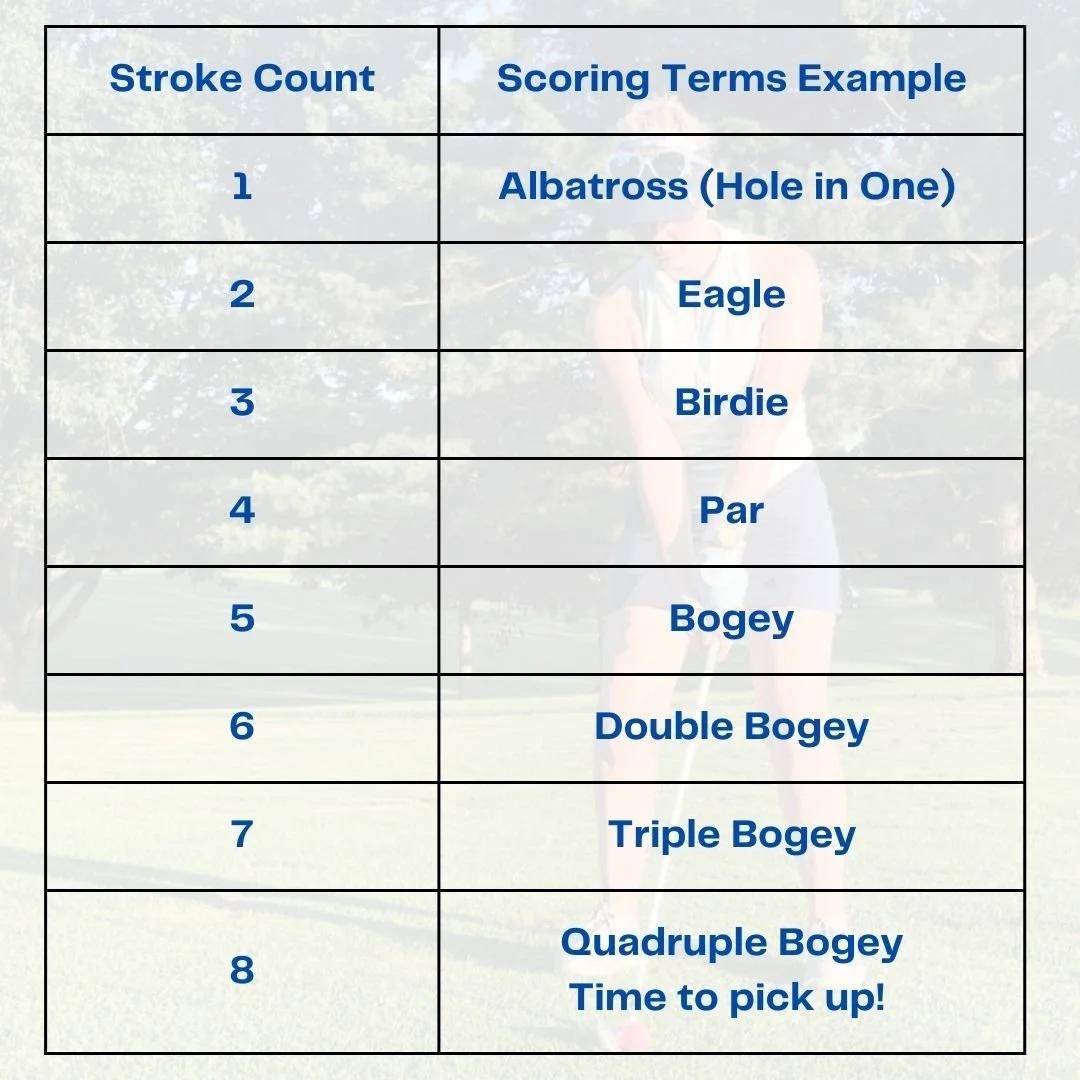
- Birdie / Bogey – One stroke under par / one stroke over par.
- Course Rating - USGA value representing difficulty for a scratch golfer.
- Slope Rating – USGA value representing relative difficulty for bogey golfers vs scratch golfers.
- Handicap Index – A numeric measure of a golfer’s potential ability, used to compute net scores.
Gross vs. Net Score: Which Should You Focus On?
Both gross and net scores are meaningful. Gross score shows your raw performance and highlights technical weaknesses.Net score is critical in competition and for fair comparisons across different skill levels.
When to prioritize gross score
- When diagnosing swing flaws or tracking improvement in ball-striking.
- When focusing on statistics like GIR (greens in Regulation) and strokes gained.
When to prioritize net score
- When competing in handicap events or club competitions.
- When setting realistic personal goals relative to your handicap index.
The Metrics That drive Scoring
To lower scores, measure what matters. These metrics highlight where strokes are won or lost.
Core metrics
- Greens in Regulation (GIR) - Percentage of holes where you reach the green in the expected strokes. Higher GIR correlates with lower scores.
- Putts per Round / Putts per GIR - Reveals putting quality and short-game efficiency.
- Strokes Gained – Compares your performance to a benchmark (tour average) for specific shots: off the tee, approach, around the green, putting.
- Scrambling - Percentage of holes missed GIR but still saved par, essential for course management.
Interpreting Your Scorecard: A Practical walkthrough
Analyze a round strategically rather than just adding numbers. Break down the scorecard by hole type, club usage, and shot outcome.
Step-by-step scorecard analysis
- Identify hole-length clusters (short par-4s, long par-3s, reachable par-5s).
- Mark outcomes: GIR yes/no, putts, penalty strokes, lost balls.
- Calculate strokes lost/gained per area (putting, approach, tee).
- Prioritize the 1-2 areas costing the most strokes and plan drills accordingly.
Scoring Strategy & Course Management
lower scores often come from smarter decisions rather than longer drives. Effective course management and shot selection reduce risk and produce consistent scoring.
Shot selection principles
- Play to your strengths: choose targets and clubs that maximize your probability of par or better.
- Favor the center of the green when in doubt-reduces three-putt risk.
- Lay up to preferred distances if reaching a hazard or forced carry carries higher risk than reward.
- Short par-4s: evaluate aggressive vs conservative play based on lie, wind and recovery ability.
practical tee selection
Choosing the right tee box affects strategy. Move forward if course length forces risky shots beyond your confidence zone-better angle and club choices frequently enough lower gross score and steady net score improvements.
Putting & Short Game: Where Most Strokes Are Saved
Improving putting and the short game yields rapid score reduction. The average amateur can save multiple strokes per round by focusing here.
High-impact drills
- 3-to-1 Putting Drill: Putt three short putts (3-6 ft) and one medium putt; repeat to build consistency under pressure.
- Chip-and-run ladder: Chip to spots at incremental distances to control roll and wedge distances.
- Pitching circle: From 30-50 yards, aim for the fringe and map variations-this builds proximity to hole and scrambling percentage.
Using Handicap, Course Rating and Slope to Interpret Scores
Understanding USGA metrics (Course Rating and Slope) lets you compare rounds across different courses and compute a meaningful handicap index.
Quick guide to calculation concepts
- Course Rating = expected score for a scratch golfer; use to gauge absolute difficulty.
- Slope Rating = relative difficulty for a bogey golfer; used to convert scores into handicap differentials.
- Handicap Index = rolling measure of ability; used to compute net score for competition.
Common Scoring Formats and Tactical Differences
Different formats change strategy-knowing these nuances helps you alter risk profiles in match play, stroke play, and Stableford.
Format highlights
- Stroke Play: Every stroke counts. Avoid high-risk plays that could produce big numbers.
- Match Play: Winning a hole is all that matters-take calculated risks when you’re down or when the opponent faces trouble.
- Stableford: Rewards birdies and pars; eliminates the penalty for blow-up holes so aggressive strategy can pay off.
Scorecard Example & Simple Analysis
| Hole Type | Typical Par | Primary Goal |
|---|---|---|
| Short Par-4 | 4 | Safe drive → attack green or two-putt for par |
| Long Par-3 | 3 | Aim for center → prioritize GIR |
| Reachable Par-5 | 5 | Look for birdie but avoid hazard; lay-up is okay |
Setting Realistic Goals and Tracking Progress
Use data to set short- and long-term goals that are measurable and achievable.
Goal-setting framework
- Baseline: record 3-5 rounds and compute average gross score and net score.
- Identify the biggest stroke leaks (putting, approach, off-the-tee).
- Set a 6-8 week skill target (e.g., reduce 2-putts per round by 20%).
- Track weekly, adjust practice priorities based on outcomes and new metrics.
Practical Tips for Immediate Scoring Improvement
- Warm up with short game first-putting and chipping simulate the highest-frequency scoring shots.
- Pick conservative targets when wind or pins make riskier lines dangerous.
- Keep a simplified pre-shot routine to reduce mental errors and speed up play.
- Use video or a launch monitor sparingly; prioritize on-course feel and outcomes over raw numbers.
Case Study: From 95 to 86 – A 9-Stroke reduction Plan
Scenario: Amateur player averages gross 95. after data review, primary issues identified: 2.1 extra putts per round, low GIR (30%), and two lost balls per round.
Intervention
- Short game focus: 3 weekly sessions (putting drills + 30 minutes chipping).
- course management: choose safer tee placements on three risky holes.
- Practice: simulated pressure holes-play them 5 times with a small penalty for blow-ups.
Outcome (8 weeks)
- Putts per round reduced by 1.4.
- GIR improved to 40%.
- Lost balls reduced to near zero; penalty strokes decline.
- Gross score dropped from 95 to 86.
Tracking Tools and tech to Boost Scoring Insight
Leverage technology to quantify performance: GPS watches, shot-tracking apps and putting sensors provide data on distance, club selection and proximity-to-hole.
Recommended tracking checklist
- Record club used and result for every hole for 3-5 rounds.
- Log putts and distance-to-hole on approach shots.
- Use strokes gained metrics (if available) to identify relative strengths/weaknesses.
First-hand Experience: What Coaches Emphasize
From conversations with coaches and club pros, the recurring advice is simple: prioritize the short game, manage risk, and measure results.
pro tips coaches share
- spend 70% of short-game practice on shots inside 60 yards; they occur most often under pressure.
- Establish two go-to tee shots for each hole (aggressive and conservative).
- Always have a plan B: if the approach is missed,know your preferred chip or flop shot to save par.
SEO & Keyword Considerations for Golf Content
To make this article search-amiable,use high-value keywords naturally:
- golf scoring,gross score,net score,handicap index
- course rating,slope rating,greens in regulation,strokes gained
- scoring strategy,course management,shot selection,putting drills
Place keywords in headings,subheadings and early in paragraphs without keyword stuffing. Use internal links in your WordPress site to related articles (e.g., ”how to lower your putting average” or “understanding handicap index”) and add descriptive alt text to images (e.g., “scorecard analysis showing GIR and putts”).
Action Plan: Your Next 30 Days
- Record 3 rounds and compute averages for gross score, putts and GIR.
- Create a 6-week practice plan emphasizing identified weaknesses.
- Commit to one course-management change each round (tee position, target line, or club substitution).
- Reassess and adjust goals every two weeks based on tracked metrics.
Helpful resources
- USGA resources on course rating and handicap index
- Shot-tracking apps and GPS devices for on-course data
- Local PGA/club pro lessons for personalized strategy