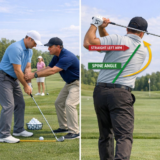
The study of golf swing mechanics demands an integrative analytical framework that synthesizes principles from biomechanics, motor control, and instrumented measurement to translate complex motion into actionable insight. Contemporary performance expectations-driven by incremental gains in clubhead speed, launch conditions, and shot dispersion-require more than descriptive observation; they require reproducible, quantitative characterization of kinematic chains, force production, and timing relationships. By articulating a structured approach to data acquisition, signal processing, modeling, and interpretation, researchers and practitioners can move from anecdote to evidence-based intervention.
Central to this framework are clearly defined variables and standardized measurement protocols. Kinematic descriptors (segmental angles,angular velocities,and intersegmental timing),kinetic outputs (ground reaction forces,joint moments),and club-ball interaction metrics (impact location,clubhead speed,smash factor) must be captured with validated instrumentation-high-speed motion capture,inertial measurement units,force platforms,and launch monitors-while adhering to calibration and sampling standards that minimize systematic error.Equally critically important are procedures for pre-processing (filtering, gap-filling), biomechanical modelling (inverse dynamics, rigid-body assumptions, musculoskeletal simulation), and statistical treatment of intra- and inter-subject variability.
Methodological rigor benefits from principles long established in analytical sciences: standardized sample preparation, validation of measurement methods, and transparent reporting enhance reproducibility and comparability across studies. Translating these principles to golf biomechanics entails protocol harmonization (e.g., warm-up, trial selection), instrument cross-validation, and sensitivity analyses that quantify how measurement choices influence derived metrics. Robust analytical pipelines shoudl also incorporate techniques for dimensionality reduction, time-series alignment, and multivariate modeling to reveal latent coordination patterns and performance-relevant synergies.
The proposed framework facilitates hypothesis-driven research, targeted coaching interventions, and equipment optimization by linking measurable mechanical determinants to performance outcomes and injury risk. Future advances will depend on integrating wearable technologies, machine learning for pattern recognition, and open-data practices that enable cumulative knowlege building. By establishing a common analytical foundation, the field can systematically evaluate the efficacy of training strategies, improve individualized coaching prescriptions, and advance the scientific understanding of the modern golf swing.
kinematic Foundations of the Modern Golf Swing: Joint Sequencing, Angular Velocity, and Temporal Coordination
contemporary swing mechanics emphasize a clear proximal‑to‑distal kinematic sequence in which rotational motion is generated and transferred from the lower extremities and pelvis, through the trunk, and into the upper limbs and club. Empirical kinematic analyses characterize this as an ordered cascade: pelvis → thorax → lead arm → club, with each segment reaching its peak rotational velocity successively. The term “modern” herein aligns with its lexical definition as contemporary,highlighting an increased deliberate separation of pelvis and thorax (the so‑called X‑factor) to augment elastic energy storage and intersegmental torque transfer.
The temporal profile of angular velocity across segments is a primary determinant of clubhead speed and shot quality. Typical laboratory and field measures reveal distinct peak timings: pelvic rotation velocity peaks early in the downswing, trunk rotation peaks later, and wrist/club angular velocities peak immediatly prior to impact. Key measurable markers used in quantitative studies include:
- peak pelvic rotational velocity (deg/s)
- Peak trunk (thorax) rotational velocity and timing offset
- Peak wrist/club angular velocity and rate of acceleration into impact
These markers form the basis for objective comparisons between skill levels and for modeling energy transfer efficiency.
Temporal coordination is most informative when presented as relative timing within the downswing window; skilled performers demonstrate compressed, repeatable timing that maximizes intersegmental power flow. the simplified timing taxonomy below illustrates typical sequence order and approximate relative peak timing expressed as percent of the downswing interval (0% = transition, 100% = impact):
| Phase | Sequence Order | Relative Peak Timing |
|---|---|---|
| Pelvis rotation | 1 | 10-30% |
| Thorax rotation | 2 | 30-60% |
| Lead arm / wrist | 3 | 70-95% |
These intervals are descriptive averages; individual variation exists, but reduced temporal dispersion correlates with higher performance and reproducibility.
For practitioners seeking to translate kinematic insights into training and injury‑mitigation strategies, focus on improving intersegmental timing and controlled velocity gradients rather than purely increasing maximal rotation. Recommended evidence‑informed interventions include:
- Movement drills that emphasize delayed trunk rotation relative to the pelvis (e.g., pelvis‑lead turns, tempo‑controlled downswing repetitions)
- Velocity‑based strength training to enhance rapid force transmission without sacrificing joint control
- Targeted mobility and motor control work to preserve the hip‑thorax separation safely and reduce compensatory lumbar loading
Objective kinematic assessment using wearable IMUs or motion capture is advised to monitor sequencing changes and to quantify the effectiveness of interventions.
Kinetic Drivers and Ground reaction Force Strategies for Maximizing Power Transfer
Contemporary analysis of swing mechanics situates the foot-ground interface as the primary generator of whole-body momentum. The term kinetic-defined in lexical sources as pertaining to motion and the forces associated with it-frames how we conceptualize energy flow from the ground through the body into the club. In biomechanical terms, efficient power transfer requires coherent sequencing of force vectors: vertical force for support, lateral shear for weight transfer, and torsional moments for rotation. When these vectors are temporally and spatially optimized, the resultant kinetic energy summates and is available for conversion into clubhead velocity at impact.
Coaching and biomechanical strategies should therefore emphasize specific, measurable behaviors. Key strategies include:
- Progressive lateral-to-rotational weight shift-initiate ground force laterally before converting to rotational torque.
- Active ankle stiffness-maintain stiffness to serve as a rigid lever for force transmission.
- Sequenced hip-thorax dissociation-maximize segmental angular velocity differentials for kinetic chain amplification.
- Optimized stance width and foot flare-balance stability with freedom for torque generation.
These strategies prioritize the creation,redirection,and timing of ground reaction forces rather than isolated upper‑body effort.
| Phase | Primary GRF focus | Coaching cue |
|---|---|---|
| Address → backswing | Even pressure distribution | “Feel grounded,load evenly” |
| Transition | Lateral shift to trail foot | “Push laterally,then rotate” |
| Downswing → Impact | rapid weight transfer + vertical impulse | “Drive the ground into the ball” |
Implementing these concepts requires objective assessment and systematic training. Use force plates, pressure insoles, and high‑speed kinematics to quantify GRF timing, magnitude, and vector orientation; these metrics inform targeted interventions such as plyometric progressions, unilateral strength work, and resisted rotational drills. Progressions should aim to increase the efficiency of kinetic transfer-measured as the proportion of ground-generated impulse converted into clubhead kinetic energy-while monitoring for compensatory patterns to mitigate risk. Embedding this evidence-based approach enhances both performance outcomes and long-term injury prevention.
Clubface Dynamics and Impact Mechanics for Consistent Launch Conditions
At the instant of contact, the orientation and angular velocity of the clubface determine the vector of initial ball velocity and the spin-axis tilt. Precise control of **face angle relative to swing path**, combined with an optimal dynamic loft, governs launch direction and spin polarity; small angular deviations (degrees, not radians) produce outsized changes in lateral dispersion.Off‑center impacts introduce coupled translational and rotational energy transfer-commonly described as the **gear effect**-which modifies both spin magnitude and axis,so maintaining impact near the geometric center is essential for repeatable launch conditions.
The transient mechanics of impact are mediated by clubhead inertia properties and shaft dynamics, which modulate face rotation during the last 0.02-0.03 seconds before and after ball contact. the following condensed reference highlights practical target ranges used in applied biomechanics assessments:
| Parameter | Typical Target |
|---|---|
| Face angle at impact | ±2° |
| Dynamic loft (woods/irons) | 10-16° / 18-28° |
| Ball spin rate | 2000-4500 rpm |
| Smash factor (efficiency) | 1.45-1.55 |
Consistent launch windows arise from controlling three coupled variables: face orientation, impact location, and relative velocity (including attack angle). Coaches and researchers rely on targeted diagnostics to decompose these contributions; common tools include:
- High‑speed video and markerless tracking for temporal face rotation analysis.
- Launch monitors for entry spin,launch angle,and ball speed measurements.
- Impact tape or pressure films to quantify strike location and energy distribution.
- force plates to link ground reaction sequencing with club delivery.
Interventions to tighten the launch envelope should combine motor learning drills with equipment tuning. Simple, evidence‑based steps include deliberate center‑face contact drills, tempo and wrist‑hinge sequencing to reduce undesired face rotation, and loft/lie adjustments tailored to measured attack angle. When implemented alongside objective feedback, these measures reliably produce the desired outcomes: **narrower dispersion**, **stable launch angles**, and **predictable spin windows**-all prerequisites for translating biomechanical insight into on‑course performance gains.
Swing Plane Geometry and Ball flight Modeling for Tactical Shot Shaping
Swing plane can be conceptualized as a moving geometric surface defined by the instantaneous line of the club shaft and the rotational axis of the torso. Quantifying the plane requires decomposition into inclination, tilt (shoulder-to-hip differential), and the radius of the clubhead arc; these components together determine the locus of possible impact vectors. From an analytical standpoint, representing the plane as a time-dependent 3D parametric surface allows one to compute tangential velocities and normal vectors at the moment of impact, which are the primary inputs for deterministic ball-flight models.
The orientation of the clubface at impact is best understood as a vector relative to the local tangent of the swing plane. Two self-reliant vectorial quantities-**club path** (direction of the clubhead velocity projected onto the target plane) and **face-to-path differential** (face vector minus path vector)-govern initial ball velocity,spin axis,and resultant curvature. Small changes in impact point along the face produce lever-arm effects that modulate spin rates; thus, accurate modeling couples swing-plane kinematics with impact mechanics (coefficient of restitution, local loft change, and contact offset) to predict launch conditions.
Translating geometry and physics into tactical shot shapes requires isolating controllable parameters.Practically relevant factors include:
- Path polarity – inside-out vs outside-in, which biases spin axis orientation;
- Face bias – open or closed relative to path, the primary determinant of side spin;
- Attack angle - affects launch angle and backspin magnitude;
- impact locus – toe/heel and high/low contact that alters gear-effect spin.
Combining these in analytic form yields a small set of control inputs that a player or coach can target to produce a desired lateral curvature and carry distance.
| Path (RHD) | Face vs Path | Spin Axis | Typical Result |
|---|---|---|---|
| Inside-out (+) | Closed (-) | Right-to-left | draw |
| Inside-out (+) | Open (+) | Neutral/low | Push or weak slice |
| Outside-in (-) | Closed (-) | Strong right-to-left | hook or pull-hook |
| Outside-in (-) | Open (+) | Left-to-right | Fade/slice |
Modeling pipelines typically combine forward dynamics of the swing plane with a rigid-body collision model and aerodynamic spin-drag solvers; this hybrid approach yields both explanatory insight for coaching interventions and predictive accuracy for tactical shot planning under varying wind and lie conditions.
Sensor Integration and Data Analytics for objective Swing Assessment and Real Time Feedback
Contemporary measurement of the golf swing begins with the fundamental role of sensors as transducers: **they convert biomechanical and environmental phenomena into measurable electrical signals** suitable for analysis. typical hardware modalities deployed in an objective assessment pipeline include inertial measurement units (IMUs) for angular kinematics, optical motion-capture systems for high-fidelity positional tracking, force plates and pressure mats for ground-reaction metrics, and strain gauges instrumented on club shafts for torsional loading. Each device yields a different representation of the underlying motion; combining these representations permits a more complete reconstruction of the swing’s mechanical state than any single sensor can provide.
Robust data acquisition and preprocessing are prerequisites for valid inference. Key concerns include **synchronized sampling**, anti-aliasing and bandpass filtering to remove noise, timestamp alignment across devices, and sensor calibration to translate raw voltages or digital counts into physical units. Sensor manufacturers and engineering literature emphasize calibration and maintenance as essential for continued system accuracy. Typical implementation parameters to consider are sampling frequency (hz), latency (ms), and dynamic range-trades that directly influence the fidelity of tempo, peak acceleration, and impact-force estimates.
Analytics focus on extracting domain-relevant features and mapping them to performance or instruction cues.Core features commonly computed are:
- Temporal metrics (backswing/downswing durations, tempo ratio)
- kinematic metrics (clubhead speed, swing plane deviation, segment angular velocities)
- Kinetic metrics (peak vertical ground reaction, weight-transfer indices)
Machine learning and statistical models-ranging from rule-based thresholds to supervised classifiers and regression models-translate these features into objective assessment scores and corrective recommendations. For real-time applications,lightweight models and streaming inference architectures are favored to meet strict latency budgets while preserving interpretability for coaching use.
System integration must reconcile practical constraints with analytical goals: **data fusion** strategies (e.g., Kalman filtering) combine noisy sensor streams into stable state estimates, while cloud-edge partitioning determines whether heavy analytics run locally or server-side. Operational considerations include power management, wireless bandwidth, firmware updateability, and a scheduled calibration/validation regimen to mitigate sensor drift. The following table summarizes representative sensor properties for system design decisions:
| Sensor | Primary Metric | Typical Sampling |
|---|---|---|
| IMU | Angular velocity / acceleration | 200-1000 Hz |
| Force plate | Ground reaction force | 1000 hz |
| Optical mocap | 3D positional kinematics | 100-500 Hz |
| Strain gauge (shaft) | Torsion / bending | 500-2000 Hz |
Individualized Training Protocols Based on Biomechanical Profiling and Periodized Practice
Extensive biomechanical profiling underpins targeted intervention: three-dimensional motion capture, force-plate analysis, club and ball telemetry, and standardized mobility/strength screens together define a player’s movement signature. Key variables-pelvic rotation, shoulder turn, torso sequencing, wrist angles, and ground reaction forces-are quantified and coalesced into a performance map that guides training prioritization. Terminology is deliberately selected for consistency with the intended audience (this text uses the American form “individualized”, cf. British “individualised”), ensuring clarity in documentation and cross-disciplinary dialog.
Periodized prescriptions translate the profile into a time-structured plan that balances skill acquisition, physical preparation, and competitive readiness. Core elements of any protocol include:
- Baseline Assessment: objective metrics, normative comparisons, and movement-fault taxonomy.
- Technical Interventions: drill progressions informed by kinematic sequencing and constraint-led instruction.
- Physical Conditioning: strength, power and mobility priorities tailored to individual deficits.
- Motor Learning Strategies: deliberate practice structure, feedback scheduling, and variability manipulation.
- Monitoring & Recovery: load management, neuromuscular readiness, and injury-risk mitigation.
A concise periodization scaffold operationalizes progression and assessment. The table below provides a practical template for integrating biomechanical targets with periodized phases:
| Phase | Primary Focus | Key Metrics |
|---|---|---|
| Preparation | Build capacity & correct mechanical faults | Mobility scores, eccentric strength |
| Pre-Competition | Power transfer & sequencing refinement | Peak clubhead speed, kinematic sequence ratio |
| Competition | Consistency & load tapering | Shot dispersion, fatigue indices |
| Transition | Active recovery & longitudinal planning | Injury markers, readiness scores |
Implementation demands an evidence-based, athlete-centered feedback loop: periodic re-profiling, criterion-referenced progression, and stakeholder dialogue (coach, S&C, medical). Decisions to advance or regress an athlete hinge on predefined thresholds-movement quality indices,reproducible power outputs,and statistical improvements in consistency-rather than subjective impressions. Embedding these protocols into weekly microcycles and macrocycles produces measurable adaptations while preserving motor stability under competitive constraints, thereby optimizing long-term advancement.
Injury Risk Mitigation and Load management Recommendations for sustainable Performance
optimizing long‑term availability requires an approach that explicitly reduces cumulative spinal and peripheral joint stress while preserving adaptive loading for performance gains.Biomechanical interventions should prioritize redistribution of forces through improved segmental coordination-notably via enhanced lumbopelvic control and proximal stability-so that peak rotational velocities are produced with diminished shear and compressive loading of the lumbar spine. This strategy aligns with contemporary guidance on sports‑related musculoskeletal health and the management of back complaints,which emphasize diagnosis,targeted intervention,and gradual return to activity (see NIAMS resources on back pain and sports injuries).
Practical load‑management tactics translate biomechanical principles into daily practice. Recommended actions include:
- Prescribed swing volume: limit high‑effort full swings during blocks of intensive training and progressively increase count by ≤10-15% per week.
- Intensity modulation: intersperse technical, half‑speed, and full‑speed sessions rather than repeatedly performing maximal‑velocity swings.
- Scheduled deloads: incorporate 1 low‑volume week every 3-6 weeks and at least 1 full recovery day after two consecutive high‑intensity sessions.
- Objective monitoring: track swing counts, session RPE, and club‑head speed to detect rising internal load prior to symptom onset.
These measures reduce the probability of overload‑related tissue breakdown while preserving stimulus for neuromuscular adaptation.
Targeted conditioning and screening form the bridge between technique work and safe load accumulation. Pre‑season and periodic screens should evaluate thoracic rotation, hip internal/external rotation, shoulder girdle control, and core endurance, with corrective programming emphasizing eccentric control and rotational power development. A concise weekly prescription example is shown below to illustrate distribution of on‑range and gym load for an intermediate golfer:
| Day | Session | Volume | Intensity |
|---|---|---|---|
| Mon | Gym (rotational strength) | 3 sets x 6-8 reps | 70-80% effort |
| Wed | Range (technique) | 40-60 swings | 50-75% effort |
| Fri | Range (speed work) | 20-30 swings | 90-100% effort |
| Sun | Recovery/mobility | 30 min | Low |
Monitoring and return‑to‑play should be criterion‑driven and multidisciplinary. Use a combination of clinician assessment and objective load metrics with staged progression: symptom resolution at rest, tolerance to submaximal swings without worsening pain, then graded reintroduction of high‑velocity swings and competition play. Adopt simple monitoring tools such as:
- Session RPE (0-10)
- Daily swing count
- Pain or readiness score (numeric, pre/post session)
Couple these metrics with clear communication between coach, physiotherapist, and athlete to ensure decisions are evidence‑based, individualized, and focused on sustainable performance over time.
Q&A
Below is a structured, academic Q&A designed to accompany an article entitled “Analytical Framework for Modern Golf Swing Mechanics.” The Q&A clarifies conceptual foundations, measurement and analysis choices, practical implications, limitations, and future directions.Citations to methodological analogies from analytical science are included where relevant to methodological design.
Q1. What is meant by an “analytical framework” in the context of modern golf swing mechanics?
A1. An analytical framework is an explicit, structured approach that defines the conceptual model, variables of interest, measurement technologies, data-processing pipelines, statistical and computational models, validation criteria, and reporting standards used to study the golf swing. It operationalizes biomechanical theory (e.g., rigid-body and multibody dynamics), links hypotheses to measurable quantities (kinematic, kinetic, neuromuscular), and prescribes methodological steps to ensure reproducibility and interpretability of results.Q2. What are the primary aims of applying such a framework to the golf swing?
A2. Primary aims include: (1) quantifying the determinants of performance (e.g., clubhead speed, ball launch conditions), (2) identifying mechanical contributors to consistency and variability, (3) characterizing injury-related loading patterns, (4) informing evidence-based coaching and equipment fitting, and (5) creating validated models for simulation and intervention testing.
Q3. What theoretical models underlie the framework?
A3. The framework draws on multibody dynamics, rigid-body kinematics, inverse dynamics, and segmental power-transfer models. Principles include conservation of angular momentum where applicable, joint torque-power relationships, and work-energy transformations. Models may be instantiated as linked-segment chains with anatomical degrees of freedom representative of hips,torso,shoulders,elbows,wrists,and the club.
Q4.Which biomechanical variables are central to analysis?
A4. Key kinematic variables: segment and club angular displacements, angular velocities and accelerations, intersegmental timing (phase), swing plane orientation, and X-factor (thorax-pelvis separation). Key kinetic variables: joint moments and powers (hip, trunk, shoulder), ground reaction forces (GRFs) and impulse, and net external moments applied to the club. Neuromuscular variables: electromyographic (EMG) activation timing and amplitude.Outcome variables: clubhead speed,smash factor,ball launch angle,spin rate,and dispersion metrics.
Q5. What measurement technologies are recommended and why?
A5. Recommended technologies include: high-speed optical motion capture for gold-standard kinematics; markerless motion capture where appropriate for ecological validity; inertial measurement units (IMUs) for field data and high-repetition sampling; force plates and instrumented turf/pressure mats for GRFs and weight transfer; high-speed launch monitors (radar/LiDAR) for club and ball outcome measures; surface EMG for muscle timing. Selection should be guided by the study’s Analytical Target Profile (ATP)-i.e., the required accuracy, temporal resolution, and ecological realism-mirroring the technology-selection principles used in analytical chemistry and method development.Q6. How should an ATP-style concept be applied to measurement selection?
A6. Define the ATP (target variables, acceptable uncertainty, sampling frequency, environmental constraints) first. Match technologies to the ATP: use optical capture and force plates when spatial and kinetic accuracy are paramount; use IMUs and launch monitors for field-based ecological studies requiring many repetitions. This approach parallels best-practice device selection in analytical sciences, where the ATP informs the analytical technology choice.
Q7. What signals processing and data-preparation steps are essential?
A7. Essential steps: synchronization of measurement streams,coordinate-system registration,low-pass filtering with cutoffs justified by residual analysis,gap-filling for marker loss,sensor-fusion for IMU/optical integration,differentiation with appropriate smoothing for velocity/acceleration estimates,inverse-dynamics processing with subject-specific anthropometrics,and normalization (e.g., to body mass or stature) for inter-subject comparison. Report processing parameters and rationale explicitly.
Q8. Which statistical and computational analyses are most appropriate?
A8. Use a mix of classical and modern methods: descriptive statistics and repeated-measures ANOVA for controlled comparisons; mixed-effects models to account for nested designs and individual variability; principal components or functional data analysis for characterizing movement synergies and variance structure; machine-learning regression/classification for predictive models (e.g., clubhead speed, shot outcome), with cross-validation and careful feature selection; Bayesian approaches when prior information or hierarchical uncertainty is central. Report effect sizes and uncertainty intervals rather than sole reliance on p-values.
Q9. How should kinematic sequencing be quantified?
A9. Quantify sequencing via temporal ordering of peak angular velocities and peak joint powers across segments (pelvis → torso → shoulder → elbow → wrist → club). Use timing lags normalized to swing duration, compute sequence indices (e.g., peak-time differences), and evaluate consistency across trials. Analyze both mean sequence and trial-to-trial variability to link sequencing to performance and consistency.
Q10. What is the role of ground reaction forces and weight transfer?
A10. GRFs characterize how the player generates external forces for rotational torque and linear acceleration of the center of mass (COM). Key metrics: peak vertical/horizontal GRFs, medial-lateral force components, center-of-pressure (COP) progression, and horizontal impulse during downswing/impact. Proper timing and directionality of GRFs facilitate transfer of energy up the kinematic chain and contribute to clubhead speed and balance control.
Q11. How is energy transfer and mechanical efficiency evaluated?
A11. Evaluate segmental work and power via inverse dynamics: compute joint powers, integrate to estimate work produced/absorbed by each joint, and calculate power transfer efficiency (ratio of power delivered to the clubhead vs. total mechanical work). Consider elastic energy storage and release in trunk tissues and passive structures. Efficiency metrics should be interpreted relative to speed-accuracy trade-offs.
Q12. how do we link biomechanics to performance outcomes (clubhead speed, accuracy)?
A12. Use multivariate models that include kinematic sequencing, peak joint powers, GRF metrics, and clubhead kinematics as predictors for outcome variables (clubhead speed, launch conditions, dispersion). Apply cross-validated predictive modeling, and examine both average effects and individual-specific patterns. Investigate mediators (e.g., X-factor influences on clubhead speed) and moderators (e.g., player strength, flexibility).
Q13. How can the framework inform coaching and training interventions?
A13. Translate biomechanical diagnostics into targeted interventions: sequencing drills to improve proximal-to-distal timing, strength and power programs to increase joint torque capacity, balance and footwork training to optimize GRF profiles, mobility work to increase safe X-factor, and sensor-based biofeedback for timing correction. Use pre-post experimental designs with the same measurement framework to evaluate intervention efficacy.
Q14. How should injury risk be assessed within this framework?
A14. quantify cumulative and peak joint loads (moments, shear forces), asymmetric loading patterns, and abrupt changes in timing that increase stress on lumbar spine, shoulders, and wrists. Combine biomechanical loading data with clinical screening (history, ROM deficits). Use threshold-based and probabilistic approaches to relate loading exposure to injury risk while acknowledging multifactorial etiology.
Q15. What are limitations and common pitfalls?
A15. limitations include: laboratory-field generalizability trade-offs, marker/soft-tissue artifacts affecting kinematic fidelity, inverse-dynamics sensitivity to anthropometric assumptions, and overfitting in predictive models with small samples. Common pitfalls: under-reporting processing parameters,ignoring between-trial variability,conflating correlation with causation,and neglecting ecological validity when making coaching recommendations.
Q16. How should researchers ensure validity and reliability?
A16. Validate measurement systems against gold standards where possible (e.g., optical capture vs. high-resolution systems), report intra- and inter-session reliability metrics (ICC, SEM), perform sensitivity analyses to processing choices, and preregister protocols where appropriate. Include power analyses and adequate sample sizes for inferential claims.
Q17. How can data from wearable sensors be integrated reliably?
A17. Integrate IMUs with optical systems during calibration phases to build robust sensor-fusion models. Validate IMU-derived kinematics against lab-grade systems across the full dynamic range of swings. Use sensor-fusion algorithms that correct for drift and align local sensor frames to anatomical frames. Report expected error bounds for field-derived metrics.
Q18. What role do simulation and forward-dynamic models play?
A18.Forward-dynamic simulations allow hypothesis testing about causality (e.g., effect of altered joint torque profiles on clubhead speed), virtual prototyping of interventions, and exploration of unmeasurable internal loads. Models must be validated against empirical data and include realistic muscle-actuator constraints and passive tissue properties.
Q19. How should results be reported to maximize reproducibility and utility?
A19.Report: detailed participant characteristics; instrumentation with manufacturer and sampling rates; coordinate system definitions; filtering and processing parameters; inverse-dynamics model assumptions and anthropometric data; statistical models, effect sizes, and confidence intervals; raw or processed data availability where ethical; and an explicit ATP describing measurement aims and error tolerances. Such transparency mirrors reporting expectations in rigorous analytical sciences.
Q20. What are promising future directions?
A20. Promising directions include: improved wearable accuracy for ecological monitoring, real-time biofeedback systems for on-course coaching, integration of large-scale movement databases for normative models, personalized models that account for individual anatomy and motor control strategies, and hybrid experimental-computational pipelines combining machine learning with biomechanical priors. Cross-disciplinary methodological transfer-e.g.,adopting ATP-like rigor from analytical chemistry-will improve methodological transparency and device selection.
Closing note on methodological analogies
The methodological rigor exemplified in analytical chemistry-such as defining an Analytical Target Profile (ATP) to guide technology selection and method validation-provides a useful template for biomechanics research. Explicitly defining measurement goals and acceptable uncertainty before selecting instruments and processing pipelines enhances the scientific validity and practical utility of golf-swing analyses (see discussion of ATP concepts in analytical method development literature).
If you would like, I can:
– Convert this Q&A into a manuscript-style FAQ section for the article (with references and suggested figures);
– Produce example data-processing scripts or pseudocode for filtering, inverse dynamics, or sequencing analysis;
– Draft a standardized reporting checklist tailored to golf-swing biomechanics studies.
this article has presented an analytical framework for modern golf swing mechanics that synthesizes biomechanical principles,kinematic and kinetic measurement,and data-driven modeling to produce a coherent basis for assessment,instruction,and performance optimization. By articulating clear variables of interest, measurement protocols, and interpretive pathways, the framework seeks to bridge theoretical understanding and applied coaching practice while enabling reproducible evaluation across players and contexts.
The practical implications are twofold. First, coaches and practitioners are afforded a structured approach for diagnosing swing faults and prioritizing interventions grounded in quantifiable metrics. Second, researchers and technology developers can use the framework as a foundation for designing sensors, analytics pipelines, and validation studies that align measurement objectives with desired performance outcomes. Consistent with methodological rigor found in the analytical sciences (cf. standards articulated in publications such as Analytical Chemistry), adopting explicit target profiles and standardized procedures will be essential for comparability and cumulative knowledge building.
Limitations of the present framework should be acknowledged: it relies on current measurement technologies and modeling assumptions that may evolve, and its generalizability across skill levels, environmental conditions, and equipment configurations requires empirical verification. Future work should pursue longitudinal validation,cross-population studies,integration with advanced machine-learning approaches,and the development of consensus standards for variables,data formats,and reporting-efforts that will enhance both internal validity and real-world utility.
Ultimately, advancing golf performance depends on rigorous, interdisciplinary collaboration among biomechanists, data scientists, coaches, and equipment specialists. By embedding practical coaching needs within a transparent analytical architecture, the framework offered here aims to catalyze research, inform evidence-based instruction, and support sustained improvements in player performance.
 note: the provided web search results point to “Analytical Chemistry” (ACS Publications), wich appears unrelated to the requested topic. Below is the requested,SEO-optimized article on “Analytical Framework for Modern Golf Swing Mechanics.”
Analytical Framework for Modern Golf Swing Mechanics
Overview: A Data-Driven Approach to Golf Swing Analysis
A modern golf swing combines biomechanics, kinematics, and repeatable motor patterns to produce consistent clubface control, launch conditions, and distance. This analytical framework turns coaching intuition into measurable checkpoints – using metrics like clubhead speed, swing plane, hip-shoulder separation (X‑factor), attack angle, and launch angle.The goal is efficient energy transfer and scalable improvements in ball flight,driving distance,and shot dispersion.
Core Components of the Analytical Framework
Grip Mechanics & Clubface Control
- Neutral grip: Promotes square clubface at impact and consistent release.Ensure V’s from thumbs/index fingers point between right shoulder and chin (for right-handers).
- Grip pressure: Light to moderate (~2-4 on a 10 scale).Excess pressure reduces wrist hinge and timing.
- Grip variation impacts: Strong/weak grips change effective loft and clubface path; analyze face angle at impact with a launch monitor or high-speed video.
Stance, Posture & Alignment
- Base width: shoulder-width for irons, slightly wider for driver to stabilize ground reaction forces.
- Posture: Neutral spine angle, tilt from hips (not lumbar flexion) to allow rotation.
- Alignment: Aim line, ball position and foot placement control launch direction and shot shape.
Swing Plane & Arc
The swing plane governs how the club travels relative to the target line. A consistent plane reduces variability in clubhead path and improves contact quality.
- Assess swing plane via video (face-on and down-the-line) and measure deviation from ideal plane.
- Maintain radius and width of arc for consistent clubhead speed and ball striking.
Kinematic Sequence & Energy Transfer
The kinematic sequence is the timing of body segment rotations: pelvis → torso → arms → club. Efficient sequence generates maximal clubhead speed with minimal compensations.
- Pelvis rotation: Initiates downswing; early, powerful hip turn loads elastic tension.
- Shoulder turn: Stores potential energy; separation from hips (X‑factor) amplifies torque.
- Arm and wrist release: Finalize energy transfer to the clubhead.
Timing,Tempo & Rhythm
A repeatable tempo (measured by backswing:downswing ratio) correlates with consistent strike. Many tour players have a tempo near 3:1 (backswing ~3 units, downswing ~1 unit), though the optimal may vary.
Ground Reaction Forces (GRF) & Lower-Body Action
- GRF magnitudes and timing affect rotation and weight shift. Force plates help quantify direction and amount.
- Proper lateral-to-rotational force transition creates stable base and improves power transfer.
Launch Conditions & Ball Flight
The final output - ball flight – depends on clubhead speed, attack angle, face angle, loft at impact, and spin rate.Track these with launch monitors to validate mechanical changes.
Key Metrics to Track (Table)
| Metric | typical Target | Why It Matters |
|---|---|---|
| Clubhead Speed | 80-120+ mph (varies) | Primary driver of distance |
| Ball Speed | 1.4× clubhead speed approx. | Energy transferred at impact |
| Attack Angle | -2° to +3° (driver) | Influences launch and spin |
| X‑Factor (Hip-Shoulder Separation) | 40°-60° for many players | Greater separation increases torque |
| Tempo Ratio | ~3:1 backswing:downswing | Repeatability and timing |
Diagnostics & Technology Stack
Use a layered approach: low-cost video for baseline, then upgrade to launch monitors and motion capture when refining. Common tools:
- High-speed video: Face-on and down-the-line for plane, rotation, and impact analysis.
- Launch monitors (TrackMan, GCQuad, FlightScope): Provide clubhead speed, ball speed, launch angle, spin, and carry distance.
- 3D motion capture & IMUs: Quantify kinematic sequence and joint angles for biomechanical analysis.
- Force plates: Measure ground reaction forces and weight transfer timing.
- Data platforms & software: Combine metrics to track progress, visualize trends, and run A/B tests for technical changes.
assessment Workflow: How to Analyze a Swing
- Collect baseline data: Video + launch monitor data from several shots to capture variability.
- Identify primary error: Is it face angle at impact, poor attack angle, inconsistent swing plane, or timing?
- Map to mechanical cause: Link the error to grip, stance, swing path, or sequencing issues through kinematic analysis.
- Design intervention: Drill, mobility exercise, or targeted coaching cue; quantify with pre/post metrics.
- Iterate: Make small adjustments, retest, and track trends over weeks to ensure retention.
Practical Drills & training Tips
Drills to Improve Kinematic sequence
- Step Drill: Start with back foot forward to force hips to initiate the downswing and promote correct sequence.
- Slow Motion Reps: 50-60% speed practice to engrain timing and sequencing; record and review.
Drills to Control Clubface & Path
- Impact Bag: Encourages square release and proper mass transfer to the ball.
- alignment Stick Plane Drill: Place stick parallel to target plane to feel correct swing path.
Drills to Optimize Launch Conditions
- launch monitor Feedback: Use shot-by-shot feedback to adjust ball position and tee height for optimal attack angle.
- Tee Height Experiment: Simple systematic changes to tee height to find maximal carry for your driver.
Mobility & Strength Considerations
Biomechanical efficiency depends on joint mobility (thoracic rotation, hip internal/external rotation, ankle dorsiflexion) and rotational power. Include:
- Dynamic warm-ups for thoracic rotation and hip hinge.
- Rotational medicine ball throws to build transferable power.
- Single-leg stability and posterior-chain strength for consistent GRF submission.
Case Study: Turning Data into Distance
Player profile: 38-year-old amateur with inconsistent driver strike and average clubhead speed of 92 mph.Baseline data showed early arm-dominant release and low X‑factor (~25°).
- Intervention: 8-week programme focused on hip rotation drills, step drill, and controlled increase in shoulder turn.Added rotational strength and thoracic mobility sessions twice weekly.
- Measurement: TrackMan used to assess pre/post metrics (10 shots, average).
- Results: Clubhead speed increased to 98 mph,X‑factor to 40°,ball speed improved proportionally,carry distance gained ~18-22 yards,shot dispersion reduced by 12%.
Common Faults, Their Causes, and Fixes
| Fault | Likely Cause | Quick Fix |
|---|---|---|
| Slices | Open clubface, out-to-in path | Neutralize grip, path drill with alignment sticks |
| Hook | Closed face, early release | Weaken grip slightly, delay release with pause drill |
| Fat shots | Early weight shift forward | Weight-bias drills, maintain posture through impact |
Performance Tracking & Progression Strategy
Prosperous improvements are measurable and progressive:
- Set short-term targets (4-6 weeks): consistency metrics (impact dispersion, % fairways hit), tempo and sequence improvements.
- Set mid-term targets (3 months): measurable distance gains, repeatable launch windows for recommended clubs.
- Use linear progression: change one variable at a time (e.g., posture or tempo) and log results to avoid confounding factors.
Integrating the Framework with Coaching
Coaches can use this analytical framework to create objective practice plans. By combining qualitative cues with quantitative feedback, a coach can:
- Prioritize interventions that produce measurable improvements in launch conditions.
- Reduce time spent on low-impact cues and increase focused, data-backed practice.
- Customize drills to the player’s mobility, strength and swing archetype.
SEO & content Tips for Golf Coaches and Bloggers
- Use primary keywords naturally: “golf swing mechanics”, “golf biomechanics”, “golf swing analysis”, “clubhead speed”, “launch monitor”.
- Create focused landing pages for specific queries (e.g., “reduce slice: swing mechanics + drills”).
- Publish case studies and before/after data - search engines value original data and practical outcomes.
- Optimize images (high-speed swing frames) with descriptive alt text like “golf swing kinematic sequence face-on”.
recommended Reading & Tools
- Launch monitors: TrackMan, GCQuad, FlightScope for ball flight and impact data.
- Video analysis apps: Hudl, V1 Golf for frame-by-frame review.
- Wearables & IMUs: For kinematic sequencing and joint angle measurement at scale.
Action Plan: 30-Day Betterment Roadmap
- Week 1: Baseline testing (video + launch monitor), set 2 measurable goals.
- Week 2: Mobility and sequence drills - prioritize thoracic rotation and hip-drive.
- Week 3: Implement face-control and path drills; adjust grip and ball position as needed.
- Week 4: Measure progress, refine practice plan, and set next 30-day targets.
Resources for Further Study
- Research on kinematic sequence and torque in rotational sports.
- Manufacturer guides for launch monitor interpretation.
- Peer-reviewed biomechanics papers on rotational power and transfer (search by terms: “golf biomechanics”, “kinematic sequence golf”).
by applying this analytical framework – combining measurable metrics, targeted coaching, and practical drills – golfers can create sustainable improvements in swing mechanics, clubface control, and ball flight. Trackable progress beats guesswork: collect data, prioritize high-impact changes, and iterate.