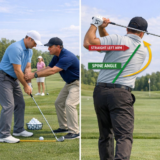
The study of human movement through the lens of mechanics provides a principled framework for understanding, quantifying, and improving athletic performance. Biomechanics-an inherently multidisciplinary field drawing on anatomy, physiology, engineering and computer science-applies principles of kinematics and kinetics to characterize how forces and displacements are generated, transmitted, and controlled by the body (see Stanford biomechanics; Wikipedia). In applied sport settings,biomechanical analysis is routinely used to diagnose technical inefficiencies,optimize movement strategies,and mitigate injury risk,thereby translating laboratory measurements into practical performance gains (Mass General Brigham).
The golf swing exemplifies a complex, high‑velocity motor skill in which precise intersegmental coordination, timing of force production, and energy transfer from the ground through the body to the club determine both outcome and injury propensity. A systematic biomechanical analysis of the swing therefore integrates assessments of joint kinematics, segmental angular velocities, intersegmental sequencing (the kinematic chain), kinetics such as joint torques and ground reaction forces, and clubhead/ball launch dynamics. Methodologies include three‑dimensional motion capture, inertial measurement units, force platforms, electromyography, and ball‑flight/launch monitor data, combined with statistical and computational techniques to extract meaningful performance indicators. by linking objective biomechanical metrics to specific performance outcomes and tissue loads, practitioners can prioritize targeted interventions-technical modifications, strength and conditioning prescriptions, and equipment adjustments-that are evidence‑based and individualized to the athlete’s functional profile.
Kinematic and Kinetic Profile of the Golf Swing With Practical Technique Refinements
The coordinated kinematic profile of an efficient swing is characterized by sequential segmental rotations, timely angular acceleration, and preserved proximal-to-distal energy transfer. Quantitatively, key features include a reproducible X‑factor (pelvis-thorax separation), peak shoulder and pelvis angular velocities, and consistent wrist hinge timing that together determine clubhead trajectory and attack angle. Measured in three dimensions, these parameters reveal that small deviations in lead hip extension or thoracic rotation timing produce measurable changes in launch conditions. Typical kinematic markers of interest for performance analysis include:
- Pelvis rotation range and velocity
- Thorax rotation relative to pelvis (X‑factor)
- Wrist hinge timing and release sequence
From a kinetic viewpoint, swing effectiveness is driven by ground reaction forces, intersegmental torques, and impulse generation during transition and downswing. the lower extremities serve as the primary platform for force production; coordinated lateral weight shift and vertical force modulation create the torque that is transmitted up the kinetic chain. Key kinetic observations include higher peak vertical and medial-lateral ground reaction forces in advanced players, and a rapid increase in resultant moment at the hips at transition that precedes peak clubhead speed. Variables commonly monitored in kinetic assessment include:
- Peak vertical GRF and force rate of progress
- Resultant hip and trunk moments at transition
- Impulse distribution between trail and lead foot
Practical technique refinements emerge directly from these kinematic and kinetic signatures and emphasize reproducible sequencing and scalable force submission. Coaching interventions should target small, measurable changes: optimize pelvis rotation to augment X‑factor without over‑coiling the lumbar spine; train a delayed wrist unhinge to preserve clubhead lag; and cue balanced pressure transfer to maximize effective impulse. A concise reference table for common measurable targets follows, suitable for integration into a coaching dashboard or biomechanical report:
| Metric | Typical Range | Coaching Target |
|---|---|---|
| Peak clubhead speed | 75-115 mph | Increase by 5-10% via sequencing |
| X‑factor (deg) | 20-45° | maintain 25-35° with spine safety |
| Peak vertical GRF (BW) | 1.1-2.0× BW | Improve ROD to raise power |
Implementation requires iterative measurement, targeted drills, and prioritization based on individual athlete constraints.Emphasis should be placed on objective monitoring (3D motion capture,force plates,IMUs) and on progressive drills that isolate timing and force application before reintegrating full swing dynamics. Recommended monitoring and intervention sequence:
- Assess: baseline kinematic and kinetic profile with standardized swings
- isolate: segmental drills to correct timing or mobility deficits
- Load/measure: introduce resisted or tempo variations while recording GRFs and angular velocities
- Integrate: graded return to full swing with objective targets and retention checks
Such a structured approach ensures that technique refinements are grounded in biomechanical evidence and yield reproducible performance outcomes.
Role of Lower Limb and Pelvic Mechanics in Power Generation and Conditioning Guidelines
The generation of clubhead speed is fundamentally rooted in the interaction between the feet, legs, and pelvis as the body converts ground reaction forces into rotational and translational energy. Effective power transfer requires coordinated **hip extension, rapid pelvic rotation, and controlled knee flexion/extension** to create a stable base while allowing elastic energy storage in the posterior chain.Biomechanically, this system acts as a proximal driver: the pelvis initiates angular momentum that is amplified through a distal kinetic chain, with the lower limbs delivering vertical and shear components of ground reaction force that determine launch and spin characteristics. Quantifying these contributions-through force-plate metrics and three-dimensional hip kinematics-clarifies how small deficits in leg drive or pelvic timing disproportionately reduce distal clubhead velocity.
Temporal sequencing is critical: a reliable proximal-to-distal pattern requires pelvis rotation to precede thorax rotation while the lead limb provides a controlled deceleration impulse. Optimal swing mechanics exhibit **pelvic rotation velocities peaking shortly before upper-trunk peak angular velocity**, coupled with eccentric loading of the trail gluteus complex and concentric drive of the lead quadriceps at impact. variability in pelvic tilt, hip internal rotation, or ankle stiffness alters moment arms and can either enhance or dissipate torque transfer. Thus, precision in phase timing-rather than maximal isolated strength-is a primary determinant of consistent, repeatable power output and reduced compensatory stresses on the lumbar spine.
Conditioning must thus prioritize integrated qualities: multi-planar hip mobility, single-leg power, and rapid force development under sport-specific constraints. Recommended emphases include:
- Multi-planar hip mobility: controlled internal/external rotation and anterior tilt control to preserve pelvic sequencing.
- single-leg power: lateral and rotational bounds to mimic asymmetric loading patterns of the swing.
- Rate-of-force development (RFD): short, high-intensity eccentric-to-concentric drills to enhance stretch-shortening efficiency.
- Neuromuscular control: balance and perturbation work to stabilize the lead limb at impact and minimize unwanted pelvis translation.
These priorities should be integrated into periodized programming that balances volume, intensity, and recovery to avoid overuse injuries.
Applied prescriptions can be summarized concisely for coaching translation and monitoring:
| Exercise | Primary Focus | Sets × Reps | Frequency |
|---|---|---|---|
| Rotational Med Ball Throw | RFD, pelvic rotation | 3×6 (explosive) | 2-3/wk |
| single-Leg Romanian Deadlift | Hip posterior chain, balance | 3×8-10 | 2/wk |
| lateral Bounds | Single-leg power, frontal plane control | 4×5 each side | 2/wk |
| Hip Internal/external rotator Drills | Mobility & control | 3×12 | 3/wk |
In practice, progressions should emphasize technique and inter-segmental timing before load increases; monitoring asymmetries, pelvic drop, or excessive lumbar extension during drills helps mitigate injury risk while optimizing transfer of lower-limb generated force into measurable increases in clubhead speed.
Thoracic Rotation and Shoulder Dynamics: optimizing Sequencing and Mobility Interventions
Understanding the mechanical contribution of the upper thorax is essential for refining rotation-driven power. Anatomically, the thoracic spine is uniquely coupled to the rib cage, which both stabilizes and constrains axial rotation relative to the cervical and lumbar regions; this structural arrangement governs how trunk rotation is transferred to the shoulder complex during the swing. In biomechanical terms, thus, improvements in segmental mobility and control of the thoracic segments alter the effective transmission of angular momentum from the core to the distal upper limb, with measurable effects on both clubhead velocity and impact consistency.
High-fidelity motion-capture investigations consistently demonstrate a proximal-to-distal temporal cascade: peak thoracic angular velocity typically precedes maximal shoulder internal rotation and clubhead acceleration. This coordinated timing-frequently enough quantified by separation angles between pelvis,thorax and scapular plane (the so-called separation or “X-factor” metrics)-is a principal determinant of kinetic sequencing efficiency. Optimizing this sequencing reduces counterproductive compensations (e.g., early arm collapse or excessive lateral bending) and improves repeatability, because an appropriately rotating thorax creates an inertial “platform” that the shoulder complex can leverage for precise distal control.
The shoulder girdle functions as an integrative interface converting thoracic rotation into clubface control; the scapulothoracic rhythm and glenohumeral stability are thus critical.Dysfunctions such as reduced thoracic extension, scapular dyskinesis, or pectoralis minor shortening increase demand on the rotator cuff and may shift timing patterns, raising injury risk and degrading accuracy. Clinical and performance assessments should prioritize dynamic scapular tracking, thoracic rotation range with scapular stability, and rotator-cuff eccentric capacity, because improving these parameters restores favorable load sharing between trunk and shoulder.
Targeted mobility and sequencing interventions yield measurable improvements when applied with specificity and progressive loading. Key interventions include:
- Thoracic rotation drills to increase segmental axial range while preserving extension.
- Scapular stabilization exercises to optimize scapulothoracic coupling during rapid trunk rotation.
- Progressive plyometric sequencing that enforces proximal-to-distal timing rather than isolated arm speed.
Below is a concise programming table suitable for on-course warm-ups and short-term training blocks:
| Exercise | Target | Reps / Frequency |
|---|---|---|
| Thoracic foam-roll + rotation | Axial rotation & extension | 6-8 reps each side, daily |
| Band-resisted scapular retraction | Scapular control | 3×12, 3×/week |
| Medicine-ball rotational throws | Proximal-to-distal sequencing | 4×6, 2-3×/week |
Wrist and Forearm Biomechanics: Timing, Grip Variations, and Corrective Drills
Effective sequencing of the distal segments begins with coordinated action of the forearm rotators and wrist flexors/extensors; motion-capture studies indicate that controlled **wrist hinge (radial/ulnar deviation and dorsiflexion)** during the backswing stores elastic energy that is released during the downswing as forearm pronation and wrist extension reduce toward impact. Precise temporal coordination-proximal-to-distal activation from hips and torso to upper arm, forearm, then hands-minimizes compensatory movements at the wrist that degrade accuracy. Kinematic signatures associated with high clubhead speed commonly show a maintained wrist lag until late in the downswing and a rapid, but brief, extension through impact, emphasizing that timing is as critical as magnitude of motion.
Grip morphology directly alters forearm orientation and wrist kinetics: a **strong grip** increases forearm supination and can accelerate face-closing rotation, a **neutral grip** tends to balance supination/pronation tendencies, and a **weak grip** predisposes to face-opening at impact via relative pronation. The table below summarizes typical forearm/wrist responses and pragmatic performance trade-offs per grip variation, useful for coaches when prescribing technique modifications or when interpreting motion-capture data.
| Grip | Forearm/Wrist Tendency | Performance Trade-off |
|---|---|---|
| Strong | Increased supination,earlier face-closing | More draw potential; risk of hooks |
| Neutral | Balanced pronation/supination | Predictable face control; broadly versatile |
| Weak | Increased pronation,delayed face-closing | Fade tendency; easier to open face |
Corrective training must address both motor control and tissue tolerance. To remediate timing faults and reduce injury risk (e.g., tendinopathy, repetitive stress, or wrist sprain), implement drills that re-establish proximal-to-distal sequencing and controlled wrist release. Recommended interventions include:
- Tempo Ladder – metronome-guided swings at graded speeds to re-time release.
- Half-Swing Lag Drill – hold wrist set on short swings to reinforce late release.
- Impact-bag Tap – develop correct extension through impact with tactile feedback.
If players report persistent pain, clinicians should evaluate for common conditions such as overuse tendinopathy or carpal tunnel syndrome before progressing load; early diagnosis and modification prevents chronic impairment.
Progressive loading and targeted neuromuscular drills restore both power and durability. Practical progressions begin with slow, high-quality repetitions (mirror or video feedback), advance to resisted wrist-curl/eccentric protocols for tendon resilience, and culminate in dynamic, sport-specific transfers (med-ball throws emphasizing rapid forearm pronation). The compact table below outlines sample drills, primary targets, and a simple prescription for integration into practice sessions.
| Drill | Primary Target | Prescription |
|---|---|---|
| Half-Swing Lag | maintain wrist set | 3×10 slow reps |
| Impact-Bag Tap | Extension timing | 4×15 moderate pace |
| eccentric Wrist Curls | Tendon resilience | 3×12 controlled |
Ground Reaction Forces and Weight transfer: Measurement Techniques and Coaching Cues
Quantifying interaction with the ground is essential for understanding how impulse is generated and transferred through the kinetic chain. Laboratory-grade force plates remain the gold standard for capturing three-dimensional ground reaction forces (vertical, anterior-posterior, medial-lateral) with high temporal resolution, allowing calculation of net impulse, rate of force development, and shear impulses that correlate with clubhead speed and ball launch. Portable solutions-pressure mats, in-shoe sensors, and instrumented insoles-offer field-compatible alternatives that trade spatial fidelity for ecological validity; inertial measurement units (IMUs) and high-speed motion capture can augment these data by synchronizing center-of-pressure (COP) trajectories with segmental kinematics. When reporting results, emphasize signal-to-noise ratios, sampling frequency (≥1000 Hz for force plates preferred), and consistent event definitions (address, top of backswing, impact) to ensure reproducibility.
Key variables for interpretation include peak vertical GRF, timing of peak vertical and horizontal impulses, COP pathway, and inter-limb force asymmetry. Empirical patterns associated with effective transfers of energy typically show a rapid increase in vertical force on the trail foot during the downswing followed by a lateral-to-medial COP migration and peak lead-foot force at or just before impact. Consider the following metrics when analyzing a swing:
- Peak vertical GRF and time-to-peak (power indicator)
- Anterior-posterior shear impulse (contributes to horizontal acceleration of the pelvis)
- COP excursion and velocity (stability and weight-shift strategy)
- Inter-foot force ratio (symmetry and sequencing fidelity)
Normalize force metrics to body mass and report relative timings as a percentage of downswing duration to compare across players.
Translating metrics into coaching cues requires distilling complex signals into tactile and perceptual prompts. Effective cues are brief, imagery-based, and tied to measurable outcomes-for example, instructing a player to “feel a push through the outside of the back foot” corresponds to increased trail-foot vertical and lateral GRF during downswing onset; “shift weight smoothly to the lead instep” encourages timely COP migration and higher lead-foot force at impact. Use progressive cueing: start with gross motor cues for timing (e.g., rhythm and tempo devices), then introduce load-specific cues (emphasize knee flexion and ground push) once the force-time pattern improves. Combine video or real-time force feedback with simple tactile drills (med-ball side toss, single-leg holds) to reinforce the sensation of ground reaction-mediated acceleration.
Integrating measurement into training programs allows objective benchmarking and targeted interventions. Below is a concise reference mapping common measurement tools to actionable coaching responses; use this table as a swift guide when designing sessions or interpreting athlete reports.
| Sensor | Primary Metric | Immediate Coaching Cue |
|---|---|---|
| Force plate | peak vertical GRF, time-to-peak | “Drive the ground early in downswing” |
| Pressure mat / insoles | COP path, inter-foot load | “Shift to lead instep by impact” |
| IMU / motion capture | Pelvis acceleration timing | “Initiate lower body, then unwind” |
Use repeated measurement under consistent conditions to track adaptation and ensure cues produce the intended biomechanical change (e.g.,increased lead-foot force at impact or reduced asymmetry).
Common Swing Faults Analyzed Through Motion Capture and Targeted Rehabilitation Strategies
Three-dimensional motion capture consistently reveals recurrent kinematic deviations that degrade performance and elevate injury risk. Commonly observed patterns include early extension (excessive hip extension during downswing), reverse spine angle (lateral trunk tilt toward the target during backswing), and casting/early release (premature wrist uncocking). Detailed temporal data from marker trajectories and joint angles allow quantification of these faults-magnitude, onset time, and their relationship to clubhead parameters-enabling objective diagnosis rather than subjective coaching cues. Typical signatures identified in capture datasets are:
- early extension: reduced hip flexion angle at impact, anterior pelvic shift.
- Reverse spine angle: increased thoracolumbar lateral bend during backswing.
- Casting: decreased wrist-**** persistence and altered clubshaft angular velocity profile.
Beyond kinematics, kinetic and sequencing faults emerge from inverse dynamics and force-plate measures: poor proximal-to-distal sequencing, asymmetrical ground reaction forces, and excessive shearing at the lumbar spine. Rehabilitation strategies must therefore be targeted and evidence-based, integrating mobility, motor control, and progressive loading. Core components of an effective protocol include:
- Mobility interventions (thoracic rotation and hip internal/external rotation) to restore usable range without substitution patterns.
- Motor control retraining emphasizing pelvis-torso dissociation and delayed wrist release (tempo and pause drills guided by motion-capture feedback).
- Load tolerance and strength work (gluteal and eccentrically biased posterior chain exercises) to normalize force transmission and reduce lumbar shear.
Translating assessment into practice is facilitated by simple clinician-friendly mappings of fault → target → exercise. The following concise matrix, compatible with WordPress styling, illustrates direct pairings that can be prescribed and re-tested within a motion-capture workflow.
| Fault | Biomechanical Objective | Sample Targeted Exercise |
|---|---|---|
| Early extension | maintain hip flexion and posterior pelvic control through downswing | Single-leg romanian deadlift → banded hip hinge with pause |
| Reverse spine angle | Reduce lateral trunk collapse; improve thoracic counter-rotation | Quadruped T-spine rotations → side-bridge progressions |
| Casting/early release | Preserve wrist ****; optimize elbow extension timing | Lead-arm isometric hold at transition → slow-tempo strikes with impact tape |
Objective metrics derived from repeat motion-capture sessions guide progression and safe return-to-play decisions: pelvis-shoulder separation angle, timing of peak angular velocities, ground reaction force symmetry, and clubhead speed consistency across stimuli.Rehabilitation endpoints should require not only restoration of range and strength but also reproducible kinematic sequencing within tolerance thresholds (e.g., <±10% of normative timing for peak pelvis-to-torso angular velocity). Using these quantitative criteria reduces subjectivity, allows incremental overload, and documents risk reduction-creating a closed-loop system that links diagnosis, intervention, and outcome in an academically rigorous, clinically practical manner.
Integrating Biomechanical Assessment into Training Programs and Evidence Based Performance Metrics
Embedding biomechanical evaluation into athlete development creates a quantitative foundation for individualized intervention. By translating movement patterns into **objective kinematic and kinetic metrics**, practitioners can move beyond subjective observation to prescribe specific corrective actions. This scientific approach clarifies the relation between altered movement strategies (e.g., reduced pelvic-shoulder separation, early lateral weight shift) and performance outcomes such as clubhead speed, launch conditions, and shot dispersion, while together identifying mechanical patterns associated with elevated injury risk.
Operationalizing this framework requires a reproducible workflow that aligns assessment with training cycles and competition schedules. Core steps include baseline profiling, hypothesis-driven interventions, progress monitoring, and on-course transfer testing. Recommended components often comprise:
- Three-dimensional motion capture or high-speed video for segmental sequencing;
- Force plates and pressure-mapping for ground reaction and weight-transfer analysis;
- Wearable inertial sensors for field-based longitudinal monitoring;
- Musculoskeletal screening (ROM,strength,motor control) to link deficits to swing deviations.
| Metric | Purpose | Example Target |
|---|---|---|
| Peak clubhead speed | Performance output | >110 mph (elite men) |
| Pelvic-shoulder separation | Energy transfer efficiency | 40-50° at top of backswing |
| Lead knee valgus | Injury risk indicator | < 10° dynamic valgus |
Selection and interpretation of metrics must be evidence-based and context-sensitive: normative values should be used cautiously, accounting for skill level, age, and anatomical variance. Emphasize longitudinal change scores and effect sizes rather than single-session comparisons to determine meaningful adaptation.Coaches and clinicians should prioritize measures with high reliability and **ecological validity**, integrate them into periodized plans, and maintain open channels for athlete feedback so that technical, physical, and load-management prescriptions remain cohesive and actionable.
Q&A
Q: What is the rationale for applying biomechanical analysis to the golf swing?
A: Biomechanical analysis translates the golf swing into quantifiable mechanical variables (kinematics, kinetics, neuromuscular outputs) so that technique, performance, and injury risk can be evaluated objectively. By applying principles from human movement biomechanics – the study of structure,function,and motion of biological systems – practitioners can identify the mechanical determinants of clubhead speed,directional control,and pathological loading patterns and thereby design evidence‑based interventions for performance enhancement and injury mitigation (see general biomechanics overviews [3],[4]).
Q: What are the primary biomechanical domains relevant to golf‑swing analysis?
A: Three interrelated domains are typically assessed:
– Kinematics: motion descriptors (positions, velocities, accelerations, angular displacements and velocities) of body segments and the club over time.
– Kinetics: forces and moments that produce motion, including ground reaction forces (grfs), joint moments, and external loads on the club and body.
– Neuromuscular dynamics: muscle activation timing, magnitude, and coordination patterns measured with electromyography (EMG) and inferred via modeling.
A thorough analysis integrates these domains to link movement patterns with force generation and muscle control.
Q: How is the golf swing conventionally segmented for biomechanical analysis?
A: The swing is commonly subdivided into key phases to standardize analysis: address, backswing (early, mid, top), transition, downswing (early, late), impact, and follow‑through. Phase definitions may vary slightly across studies, but segmentation around top-of-backswing and impact is essential for comparing kinematic sequencing, kinetic events (e.g., peak GRF), and neuromuscular activation.
Q: Which kinematic variables are most predictive of driving performance?
A: Important kinematic determinants of driving distance include peak clubhead speed at impact, peak angular velocities of pelvis and thorax, timing and magnitude of intersegmental rotational separation (hip‑shoulder or “X‑factor”), and the proximal‑to‑distal sequencing of peak angular velocities. Efficient temporal sequencing-where proximal segments reach peak velocity before distal segments-supports effective energy transfer to the club and higher clubhead speed.
Q: What kinetic measures are crucial in swing performance analysis?
A: Key kinetic measures include peak and time‑resolved ground reaction forces (vertical, anterior‑posterior, mediolateral), joint reaction forces and net joint moments (particularly at the hips, lumbar spine, shoulders, and wrists), and the external torque about the vertical axis applied to the body and club. Magnitude and timing of GRFs, and the capacity to convert GRFs into rotational torque through lower‑body bracing and weight transfer, strongly correlate with clubhead speed.
Q: how do neuromuscular dynamics contribute to swing quality?
A: Neuromuscular dynamics determine how muscles generate and modulate forces to produce coordinated motion.Critical aspects are the timing of muscle activation (onset/offset), co‑contraction patterns supporting joint stability (especially lumbar and shoulder regions), and eccentric control during the transition and early downswing. Rapid, well‑timed concentric contractions of rotators and extensors, preceded by appropriate eccentric lengthening, facilitate elastic energy storage and return, contributing to power generation.
Q: What measurement technologies are used in rigorous golf‑swing biomechanics?
A: Common tools include optical motion capture systems (high‑speed cameras and markers), inertial measurement units (IMUs), force plates for GRFs, instrumented club or shaft sensors, surface and fine‑wire EMG for muscle activity, and imaging (DXA, MRI) for morphological characterization.Inverse dynamics and musculoskeletal modeling integrate kinematic and force data to estimate joint moments, powers, and muscle forces.Q: What analytical approaches are recommended for interpreting biomechanical data?
A: Recommended approaches combine time‑normalized ensemble averaging across trials,inverse dynamics for kinetics,statistical parametric mapping for time‑series comparisons,principal component or other multivariate analyses for pattern recognition,and musculoskeletal modeling for muscle force estimation and tissue loading. Interpretation should account for inter‑trial and inter‑subject variability and adjust for swing speed or club selection when comparing athletes.
Q: How can biomechanical findings be translated into technique refinement?
A: Translation requires identifying specific mechanical deficits (e.g., late pelvis rotation, insufficient weight transfer, poor sequencing) and prescribing targeted interventions: mobility exercises to increase thoracic rotation, strength and power training for hip and trunk rotators, plyometrics and ground‑reaction training to improve force application timing, and motor‑learning strategies (augmented feedback, variable practice) to adjust sequencing. Prescriptions should be individualized based on the athlete’s physical capacities and performance goals.
Q: What are common injury mechanisms revealed by biomechanical studies of the golf swing?
A: Repetitive high torsional and shear loads on the lumbar spine during rotational deceleration, excessive shoulder abduction or impingement during the follow‑through, and valguing or overuse stresses at the elbow from poor release mechanics are commonly implicated. High peak forces and moments, abrupt decelerations, and inadequate muscular control or segmental bracing increase tissue strain and injury risk.
Q: How can biomechanical assessment be used to reduce injury risk?
A: Use assessment to (1) quantify tissue‑level loads via inverse dynamics and modeling, (2) identify hazardous movement patterns (e.g., excessive lateral bending of the lumbar spine combined with rotation), (3) prescribe corrective strategies such as strengthening hip and trunk stabilizers, improving thoracic mobility to distribute rotation, and modifying technique to reduce deleterious end‑range loading, and (4) integrate load‑management plans (practice volume and intensity) guided by objective measures.Q: What role does the lower body play in the production of clubhead speed?
A: The lower body initiates ground‑reaction generation and provides the stable base and rotational torque that propagate proximally through the kinetic chain. Effective weight transfer, hip rotation, and bracing enable the generation of axial rotation moments and support the proximal‑to‑distal sequencing essential for magnitude and timing of clubhead speed.Q: Are there performance‑injury tradeoffs in commonly promoted swing features (e.g., large X‑factor)?
A: Yes. Increased hip‑shoulder separation (X‑factor) can enhance elastic energy storage and increase clubhead speed, but excessive separation or abrupt dissociation can elevate lumbar disc and facet stresses. Modifications should balance performance benefits against increased tissue loading and be guided by individual spinal tolerance, mobility, and strength.
Q: What are best practices for conducting a clinical or field biomechanics assessment of a golfer?
A: Best practices include:
– Establishing standardized warm‑up and club/ball conditions.
– Using multiple trials to capture typical variability.
– Measuring both kinematics and kinetics when possible (motion capture/IMUs + force plates or instrumented shoes).
– Recording EMG of key trunk and hip muscles for neuromuscular insight.
– Normalizing time series to swing phase for comparisons.
– Reporting metrics relative to clubhead speed and athlete characteristics.
– Combining objective findings with clinical movement and strength assessments to inform intervention.
Q: What are limitations of current biomechanical analyses and directions for future research?
A: Limitations include laboratory constraints that may alter natural swing behavior, variable marker/IMU placement and modeling assumptions affecting joint estimates, limited longitudinal intervention trials linking biomechanical corrections to long‑term performance and injury outcomes, and incomplete understanding of individual tissue tolerance thresholds. Future research should emphasize ecological validity (on‑course measurements), predictive models for injury and performance using large datasets, integration of wearable technology for continuous monitoring, and randomized trials of targeted interventions.
Q: How should clinicians and coaches integrate biomechanical data within a multidisciplinary approach?
A: Biomechanical data should be one input among physical assessments, medical history, imaging when indicated, and coaching observation. Multidisciplinary collaboration among biomechanists, coaches, physiotherapists, strength and conditioning specialists, and medical practitioners ensures that technique changes are physically feasible, safe, and aligned with performance goals. Iterative reassessment after intervention is essential.
Q: What practical metrics should a practitioner track over time to evaluate progress?
A: Useful metrics include clubhead speed, peak and timing of pelvis and thorax angular velocities, sequencing indices (time differences between segmental peak velocities), peak GRFs and their timing during downswing, joint moments at lumbar spine and hips, and EMG onset/timing of trunk rotators and hip extensors. Tracking these alongside subjective measures (pain,perceived effort) and practice load informs progress and risk.
Q: Summary takeaway for evidence‑based practice?
A: An evidence‑based biomechanical approach to the golf swing quantifies motion, force, and neuromuscular control to identify mechanical determinants of performance and hazardous loading patterns. Effective application requires rigorous measurement, individualized interpretation, targeted interventions that address physical capacity and technique, and multidisciplinary coordination to optimize performance while minimizing injury risk (see applied biomechanics principles [1]-[4]).
a biomechanical approach to the golf swing integrates kinematic and kinetic analysis, musculoskeletal function, and motor control principles to elucidate the determinants of performance and injury risk. By characterizing the coordinated sequencing of pelvis, torso, and upper-extremity motion; quantifying ground-reaction and club-head forces; and identifying neuromuscular patterns that underlie efficient energy transfer, practitioners can move beyond prescriptive technique cues to evidence‑based, individualized interventions. Contemporary biomechanics resources demonstrate that such analyses are not only diagnostic but also prescriptive-informing training, rehabilitation, equipment selection, and real‑time feedback systems to enhance both consistency and power while mitigating pathological loading.
For coaches, therapists, and sport scientists, the principal translational implications are clear: (1) evaluation should target the kinetic chain as a functional unit rather than isolated joints; (2) objective measurement (motion capture, force platforms, wearable sensors) should complement observational assessment; and (3) corrective strategies must account for an athlete’s physical capacities, skill level, and injury history. Interdisciplinary collaboration-linking biomechanics, strength and conditioning, physiotherapy, and coaching-facilitates interventions that are both biomechanically sound and practically implementable.
Looking forward, advancing the field will require larger, longitudinal studies, improved subject‑specific modeling, and validation of portable monitoring technologies and machine‑learning algorithms for on‑course application. Such work will deepen understanding of how inter‑individual variability (anatomical, neuromuscular, and motor-learning differences) interacts with swing mechanics and how tailored interventions can sustainably improve outcomes.
Ultimately, a rigorous, biomechanics‑informed framework provides a robust pathway to optimize golf performance while prioritizing athlete safety. Through continued research and the thoughtful integration of measurement technologies into coaching practice, the potential to refine technique, enhance athletic development, and reduce injury burden is substantial.