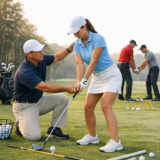
The performance of golf equipment arises from a complex interaction between human movement mechanics and the physical behavior of the club and ball in flight. Recent advances in measurement technologies and computational modeling have enabled a more rigorous interrogation of how clubhead geometry, shaft dynamics, and grip ergonomics influence ball launch conditions, and how aerodynamic forces-drag, lift and moment-modulate carry, spin decay and stability. Framing equipment design within the broader discipline of biomechanics, which applies mechanical principles to living systems and their motion [1-4], allows for a systematic, quantitative approach to linking player kinematics and kinetics with equipment response.
this study adopts an integrative framework that couples biomechanical analysis of the golfer-equipment interaction with aerodynamic characterization of the club and ball. From the biomechanical viewpoint, tools such as three-dimensional motion capture, inertial measurement units, force platforms and inverse dynamics permit quantification of swing kinematics, joint loads and the transfer of energy through the shaft to the clubhead. From the aerodynamic perspective, wind-tunnel testing, trajectory tracking and computational fluid dynamics (CFD) provide detailed descriptions of flow separation, wake behavior and the generation of aerodynamic moments that affect ball flight. Structural and materials analyses, including finite element modeling and bench testing, further illuminate how shaft stiffness, clubhead mass distribution and face properties determine collision dynamics and energy transfer.The goals are threefold: (1) to quantify the contributions of geometric and material design variables to launch conditions and ball-flight outcomes, (2) to map how individual biomechanical profiles interact with equipment properties to produce performance variability, and (3) to derive evidence-based design and fitting recommendations that enhance consistency, distance and playability across skill levels. By synthesizing experimental data and predictive models, the analysis seeks to identify design trade-offs-such as between forgiveness and workability, or between spin control and aerodynamic efficiency-and to translate those trade-offs into practical guidance for designers, fitters and practitioners.Positioned at the intersection of biomechanics and aerodynamics, this work contributes to a more rigorous, science-driven paradigm for golf-equipment development. It aims both to advance essential understanding of the coupled golfer-equipment-air system and to inform iterative design processes that prioritize measurable performance outcomes and user-specific optimization.
Integrated Methodological Framework for Biomechanical and Aerodynamic Assessment of Golf Equipment
The proposed framework integrates experimental biomechanics and aerodynamic analysis into a cohesive pipeline that supports hypothesis-driven evaluation of golf equipment. Emphasis is placed on **quantitative reproducibility**, where high-fidelity kinematic and kinetic measurements are paired with fluid-dynamic characterization of the club-ball system. This strategy leverages principles from modern biomechanics and computational biomechanics (see foundational definitions and methods in the literature) to ensure that conclusions are grounded in mechanistic models rather than anecdote (cf. britannica; Biology Dictionary)[1][2].
Core components of the workflow include synchronized multi-modal acquisition, rigorous preprocessing, model-based parameter extraction, and cross-domain validation.Typical instrumentation and computational resources comprise:
- Optical motion capture and markerless tracking for segmental kinematics
- Force measurement (force plates, instrumented club shafts) for kinetic profiles
- Inertial measurement units (IMUs) for on-course dynamics
- Wind-tunnel tests and CFD simulations for aerodynamic coefficients
Each element is treated as a modular sub-system with defined interfaces to facilitate data fusion and error propagation analysis.
Data fusion is performed through a hierarchical modelling approach: multibody dynamics for whole-body-club interactions, finite-element or rigid-body models for shaft flex and clubhead deformation, and Reynolds-averaged or scale-resolving CFD for transient aerodynamic forces. Validation metrics emphasize repeatability, convergent validity, and sensitivity analyses to quantify how changes in clubhead geometry, shaft stiffness, or grip ergonomics map onto performance outcomes (ball speed, launch angle, spin rate). The table below summarizes key modalities and example primary outputs commonly used in comparative studies:
| Modality | Primary Metric | Typical Sampling |
|---|---|---|
| Motion capture | Club & limb kinematics | 200-1000 Hz |
| Force/torque sensing | Ground reaction & grip forces | 1000 Hz |
| CFD / wind tunnel | Drag/lift coefficients | Steady / transient |
the framework supports iterative design optimization and standards-oriented assessment by translating biomechanical and aerodynamic findings into actionable design constraints (e.g., allowable face curvature, preferred tapering of shaft stiffness profiles, or grip geometry promoting consistent wrist mechanics). Embracing open-data practices and standardized reporting-consistent with advances in biomechanical sciences-ensures that experimental outcomes are comparable across laboratories and that evidence-based equipment choices can be robustly justified (see reviews on biomechanics methodology)[3][4].

Clubhead Geometry and Surface Topology: effects on Lift, Drag, and Ball Launch Conditions with Practical Design Recommendations
Clubhead form and surface topology exert frist-order control on the aerodynamic forces generated during the brief flight window instantly following impact. Subtle variations in face curvature, leading- and trailing-edge geometry, and local surface roughness alter pressure distributions and boundary-layer behavior, shifting the effective centre of pressure and modulating both lift- and drag-coefficients. Grooves and micro-textures on the face primarily influence near-field frictional interaction and initial spin generation, whereas macro-scale planform and camber govern separated flow patterns and wake size. (Note: the supplied web search results pertained to historical/cultural material unrelated to golf equipment design and were thus not incorporated into the aerodynamic analysis.)
Quantitative design sensitivity can be usefully summarized by mapping discrete geometric parameters to expected aerodynamic and launch effects; the table below provides concise, empirically informed guidance for early-stage design iteration.
| Parameter | Primary Effect | Typical Directional Change |
|---|---|---|
| Face loft (°) | Launch angle / spin | ↑ loft → ↑ launch & ↑ backspin |
| Face curvature | Gear effect / spin axis | More bulge/roll → ↑ forgiveness, alters spin axis |
| Trailing edge taper | Drag coefficient (Cd) | Sharper taper → ↓ Cd |
| Surface roughness | Boundary layer state | Moderate roughness → delayed separation, ↑ lift |
These qualitative shifts should be calibrated with CFD and launch-monitor data for specific head volumes and swing-speed cohorts.
Practical recommendations for designers seeking measurable improvements in launch conditions and playability include:
- Optimize loft and face curvature to the target swing-speed band-higher loft and slightly increased face camber benefit lower swing speeds by raising launch and spin into an effective aerodynamic regime.
- Place mass low and back to raise MOI while managing center-of-pressure height-this enhances forgiveness without excessively increasing adverse pitching moments that complicate launch conditions.
- Employ controlled surface roughness at trailing regions to stabilize the boundary layer and reduce wake-induced drag; avoid high-frequency roughness near the sweet spot that could unpredictably alter frictional spin generation.
- Use tapered trailing edges and mild winging to minimize pressure drag while preserving an acceptable sound and feel profile for the player.
Prosperous implementation requires integration with biomechanical fitting protocols: match head geometry to measured attack angles, clubhead speed, and temporal impact characteristics derived from high-speed video and launch-monitor telemetry. Recommended evaluation metrics include peak launch angle, spin rate, lateral spin axis, smash factor, and measured carry distance under standardized launch conditions; use iterative CFD-prototype testing to close loop on design choices. Recognize the certain trade-offs-maximizing carry or reducing drag may reduce workability or affect feel-so adopt a multi-objective optimization that weights both performance metrics and player-specific kinematic constraints.
Shaft Vibrational Dynamics and Torsional Stiffness: Quantifying Energy Transfer and Player-Specific Fit Criteria
High-resolution modal characterization reveals that the shaft functions as a distributed compliant element whose primary vibrational contribution during the impact window is a low-order bending mode coupled with a torsional mode. Experimental modal analysis using tri-axial accelerometers and high-sampling-rate strain gauges, combined with FFT and wavelet decomposition, quantifies modal frequencies and damping ratios that correlate with perceived feel and stability.dominant bending frequency (typically 40-80 Hz for drivers) and first torsional frequency are critical metrics: shifts in these frequencies change the phase relationship between clubhead rotation and shaft flex, thus altering face-angle at impact and the efficiency of kinetic energy transfer.
From a biomechanical-fitting perspective, torsional stiffness must be treated as a player-specific parameter rather than a global spec. Players with a rapid hand-speed release and strong forearm torque generally benefit from higher torsional stiffness to minimize unwanted face rotation, whereas players with slower release rates can exploit moderate torsional compliance to store and return energy. Key fit metrics to collect in the lab and on-course include:
- Swing tempo and release timing (watch for early vs.late release)
- Hand rotational velocity through impact
- Face-angle variability across repeated strikes
- Ball speed and spin correlation with measured shaft phase lag
Quantifying energy transfer requires coupling time-domain transient analysis with steady-state modal parameters. The shaft acts as an intermediate energy reservoir: bending stores linear elastic energy while torsion mediates face rotation energy. Minimizing phase lag between the peak shaft return and the ball-contact instant maximizes ball speed and reduces side spin. The following compact table summarizes representative experimental targets and their practical impact for driver-class shafts:
| Metric | Typical Range | Practical Effect |
|---|---|---|
| First bending freq. | 40-80 Hz | Controls overall feel and launch timing |
| First torsional freq. | 120-220 Hz | Limits face rotation, affects dispersion |
| Torsional stiffness | 3-12 N·m/deg | Player-specific face stability |
For an evidence-based fitting protocol, integrate the following iterative workflow: 1) baseline swing and hand-rotation profiling; 2) laboratory modal testing of candidate shafts; 3) on-course validation of ball-flight and dispersion; and 4) targeted micro-adjustment of torsional properties (material layup, wall thickness distribution, coupling). Recommended acceptance thresholds are <3° face-angle SD over a ten-shot sample for matched players and ball-speed loss <1% when substituting shafts in a fitted category. Note: routine web searches for the term ”shaft” commonly return unrelated entertainment results (film titles); such results were excluded from this technical synthesis.
Grip ergonomics and Interface Mechanics: Optimizing Contact forces, Torque Control, and Injury Risk Mitigation
Contact mechanics at the golfer-club interface determine initial impulse transmission and downstream kinematic chaining. Optimizing local pressure distribution across the palmar surface reduces micro‑slip and preserves intended clubface orientation at impact; this is accomplished by adjusting handle diameter, taper, and surface compliance to match the individual’s hand anthropometry and grip strength. Quantitative descriptors-peak contact pressure, contact patch centroid, and shear stress magnitude-are recommended as primary outcome measures in both laboratory and on‑course assessments.Instrumented grips with distributed pressure sensors provide objective metrics to correlate grip morphology with ball flight variability and energy transfer efficiency.
Torque management is achieved through coordinated modulation of grip force and distal segment alignment. Effective moment control requires a balance between longitudinal grip force (to prevent clubhead lag) and differential pressures between the hypothenar and thenar eminences (to regulate face rotation). Practical control strategies include:
- Dynamic pressure modulation: increasing grip preload through transition and reducing tension at release to permit optimal wrist uncocking;
- Asymmetric load placement: purposeful bias toward the lead hand to stabilize axial torque while allowing trail‑hand fine adjustments;
- Stiffness tuning: combining grip padding and shaft flex to shape the effective rotational inertia experienced at the hand.
From an injury‑prevention perspective, prolonged high compressive and torsional loads concentrated at small contact areas predispose the wrist, flexor tendons, and ulnar nerve to overuse syndromes. Ergonomic interventions should thus target three objectives: disperse peak pressures, limit sustained isometric gripping above threshold levels, and preserve neutral joint postures during repetitive practice.Evidence supports graded load‑progression protocols, periodic grip force monitoring during high‑volume practice, and equipment adaptations (e.g., larger diameters, compliant under‑wraps) for athletes with prior tendinopathy or neuropathic symptoms. Coaches and clinicians should integrate subjective pain scales with objective grip metrics when prescribing modifications.
| Parameter | Biomechanical Target | Practical Adjustment |
|---|---|---|
| Handle diameter | Reduce peak contact pressure | ±2-4 mm increase for small hands |
| Surface compliance | Dampen shear spikes | high‑durometer under‑wrap in wedges |
| Grip taper | Control axial torque | Moderate taper to favor lead‑hand bias |
Integration of sensorized grips and real‑time biofeedback is recommended to translate these parameters into individualized protocols that concurrently optimize performance and minimize injury risk.
Swing Kinematics and Human in the Loop Modeling: Correlating Player Motion Patterns with Equipment Performance Outcomes
Contemporary human‑in‑the‑loop models integrate high‑resolution kinematic data with equipment aerodynamic and inertial parameters to quantify causative relationships between player motion and ball flight.Key measured variables typically include pelvis and thorax rotation rates, shoulder-arm separation, wrist hinge timing, and clubhead tangential velocity at impact. Using synchronized inertial measurement units (IMUs), optical motion capture, and club‑embedded sensors, researchers can compute time‑series descriptors (e.g., peak angular velocity, rate of closure, and temporal offsets) that serve as inputs to multivariate regression and machine‑learning models. The emphasis is on **temporal coordination** (when segments accelerate/decelerate relative to one another) as much as on magnitude, as phase relationships strongly mediate equipment response under dynamic loading.
Empirical correlations demonstrate that distinct motion patterns map to reproducible equipment performance outcomes: such as, early release patterns often amplify backspin with high‑lofted heads but reduce carry for low‑spin drivers. Clustering player kinematics yields interpretable phenotypes that guide equipment prescription and tuning. Representative clusters and their typical equipment responses include:
- Late torque transfer – greater clubhead speed with lower spin sensitivity;
- Early wrist unhinge – increased spin and higher launch, beneficial with neutral‑to‑soft shafts;
- high shoulder-hip separation – increased ball speed and tighter dispersion when matched to stiffer shaft profiles.
These associations allow fitting algorithms to recommend shaft stiffness, loft adjustments, and face geometry tailored to a player’s dynamic signature rather than static measures alone.
The modeling pipeline couples forward and inverse dynamics with aerodynamic flight models to predict on‑course outcomes from measured kinematics.A compact summary of actionable metric→equipment mappings is shown below (WordPress table styling applied for integration into fitting reports):
| Kinematic Metric | Equipment Tweak | Expected Outcome |
|---|---|---|
| Peak wrist hinge timing | Adjust shaft flex | Optimized launch & spin |
| Pelvis rotational velocity | Change clubhead mass | Improved transfer to ball speed |
| Shoulder-hip separation | Alter loft/lie | Enhanced dispersion control |
Real‑time feedback loops-where wearer receives haptic or visual cues-enable iterative adaptation, closing the loop between measured motion, equipment response, and motor learning.
Methodological rigor requires attention to inter‑subject variability, sensor drift, and ecological validity: lab‑based swings may not capture fatigue effects or course‑condition interactions. Statistical models must therefore include hierarchical structures to separate within‑player adaptations from between‑player differences and quantify uncertainty in predicted equipment gains.Importantly, interdisciplinary teams should note semantic ambiguities in the term “swing” (searches frequently enough return unrelated commercial items such as patio or playground swings), which underscores the need for precise metadata and ontologies when aggregating datasets. Future work should prioritize longitudinal datasets, transfer‑learning approaches for low‑sample players, and validated field trials that align kinematic phenotypes with measurable scoring and shot‑quality improvements.
Aerodynamic Flow Visualization and Computational Fluid Dynamics validation: Best Practices for Experimental and Numerical Testing
Integrating qualitative flow visualization with quantitative Computational Fluid Dynamics (CFD) establishes a robust framework for interrogating golf equipment aerodynamics. Visual techniques-such as **smoke/water tunnels**, **tufting**, **oil-flow**, and **particle image velocimetry (PIV)**-reveal coherent structures, separation lines, and transitional zones that guide modeling choices. When these observations are mapped to club geometry and swing kinematics, they enable targeted CFD studies that respect the dominant physical mechanisms (e.g., laminar-turbulent transition on rotating surfaces, separation from grooves or edges). Combining modalities reduces ambiguity: visualization identifies phenomena, while CFD quantifies loads, pressure fields, and wake dynamics critical to performance and design iteration.
Best practices for experimental campaigns emphasize repeatability, traceability, and uncertainty quantification. key procedural recommendations include:
- Geometric fidelity: manufacture test articles to tolerance and document surface roughness and material properties.
- Scaling and re matching: use Reynolds-number and rotational similitude where possible, or apply validated correction factors when full similarity is infeasible.
- boundary control: minimize blockage effects, specify inflow turbulence intensity, and characterize tunnel flow uniformity prior to tests.
- Data provenance: log sensor calibration, acquisition parameters, and environmental conditions to support CFD boundary-condition specification.
These steps ensure that visualization data are not onyl descriptive but also directly usable for numerical model specification and validation.
On the numerical side, validation should be systematic and documented: conduct mesh- and timestep-independence studies, evaluate multiple turbulence/transition models, and perform sensitivity analyses of inlet/outlet boundary conditions. The term “computational” in CFD denotes the rigorous act of computing flow fields (see standard definitions of computation for context here), and this computational rigor requires objective convergence and error metrics. Match experimental measurement planes and sampling frequencies in the simulation postprocessing to enable direct comparisons (e.g., PIV velocity fields vs. CFD planar velocities). Use adjoint or local error-estimation techniques where possible to identify regions driving global discrepancies.
Quantitative validation is best expressed through a concise set of metrics and harmonized reporting. Below is a compact reference table of typical targets used in combined experimental-numerical studies for golf equipment aerodynamics:
| Parameter | Experimental Target | CFD Goal |
|---|---|---|
| Reynolds number | Match within ±10% | Replicate within ±10% |
| Force coefficient error (Cd, Cl) | <5% (statistical) | <5% vs. experiment |
| Spatial resolution | PIV grid ≤0.5 chord | Mesh ≤0.25 local boundary-layer thickness |
In addition to these quantitative goals, report correlation coefficients, root-mean-square errors, and vortex-core positional offsets when comparing fields. Adopting these best practices-transparent uncertainty budgets, matched sampling, and iterative cross-validation-creates a defensible bridge between visualization evidence and computational prediction, ultimately supporting robust aerodynamic decisions in golf-equipment design.
Evidence Based Design Guidelines and Testing Protocols: Translating Biomechanical and Aerodynamic Findings into Manufacturable Specifications
Translating kinematic and aerodynamic insights into practical design constraints requires a formal mapping from observed human variability and flow phenomena to dimensional and material specifications. Biomechanical analyses (see foundational discussions on movement mechanics and computational approaches at Verywell Fit and Biology Dictionary) establish distributions of wrist angles, swing speeds, and impact points; aerodynamic studies quantify lift, drag, and wake structures under representative spin and yaw conditions. From these data the design engineer should derive target statistical envelopes (e.g., mean ± 2σ for swing speed by player segment) that drive nominal geometry, center‑of‑gravity (CG) locations, and permissible face curvature. Emphasis should be placed on specifying both the central tendency and **inter‑subject variability** so that manufacturable tolerances preserve performance across the intended player population.
Measurable, manufacturable specifications must be explicit, testable, and traceable to the underlying biomechanics and aerodynamics. Key parameters include:
- Coefficient of restitution (COR) - target and allowable deviation;
- Moment of Inertia (MOI) – defined about precise axes with tolerances;
- CG Position – x/y/z offsets relative to a datum plane;
- shaft stiffness and damping - frequency bands and modal limits;
- Surface roughness and dimpling (for aerodynamic surfaces) – Ra and spacing tolerances.
Each parameter should be accompanied by a measurement protocol, an acceptance criterion, and a documented uncertainty budget so that engineering decisions are defensible and reproducible.
testing protocols must combine controlled laboratory methods with in‑field validation to capture both mechanistic and ecological validity. Recommended methods include:
- 3D motion capture and force plate analysis for human-club interaction and impact loading;
- Robotic swing rigs to generate repeatable impact conditions for COR/MOI assessments;
- Wind tunnel testing (or scaled/sectional testing) and validated CFD simulations to map aerodynamic forces across yaw and spin matrices;
- Accelerometer/strain sensor instrumentation embedded in prototypes to monitor dynamic response under real swings.
Protocol design should follow statistical best practices (pre‑specified sample sizes, power calculations, randomized and blinded tests where possible) and incorporate error propagation so that performance claims reflect measurement uncertainty rather than single point estimates.
To integrate test outcomes into production, implement a closed‑loop specification control system linking R&D outputs to manufacturing acceptance rules. Production QA should include incoming material checks, first‑article testing against the lab protocols, and periodic sampling with documented calibration records for measurement fixtures. the table below summarizes a concise example of laboratory acceptance thresholds useful for product release decisions. Maintain a formal change control process so that any revision to geometry or material (even within tolerance) triggers re‑evaluation against the biomechanical/aerodynamic envelope. ensure all test data and decision rationales are archived to support traceability, regulatory review, and iterative optimization.
| Parameter | Test Method | pass Criterion |
|---|---|---|
| COR | Robotic impact / high‑speed camera | 0.815 ± 0.005 |
| MOI (heel-toe) | Pendulum/rotational rig | 4200 ± 150 g·cm² |
| CG offset | Computed from CAD & physical balance | < 2 mm from nominal |
| Aero force @ 3000 rpm | Wind tunnel / CFD validated | Drag ≤ target + 8% |
Q&A
Below is a focused, academically styled question-and-answer compendium intended to accompany an article titled “Biomechanical and Aerodynamic Analysis of Golf Equipment.” Each answer is concise, evidence-oriented, and oriented toward researchers, clinicians, and design engineers working at the interface of human movement science and sports engineering.
1) what do we mean by “biomechanical and aerodynamic analysis” in the context of golf equipment?
– Biomechanical analysis examines how a player’s musculoskeletal system interacts with equipment during the golf stroke, using kinematics (motion), kinetics (forces/torques), and neuromuscular measures (e.g.,EMG). Aerodynamic analysis quantifies how equipment (clubhead and ball) interacts with airflow to generate lift, drag, and moment forces that influence ball trajectory. The combined approach evaluates how equipment geometry and materials alter both the human-tool interface and ball flight outcomes.
2) Why is a combined biomechanical-aerodynamic perspective critically important for equipment design?
– Equipment performance emerges from coupled human-equipment-air interactions: club geometry and shaft dynamics determine how energy is transferred from the player,while aerodynamic properties govern post-impact ball behavior. isolated study of only one domain may misattribute causality (e.g.,a club that improves launch conditions in a wind tunnel may be unusable for real players because of poor ergonomics). Integrated analysis enables evidence-based trade-offs between playability, performance, and injury risk.
3) What are the core biomechanical concepts and measurements used in this research?
– core concepts include joint kinematics (angles, angular velocities), segmental kinetics (joint moments and power), center-of-mass and club COM trajectories, and muscle activation timing/intensity (surface EMG). Standard measurements employ 3D motion capture, force plates (ground reaction forces), instrumented clubs (load cells/accelerometers/gyros), and electromyography. Definitions and the role of biomechanics as a discipline are summarized in foundational overviews (see e.g., [1], [2], [4]).4) What aerodynamic quantities are most relevant for golf equipment?
– Key aerodynamic quantities include the drag coefficient (Cd), lift coefficient (Cl, largely from ball dimples and spin), aerodynamic moments (pitch, yaw, roll), Reynolds number regimes typical of club and ball speeds, spin rate influence on lift (Magnus effect), and transient wake behavior during club-air and ball-air interactions. These are typically measured or estimated via wind-tunnel testing, free-flight tracking, and computational fluid dynamics (CFD).
5) How are experiments typically structured to separate biomechanical and aerodynamic effects?
– Typical approaches: (a) Controlled lab studies where golfers swing instrumented clubs into a high-speed ball launcher or a fixed, compliant impact surrogate to isolate kinematic/kinetic effects; (b) wind-tunnel or free-flight tests to characterize ball/club aerodynamic coefficients autonomous of human variability; (c) integrated field trials using launch monitors and high-speed videography to capture real-world coupling. Repeated measures, randomized equipment order, and adequate sample sizes mitigate intersubject variability.
6) What modeling tools are used and what are their strengths/limitations?
– common tools: multibody dynamics and inverse dynamics for human-club motion; finite element analysis (FEA) for structural response and contact deformation; CFD for aerodynamic flows and transient wake; coupled fluid-structure interaction (FSI) when deformations influence aerodynamics; musculoskeletal simulations for neuromuscular strategies. Strengths: predictive capability, parameter sensitivity analysis. Limitations: computational cost (CFD/FSI), parameter uncertainty (material properties, boundary conditions), and the need for validation with experimental data.
7) What are the primary clubhead geometry metrics that influence performance?
– Center of gravity (CG) location and depth, moment of inertia (MOI) about vertical and horizontal axes, face curvature and bulge/roll, loft and face angle, effective face area, COR (coefficient of restitution), and aerodynamic profile (leading-edge shape, sole and crown contours). These influence launch angle, spin, forgiveness, and aerodynamic drag/lift during pre- and post-impact phases.
8) How do shaft properties affect playability and performance?
– Key shaft metrics: bending stiffness (flex), torsional stiffness (twist), dynamic bending modes (natural frequencies and mode shapes), tip mass and balance point, and damping characteristics. These parameters alter clubhead speed, face orientation at impact (loft and lie at contact), timing of energy transfer, vibro-tactile feedback to the hands, and perceived control. Shaft-clubhead dynamic coupling can amplify or attenuate player-induced variability.
9) What aspects of grip ergonomics are quantitatively important?
– Grip diameter relative to hand size, grip texture and coefficient of friction, pressure distribution across the palmar surface, grip length, and taper. measured outcomes include grip force magnitude and variability, micro-slip occurrences, hand-arm muscle activation patterns, and postural comfort. Optimal grip design balances secure control (reducing unwanted clubface rotation) with minimization of grip force that can damp desirable wrist motion or induce fatigue.
10) How is energy transfer from player to ball quantified?
– Energy transfer is characterized by pre-impact clubhead speed, effective mass at impact, clubhead directional velocity (including upward/downward/side components), coefficient of restitution (COR) at the face-ball interface, and the resulting ball velocity vector and spin. Instrumented clubs and high-speed cameras or radar/lidar launch monitors quantify club and ball kinematics, while inverse dynamics can estimate applied joint powers.
11) What experimental and statistical practices ensure rigor and reproducibility?
– Practices include: pre-registration of hypotheses, standardized protocols (warm-up, shot selection, rest intervals), repeated measures and randomization, calibration of measurement devices, reporting of measurement error and repeatability metrics (e.g., ICC, SEM), appropriate sample-size estimation, use of mixed-effects models to account for within-subject repeated measures, and reporting of effect sizes and confidence intervals rather than sole reliance on p-values.
12) How should designers weigh trade-offs between distance, accuracy, and injury risk?
– Designers should adopt multi-criteria optimization that quantifies distance gains, shot dispersion (accuracy/consistency metrics), and biomechanical risk factors (elevated joint loads, extreme ranges of motion, or repetitive loading patterns linked to injury). Risk-benefit matrices and Pareto front analyses can definitely help identify designs that enhance performance without disproportionate increases in physiological load.
13) What are common confounders and how can they be controlled?
- Confounders include player skill and technique heterogeneity, fatigue, environmental conditions (wind, temperature), ball construction variability, and testing surface differences.Control strategies: within-subject designs, counterbalanced equipment order, standardized balls and clubs, controlled indoor environments for primary measures, and covariate adjustment in statistical models.
14) What are the practical implications for club manufacturers and coaches?
– for manufacturers: integrate human-centered design, optimize CG and MOI within ergonomic constraints, tailor shaft flex and torque ranges to defined player populations, and validate aerodynamic gains under realistic swing conditions. For coaches: select equipment that complements a player’s kinematic pattern and physical capacity, prioritize consistency and injury prevention, and interpret launch-monitor metrics in the context of biomechanical data.
15) How does aerodynamic design of the ball interact with club design and player mechanics?
– Ball aerodynamics (dimple pattern, seam geometry, stiffness) determine lift/drag as a function of spin and speed; thus, an equipment-package perspective is necessary-optimizing a club to produce high launch and spin without considering ball response may not yield intended flight. Additionally, player mechanics (e.g., swing angle of attack) determine launch conditions that interact with ball aerodynamics, so tests should use coupled player-club-ball configurations or simulate realistic launch vectors.
16) What measurement technologies are recommended for a robust study?
– Recommended core technologies: high-resolution 3D motion capture (≥200 Hz for swing kinematics), instrumented force plates (≥1000 Hz for impact transients and ground reaction), instrumented clubs (tri-axial accelerometers and gyros, load cells at hosel/shaft), high-speed videography and high-sample-rate launch monitors (radar/photometry), surface EMG for muscle timing, wind tunnel or free-flight rigs for aerodynamic coefficients, and access to CFD/FEA tools for complementary modeling.
17) What are the principal limitations of current research and avenues for future work?
– Limitations: limited ecological validity in many lab tests (e.g., constrained swings), underrepresentation of diverse player populations, challenges in high-fidelity coupling of structural deformation and aerodynamics (FSI), and incomplete understanding of long-term adaptation to equipment changes. Future directions: longitudinal intervention studies, personalized equipment optimization via machine learning on large datasets, improved in-field sensing (wearables, embedded sensors), and development of validated FSI workflows for transient club/bounce/ball interactions.
18) Are there ethical, regulatory, or safety considerations researchers should observe?
– Ethics: informed consent for human subject testing, attention to cumulative loading and injury risk, and transparent reporting of conflicts of interest (e.g., manufacturer funding). Regulatory: conformity with governing body rules (e.g., USGA/R&A limits on COR, club performance characteristics) when reporting performance claims. Safety: monitor participants for excessive joint loads and implement abort criteria for unsafe motions.
19) How should results be communicated to non-specialist stakeholders (coaches, amateur players)?
– Translate technical metrics into pragmatic recommendations: e.g.,expected change in carry distance per unit of clubhead speed or spin,hands-on fitting guidelines (shaft flex for swing speed ranges),and clear caveats about trade-offs (e.g., more aggressive loft/face designs may increase distance but reduce forgiveness). Use visualizations (trajectory plots,confidence bands) and decision rules rather than only technical coefficients.
20) Key references and foundational reading
- For an overview of biomechanics as a discipline and its historical context: see biomechanics syntheses and reviews (e.g., [1], [2], [4]). For applied sport-specific methods,consult recent peer-reviewed studies combining motion analysis,instrumented clubs,and aerodynamic testing in golf. (Cite these general biomechanics resources as starting points; domain-specific experimental protocols are available in the sport-science literature.)
if you would like, I can:
– Convert this Q&A into a formal FAQ for publication.
– Expand any answer into a full methodological appendix (experimental protocols, data-analysis scripts).
– Provide example statistical analysis code templates (mixed-effects modelling) for repeated-measures equipment comparisons.
the biomechanical and aerodynamic analysis of golf equipment provides a rigorous framework for quantifying how clubhead geometry, shaft dynamics, and grip ergonomics interact with human motor patterns and airflow to determine launch conditions, ball flight, and injury risk. integrating motion-capture biomechanics, finite-element and multibody dynamics, and computational fluid dynamics (CFD) enables a mechanistic understanding of how design variables-mass distribution, moment of inertia, flexural stiffness, surface roughness, and spin generation-translate into measurable performance outcomes under realistic swing and atmospheric conditions.
These findings carry direct implications for designers,biomechanists,clinicians,and coaches: evidence-based optimization of equipment can enhance performance while reducing injury potential,but such optimization must respect interindividual variability in anthropometry,strength,and technique. The current literature is constrained by heterogeneity in testing protocols, limited in vivo validation, and, in some cases, small sample sizes; therefore, conclusions about generalized performance benefits should be framed with appropriate caution.Future progress will depend on interdisciplinary collaboration, standardized testing methodologies, and the combined use of laboratory experimentation, on-course validation, and data-driven modeling (including machine learning to handle high-dimensional datasets). Priorities include longitudinal studies linking equipment choices to performance and musculoskeletal health, expanded CFD studies under turbulent atmospheric conditions, and the development of normative databases to guide individualized equipment prescription. By adhering to rigorous, reproducible methodologies and prioritizing the human-equipment interface, the field can translate biomechanical and aerodynamic insights into safer, more effective, and more equitably accessible golf technologies.

Biomechanical and Aerodynamic Analysis of Golf equipment
Why biomechanics and aerodynamics matter for golf performance
Golf performance is not just about technique – it’s an interaction between the golfer’s body and the equipment. Biomechanics applies mechanical principles to human movement (see research on biomechanics for background), and aerodynamics governs how the club and ball move through air. When clubhead geometry, shaft dynamics, and grip ergonomics are optimized together, golfers can improve swing efficiency, increase ball launch quality, and reduce shot dispersion.
Key concepts: biomechanics + aerodynamics explained
- Biomechanics: analyzes body kinematics (joint angles, segment velocities) and kinetics (forces, torques). Motion capture, force plates, and inertial sensors measure how a golfer produces clubhead speed and clubface orientation at impact.
- Aerodynamics: covers drag, lift, and moment forces that act on the clubhead and ball. For the ball, dimple patterns and spin determine lift and drag; for the clubhead, head shape and surface details influence airflow and clubhead stability through the swing.
- Equipment interaction: shaft stiffness, torque, and kick-point affect timing and clubface orientation at impact. Grip size and pressure alter wrist action and club control, which changes shot dispersion and launch consistency.
How clubhead geometry affects launch and dispersion
Clubhead shape, center of gravity (CG) location, and moment of inertia (MOI) are primary determinants of how the clubhead behaves through impact and how forgiving it is on off-center strikes.
Crucial clubhead aerodynamic and biomechanical variables
- Clubhead shape & crown design - streamlined crowns and rear-edge shaping can reduce drag during downswing and improve clubhead speed slightly.
- CG location - lower/back CG increases launch angle and can reduce spin; forward CG lowers spin and tightens dispersion for better players.
- MOI (forgiveness) – higher MOI reduces face twist on off-center hits, shrinking shot dispersion but sometimes reducing peak ball speed.
- Face design (grooves, face curvature) – affects ball speed and spin rate, especially on partial-face hits.
Shaft dynamics: timing, energy transfer, and feel
The shaft is a dynamic link transferring energy from the golfer to the clubhead.Key shaft properties that influence performance:
- Flex (stiffness) - influences launch angle and spin; softer flex can increase launch and spin for slower swing speeds; too soft adds dispersion for faster swingers.
- Torque – shaft twisting under load affects face rotation and ultimately shot shape; lower torque helps maintain face stability.
- Kick point (bend profile) – affects dynamic loft at impact and thus launch angle.
- Mass and balance – total weight and swing weight change timing, tempo, and perceived feel.
Grip ergonomics: pressure, size, and tactile feedback
Grip affects how a player manipulates the club and controls face angle:
- Proper grip size reduces excessive wrist action and inconsistent face rotation. Too small a grip can increase hand action and side spin; too large a grip can suppress release and flatten launch.
- Grip pressure should be light-to-moderate; excessive grip force inhibits natural wrist hinge and reduces clubhead speed.
- Texture and tackiness influence confidence and slip prevention in wet conditions; consider microtexture for tactile feedback.
Testing methods: how to measure biomechanical and aerodynamic performance
Combining human motion analysis with aerodynamic testing provides the most actionable insights. Recommended methods:
- Motion capture & force plates – capture joint angles, clubhead speed, and ground reaction forces to calculate swing efficiency.
- High-speed video – analyze impact sequence and face orientation through contact.
- Launch monitors (TrackMan, FlightScope) – measure ball speed, launch angle, spin rate, carry distance, and shot dispersion.
- Computational Fluid Dynamics (CFD) & wind tunnel – evaluate airflow around clubheads and dimpled balls to compute drag and lift coefficients.
- Shaft bending rigs & torsion testers – quantify flex profiles and torque characteristics.
Design of a repeatable test protocol
To isolate effects and make comparisons meaningful,follow a controlled testing protocol:
- Use the same golf ball model and tee height for every trial.
- Warm-up and standardize swing tempo; for human tests use a fitted robot swing if available for absolute repeatability.
- Test one variable at a time (e.g., change shaft only while keeping grip and head constant).
- Collect at least 30 swings per configuration and average the middle 20 to reduce outliers.
- Record environmental conditions (temperature, humidity, wind) – aerodynamics is sensitive to air density.
Speedy reference: aerodynamic & biomechanical impacts of common changes
| Change | Typical Ball Effect | Player Impact |
|---|---|---|
| Lower CG | Higher launch, lower spin | More carry, can help slower swing speeds |
| Higher MOI | Less dispersion on misses | Greater forgiveness, slight speed trade-off |
| Softer shaft | Higher launch, more spin | Better for slower swingers, can hurt accuracy for fast swingers |
| Larger grip | Less side spin | May reduce distance if overdone |
Interpreting key numbers: what to optimize for yoru game
When evaluating fitting data and aerodynamic test results, focus on:
- Ball speed – primary driver of distance; maximize by optimizing clubface energy transfer and minimizing energy-sapping flex mismatch.
- Launch angle – aim for the optimal launch that pairs with spin rate to deliver maximum carry for your swing speed.
- spin rate – too high reduces distance (especially with the driver); too low can reduce carry and make the ball roll unpredictably.
- Shot dispersion – minimize with higher MOI and proper shaft/loft fit to improve scoring consistency.
Benefits and practical tips for golfers
- Get a professional club fitting using launch monitor data – small adjustments to loft,shaft flex,and grip size can create measurable performance gains.
- Practice with biofeedback tools (wearables or video) to link technique changes to measurable outcomes like clubhead speed and face angle.
- Consider incremental aerodynamic gains: a more streamlined driver crown, reduced surface roughness, or optimized dimple ball selection can add a few yards – often cost-effective gains during club selection.
- Balance feel and numbers: some players prefer the feel of a particular shaft even if telemetry shows a small performance drop - long-term confidence and consistency matter.
Case study: driver swap and measurable gains (hypothetical)
Setup: 3 golfers (low, mid, high swing speeds) test two drivers – Driver A (standard head, CG forward) and Driver B (aero-optimized head, rear-low CG) keeping same shaft and grip. Data averaged across 25 swings each.
| Metric | Driver A | Driver B |
|---|---|---|
| Average Ball Speed | 146 mph | 148 mph |
| average Launch Angle | 11.5° | 12.3° |
| Average Spin Rate | 2650 rpm | 2400 rpm |
| Mean Dispersion (yd) | 28 | 22 |
Interpretation: Driver B’s aerodynamic head and lower/rear CG produced slightly higher ball speed and launch with lower spin, resulting in increased carry and reduced dispersion – a practical example of combined biomechanical and aerodynamic improvements.
First-hand fitting checklist (what to bring to a session)
- Your current driver and a couple of preferred irons or hybrids
- Usual golf ball (if fitting allows) or the ball the fitter recommends for consistency
- Comfortable shoes and a short warm-up to present your typical swing
- A goal (carry distance,accuracy,shot shape) to guide the fitting decisions
Common myths and evidence-based clarifications
- Myth: “Aero designs always increase distance dramatically.” Reality: Aerodynamics can add yards but often in single digits; the biggest gains usually come from match-fitting shaft and loft to the player.
- Myth: “Heavier shafts always increase control.” Reality: Heft changes timing and tempo; some players gain control, others lose clubhead speed – test before committing.
- Myth: “Grip size is only about comfort.” Reality: Grip size directly influences release, spin, and dispersion – small changes can improve accuracy significantly.
Recommended next steps for players and coaches
- Schedule a data-driven fitting session that includes launch monitor and, if possible, motion capture or at least high-speed video.
- Run controlled tests: change one component at a time and log at least 20-30 swings per configuration.
- Use objective metrics (ball speed, launch, spin, dispersion) to guide equipment decisions, then validate with on-course testing.
- For high-performance research or product growth, pair CFD/wind-tunnel testing with player trials to connect aerodynamic gains to real-world outcomes.
Further reading
For foundational understanding of biomechanics, see scholarly resources such as Biomechanics: a essential tool with a long history (PMC) which explores how mechanical principles are applied to human movement.
If you’d like, I can provide a printable fitting checklist, a sample test protocol spreadsheet, or help draft questions to bring to your next club fitting.