The follow-through phase of the golf swing is a critical, yet often under-emphasized, component of skilled performance and injury prevention. Beyond its aesthetic contribution to a mechanically sound swing, follow-through encapsulates the final stage of energy transfer, the controlled dissipation of kinetic loads, and the coordinated deceleration of multiple segments. subtle variations in joint kinematics, intersegmental timing, ground-reaction force application, and neuromuscular braking strategies during this phase can materially affect ball-flight characteristics, consistency, and cumulative tissue loading on the lumbar spine, shoulder complex, and lead wrist.
Framed within the discipline of biomechanics-defined as the study of the structure, function, and motion of biological systems using principles of mechanics (see foundational summaries in biomechanics literature)-analysis of follow-through requires integration of kinematic, kinetic, and neuromuscular data (Wikipedia; Britannica; Verywell Fit).Kinematic assessment quantifies segment orientations, angular velocities, and temporal sequencing; kinetic analysis evaluates external and internal forces including ground reaction forces and joint moments; and neuromuscular investigation (e.g., electromyography) elucidates patterns of muscle activation, eccentric control, and timing that govern deceleration and dynamic stability.
This article synthesizes contemporary empirical findings and methodological approaches to characterize the biomechanical determinants of an effective and safe follow-through. Emphasizing evidence-based technique refinement, it reviews motion-capture, force-plate, and electromyographic studies, links biomechanical markers to performance outcomes and injury mechanisms, and identifies practical coaching and rehabilitation strategies. gaps in the literature and directions for future research are highlighted to foster more precise, athlete-specific interventions that optimize performance while minimizing injury risk.
Kinematic Sequencing and energy Transfer During the Follow Through
Efficient continuation of motion after ball impact is governed by a precise proximal-to-distal kinematic sequence: pelvis rotation precedes thorax rotation, which in turn precedes upper-arm acceleration, wrist release and finally clubhead peak velocity. In biomechanical terms, kinematic sequencing describes the temporal pattern of segment motions, distinct from dynamic considerations that address the forces and moments producing those motions. Understanding this separation allows practitioners to analyze timing and geometry (kinematics) independently from the muscular and ground reaction force strategies (dynamics) that generate and modulate the follow-through.
The follow-through is not merely the aftermath of impact but an integral phase that reflects how effectively kinetic energy was transmitted through the kinematic chain. Proper sequencing minimizes intersegmental energy loss and reduces unnecessary joint torques by ensuring that angular velocity peaks occur in order and with appropriate magnitude. Deviations in timing-such as early trunk deceleration or delayed wrist release-manifest as energy leakage,measurable reductions in clubhead speed,and increased variability in launch conditions.
- Pelvis - initiates controlled rotation and transfers momentum to the torso.
- Torso – continues rotational acceleration and modulates trunk deceleration after impact.
- Upper arms – convert torso rotation into distal limb acceleration.
- Wrists/Hands – time the release to preserve clubhead speed while controlling face orientation.
- Clubhead – achieves peak velocity slightly after impact during the early follow-through.
For practical assessment and coaching, several quantifiable kinematic targets are useful reference points: trunk (thoracic) rotation through impact is commonly observed in the range of ~40°-60° relative to address for many players; arm extension that maintains a nearly straight lead arm at impact supports lever length and consistency; and wrist pronation typically progresses gradually within the first ~200-300 ms post-impact to stabilize face orientation. Use these as normative guides rather than prescriptive thresholds, adapting to individual anthropometrics and intent.
| Energy sink | Predominant Role |
|---|---|
| Ball | Primary external energy transfer (brief) |
| Club shaft flex & drag | Short-term storage and dissipation |
| Muscles & connective tissue | Eccentric absorption and controlled deceleration |
| Ground | Final sink via braking and stabilization |
Translating kinematic insights into practice requires targeted drills and measurable feedback. Emphasize exercises that reinforce sequencing (e.g., medicine-ball rotational throws, band-resisted pelvis-to-torso drills) and tempo work that preserves the natural proximal-to-distal timing. For objective coaching cues, prioritize: stable lead-side support, progressive torso deceleration, wrist release timing, and clubface control through follow-through. These cues, combined with motion-capture or inertial-sensor feedback, allow precise adjustments that improve energy transfer efficiency and shot consistency.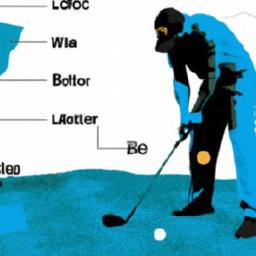
Joint Kinematics and Range of Motion Requirements for Optimal Follow Through
Effective follow-through mechanics depend on precise joint kinematics and sufficient range of motion across the kinetic chain. The shoulder, elbow, wrist and thoracolumbar segments operate through coordinated synovial articulations that permit large angular excursions and rapid intersegmental energy transfer. Kinematic sequencing that preserves angular momentum while permitting controlled deceleration is essential: excessive restriction in axial rotation or shoulder external rotation can force compensatory motions elsewhere,increasing variability in clubface orientation at impact and degrading accuracy.
Primary functional ROM targets for an optimized follow-through emphasize mobility without loss of stability. Key practical targets include:
- Thorax (axial rotation): ~45-90° total rotation from address to finish to allow adequate release and line of sight.
- Shoulder (glenohumeral external rotation): ~60-90° peak to support a wide arc and maintain clubface control.
- Elbow (extension): Near full extension (~0-5° flexion) at follow-through to maximize lever length and reduce mid‑swing variability; hinge joint mechanics require preservation of joint integrity.
- Wrist (pronation/dorsiflexion): Pronatory excursion ~70-90° combined with controlled extension to manage loft and face angle during release.
| Segment | Target ROM (approx.) | Coaching cue |
|---|---|---|
| Thorax | 45-90° rotation | “Finish towards target, chest open” |
| Shoulder | 60-90° ER | “Wide arc, relaxed lead arm” |
| Elbow | 0-5° flexion | “Let the arm extend through” |
| Wrist | 70-90° pronation/extension | “Controlled release of the club” |
From a training and screening perspective, these kinematic targets imply a dual emphasis on mobility and eccentric control. Mobility assessments should verify that the synovial joints of the upper limb and thorax achieve the ranges above without compensatory lumbar shear or shoulder impingement.Strength and conditioning prescriptions should prioritize eccentric rotator cuff and scapular stabilizer capacity to decelerate the club and preserve repeatable clubface orientation; likewise, progressive mobility drills focused on thoracic rotation and shoulder external rotation can reduce kinematic variability and enhance accuracy.
muscle Activation Patterns and Temporal Coordination for Consistent Ball Striking
Electromyographic analyses of the follow‑through reveal a robust proximal‑to‑distal activation pattern that is central to reproducible contact. The kinetic chain typically shows an initial burst from the lower limb and pelvic stabilizers, followed by sequential activation of the trunk rotators, scapular stabilizers and then the upper‑limb prime movers. Consistent ball striking correlates with a predictable amplitude and order of these activations: **hip extension and bracing → controlled trunk rotation → coordinated shoulder-elbow drive → distal wrist modulation**. Variability in any link of this chain-especially reduced trunk sequencing or delayed scapular stabilization-produces greater dispersion in clubface orientation at impact and therefore decreased accuracy.
Temporal coordination during the follow‑through is characterized by tightly constrained time‑to‑peak windows for each muscle group. Peak activation of trunk rotators generally precedes maximal shoulder/elbow output by a narrow 20-40 ms window, while distal musculature (wrist flexors/extensors and forearm pronators) reach peak activity around impact and promptly thereafter for deceleration control. Equally critically important is the **eccentric braking** provided by forearm and wrist muscles in the milliseconds after contact; this deceleration shapes clubhead path and face angle. High‑accuracy performers demonstrate both lower trial‑to‑trial latency variance and a faster restoration of baseline EMG activity, reflecting efficient neuromuscular timing and rapid feedforward/feedback integration.
The translational implications for coaching and training emphasize neuromuscular consistency rather than simply maximal strength. targeted interventions include:
- Sequencing drills-slow‑motion swings with segmental emphasis to ingrain proximal‑to‑distal timing;
- Eccentric control exercises-weighted reverse accelerations and resisted decelerations for wrist/forearm;
- Reactive tempo training-metronome‑guided impacts to reduce temporal jitter;
- Scapular stability routines-to preserve shoulder position through the follow‑through.
These approaches reduce temporal dispersion of muscle onset and improve reproducibility of the clubface trajectory at impact.
| Muscle Group | functional Role | Typical Timing |
|---|---|---|
| Hip extensors | initiate ground reaction and pelvis rotation | Early pre‑impact |
| Trunk rotators | Transmit torque to upper limb | Peak shortly before shoulder drive |
| Shoulder/elbow movers | Generate clubhead velocity | Around impact |
| Forearm/wrist | Fine path control and eccentric braking | Peak at/just after impact |
Coaching cues tied directly to primary muscle roles can aid transfer of EMG-informed concepts into practice. Examples include:
- Glutes: “Drive through the left heel” (power generation and pelvic stability).
- Obliques: “Rotate and hold the chest open” (trunk rotation & deceleration).
- Rotator cuff: “Control the trail shoulder” (shoulder control & deceleration).
- Forearm pronators: “Pronate through the ball” (clubface rotation and release).
Integrating this evidence into periodized practice-progressing from motor control drills to power‑endurance work while monitoring timing consistency-yields the most reliable improvements in strike accuracy.The primary take‑away is that **temporal precision of activation, not maximal activation alone, underpins consistent ball striking**.
Ground Reaction Forces and Footwork Strategies to Stabilize Follow Through
Ground reaction forces (GRFs) during the finishing phase of the swing are characterized by rapid redistribution of load between the feet and systematic modulation of vector direction. Peak vertical GRF typically decays after ball impact while anterior-posterior and medial-lateral components continue to shape rotational deceleration and postural arrest. Precise control of these components reduces unwanted torso tilt and lateral sway, thereby preserving clubface orientation through the final kinematic chain. Empirical studies underscore that even small deviations in GRF direction at the lead foot (<5°) are associated with measurable lateral dispersion at ball flight, highlighting the need for intentional force-vector management.
Foot placement and micro-adjustments in the lower limb determine the capacity to generate and accept grfs safely and consistently.Effective strategies emphasize forefoot engagement of the lead foot, progressive unloading of the trail foot, and calibrated ankle stiffness to dissipate rotational energy without rebound. Practical coaching cues that translate biomechanical principles into repeatable behavior include:
- Progressive bracing: feel the lead medial arch accept load for 0.25-0.40 s post-impact.
- Controlled trail release: allow the heel of the trail foot to lift smoothly to reduce torsional rebound.
- Stance width optimization: adjust for individual hip and shoulder geometry to minimize excessive lateral GRF.
| Force Component | Coaching Focus |
|---|---|
| Vertical GRF | Absorb with knee flexion; avoid early extension |
| anterior-Posterior | Control lead-foot braking to stabilize torso rotation |
| medio-Lateral | Widen stance or use hip-hinge to reduce lateral sway |
Integrating force-control strategies with timing and sensory feedback yields the most robust improvements in follow-through stability. Objective monitoring-using force plates, pressure-sensing insoles, or high-speed plantar pressure mapping-allows quantification of center-of-pressure migration and temporal sequencing of load transfer. Training progress should target consistent center-of-pressure trajectories and repeatable temporal windows for peak GRF decay; clinically meaningful thresholds are typically reductions in variability of <10% across sessions.Ultimately, the interplay of biomechanics and targeted footwork drills produces stabilization that translates into enhanced shot precision and controllable dispersion patterns.
Sensorimotor Integration and Feedback Mechanisms for Precision and Adaptation
Effective control of the follow-through depends on seamless integration of anticipatory commands and afferent feedback to maintain shot precision under variable conditions. Neural control combines **feedforward motor programs**-shaped by experience and internal models of limb dynamics-with rapid feedback corrections delivered during the deceleration and finish phases of the swing. Temporal coordination across spinal, brainstem, and cortical circuits ensures that mechanical energy is safely dissipated while the clubface orientation and body kinematics remain aligned to the intended target, minimizing late-stage errors that degrade accuracy.
Peripheral sensory systems supply the details necessary for this ongoing calibration. Key contributors include:
- Proprioception: muscle spindles and Golgi tendon organs encode joint angle and load, informing limb position during follow-through.
- Visual input: optic flow and target fixation provide exteroceptive references for final alignment and postural stabilization.
- Vestibular signals: sense head acceleration and orientation,supporting balance through the deceleration phase.
- Cutaneous feedback: foot and grip sensors signal pressure shifts that reflect weight transfer and club release dynamics.
these streams are weighted dynamically, with relative reliance shifting according to uncertainty (e.g., low light increases proprioceptive dependence).
Feedback operates at multiple latencies to support both reflexive stabilization and adaptive recalibration. Short-latency spinal reflexes and brainstem-mediated postural responses correct abrupt perturbations during the finish, whereas longer-latency cortical pathways implement context-dependent adjustments and update internal models across practice trials. Error signals-computed as the difference between predicted and observed sensory consequences-drive sensorimotor learning via synaptic plasticity mechanisms. Practically, this architecture enables rapid compensation for minor disturbances while gradually refining the predictive mappings that generate consistent follow-through kinematics.
Translating these principles into training emphasizes fidelity of sensory contexts and graded perturbation.Empirically supported interventions include variable practice to broaden internal models, low-vision or foam-stance drills to increase reliance on proprioception, and augmented feedback schedules that fade over time to promote intrinsic error detection. The table below summarizes core feedback sources and simple training prescriptions for each.
| Feedback Source | Latency | Training Prescription |
|---|---|---|
| Proprioception | ~20-100 ms | Balance drills; unstable surfaces |
| Vision | ~100-200 ms | Target occlusion; variable lighting |
| Vestibular | ~10-50 ms | Head-turn drills; dynamic weight shifts |
Load Management and Injury Prevention in Follow Through Mechanics
Follow-through dynamics concentrate eccentric and shear forces into the distal kinetic chain as momentum is dissipated. Optimal sequencing-proximal-to-distal transfer followed by graded eccentric action of the trunk and lead shoulder-reduces peak tissue stress and improves reproducibility of ball-strike. when proximal segments (hips and thorax) decelerate predictably, distal joints absorb load through controlled lengthening contractions rather than abrupt impactive forces. Practitioners should therefore emphasize the role of coordinated deceleration as a primary protective mechanism: timing,muscle stiffness modulation,and segmental attenuation are determinative for both performance and injury risk.
Several modifiable and non-modifiable contributors govern the risk profile during the terminal phase of the swing. Key variables include:
- Sequencing errors – premature arm release or delayed trunk deceleration that increase distal load.
- Excessive rotational velocity without adequate eccentric capacity in the hips and core.
- Muscle fatigue and inadequate recovery leading to compromised motor control.
- Previous pathology (e.g., tendinopathy, lumbar disc disease) that reduces tissue tolerance.
- Poor swing ergonomics such as overextension or fixed wrists at impact that magnify shear forces.
Monitoring joint-specific loads enables targeted interventions. The table below synthesizes common peak-load locations in the follow-through and short management prescriptions suitable for coaching or clinical settings.
| Joint/Region | Typical Peak Load | management Strategy |
|---|---|---|
| Lumbar spine | Eccentric compression & rotation | Core bracing + tempo drills |
| Lead shoulder | Rotational shear at deceleration | Eccentric rotator cuff training |
| Lead elbow/wrist | High-impact axial and bending loads | technique refinement + progressive loading |
Applied load management integrates biomechanical coaching with structured physical readiness. Use progressive overload for eccentric strength, prescribe motor-control drills that emphasize gradual energy dissipation, and implement tempo constraints during practice to reduce high-velocity decelerations. objective monitoring-sessional RPE, pain-scoring, and periodic movement-screening-should guide acute load reductions. for clinicians and coaches combined, prioritize graduated return-to-play protocols and corrective motor patterns over excessive volume increases; small reductions in training load coupled with targeted strengthening typically yield disproportionate reductions in injury incidence while preserving swing consistency.
Evidence Based Training protocols and Drills to Reinforce Efficient Follow Through
Training frameworks should foreground motor learning principles and biomechanical specificity: programs that emphasize task-specific practice, progressive constraints, and variability in practice produce more robust follow-through retention than rote repetition. Integrate a constraint-led approach (manipulating task, environment, or performer constraints) with intentional practice blocks that isolate the kinematic components of the deceleration and finish phases.Key practice principles include:
- Specificity: practice at speeds,loads,and postures representative of on-course swings;
- Variability: intersperse altered lies and target demands to promote adaptable motor programs;
- Feedback scheduling: move from high-frequency external feedback to faded and summary feedback to enhance retention.
Selected evidence-based drills target coordinated sequencing, dissociation, and deceleration: implement drills that isolate proximal-to-distal energy transfer and controlled release of the clubhead. Effective drills include medicine-ball rotational throws (emphasize thoracic rotation and weight transfer), towel-release drills (promote forearm supination and delayed wrist release), step-through finish drills (encourage full weight transfer and stable base), and alignment-rod gate drills (train consistent clubhead path).Cues and short objectives for practice:
- Medicine ball throws – objective: reinforce trunk-to-arm power transfer; cue: “snap through with chest, not arms.”
- Towel release – objective: timed wrist release and impact feel; cue: “hold until the finish.”
- Step-through finish – objective: dynamic balance and follow-through posture; cue: “finish tall over lead leg.”
Augment drills with quantitative sensorimotor feedback and structured dosing: use high-speed video, inertial measurement units (IMUs), and where available, surface EMG to monitor sequencing and muscular timing. Short, focused blocks (5-10 minutes per drill) embedded within regular practice optimize consolidation without inducing fatigue.The following quick-reference table summarizes typical drill dosage and primary adaptation targets:
| Drill | Primary Target | Typical Dosage |
|---|---|---|
| Medicine-ball rotational throw | Proximal-to-distal sequencing | 3×8 explosively |
| Towel-release drill | Timing of wrist release | 4×10 controlled |
| Step-through finish | Weight transfer & balance | 3×6 slow→full speed |
Program design should emphasize progressive overload, transfer, and objective progression criteria: begin with slow, technique-focused repetitions, progress to tempo-matched swings, then to full-speed under variable conditions. Include balance and proprioception training (single-leg holds, perturbation drills) to stabilize the finish posture and reduce variability. Use the following progression markers to guide advancement:
- Consistent finish posture across 8-10 trials;
- Reduced within-session variability of clubhead path (assessed visually or via IMU);
- Successful transfer of drill cues to full shots on the range and under mild pressure conditions.
Q&A
Q1 - What is meant by “biomechanics of the follow-through” in the golf swing?
A1 – In biomechanical terms, the follow-through is the phase immediately after ball impact during which the golfer’s body and club continue to decelerate and reorient. Biomechanics studies this phase as a set of coordinated movements of the musculoskeletal system that govern kinematic sequencing, force dissipation, energy transfer, and balance. The discipline applies mechanical principles (e.g., kinetics and kinematics) to understand how muscles, bones, tendons, and external forces produce and control that motion (see general definitions of biomechanics: Verywell Fit; Britannica; Stanford) (https://www.verywellfit.com/understanding-biomechanics-3498389; https://www.britannica.com/science/biomechanics-science; https://biomech.stanford.edu/biomechanics/).
Q2 – Why is the follow-through important for shot precision and control?
A2 – The follow-through is both an outcome and a determinant of shot quality. A mechanically consistent follow-through reflects correct kinematic sequencing and efficient energytransfer during the downswing and impact. It is associated with predictable clubface orientation, controlled ball launch parameters, and stable balance at impact, all of which contribute to precision and reproducibility. Conversely, a disrupted or compensatory follow-through frequently enough indicates timing errors, inefficient force transfer, or balance deficits that degrade accuracy.Q3 – What are the key biomechanical goals of an efficient follow-through?
A3 – key goals include:
– Smooth deceleration of the club through coordinated eccentric muscle action to protect tissues and control clubface rotation.
– Preservation of momentum and optimal angular velocity sequencing (proximal-to-distal pattern) to maximize directed energy transfer.
– Maintenance of dynamic balance and a stable base of support to ensure consistent impact geometry.
– Adequate trunk and hip rotation to allow natural extension and minimize compensatory actions by the arms and wrists.
Q4 – What is kinematic sequencing and how does it relate to follow-through quality?
A4 – Kinematic sequencing refers to the temporal order and magnitude of segmental angular velocities (e.g., pelvis → torso → shoulders → arms → club). Efficient golf swings show a proximal-to-distal cascade where the pelvis initiates rotation, followed by the torso and shoulders, culminating in peak clubhead speed near impact and controlled deceleration afterward. Proper sequencing reduces unnecessary stress, produces higher clubhead speed, and produces a follow-through that is balanced and biomechanically economical.Q5 – Which kinetic and kinematic variables are most informative when evaluating the follow-through?
A5 – Critically important variables include:
- Angular velocities and peak timing across pelvis, trunk, shoulder, elbow, and wrist.
– Clubhead speed curve (magnitude and rate of deceleration post-impact).
- Ground reaction forces and their timing (measured with force plates).- Center-of-pressure and center-of-mass trajectories (balance metrics).
- joint angles at impact and in the follow-through (hip, knee, trunk, shoulder).assessment combining motion capture and force data yields the most complete picture.
Q6 - How does energy transfer and dissipation occur during the follow-through?
A6 – Energy transfer in the swing is a sequence of elastic and inertial transfers from proximal segments to the distal club. At impact, much of the kinetic energy is imparted to the ball; remaining energy must be dissipated through controlled muscular actions and multi-joint decelerations. Eccentric muscle contractions (notably in the trunk, shoulders, and lead arm) absorb residual energy, reducing abrupt joint loading and stabilizing the follow-through. Efficient dissipation preserves tissue integrity and supports reproducible ball flight.
Q7 – What role does balance and posture play in follow-through mechanics?
A7 - Dynamic balance ensures the golfer can tolerate the torques created by the swing without compensatory movements that alter clubface orientation. Postural alignment (spine angle, pelvis tilt) set before and maintained through impact stabilizes the kinetic chain, allowing smooth rotation and controlled deceleration. A stable lower-limb base and correct weight-shift pattern reduce unwanted lateral movements and facilitate a full, mechanically sound follow-through.Q8 – What common biomechanical faults in the follow-through reduce precision and increase injury risk?
A8 - Common faults include:
– Early or late release leading to inconsistent clubface control.
– Over-rotation or under-rotation of the torso causing open/closed clubface at impact.
- Excessive lateral sway or loss of balance altering impact geometry.
– Rigid or “arm-only” follow-through indicating poor sequencing and increased joint loads.
- Abrupt deceleration or “hanging back” that increases eccentric loading on the lead side and raises injury risk.
Q9 – How are follow-through mechanics assessed in practice and research?
A9 – Assessment methods include:
– 3D motion-capture systems for segment kinematics.- High-speed video for club and body sequence analysis.- Force plates to record ground reaction forces and balance metrics.
– Wearable inertial measurement units (IMUs) for field-based kinematics.
– Instrumented clubs and launch monitors for clubhead speed and face orientation.
Combining modalities (kinematics + kinetics) provides the most robust evaluation.
Q10 – What training interventions improve follow-through biomechanics?
A10 – Evidence-informed interventions include:
– Drills emphasizing proximal-to-distal sequencing (e.g., pelvis-first rotation drills).
– Eccentric strengthening for trunk and lead-arm musculature to improve controlled deceleration.
– Balance and proprioception training (single-leg stability, perturbation exercises).
– Tempo and rhythm training (metronome or paced swings) to stabilize timing.
– Video-feedback and objective sensor feedback to correct posture and sequencing in real time.
Q11 – How does understanding follow-through biomechanics inform injury prevention?
A11 - Biomechanical analysis identifies maladaptive loading patterns and inefficient deceleration strategies that increase tissue stress (e.g., excessive valgus torque at the lead elbow, lumbar shear). Interventions-strengthening, technique modification, and load management-can reduce peak joint loads and repetitive strain. integrating biomechanics into conditioning programs aligns movement demands with tissue capacity, lowering injury incidence (cf. biomechanics in sports performance and injury prevention: Mass General Brigham) (https://www.massgeneralbrigham.org/en/about/newsroom/articles/biomechanics-in-sports).
Q12 – What are limitations in current knowledge and future research directions?
A12 – Limitations include inter-individual variability in optimal patterns, ecological validity of lab measurements versus on-course swings, and incomplete understanding of how equipment interactions affect follow-through biomechanics. Future research should:
- Use combined lab-field studies with wearable sensors.
– Explore individualized sequencing strategies based on anthropometrics and injury history.
– Quantify how small changes in follow-through mechanics affect long-term joint loading and performance.
– Integrate machine learning to identify subtle patterns predictive of outcomes.
Q13 – How can coaches and practitioners apply biomechanical insights without overcomplicating instruction?
A13 – Practical translation involves:
– Prioritizing a few observable markers (stable spine angle at impact, smooth rotation, balanced finish).
– Using simple drills that reinforce proximal-to-distal initiation and controlled deceleration.
– employing brief objective feedback (video, sensor metrics) tied to clear performance goals.
- Coordinating technical coaching with targeted physical training (strength, mobility, balance).
References and further reading
– Introductory biomechanics resources: Verywell Fit – Understanding biomechanics (https://www.verywellfit.com/understanding-biomechanics-3498389); Britannica – Biomechanics (https://www.britannica.com/science/biomechanics-science); Stanford Biomechanics (https://biomech.stanford.edu/biomechanics/).
– Applied sports biomechanics: mass General Brigham – how Sports Biomechanics Help Athletes (https://www.massgeneralbrigham.org/en/about/newsroom/articles/biomechanics-in-sports).
If desired, I can tailor this Q&A to a specific audience (coaches, biomechanists, recreational golfers) or expand any answer with figures, measurement protocols, or example drills.
the follow-through is not an epilogue to the golf swing but an integral phase that codifies the kinematic chain, neuromuscular sequencing, and sensorimotor processes that produced the strike. Viewed through the lens of biomechanics-which investigates the structure, function, and motion of biological systems and draws on multiple scientific and engineering disciplines-the follow-through provides measurable indicators of energy transfer, temporal coordination, and stability that directly relate to shot precision, consistency, and mechanical load distribution.
The practical implications are twofold. For practitioners and coaches, systematic assessment of follow-through kinematics and associated muscle activation patterns can refine cueing, drill selection, and progressive overload while reducing injury risk. For researchers and technologists, combining high-fidelity motion analysis, force measurement, and electromyography with wearable and machine-learning approaches offers a pathway to individualized models that predict performance and resilience. Integrating objective biomechanical metrics with athlete-reported outcomes and on-course performance will be essential to translating laboratory insight into coaching practice.
Future work should prioritize longitudinal studies that capture adaptation to training interventions, stronger links between follow-through mechanics and ball-flight outcomes, and progress of accessible assessment tools for routine applied use. By treating the follow-through as a diagnostic and prescriptive element of the swing rather than an afterthought,practitioners can better align motor learning strategies,strength-and-conditioning protocols,and equipment choices to the athlete’s biomechanics-ultimately improving reproducible performance and reducing injury burden.