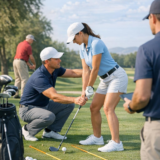
The precision of golf shot outcomes is persistent not only by the moment of impact but by the coordinated sequence of movements that precede and follow it. The follow-through-the kinematic and kinetic continuation of the swing after ball contact-serves as both a consequence of sub‑millisecond pre‑impact events and as an active component in decelerating the body, stabilizing final clubface orientation, and providing sensory feedback for motor learning. Despite its ubiquity in coaching cues and player self‑assessment, the follow‑through remains understudied relative to the downswing and address phases, even though its biomechanical characteristics can index consistency, energy transfer efficiency, and injury risk.
Biomechanics, broadly defined as the application of mechanical principles to biological systems, supplies the conceptual and methodological framework necessary to quantify and interpret follow‑through behavior. Multidisciplinary approaches that combine three‑dimensional motion capture, inverse dynamics, electromyography, force‑platform analysis, and computational modeling allow for the decomposition of the follow‑through into measurable elements: joint kinematics and kinetics, intersegmental coordination, muscular activation timing, and external force interactions. These measures illuminate how variability in segmental sequencing and neuromuscular control map onto shot dispersion and repeatability.
This article synthesizes current biomechanical knowledge of the golf follow‑through with an emphasis on mechanisms that influence precision. We review characteristic kinematic patterns associated with repeatable ball flight, examine muscle coordination strategies that facilitate controlled deceleration and clubface stabilization, and consider the role of sensory feedback and motor learning in refining follow‑through mechanics. Methodological considerations-measurement reliability, ecological validity of on‑course versus laboratory assessments, and modeling assumptions-are discussed to contextualize empirical findings.
we translate biomechanical insights into practical implications for coaching, training interventions, and equipment considerations aimed at improving shot precision and reducing injury risk. By integrating theory, measurement, and applied practice, the article aims to advance a mechanistic understanding of the follow‑through and to identify targeted directions for future research and performance optimization.
Kinematic Chain Coordination in the Follow Through and Implications for Shot Precision
The follow-through represents the terminal phase of a coordinated multi-segment motor pattern in wich energy and angular momentum are redistributed across the body and the club. In biomechanical terms, effective follow-through is the observable outcome of correct **proximal-to-distal sequencing**, where pelvis rotation precedes thorax rotation, which in turn precedes upper-arm acceleration and the distal release of the wrists and club. When sequencing is preserved into the follow-through, it reflects minimal disruptive torque at impact and more efficient energy transfer from the ground through the kinetic chain to the ball-factors that reduce lateral and longitudinal dispersion of shots.
Segmental contributions during the follow-through are diagnostic of upstream timing errors and have direct implications for shot precision. Key relationships include:
- Pelvis: continued rotation and controlled deceleration indicate appropriate ground reaction force utilization and stable base of support.
- Thorax/shoulders: smooth rotational follow-through signals correct torso-to-arm coupling and limits excessive shaft manipulation.
- Lead Arm & Wrists: extension and controlled release preserve clubface alignment through impact and into the finish.
- Lower Limbs/Feet: weight transfer and foot pressure patterns in follow-through reflect balance and influence club path consistency.
Temporal variability in the follow-through-specifically the relative timing between segmental peak angular velocities-correlates strongly with variability in impact conditions. small delays or reversals in the expected sequence increase the probability of face-angle errors and path deviations at impact.Moreover, the follow-through can act as a compensatory window: excessive continuation or abrupt deceleration of distal segments frequently enough masks earlier sequencing faults rather than correcting them. Thus, quantitative measures such as timing of peak pelvis versus peak wrist velocity, and qualitative markers like a stable finish posture, are reliable indicators of precision-related motor control.
Postural control and regulated deceleration strategies during the finish phase modulate shot dispersion via eccentric braking and redistribution of angular momentum. An optimally coordinated finish will show attenuated trunk rotation with the head and sternum aligned over the lead leg-conditions that foster repeatable clubface orientation. The table below summarizes practical finish markers and their direct implications for precision.
| Finish Marker | Biomechanical Feature | Precision Implication |
|---|---|---|
| Pelvis rotation complete | Full ground-driven turn | Reduced directional variability |
| Controlled wrist release | Gentle distal deceleration | Consistent face angle |
| Balanced finish posture | Stable center-of-mass over lead foot | Smaller dispersion ellipse |
Translating these biomechanical insights into practice involves targeted drills and feedback that emphasize timing, balance, and relaxed deceleration. Effective interventions include tempo-based sequencing drills (to reinforce proximal-to-distal timing), mirror or video feedback focused on finish markers, and constraint-led tasks that manipulate target distance or stance to elicit spontaneous coordination changes.Coaches should prioritize measurable metrics-such as inter-segmental timing and finish posture stability-over isolated strength cues, as precision is primarily a product of coordinated timing and controlled energy dissipation across the kinematic chain.
Trunk Rotation Timing and Torque Optimization for Consistent Clubface Alignment
Precise sequencing of trunk rotation is a primary determinant of clubface orientation at and after impact; optimal performance emerges when rotational timing exhibits a coordinated proximal-to-distal transfer of angular momentum. In practice, this requires the pelvis to initiate rotation slightly ahead of the thorax, creating a controlled separation that stores elastic energy in the lumbar-thoracic musculature. Empirical analysis indicates that maintaining a consistent phase relationship between pelvic rotation and thoracic rotation reduces unwanted clubface yaw, thereby improving lateral dispersion. Proximal stability with distal mobility remains the governing principle for reproducible alignment.
The mechanical objective is to maximize rotational torque while preserving kinematic consistency. Torque production depends on two interacting factors: rotational moment arm and angular acceleration of the trunk segments. By modulating trunk stiffness and exploiting thorax-pelvis dissociation, a golfer can increase peak rotational power without sacrificing control. The following table summarizes representative mechanical targets for each swing phase and the associated trunk strategy (values are conceptual targets for coaching, not prescriptive medical data):
| phase | Trunk Behavior | Torque Focus |
|---|---|---|
| Transition | Pelvic lead, controlled thorax delay | Preloading (elastic) |
| Downswing to Impact | Rapid thorax acceleration, maintained core stiffness | Maximal concentric torque |
| Follow-through | Progressive deceleration, coordinated arm release | safe eccentric unloading |
Translating biomechanical principles into training requires targeted drills that reinforce timing and torque control.Effective interventions emphasize sensation of segmental sequencing and controlled energy transfer. Recommended exercises include:
- medicine-ball rotational throws executed with emphasis on pelvic initiation and thoracic follow-through to rehearse proximal-to-distal firing.
- Step-and-rotate drills that exaggerate pelvic rotation prior to thoracic rotation to ingrain correct phase lag.
- Slow-motion impact rehearsals with a focus on trunk stiffness at ball contact and smooth deceleration in the follow-through.
Objective feedback accelerates mastery of timing and torque parameters. Wearable inertial sensors (IMUs) and high-speed video allow quantification of trunk angular velocity, relative phase lag (thorax vs. pelvis), and peak rotational acceleration.When available, force-platform data provide corroborative evidence of ground reaction patterns that support torso torque generation. Coaches should monitor three principal metrics: peak trunk angular velocity,thorax-pelvis phase delay,and eccentric deceleration rate,using these as benchmarks for progressive load and technical refinement.
optimizing rotational torque must be balanced with tissue tolerance and long-term resilience. Training progressions should prioritize eccentric strength of the obliques and lumbar stabilizers, mobility of the thoracic spine to permit safe rotation, and neuromuscular control drills to limit compensatory lateral bending. by integrating controlled overload with technique-focused rehearsal, practitioners can enhance consistent clubface alignment while minimizing injury risk-achieving both precision and sustainability in the golf swing.
Distal Segment Mechanics of Arm Extension and Wrist Pronation for Launch Angle Control
In distal segments-those portions of the upper limb located farthest from the torso-the final modulation of clubhead trajectory occurs within tens of milliseconds around impact. The hand, wrist and distal forearm act as the mechanical interface between proximal energy transfer and the ball, such that small changes in orientation or angular velocity produce disproportionate effects on the resulting launch angle and spin. Conceptually, distal control functions not as a primary power generator but as a precision regulator: it shapes the exit vector and face-to-path relationship established by earlier segments in the kinetic chain.
Kinematic and electromyographic analyses demonstrate that coordinated arm extension and measured wrist pronation produce a controlled release of stored elastic energy in the wrist and forearm extensor-flexor complex.Peak angular velocity of the distal segments typically occurs slightly after peak torso rotation, supporting classic proximal‑to‑distal sequencing. Key musculature includes the triceps brachii for terminal elbow extension and the pronator teres/pronator quadratus group for controlled hand rotation; timing of these activations relative to impact is a critical determinant of vertical launch and backspin generation.
From a mechanistic outlook, two principal distal effects govern vertical launch: the effective loft created by the combined hand-wrist orientation at impact, and the transient local flexion/extension impulses that alter face angle during milliseconds of contact. Practical technique cues that arise from this understanding include:
- Maintain progressive arm extension through impact to preserve predictable clubhead arc and minimize late face rotation.
- Pronate smoothly, not abruptly: a graded pronation reduces unwanted face closure spikes that lower launch unpredictably.
- Control distal stiffness-a firm but adaptive wrist maintains launch consistency while allowing necessary energy transfer.
- Sequence timing-ensure distal peak velocity follows peak proximal rotation to exploit optimal energy transfer.
To translate these principles into actionable metrics, the following compact matrix summarizes common distal variables and their direct implications for launch behavior:
| Variable | Mechanical Effect | Coachable Cue |
|---|---|---|
| Terminal elbow extension | Lengthens arc; raises potential launch | “Finish through” |
| Pronatory angular impulse | Controls face closure rate and spin | “Rotate hands after impact” |
| Wrist stiffness | Modulates energy transfer; affects launch variability | “Firm, responsive wrist” |
Implementation of these distal strategies benefits from objective monitoring (high‑speed video, IMU sensors) and progressive drills emphasizing timing and sensation rather than raw force. Drills that isolate the hand-wrist complex under controlled proximal motion-short‑arm throws, slow‑motion impact rehearsals, and guided pronation‑through exercises-improve the repeatability of launch outcomes. For applied settings, target consistency in measured launch angle (±1-2°) and predictable face‑to‑path relationships are realistic benchmarks when distal mechanics are optimized within a sound proximal sequence.
Lower Limb Stability and Ground Reaction Force Transfer During the Follow Through
Lower limb function during the follow-through is not merely passive; it constitutes the final stage of ground reaction force (GRF) transfer that stabilizes the torso and club through ball impact and into finish. Empirical and modeling studies indicate that effective transfer requires a well-timed center of pressure (COP) progression from the trail to lead foot, accompanied by preservation of vertical GRF magnitude while selectively redirecting shear forces into rotational torque. Maintaining a consistent COP trajectory reduces unwanted lateral torso translations and preserves launch vector consistency. Stiffness regulation at the ankle and knee is therefore critical to attenuate impact perturbations without dissipating rotational energy.
Force transmission up the kinetic chain relies on coordinated contributions from the ankle, knee and hip joints. The triad of joints must perform both energy transfer and stability control: the ankle provides the initial reactive impulse and COP modulation; the knee functions as a shock attenuator and alignment guide; and the hip generates and transmits rotational moments into the trunk. Key contributors to effective transfer include:
- Ankle dorsiflexion control and proprioceptive responsiveness
- Knee eccentric capacity to absorb decelerative loads
- Hip external-rotation stiffness to couple lower limb torque into pelvis rotation
- Foot-ground interface (shoe-surface contact) mediating shear vs. vertical GRF
During the deceleration phase of the follow-through, controlled eccentric loading of lower-limb musculature limits excessive joint excursions and stabilizes pelvic rotation-this is especially important for shots demanding precision. Objective metrics that correlate with repeatability include COP travel distance, peak vertical GRF asymmetry, and time-to-peak GRF after impact. The following brief table summarizes representative target values and training emphases for players seeking tighter launch consistency:
| Metric | Typical Target | Training Focus |
|---|---|---|
| COP travel (cm) | 6-10 | Weight-shift drills |
| Peak vertical GRF symmetry (%) | <10 asymmetry | Single-leg balance & strength |
| Time-to-peak GRF (ms) | 150-250 | Plyometric timing |
Stance geometry and postural alignment at impact influence how GRF is resolved. A moderate base width optimizes mediolateral stability while permitting efficient transverse rotation; conversely, an excessively narrow or wide stance alters COP progression and increases variability in clubface orientation at launch. Postural control at the end of follow-through-measured as residual trunk sway and single-leg hold time-serves as a reliable proxy for lower-limb stability under sport-specific loading conditions. Implementing objective balance testing in conjunction with on-course monitoring enhances the transfer from training to performance.
From a coaching and conditioning perspective, interventions should prioritize dynamic stability and eccentric strength rather than isolated maximal strength alone. Evidence-based drills include resisted weight-shift patterns, deceleration-focused lunges, single-leg plyometrics, and proprioceptive perturbation training to refine COP modulation and GRF timing. Consistent assessment using force plates or wearable force-estimation tools allows practitioners to quantify progress in GRF transfer and reduce motor variability, thereby improving shot-to-shot precision. Emphasizing integrated lower-limb control yields measurable gains in launch condition repeatability and long-term shot consistency.
muscle Activation Patterns and Neuromuscular Strategies to Reduce Performance Variability
Inter-individual inconsistency in follow-through mechanics often originates at the level of motor-unit recruitment and timing rather than gross kinematics alone. Electromyographic studies and anatomical principles of the human muscle system indicate that small shifts in pre-activation of local stabilizers can disproportionately alter distal clubhead trajectory. Precise modulation of **agonist-antagonist co-contraction**, notably across the trunk and shoulder complex, reduces transient joint compliance and thereby narrows the distribution of launch parameters across repeated swings.
Temporal sequencing of activation is critical: a robust, reproducible follow-through depends on a proximal-to-distal cascade that begins with controlled trunk deceleration, continues through scapulothoracic stabilizers, and finishes with distal pronation/supination of the forearm. Neuromuscular strategies that enhance this cascade-such as anticipatory postural adjustments and feedforward timing-promote consistent energy transfer and minimize late-phase variability. Emphasis on **timing precision** of the serratus anterior, external oblique, and pronator teres can substantially improve repeatability of the clubface orientation at impact.
Applied interventions that reduce variability target both neural drive and sensorimotor integration. Recommended approaches include:
- Task-specific pre-activation routines to standardize baseline stiffness;
- Augmented feedback (sonic or visual) to entrain temporal landmarks within the follow-through;
- Reactive perturbation training to enhance adaptable stability without sacrificing repeatability.
These strategies operate synergistically to refine central set and peripheral responsiveness during the transition from impact into follow-through.
| Muscle Group | Optimal Activation Window (ms) | Functional Role |
|---|---|---|
| External Oblique | -60 to +40 | Trunk deceleration / rotational control |
| Serratus Anterior | -40 to +60 | Scapular stability, transfer to distal chain |
| Pronator Teres | 0 to +80 | Clubface orientation, distal control |
From a training and monitoring perspective, progressive overload of neuromuscular tasks-combined with objective metrics (EMG onset latency, variability of joint moments)-enables quantifiable reductions in performance variability. Integrating biofeedback, periodized motor learning drills, and proprioceptive challenges supports durable changes in cortical and spinal circuitry that favor consistent follow-through execution. The net effect is a measurable tightening of shot dispersion while preserving necessary dynamic adaptability for on-course conditions.
Visual and Proprioceptive Integration for Fine motor Adjustment in Late Follow Through
Visual and proprioceptive systems operate as a coupled feedback loop during the late follow-through, resolving residual trajectory error through rapid sensorimotor adjustments. Visual input provides allocentric details about the ball and target line, while proprioception supplies egocentric data on joint angles and muscle stretch. Together these modalities enable the central nervous system to estimate the clubhead’s final orientation and apply corrective micro-adjustments to wrist and forearm posture in the final 150-300 ms after impact.
Temporal dynamics are critical: visual processing contributes slower but spatially rich updates,whereas proprioceptive signals arrive with short latency and high temporal fidelity. Coaches and researchers should note that visual fixation strategies (e.g., soft-focus follow-through vs. target-lock) alter the weighting of these inputs, and that players with faster proprioceptive integration often demonstrate superior shot-to-shot consistency under variable light or wind conditions.
- Training foci: brief peripheral-vision drills to maintain target awareness without disrupting swing rhythm
- Proprioceptive enhancement via closed-chain forearm and wrist stabilization exercises
- Multisensory perturbation practice (mild visual occlusion, compliant ground) to strengthen sensor integration
Neuromechanically, the cerebellum and sensorimotor cortex reconcile discrepancies between predicted and observed states of the limb-club system, using afferent feedback to update internal models.This results in subtle modulation of muscle co-contraction patterns during the late follow-through that refine clubface orientation. EMG studies indicate that small increases in coordinated forearm extensor activity during this phase correlate with reduced dispersion in lateral deviation at landing, highlighting the importance of precise proprioceptive calibration.
For applied measurement and coaching, a concise summary table can guide intervention selection. Use visual-proprioceptive drills progressively, beginning with high-feedback conditions and transitioning to reduced-vision, high-pressure scenarios to promote robust internal model formation. Emphasize cues that combine visual reference with felt limb position rather than isolated visual targets alone.
| Sensor | Typical Latency | Late-Follow-Through Role |
|---|---|---|
| Vision | ~100-200 ms | Target alignment, trajectory verification |
| Proprioception | ~20-50 ms | Joint angle correction, muscle tone adjustment |
| Vestibular | ~10-100 ms | Head stability, global orientation |
Practical Training Interventions and Drills to Enhance follow Through Precision
Targeted training interventions should prioritize sensorimotor integration and segmental sequencing to improve terminal kinematics of the swing. Empirical evidence emphasizes controlled trunk rotation, sustained arm extension, and coordinated wrist pronation as determinants of launch consistency. Programs must thus integrate strength, flexibility, and neuromuscular control elements that specifically transfer to the dynamic demands of the follow-through. Precision is best cultivated through drills that expose athletes to variable loads and feedback-rich conditions so that desirable movement patterns become robust across contexts.
Practical drills are most effective when they explicitly address the biomechanical constraints observed in analysis. Below is a compact set of high-yield interventions with direct biomechanical rationale:
- finish-Hold Drill – hold the final rotated position for 3-5 seconds to reinforce trunk rotation and balance.
- towel-Under-Arm drill – keeps the lead arm connected to the torso to promote consistent extension and plane maintenance.
- Weighted Slow-Motion Swings – increases proprioceptive awareness of wrist pronation timing while preserving sequence.
- Targeted Tempo Training – using metronome-paced swings to stabilize acceleration phases that influence the follow-through.
These drills should be progressed from low-velocity motor learning phases to full-speed integration with task-specific feedback.
load management and progressive overload are essential to develop the musculature that supports a reproducible follow-through. Strength exercises should emphasize anti-rotation core work, single-arm horizontal pulling, and eccentric wrist pronation control. Use sets of controlled concentric-eccentric lifts at moderate intensity (e.g., 3-4 sets of 6-12 reps) and couple them with mobility sessions focused on thoracic rotation and lead-hip internal rotation. Implement weekly microcycles that alternate neuromuscular skill work and hypertrophy/strength emphasis to minimize interference and maximize transfer.
Objective monitoring accelerates adaptation and ensures specificity. Simple on-range measures (radar-derived clubhead speed, carry dispersion) combined with video-derived kinematic checkpoints (finish-rotation angle, arm-extension distance, wrist-pronation timing) provide actionable feedback. The table below offers a concise practice-to-metric mapping that coaches can adopt immediately.
| drill | Primary Target | Practical Metric |
|---|---|---|
| Finish-Hold | Trunk rotation & balance | Hold time ≥3s / deviation ≤10° |
| Towel-Under-Arm | arm-torso connection | Arm separation events per 20 reps |
| Weighted Slow Swings | Wrist pronation timing | Pronation onset variance <0.05s |
Implementation guidelines should emphasize intentional practice with immediate,specific feedback. Use augmented feedback modalities-video slow-motion, mirror cues, and external focus targets-to accelerate implicit learning. Progressions should be criterion-based (e.g., achieve target metrics in the table on two consecutive sessions) rather than strictly time-based. integrate these interventions into competition-phase planning with tapering of novel stimuli to preserve motor consistency under pressure.
Monitoring and Assessment Using Motion Capture Metrics and Performance benchmarks
Contemporary motion-capture systems enable quantitative analysis of the follow-through by capturing segmental kinematics, temporal sequencing, and club dynamics with high fidelity. For reliable comparison across athletes and sessions, attention to **sampling rate** (preferably ≥250 Hz for club and wrist kinematics) and rigorous **marker placement** protocol is essential. Synchronous acquisition of inertial sensors and high-speed video augments optical systems, improving robustness to occlusion during late follow-through positions.
Processed kinematic outputs should focus on variables with direct mechanistic links to ball flight: peak angular velocities, time-to-peak sequencing (pelvis → torso → arms → club), clubhead speed at impact, and residual wrist pronation during follow-through. Core metrics to monitor include:
- Clubhead speed (m·s⁻¹ or mph)
- Pelvis-to-shoulder separation (X‑factor) at top of backswing and at impact
- Peak trunk angular velocity and its timing relative to impact
- Wrist pronation angle and extension at follow-through
- Time-series symmetry and inter-trial variability
| Metric | Novice | Intermediate | Elite |
|---|---|---|---|
| Clubhead speed (mph) | 70-85 | 86-100 | 100+ |
| Pelvis rotation at impact (deg) | 20-30 | 30-40 | 40-50 |
| X‑factor (deg) | 10-20 | 20-30 | 30-45 |
| Wrist pronation at follow-through (deg) | 10-20 | 20-35 | 25-40 |
Assessment protocols must prioritize reliability: use a standardized warm-up, collect multiple trials (recommend 8-12 swings), and apply consistent data filtering (e.g., low-pass Butterworth filter, 6-12 Hz depending on sensor noise). Report intra-session coefficients of variation for primary metrics; values >10% may indicate poor technique consistency or measurement error. When available, integrate force-plate measures of ground reaction forces to contextualize rotational power during the follow-through.
Translation to coaching practice requires synthesis of motion-capture outputs into actionable feedback. Construct composite performance benchmarks (e.g., a weighted index combining clubhead speed, X‑factor, and trunk timing) and set progressive targets. Practical monitoring steps include:
- Baseline profiling against normative table values
- Short-term goals focused on variability reduction (reduce SD by 20% over 6 weeks)
- Drill prescription directed at identified deficits (e.g., mobility drills for limited pelvis rotation)
Maintain clinical judgment: metrics inform but do not replace on-field validation. Confirm that kinematic improvements produce corresponding gains in launch conditions and dispersion before making permanent technique changes.
Q&A
Below is an academic-style, professional Q&A designed for an article on “Biomechanics of Golf Follow‑Through for Precision.” The questions address theory, measurement, practical application, coaching implications, and research directions consistent with contemporary biomechanics principles.1) What is meant by the “follow‑through” in golf and why is it important for shot precision?
Answer: The follow‑through is the terminal phase of the golf swing that begins immediately after ball impact and continues until the body and club come to rest. Although it occurs after ball‑club contact, the follow‑through is a direct expression of the kinematic chain and force sequencing that produced the impact conditions. A controlled,mechanically appropriate follow‑through reflects consistent clubhead speed,face orientation,and swing plane through impact,all of which contribute to reproducible launch conditions and therefore shot precision.
2) how does biomechanics define the primary variables that influence precision during the follow‑through?
Answer: From a biomechanical perspective, precision is influenced by kinematic variables (joint angles, angular velocities, segment trajectories), kinetic variables (joint moments, ground reaction forces, clubhead kinetics), temporal sequencing (timing of peak velocities and moments across segments), and neuromuscular control (muscle activation patterns and co‑contraction). The follow‑through is assessed by how these variables maintain smooth deceleration, preserve desired clubhead path and face angle, and minimize uncontrolled variability after impact.3) What role does kinematic sequencing (kinetic chain) play in producing a precise follow‑through?
Answer: Efficient kinetic‑chain sequencing transfers energy from proximal to distal segments (pelvis → trunk → shoulder → forearm → wrist → club). Proper sequencing ensures the club achieves intended velocity and orientation at impact with minimal compensatory torques. The follow‑through should show a coordinated deceleration pattern consistent with this proximal‑to‑distal transfer; disruptions in sequencing (e.g., early release, reverse-pivot) manifest as aberrant follow‑through kinematics and increased shot dispersion.
4) Which kinetic measures during the follow‑through are most informative about shot repeatability?
Answer: Informative kinetic measures include ground reaction force (GRF) patterns (magnitude, timing, center of pressure progression), net joint moments at the hip and trunk during deceleration, and the impulse delivered through the body to the club during late downswing and impact. Consistent GRF timing and magnitude and predictable joint moment profiles correlate with repeatable delivery of the club to the ball and consistent follow‑through characteristics.
5) How do muscle activation patterns (EMG) relate to an effective follow‑through?
Answer: Electromyography (EMG) reveals timing and amplitude of muscle recruitment. Effective follow‑throughs are associated with timely activation of trunk rotators, gluteal and hamstring decelerators, and forearm/wrist muscles that manage the release and deceleration of the club. Appropriate co‑contraction stabilizes joints during high‑velocity phases, reducing variability at impact and supporting a controlled follow‑through.
6) What common biomechanical faults during the follow‑through most negatively affect precision?
Answer: Faults include early or abrupt deceleration of proximal segments (causing late or early release), excessive lateral sway or loss of balance, uncontrolled trunk rotation or extension, collapsing of the lead side (loss of posture), and inconsistent weight transfer. These faults disrupt launch angle and clubface orientation, increasing lateral and distance dispersion.
7) How can motion analysis quantify follow‑through quality in research or coaching?
Answer: Motion analysis quantifies 3D joint kinematics (angles, angular velocities), segment trajectories, clubhead path and orientation, and timing of key events. Synchronized force plates provide GRF data; EMG adds muscle timing; high‑speed cameras and launch monitors supply ball/club exit conditions. Quantitative metrics include peak angular velocities, time to peak, variability (standard deviation) of clubhead path/face angle at and after impact, and GRF timing/impulse.
8) Which metrics should coaches and researchers prioritize when assessing follow‑through for precision?
Answer: Prioritize (a) clubface angle and path at impact and immediately after, (b) variability in clubhead speed and launch parameters, (c) timing of peak angular velocities across pelvis, trunk, and shoulder, (d) GRF progression and center of pressure shifts, and (e) measures of balance/postural stability during follow‑through.Variability and repeatability of these metrics across repetitions are especially critically important for precision.9) What training interventions can improve biomechanical aspects of the follow‑through?
Answer: Interventions include drill‑based swing sequencing practice emphasizing proximal‑to‑distal timing, balance and proprioceptive training (single‑leg stability, dynamic balance drills), strength and power conditioning (hip, trunk, and shoulder rotators), flexibility/mobility programs to permit optimal travel and rotation, and neuromuscular drills (plyometrics, medicine‑ball rotational throws) to improve rate of force advancement and coordinated deceleration.
10) How does balance and postural control during the follow‑through affect shot consistency?
Answer: Stable balance and controlled center of pressure progression permit consistent weight transfer and ground reaction timing, which underpins reliable kinetic sequencing and club delivery. Postural instability or excessive sway increases compensatory motions that alter clubface orientation and path,leading to greater shot dispersion.
11) Are there gender, age, or skill‑level differences in follow‑through biomechanics relevant to precision?
Answer: Yes. Age and gender can influence strength, power, flexibility, and neuromuscular timing, altering sequencing and deceleration capacities. Skill level strongly correlates with consistency of kinematic sequencing, lower variability in clubface orientation at impact, and better balance/control in follow‑through. Training programs should therefore be individualized, addressing these physiological and technical differences.
12) How can technology (motion capture,force plates,EMG,launch monitors) be integrated practically in coaching environments?
Answer: Use a tiered approach: launch monitors and high‑speed video for routine on‑range feedback; portable inertial measurement units (IMUs) for segment kinematics in the field; periodic lab assessments with motion capture,force plates,and EMG for detailed diagnosis and program design.Data should be translated into actionable coaching cues and drills rather than raw metric overload.
13) What are the primary limitations and potential confounders in biomechanical studies of the follow‑through?
Answer: Limitations include ecological validity (lab vs. real course conditions), inter‑subject variability, small sample sizes, equipment constraints (marker occlusion, soft‑tissue artifact), and difficulty isolating the follow‑through from the entire swing.Confounders include fatigue, club selection, intent (practice vs.competitive swing), and individual anatomical differences.
14) What coaching cues are biomechanically informed and evidence‑based for improving follow‑through precision?
Answer: Effective cues focus on sequencing and balance rather than forcing the follow‑through position. Examples: “rotate from the hips and let the arms follow” (encourages proximal initiation), “finish balanced on your lead leg” (promotes stable weight transfer), and “hold the finish for a beat” (reduces abrupt deceleration). Cues should be paired with drills and objective feedback from measurements.
15) How is variability in follow‑through related to performance under pressure?
Answer: Increased neuromuscular variability under pressure can disrupt timing and coordination, producing greater inconsistency in impact conditions and follow‑through kinematics. Training that enhances automaticity of sequencing, improves neuromuscular resilience (e.g., under fatigue or stress), and reduces unnecessary conscious control can definately help maintain follow‑through consistency in pressured situations.16) What future research directions are most promising for advancing understanding of follow‑through biomechanics and precision?
Answer: Promising directions include longitudinal intervention studies linking specific training programs to changes in biomechanical metrics and shot dispersion; integration of in‑field wearable sensors for large‑scale data collection; investigations of neuromotor control mechanisms underpinning sequencing robustness; and multimodal studies combining biomechanics with biomechanics-informed motor learning frameworks to optimize retention and transfer to competition.
17) How does the discipline of biomechanics provide a foundation for studying the golf follow‑through?
answer: Biomechanics applies mechanical principles to biological movement, allowing objective quantification of motion, forces, and control strategies (see general resources such as Stanford Biomechanics and foundational overviews). This framework enables rigorous analysis of the relationships between body mechanics during the follow‑through and resultant ball flight/precision.
Suggested further reading and resources:
– Stanford University Biomechanics overview: https://biomech.stanford.edu/ (general field background)
– Biomechanics – Wikipedia: https://en.wikipedia.org/wiki/Biomechanics
– Additional applied golf biomechanics literature and laboratory studies (search terms: “golf swing biomechanics,” “follow‑through kinematics,” “launch conditions and kinematic sequencing”)
If useful, I can convert this Q&A into a formatted FAQ for publication, provide sample measurement protocols for lab or field assessment, or draft a short methods section describing how to measure the follow‑through with motion capture, force plates, EMG, and launch monitors.
key Takeaways
the biomechanics of the golf follow-through represents a confluence of kinematic sequencing, neuromuscular coordination, and sensorimotor feedback that together determine shot precision and consistency. Contemporary biomechanical frameworks-grounded in the study of living motion and mechanical principles-emphasize the importance of coordinated segmental timing (proximal-to-distal sequencing), optimized force production and transfer through the ground and torso, and controlled dissipation of angular momentum during and after ball impact. When these elements are evaluated empirically using tools such as motion capture, force plates, and wearable sensors, practitioners can identify specific mechanical contributors to dispersion and error and translate those insights into targeted interventions for swing mechanics, strength and conditioning, and motor learning.
Looking forward, integrating individualized biomechanical assessment with evidence-based coaching strategies holds promise for enhancing performance while minimizing injury risk.Future research should continue to refine quantitative markers of an effective follow-through, investigate how inter-individual variability modifies ideal sequencing, and evaluate how augmented feedback and training prescriptions alter neuromuscular control in ecologically valid settings. By bridging rigorous biomechanical analysis with applied instruction, researchers and coaches can advance a more precise, reproducible, and athlete-centered approach to optimizing the golf follow-through.

Biomechanics of Golf Follow-Through for Precision
Why the Golf Follow-Through Matters for Precision
The golf swing follow-through is more than a celebratory pose – it is the visible result of every mechanical decision made during the swing. In biomechanical terms, the follow-through reflects how energy was transferred through the body, how the clubface exited impact, and whether the kinematic sequence (hips → trunk → arms → club) executed correctly. Optimizing the follow-through improves clubhead speed, stabilizes launch angle, reduces dispersion and increases repeatable shot accuracy.
Key Biomechanical Components of a Precise Follow-Through
Below are the primary body segments and motion patterns that determine a consistent, accurate follow-through. Each component includes the performance goal and common coaching cues.
Trunk Rotation & sequencing
- Performance goal: Smooth and complete rotation through impact so the chest faces the target in the follow-through.
- Biomechanical role: Trunk rotation generates angular momentum that is transferred to the arms and club; poor rotation limits clubhead speed and causes early release or hooked/sliced shots.
- Coaching cues: “Rotate hips then chest,” “finish with your belt buckle pointing at the target.”
Arm extension & Width
- Performance goal: Maintain extension through impact and into the follow-through to maximize radius and clubhead speed.
- Biomechanical role: Longer effective radius (arm + club) produces higher clubhead velocity for a given rotational speed; collapsing the arms shortens the radius and causes loss of power and inconsistent contact.
- Coaching cues: “Hold the arc,” “extend through the ball,” “finish with arms reaching toward the target.”
Wrist Pronation and Release
- Performance goal: Timed lead-wrist pronation (rotation of the lead forearm) to square and control clubface while preserving lag.
- Biomechanical role: Wrist mechanics control face angle at impact and influence spin/launch; early cupping or flicking leads to slices or inconsistent launch.
- Coaching cues: “Release the club through the ball,” “let the wrists rotate after impact.”
Weight Transfer & Ground Reaction Forces
- Performance goal: Transfer weight from trail foot to lead foot smoothly to create stable platform in the follow-through.
- Biomechanical role: Proper ground reaction force timing through the lower body anchors rotation and increases power while improving directional control.
- Coaching cues: “Push through your left heel” (right-handed golfer), “finish balanced on lead side.”
Balance, Posture and Head Position
- Performance goal: finish balanced with head stable and spine inclination appropriate to ball flight.
- Biomechanical role: Excessive head movement or postural collapse during follow-through indicates energy leaks and inconsistent impact geometry.
- Coaching cues: “Keep your head level,” “hold your finish.”
How Biomechanics Affects Precision – Metrics to Track
To quantify improvements from follow-through optimization, use these measurable golf metrics:
- Clubhead speed – higher speed usually increases carry distance but must be combined with correct launch and spin for accuracy.
- Launch angle & ball flight – follow-through that reflects correct impact results in consistent launch windows.
- Spin rate – improper wrist release increases unwanted sidespin (curve) and vertical spin variation.
- Shot dispersion (grouping) – the most direct field measure of precision; an optimized follow-through narrows dispersion.
- centeredness of contact (smash factor) – indicates whether energy transfer was efficient and consistent through impact.
Rapid Comparison: Follow-Through Targets vs common Faults
| Biomechanical Target | Desired Outcome | Common Fault |
|---|---|---|
| Complete trunk rotation | Stable, repeatable club path | Open/early chest -> slice |
| Arms extended through impact | higher clubhead speed | Collapsed arms -> loss of distance |
| Delayed wrist pronation | Square face at impact | Early flip -> inconsistent launch |
Practical Drills to Optimize Your follow-Through
Here are field-tested drills that emphasize the biomechanical keys listed above.Each drill focuses on a single element so you can isolate and correct faults.
1. Rotation-First Drill (Trunk Timing)
- Take your normal address position with an easy wedge or 7-iron.
- On the downswing, exaggerate hip rotation first – feel the hips lead the chest.
- Finish with the chest open toward the target and hold the finish for 2-3 seconds.
- Repeat 8-12 reps focusing on smooth timing rather than distance.
2. arm-Extension Mirror Drill (Width & Extension)
- Set up in front of a mirror or record a face-on video.
- Make slow-motion swings holding a towel under the lead armpit to maintain connection.
- Focus on keeping the arms extended through impact; watch the width in the mirror.
3.Towel-Flip Drill (Wrist Pronation)
- grip a towel by its midpoint as if it were a club.
- Make half swings and practice rotating the lead forearm so the towel face turns over after impact.
- Feel the sequence: hands follow body rotation, not the other way around.
4. Step-Through Drill (weight Transfer)
- Address normally. At the top, step the trail foot forward slightly toward the target as you start the downswing.
- This exaggerates weight shift and helps create a stable lead-side finish.
Training progression & Programming for Follow-Through Improvements
Use a progressive plan to move from isolated drill work to on-course integration:
- Week 1-2: Motor learning phase – short, slow repetitions of each drill (10-15 minutes daily).
- Week 3-4: Speed integration – gradually add swing speed while maintaining biomechanical targets (30-45 minute sessions, 3×/week).
- Week 5-8: On-course transfer – practice shots under fatigue and pressure, use target practice to assess dispersion.
Pair this with strength and mobility work for the core, hips and thoracic spine to support stable rotation and follow-through mechanics. resources on biomechanics and human movement (for background reading) include authoritative sources such as Nature Biomechanics and university biomechanics programs like Stanford Biomechanics.
Technology & Feedback: What to Use
Objective feedback accelerates learning. Useful tools include:
- Launch monitors (track carry distance, launch angle, spin rate, clubhead speed).
- Slow-motion video or high-speed cameras to analyze trunk rotation, arm extension and wrist motion.
- Pressure mats or force plates to monitor weight transfer and ground reaction timing.
- Wearables / IMUs (inertial measurement units) for real-time kinematic sequencing feedback.
Case Study: From slice to Straight – A Practical Example
Player profile: Mid-handicap (12 handicap) right-handed amateur,average clubhead speed with inconsistent slices and wide dispersion.
Baseline assessment:
- Excessive early chest opening at impact.
- Shortened arm extension through impact (collapsed radius).
- Early wrist flip causing open clubface at impact.
Intervention plan (8 weeks):
- Rotation-First Drill (daily) – re-teach hip lead and delayed chest opening.
- Arm-Extension Mirror Drill (every session) – maintain width and arc.
- Towel-Flip Drill (every other day) – improve timed pronation of lead wrist.
- Weekly launch monitor session to track dispersion, launch angle and spin.
Outcome after 8 weeks:
- Group dispersion reduced by ~25% on average.
- Launch angles became more consistent within a 1-2° window.
- Player reported more confidence in finishing positions and improved feel for ball flight control.
Common Follow-Through Mistakes and quick Fixes
- Early chest opening – Fix: practice hip-led downswing and finish holds.
- Collapsed arms – Fix: use a towel under the lead armpit and swing slowly to maintain connection.
- Flicking wrists – Fix: drill delayed release with a towel or light weighted club and focus on forearm rotation after impact.
- Poor weight transfer (staying on trail leg) – Fix: step-through or shift-weight drills to develop lead-side finish.
Benefits of an Optimized Follow-Through
- Improved shot-to-shot consistency and tighter dispersion.
- More efficient energy transfer and increased effective clubhead speed.
- Better control of launch angle and spin for predictable ball flight.
- Reduced risk of compensatory injuries caused by poor sequencing and imbalanced loading patterns.
Practical Coaching Cues to Reinforce Biomechanics
short cues are critical for on-course execution. Try these:
- “Hips lead, chest follows” – sequencing cue for trunk rotation.
- “Hold the arc” – cue for arm extension/width.
- “Turn the lead palm” – simple cue for wrist pronation after impact.
- “Finish balanced” – reminder to complete weight transfer and hold posture.
Further Reading & References
To deepen understanding of movement mechanics and how they apply to golf, explore foundational biomechanics resources:
If you want, I can create a printable practice plan tailored to your handicap and available training time, or analyze a short swing video and give specific follow-through corrections.