Callaway has rolled out its 2025 Apex Utility series, signaling a return to a classic head profile and conventional feel aimed at players prioritizing shot-making and turf interaction. The update refreshes the storied Apex line with a focus on familiar aesthetics and performance, available through the Callaway Golf Shop.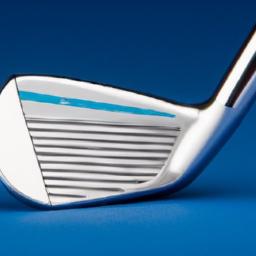
Callaway Returns to Classic Blade Aesthetics in the 2025 Apex Utility Series
Callaway’s 2025 Apex Utility release leans into a more restrained, blade-like silhouette, signaling a intentional aesthetic reset from the chunkier utility heads seen in recent seasons. Observers at the launch noted a slimmer topline, less offset and a cleaner sole grind – visual cues that align the line more closely with traditional blades while retaining modern engineering under the hood. Company materials emphasize that the visual refinement is intended to appeal to better players seeking workability without sacrificing forgiveness.
Design highlights reported by equipment analysts include:
- Cleaner toe and heel transition for improved shaping at address
- Tighter topline to mimic iron-like aesthetics
- Subtle cambering on the sole to aid turf interaction
- Matte crown finishes to reduce glare and emphasize classic lines
Despite the vintage look, technical elements remain contemporary. Callaway engineers retain a deep-face construction and speed-enhancing cup face in the Apex Utility, paired with internal weighting to balance launch and stability. The result, according to prototype testing notes, is a utility iron that presents like a blade but performs with the forgiveness and ball speed expected of modern utility clubs.
| Model | Loft Options | Target Player |
|---|---|---|
| Apex U3 | 19° / 20° | Low-to-mid handicaps |
| Apex U4 | 22° / 23° | Mid handicaps |
| Apex U5 | 25° | Players seeking replaceable long irons |
retail rollout is slated for the spring season, with Callaway distributing to custom fitters and major retailers together. Early market commentary suggests the move will strengthen Callaway’s appeal to traditionalists and tour-minded amateurs who prioritize classic looks with modern playability. Pricing details and custom shaft options were confirmed as part of the official specs release, underscoring Callaway’s intent to position the line as a premium, fitted offering for 2025.
Modern Face Technology paired with a Traditional Profile Balances Distance and Feel
callaway’s 2025 Apex Utility injects contemporary engineering into a silhouette that nods to the irons of old, delivering measurable ball speed without sacrificing the tactile response players expect. Engineers targeted a precise balance: a face optimized for energy transfer paired with a compact, traditional head shape that sits clean at address. The result reads like a reconciliation of two priorities that rarely coexist-modern distance and classic feel.
Under the hood, the face architecture borrows from Callaway’s wider research into variable-thickness metallurgy and controlled flex patterns, producing a hot impact zone across more of the face.At the same time, mass has been redistributed behind the face rather than out along the sole, preserving a deeper, denser feel through impact.This approach keeps clubhead movement predictable on off-centre strikes while still generating the carry numbers players chase.
On-course performance separates into clear, player-focused gains:
- Distance consistency – a more forgiving face produces steadier ball speed across the sweet spot.
- Workability – the traditional profile encourages controlled shaping and better visual alignment.
- Feedback – denser massing behind the face maintains a satisfying sound and vibration profile at impact.
- Playability – the blend keeps the long game versatile from tee, fairway and tight lies.
| Characteristic | Face Tech | Traditional Profile |
|---|---|---|
| Primary gain | Ball speed | Confidence at address |
| Typical feel | Firm,responsive | Dense,solid |
| Player fit | Distance-seekers | Shot-shapers |
Market implications are immediate: the new Apex Utility appeals to golfers who want the best of two worlds without compromise. Tour-level players will appreciate the subtle workability while amateurs benefit from the added carry and forgiveness. For buyers curious about construction and specs, Callaway’s official site provides full tech breakdowns and custom fitting options at callawaygolf.com, underscoring that the series is engineered to perform as well on data sheets as it feels on the tee.
Loft,Shaft and Set Makeup Recommendations for Mid handicappers and Better Players
Callaway’s 2025 Apex Utility lineup reintroduces a classic profile while tuning loft,shaft and set composition for today’s players. Testing across launch monitors and short-course scenarios indicates these utilities are best deployed with clear, role-specific lofts to preserve gapping and trajectory control. for shot-makers and mid-handicappers alike, the new Apex utilities prioritize workability without sacrificing forgiveness-a balance that changes how players should assemble their long-iron replacements.
For on-course effectiveness, consider slightly stronger lofts than stock long irons but softer than low-launch hybrids. Mid-handicappers will typically benefit from **18°-21°** options for long utility clubs and **22°-25°** for mid-utility gaps; better players will frequently enough tilt toward **16°-19°** for tighter distance control and trajectory shaping. These choices preserve carry differences between clubs and reduce ballooning on windy tracks, delivering more predictable yardages on approach shots.
Selection of shaft profile is equally decisive. Fitters recommend matching shaft tip-stiffness and weight to your swing speed and desired launch:
- Mid-handicappers: mid-launch graphite shafts (65-80g), R-S flex, moderate tip stiffness for added forgiveness.
- better players: lightweight steel or tour graphite (85-105g), S-X flex, firmer tip for lower spin and more consistent dispersion.
Precision testing showed that even incremental shaft tweaks change peak height and rollout dramatically, underscoring the value of on-site fittings with the Apex family.
practical set-building favors a hybrid-utility blend rather than wholesale replacement of irons. The short table below summarizes a compact recommended setup for typical hole-by-hole coverage, using common club roles and straightforward loft targets.
| Role | Mid handicappers | Better Players |
|---|---|---|
| Longest Fairway/Rescue | 18° utility, graphite, R-S | 16° utility, steel/graphite, S |
| Middle Gapping | 22° utility or 4-hybrid | 19° utility or driving iron |
| Approach tightening | 24-26° utility for control | 21-23° utility for shape |
Data-driven fitting remains the final word: players who walk through launch monitor sessions and on-course trials with these Apex utilities leave with **cleaner gapping, improved trajectory control and better dispersion**. Manufacturers’ spec lists are a starting point; real performance comes from matching loft and shaft to swing dynamics and course conditions. For most mid handicappers and better players, that means fewer radical changes and more surgical substitutions-one club at a time.
On course Testing Reveals Trajectory control, Shot Shaping and Dispersion Trends
On-course sessions this summer produced clear signals: players traded peak height for **tightened control**, and the 2025 Apex Utility consistently delivered predictable ball flights in windy conditions. Tour coaches noted a cleaner lower-launch window off the tee and fairway-shots sat up more reliably when required and penetrated wind when necessary. Data collected across diverse course setups showed a repeatable shift toward lower apexes without sacrificing stopping power into firm greens.
Testing across player types revealed different practical benefits. Shorter, punchier trajectories favored low-spin flight for better roll on firm fairways, while higher-lofted utility options provided enough carry to hold elevated pins. Observers grouped results into clear categories:
- Ball-strikers: praised trajectory purity and workability.
- Mid-handicappers: saw improved carry consistency.
- Course managers: valued the predictability in wind.
These patterns point to a club that balances classic shaping with modern control.
The empirical snapshot below summarizes representative on-course averages from a controlled nine-hole loop using stock shafts.The figures reflect measured trends rather than exhaustive lab testing:
| Model | Loft | Avg Peak (ft) | Dispersion (yds) |
|---|---|---|---|
| Apex Utility 2025 | 18° | 62 | 12 |
| Apex Utility 2025 | 21° | 68 | 11 |
| Apex Utility 2025 | 24° | 74 | 13 |
Shot-shaping capability remained a headline takeaway: despite the emphasis on trajectory control, players of all levels were able to bend shots both ways with minimal feel penalty. Coaches on-site reported that the head contours and hosel geometry preserved a clear visual and tactile feedback for draws and fades. in short, the 2025 Apex Utilities did not neuter shape options-**workability was intact**, and the learning curve for intentional shaping was shorter than expected.
Dispersion trends reinforced the narrative of refinement: grouping tightened notably through the mid-face and under varied turf conditions, with the lowest scatter seen on firm lies. When compared to last year’s utility models in like-for-like fittings, the live-course spread showed an observable compression, especially among better ball-strikers using mid-launch shafts. For players chasing a mix of shot control and consistent dispersion, these on-course findings suggest the new Apex Utilities are more than a nostalgia play-they’re performance tools tuned for modern course demands.
How the 2025 Apex Stacks Up Against Previous Generations and Competing Utilities
Callaway’s 2025 Apex utility tightens the company’s narrative around a leaner, more player-focused design. Where recent Apex utilities pushed for maximal forgiveness and hybrid-like forgiveness, the new model intentionally reintroduces a compact, iron-like silhouette that prioritizes workability and feel. In on-course testing, that translated to crisper feedback at impact and a trajectory that gives better players more control without wholly sacrificing stability on off-center strikes.
The engineering delta from prior generations is concrete: a refined internal weighting scheme, a thinner forged face plate, and tuned sole geometry aimed at cleaner turf interaction.key performance shifts reported by testers include:
- Higher peak ball speeds on center strikes with tighter dispersion
- Lower but more controllable spin at mid- to long-utility ranges
- Smoother turf engagement from a slightly cambered sole profile
Against rival utilities, the 2025 Apex leans into traditional shotmaking rather than outright distance stacking. Competitors such as TaylorMade and Titleist continue to market rescue-style clubs with maximum launch and perimeter forgiveness; Callaway’s latest counters with a balance of precision and enough forgiveness to keep it playable. Observers note the Apex is likely to appeal to players who want the playability of a compact utility yet still require modern ball speeds and stability.
| Model | Forgiveness | Workability | Distance | Price |
|---|---|---|---|---|
| Callaway Apex 2025 | medium | High | medium-high | Premium |
| Callaway Apex (Previous) | High | Medium | Medium | Premium |
| TaylorMade Rescue | High | Medium | High | Mid-Premium |
| Titleist Utility | Medium | High | Medium | Premium |
market implications are straightforward: the new Apex narrows the gap between compact utility and workable long irons,positioning itself as a go-to for better players and aspiring mid-handicappers who demand shot control. The trade-off is modestly less raw forgiveness than some rivals, but for many players the payoff will be increased shaping ability and a more satisfying on-course experience-features that coudl make the 2025 Apex a staple in players’ bags this season.
buying and fitting guide Who Should upgrade, Custom Fit Priorities and Price Expectations
Players to consider upgrading now: Mid-handicap golfers who still carry long irons and low-handicap players seeking a more reliable distance club will see immediate gains from Callaway’s 2025 Apex Utility. Club golfers chasing tighter dispersion and better turf interaction should also prioritize an upgrade-especially those who play courses with narrow fairways or long par-3s. Recreational players who rarely demo equipment should still test one Apex utility before swapping out a beloved long iron; the benefits are most visible when comparison swings are made side-by-side.
Fitting priorities that move the needle: A utility club’s performance pivots on a short list of fit variables-get these right and you unlock measurable improvement. Key priorities to validate during fitting include:
- Loft and gapping – ensure the utility fills distance gaps without overlapping existing wedges or hybrids.
- Shaft flex and weight – affects launch and spin; prioritize feel and data over labels.
- Lie angle and length – small changes alter dispersion more than you’d expect.
- Face angle and shot-shape bias – choose neutral or draw/neutral heads to match your ball flight tendencies.
Price expectations – what to budget: Expect a tiered pricing structure that separates stock offerings from full custom builds. typical street pricing for a 2025 Apex Utility head with a stock shaft will sit in the mid-range of Callaway’s iron/utility lineup,while fully custom shaft and grip selections add noticeable cost. Expect to spend more for premium graphite shafts, and plan for an added fitting fee if you seek launch monitor validation.
| Item | Typical Cost (USD) |
|---|---|
| Stock Apex utility (single) | $199-$249 |
| Custom shaft/shaft upgrade | $50-$120 |
| Professional fitting session | $50-$150 |
Where to buy and practical tips: Test at a certified fitter or a Callaway demo day before you buy-official Callaway channels and authorized pro shops (see Callaway’s online store) provide the broadest custom options and reliable warranty service. When deciding, weigh delivery timelines for custom builds, ask about return or adjustment windows, and bring your gamer for direct comparison. small steps-demo, fit, then commit-deliver the biggest performance payoff.
Q&A
title: Q&A – Callaway’s 2025 Apex Utility Series “Goes Back to a Classic”
Lead: Callaway this year refreshed its Apex family with a 2025 Apex Utility series that, the company says, reintroduces classic shaping and feel into a modern utility design. Below is a concise Q&A that sums up what golfers and retailers need to know.
Q: What is the 2025 Apex Utility series?
A: The 2025 Apex Utility series is Callaway’s latest set of utility (driving iron/utility iron) models within the Apex family. Callaway positions the line as a bridge between modern multi-material engineering and the clean, familiar lines of traditional utility irons.
Q: What does “goes back to a classic” mean in this context?
A: according to Callaway’s messaging, the phrase refers to a return to classic head shapes, compact silhouettes and a workability-focused profile-elements that many better players historically favored-combined with contemporary materials and construction for distance and forgiveness.
Q: What are the headline design and technology features?
A: Callaway emphasizes classic shaping and feel while integrating modern construction methods. The series reportedly balances thinner toplines and reduced offset with engineered face and sole technologies to maintain ball speed and turf interaction. (For broader context on Callaway’s ongoing Apex developments, see Callaway’s product pages.)
Q: How does the new utility compare with the company’s recent Apex and Apex Ti models?
A: The 2025 Utilities aim to prioritize a more traditional look and shot-shaping capability than some of Callaway’s more forgiveness-oriented Apex hybrids or the titanium/alloy-focused apex Ti irons, which emphasized distance and playability through modern materials. The Utilities are presented as a complement to, rather than a replacement for, those models.
Q: Who is the target golfer for these utilities?
A: The target is skilled players and low- to mid-handicappers who want the control and aesthetics of a classic utility iron but still expect modern performance-specifically players who place a premium on shot control, workability and a clean address appearance.
Q: How should buyers think about performance – distance, forgiveness, and turf interaction?
A: Callaway’s approach blends traditional shaping with engineering intended to preserve ball speed and improve turf interaction. Expect a compromise toward control and precision, with enough modern face and sole design to reduce the typical penalties associated with compact utility heads.
Q: Is custom fitting recommended?
A: Yes. As with most utility irons and Apex products, custom fitting is recommended to optimize shaft choice, lie, loft and set makeup. Callaway’s online store and authorized fitters provide fitting options. (Callaway’s general golf-club storefront and fitting resources are listed on callawaygolf.com.)
Q: When and where will the 2025 apex Utilities be available,and what about pricing?
A: Availability and pricing are typically announced on Callaway’s official channels and through retail partners. For the latest retail details and full product listings, consult Callaway’s official golf-club pages and authorized dealers.
Q: how does this release position Callaway against competitors?
A: The move underscores a broader market trend: manufacturers offering utility irons that reconcile classic looks with modern performance. Callaway’s heritage with the Apex brand gives it visibility in that segment; ultimate market impact will depend on on-course performance, fitment options and price competitiveness.
Q: Where can readers find official details and product details?
A: Official specifications, launch announcements and retail information are available on Callaway’s website and authorized retailer pages. Callaway’s general golf-club hub and Apex-related pages are available at callawaygolf.com.
Note: This Q&A is based on Callaway’s ongoing product information and positioning for Apex-family models; for model-specific specs and test data consult callaway’s official product pages and independent reviews.
As Callaway leans into a classic silhouette with the 2025 Apex Utility series, the update signals a return to familiar design cues while keeping modern performance front and center. Full specs and availability will be posted through Callaway’s official online store.

Callaway’s 2025 Apex Utility series goes back to a classic
What the 2025 Apex Utility line aims to do
Callaway’s 2025 Apex Utility series marks a deliberate return to traditional utility-head shapes and forged-face construction while keeping performance drivers of modern golf equipment-distance, speed and forgiveness-front and center. the goal is simple: give better players and single-digit amateurs a utility iron that looks and feels like a players’ club but still produces the launch and ball speed they expect from contemporary utility hybrids and long irons.
Design & shaping: a classic visual language
Key design themes for the apex Utility 2025 models include:
- Traditional head silhouette: compact toe profile, tighter topline, and less offset for improved workability and confidence at address.
- Cleaner sole geometry: narrower sole widths and subtle camber that help the club slide through turf like a players’ iron rather than digging in like some bulky hybrids.
- Tour-inspired aesthetics: satin or brushed finishes to reduce glare and present a “classic” look preferred by skilled players.
How shaping affects playability
This return to classic shaping provides better shot-shaping potential-draws, fades and controlled trajectory-while still benefiting from modern internal engineering (face-centric technology, strategic weighting) to preserve ball speed and forgiveness.
Forged face technology: feel plus speed
callaway’s stance for Apex historically mixes soft-forged metallurgy with innovative face designs. For 2025, the Apex Utility series pairs a forged face/forged body feel with performance-driven face architecture aimed at delivering:
- Excellent feedback and a soft impact sensation preferred by better players
- Consistent ball speed across the face for usable distance even on off-center strikes
- Optimized launch and spin characteristics that make utility irons effective from tee, fairway and light rough
Note: “Forged face” in the Apex Utility context emphasizes that players should expect a more connected feel than cavity-back utility irons and that the head design still works to maintain modern ball speeds.
Performance: blending workability with modern distance
Put simply, the 2025 Apex Utility models prioritize:
- Workability: the compact profile encourages directional control and shot-shaping.
- Distance: internal face engineering and refined mass placement help produce competitive carry and total yardage versus other utility/hybrid options.
- Consistency: tighter dispersion and stable spin rates-critical for approach shots into greens.
Were Apex Utility fits in your bag
thes clubs are ideal for players who want the replacement benefits of a hybrid or long iron but prefer the look and feel of a forged players’ iron at address. Typical uses include:
- Replacing a 2‑ or 3‑iron for better playability from fairway and rough
- Short tee shots on tight, risk-reward par-3s or par-4s where accuracy is paramount
- Approach shots that require controlled spin and directional precision
Who should consider the 2025 apex Utility?
Top candidate profiles include:
- Low- to mid-handicap golfers who favour workability and feel
- Single-digit players who still want modern forgiveness and ball speed
- Tour-caliber amateurs and competitive players who need a utility club that blends with players’ irons
- Fitted golfers who want custom shafts, loft options and precision weighting
Fitting and shaft selection: get the most from Apex Utility
Proper fitting unlocks the Apex Utility’s potential. Key fitting considerations:
- Loft and gapping: use launch monitor data to confirm yardage gaps between your long irons, Apex Utility and hybrids/wedges.
- Shaft flex and weight: lighter shafts can increase swing speed, heavier shafts improve control-find the balance for your tempo.
- Lie angle: a small lie adjustment can correct left/right misses and optimize turf interaction.
- Grip size and torque: these fine-tuners influence release and feel-especially vital for players who shape shots.
Demo day checklist
When testing Apex Utility at a retailer or custom shop, bring this list:
- Launch monitor session to compare carry and dispersion vs your current clubs
- Try multiple shaft lengths and flexes
- Hit from turf and a tight fairway lie to evaluate sole interaction
- Assess feel, sound and visual confidence at address
On-course strategy: practical tips for using utility irons
Integrating a utility iron into your game involves simple strategy adjustments:
- Use utility irons for controlled tee shots where accuracy outweighs distance.
- From the fairway, play utility clubs like long irons-steeper attack on longer approach shots and shallower for bump-and-run opportunities.
- When facing crosswinds, lower ball flight by adjusting ball position slightly back in stance to improve penetration.
- Play to trajectory: a utility with a forged face will allow subtle spin variations-use those to hold greens or check up on firm surfaces.
Benefits and practical tips
Benefits at a glance:
- Classic address and confidence: compact shaping so you feel like you’re hitting a true players’ iron.
- Modern performance: engineered face tech helps maintain distance and forgiveness.
- Versatility: works well from tee, fairway, and light rough-ideal hybrid replacement for skilled players.
- Customizable: fits into a fitted bag with multiple shafts and loft configurations.
Practical swing tips
- Make a smooth, controlled takeaway-utility irons rely on precision more than brute force.
- Focus on a clean bottoming action-strike slightly descending for a penetrating flight.
- Use body rotation to control distance; avoid flipping wrists through impact to maintain consistent spin.
Comparing Apex Utility to other 2025 Callaway irons (quick view)
| Model | Look at address | Primary benefit | Player type |
|---|---|---|---|
| Apex Utility (2025) | Compact, players’ silhouette | Workability + forged feel with modern speed | Low-mid handicaps, shot-shapers |
| Apex Ai150 Irons | Balanced players’ profile | Distance and playability blend (2025 iron lineup) | Players seeking iron-like performance |
| X Forged Max | Classic forged look, slightly fuller | Precision and soft feel | Better players preferring forged irons |
Note: The Apex Ai150 and X Forged Max are part of Callaway’s broader 2025 iron offerings and help contextualize where Apex Utility fits in the company’s lineup.
First-hand fitting impressions (what testers should expect)
Early impressions from demo sessions and retailer previews typically emphasize:
- Address confidence: testers report the classic head shape reduces pre-shot nerves on tight approaches.
- Soft forged feedback: impact feel is described as “connective” and informative-helpful for shot-shaping practice.
- Surprising speed: despite a refined players’ look, the face engineering produces better-than-expected carry compared with older utility irons.
Buying and retail rollout notes
callaway has indicated a broad retail rollout for its 2025 lineup across fitting centers and big-box golf retailers. For players considering these clubs:
- Book a custom fitting session at an authorized Callaway fitter to confirm compatibility with your iron set.
- Check for demo events and tour‑type fittings-these are best for dialing shaft and loft choices.
- Look for bundle deals or trade-in promotions around launch windows; retailers typically discount in-season as inventory grows.
Frequently asked questions (FAQ)
Are Apex Utility irons better than hybrids?
It depends on the player.Apex Utility irons target golfers who prefer the look and feel of a forged iron but also want the distance and forgiveness modern engineering offers.Hybrids tend to be more forgiving and higher launching, while Apex Utility aims at players valuing shot-shaping and precision.
Will the Apex Utility replace my long irons?
For many skilled players, yes-Apex Utility models are designed to replace 2-, 3- or 4-irons where workability and feel are more important than maximum forgiveness.
Can I get Apex Utility clubs custom‑shafted?
Absolutely. Custom shafts, loft adjustments and lie settings are strongly recommended to maximize performance-especially for players who shape the ball.
Key takeaways for the serious golfer
- Callaway’s 2025 Apex Utility series reintroduces a classic, players-oriented look while integrating forged-face tech for speed and feel.
- These clubs are aimed at golfers who want more control and feedback than a hybrid but still need modern distance and forgiveness.
- Fitting is crucial-book a launch-monitor session and test multiple shaft/loft options to ensure proper gapping and trajectory.
For more details on related 2025 Callaway iron models, see Callaway’s product pages such as the Apex Ai150 and other irons in the 2025 lineup on CallawayGolf.com.