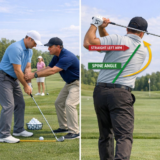
Slow-motion swing practice provides a precise, intentional framework for dissecting and improving the multi-step sensorimotor sequence that makes up the golf swing. Seen through the lens of contemporary cognitive science-where cognition includes perception, attention, memory and motor planning-slowed rehearsal reduces temporal constraints and background sensory interference so golfers can better sense kinematic details and internal feedback.Cognitive researchers show that mental operations are organized and trainable; by decelerating the motion, players and coaches gain clearer access to those operations, which supports more accurate error recognition, targeted adjustments, and progressive reprogramming of motor plans.
This piece explores how slowed swing rehearsal affects the key cognitive mechanisms that support skill learning and consistent performance.Covered topics include shifts in attentional allocation and working-memory demands, how explicit strategies move toward implicit control, improvements in sensorimotor integration and proprioceptive calibration, and the contribution of intentional, varied practice to retention and transfer.Drawing on principles from motor-learning and cognitive psychology, the discussion explains how tempo manipulation-when applied systematically-can speed up the consolidation of stable movement patterns, sharpen anticipatory control, and lower variability under pressure. Practical coaching implications and directions for future research conclude the review,with suggestions for optimizing the cognitive returns from slow-motion swing training in golf.
Neural and Cognitive Foundations of slowed‑Tempo Motor practice in Golf
The physiological networks that support purposeful slow‑tempo rehearsal span cortical and subcortical circuitry. Executing controlled,lower‑speed swings increases afferent signaling and better engages regions such as primary motor cortex,cerebellum and basal ganglia-areas involved in planning,error correction and automatization.Slower movement widens the time available for sensory prediction and comparator functions, improving the accuracy of internal models that later guide faster, ballistic strokes. In addition, deliberate slowing recruits prefrontal executive systems that permit conscious experimentation with technique and cognitive remapping of motor commands.
From a cognitive standpoint, reducing tempo temporarily shifts control away from largely procedural networks toward attention‑dependent encoding, strengthening the linkage between sensation and action. Reviews of cognitive principles predict measurable gains in:
- Focused attention – the ability to hold attention on defined swing elements for longer;
- Working memory – short‑term maintenance of kinematic targets and verbalized cues;
- Sensorimotor integration – tighter correspondence between proprioceptive inputs and outgoing motor plans;
- Interoceptive sensitivity – finer awareness of joint angles, muscular tension and pressure shifts.
These cognitive adjustments support the move from deliberate, explicit control toward efficient implicit performance when speed demands increase.
Slowed rehearsal also produces richer error signals that aid neural consolidation and offline replay. The table below contrasts common outcomes seen after careful slow practice versus merely repeating full‑speed swings:
| Measure | Slow‑Tempo outcome |
|---|---|
| Movement variability | decreases; clearer gradients for correction |
| Retention over days | Stronger across sessions |
| Transfer to competition speed | More likely when ramped progressively |
These patterns are consistent with neurocognitive accounts that highlight error‑driven plasticity and the value of extended feedback windows for forming stable motor memories.
For coaches, slow‑tempo drills work best as focused interventions to alter dysfunctional movement habits and to scaffold complex components. Practical guidelines include:
- Integrate brief slow blocks within technical sessions rather than making them the sole activity;
- Pair slowed swings with clear cues (kinesthetic and visual) to anchor prefrontal encoding;
- Raise speed progressively when objective reductions in error are observed to support transfer;
- Apply objective feedback (video, inertial sensors) to tighten the perception-action loop.
These tactics exploit neurocognitive mechanisms-attentional allocation, working‑memory scaffolding and consolidation-to turn deliberate slow practice into improvements that hold up at higher speeds.
Greater Proprioceptive Accuracy and Body Awareness from Intentional Slow Rehearsal
Deliberately slowing the swing expands the nervous system’s access to proprioceptive and tactile inputs, helping golfers build more accurate internal maps of limb and club geometry. When the motion is decelerated, prolonged afferent streams from muscle spindles, joint mechanoreceptors and skin sensors create an extended sensory sampling window.That extended input improves sensorimotor integration and strengthens feedforward models that are used during full‑speed shots.Neurophysiological change includes potentiation of synaptic connections in sensorimotor pathways and reduced dependence on the noisy cues typical of ballistic practice.
These sensory refinements produce tangible perceptual and motor benefits. Reproducible outcomes commonly reported are:
- Finer joint‑angle discrimination – better detection of wrist, elbow and hip positions during transition and follow‑through;
- More reliable weight‑shift sensing – clearer perception of pressure distribution under the feet throughout the swing;
- Improved sense of clubface orientation – a better internal estimate of face angle at impact, even without visual confirmation.
Such gains reduce within‑trial variance and speed up error detection when returning to normal tempo swings.
| Practice Variable | why it helps | Typical guideline |
|---|---|---|
| Tempo (slow) | Extends sensory sampling time | 3-5 s for backswing and downswing |
| Repetitions | Supports neural consolidation | 8-12 focused reps per set |
| Directed focus | Channels attention to sensory cues | Cue examples: pressure,joint angle,clubface |
Pair slow rehearsal with explicit cognitive prompts and regular checks at full speed to confirm transfer. Use short experimental blocks (2-3 sets) embedded in standard practice and intersperse normal‑tempo strokes to preserve rhythm. in the literature, “enhanced” typically denotes measurable improvements in acuity or function; slow rehearsal frequently produces these changes by recalibrating sensorimotor maps and creating more durable cortical representations.
Attentional Economy and Working‑Memory Advantages from Slowed Technique Work
Slowed‑tempo practice breaks the swing into extended temporal segments, reliably increasing a player’s capacity for selective attention and lowering the cognitive burden that accompanies fast, ballistic motion. when execution is slowed, athletes can observe and attend to specific cues (clubface angle, hip rotation timing, wrist hinge) and update internal forward models with greater fidelity. Motor‑control frameworks propose that this temporal stretching improves the perceptual signal‑to‑noise ratio, enabling more precise error detection and finer tuning of feedforward commands.
Key cognitive operations that are better engaged during intentional slow refinement include:
- Sustained attention: longer observation windows for critical kinematic events;
- Inhibitory control: preventing needless acceleration that hides technical faults;
- Multi‑sensory alignment: improved matching of proprioceptive and visual signals with motor output;
- Chunking: segmenting a complex movement into stable subunits for working‑memory encoding.
Together, these processes build a more detailed internal model of the desired movement.
| Cognitive Marker | Change with Slow Practice |
|---|---|
| reaction time to error cues | Faster detection |
| Quality of motor representation | Higher fidelity |
| Working‑memory load during rehearsal | More efficient chunking |
Working‑memory advantages appear during both acquisition and retention phases: slower execution permits repeated mental rehearsal of component actions, strengthening transient representations that support consolidation. Over multiple sessions these chunks are integrated into procedural memory, improving transfer to full‑speed performance and enhancing retention after delays. In practice,alternating slow,attentive repetitions with progressively faster composite trials maximizes the combined benefits for attention and working‑memory encoding,yielding measurable improvements in consistency and precision.
Stabilizing Motor Schemas and Scaling to Competition Speed
Slowed rehearsal promotes gradual stabilization of internal movement schemas by minimizing temporal and kinematic noise during learning. Deliberate deceleration increases sensory sampling and cognitive processing of proprioceptive and visual information, which helps encode precise state‑action relationships. This process improves the fidelity of motor schemas-generalized rules that map situations to coordinated muscle outputs-so they become more robust to perturbations and more accessible under pressure. consolidation hear includes short‑term strengthening of traces and the integration of movements into a flexible repertoire that can be expressed at higher velocities.
Mechanisms that enable low‑speed practice to carry over to fast performance can be summarized as:
- Proprioceptive sharpening: better somatosensory discrimination of limb posture;
- Sharpened error detection: clearer perception of deviations from intended trajectories;
- Temporal chunking: breaking the swing into stable segments that recombine at tempo;
- Attentional economization: lower cognitive load during execution, freeing resources for strategy.
Neurocognitive models indicate that consolidation relies on both online tuning during practice and offline processes (such as sleep‑related integration) that stabilize motor memories.Coaches can monitor transfer with kinematic markers (e.g., onset of rotation, wrist hinge timing) and by checking inter‑segmental coordination at higher speeds. The table below lists target components and observable indicators useful for assessment:
| Component | Observable Indicator |
|---|---|
| Timing schema | Reproducible lead‑arm deceleration |
| Sequencing | Stable pelvis‑to‑shoulder lag |
| Force scaling | Predictable clubhead acceleration profile |
To promote transfer, combine slow‑tempo consolidation with graduated increases in velocity and varied practice scenarios that challenge the generalized motor program. Coaches should explicitly link sensed cues to intended outcomes during slow work, then use constrained drills that preserve learned kinematic relationships as tempo rises. Valid assessment of transfer should include both kinematic analysis and task‑level metrics (accuracy, dispersion); when schemas are well consolidated, performers maintain coordination and adapt execution across speeds and settings.
Error Awareness,Feedback Use,and Adaptive Learning with Slowed Rehearsal
Slowed swings widen the sensory sampling window and increase conscious access to kinesthetic and proprioceptive signals,which amplifies error detection. At lower speeds, transient deviations masked by momentum in fast swings become noticeable, allowing learners to distinguish intended from actual segmental motion. Neurocognitively, this practice engages enhanced prefrontal monitoring and stronger sensorimotor integration, promoting higher‑resolution internal models that translate desired outcomes into corrective commands.
Effective feedback integrates both intrinsic and extrinsic sources without creating dependency. Short, well‑timed augmented cues aid consolidation, while continuous descriptive feedback can reduce opportunities for self‑monitoring. Useful feedback channels include:
- Visual: slowed video playback with annotated markers;
- Auditory: metronome pacing or sonified club path cues;
- Tactile: light contact constraints or wearable haptic signals;
- Reflective: structured self‑assessment and error journaling.
Adaptive learning is fostered by gradually changing constraints so that learners generalize from slow rehearsal to performance pace. common manipulations and cognitive targets are summarized below:
| Manipulation | Cognitive Target | expected Outcome |
|---|---|---|
| Incremental tempo increases | Temporal rescaling | Preserved timing at speed |
| Limiting degrees of freedom | Segmental control | Greater pattern stability |
| Variable practice contexts | Schema generalization | Improved adaptability |
To build durable skills, embed slow practice within a cycle of measurement, reflection and graduated challenge. Use objective metrics (e.g., deviation angles, tempo consistency) together with subjective reports to monitor trends, and schedule probe trials at full speed to evaluate transfer. teach metacognitive strategies-goal setting, hypothesis testing and systematic variation-so slow rehearsal fuels adaptive learning rather than becoming rote repetition of a single tempo.
Putting an Evidence‑Aligned Slow‑Tempo Protocol into Practice: Frequency,Duration and Progression
Constructing an effective slow‑tempo training plan should rest on motor‑learning and cognitive‑neuroscience principles. Reviews consistently find that distributed practice-short, focused sessions spaced across days-produces superior retention and transfer compared with long, massed bouts. For the cognitive benefits tied to slow practice (improved error detection, refined proprioception and better chunking), prioritize frequent, consistent rehearsals of high quality over high volume of unfocused reps.
Practical, evidence‑friendly parameters might include 3-5 sessions per week, each running about 15-30 minutes. Structure sessions as multiple short trials (6-10 slow swings per set) with rest to avoid mental fatigue and preserve attention. Emphasize active cognitive engagement-cue labeling, silent mental rehearsal and quick self‑checks-to reinforce the mind-body mappings targeted by slowed practice.
- Session structure: warm‑up (≈5 min), 3-6 slow‑swing sets (6-10 reps; 30-90 s rest), focused reflection (2-5 min)
- Progress markers: reproducible kinematics, reduced within‑trial variability, faster error identification
- Variation strategy: introduce lie/club/target changes after baseline stability is reached
Advance players based on criteria rather than elapsed time: progress when objective thresholds are met (for example, stability across three consecutive sessions). Typical ladders proceed from isolated slow practice to mixed‑tempo blends (50% slow → 75% → full speed) and finally to pressure or dual‑task conditions to test transfer. Use simple tracking tools-video clips, a short kinematic checklist or quick perceptual probes-to guide decisions and personalize load, while watching for cognitive fatigue and allowing recovery to consolidate gains.
| Level | Weekly Frequency | Session Duration | Progression Criterion |
|---|---|---|---|
| Beginner | 3× | 15-20 min | Consistent kinematics over 3 sessions |
| Intermediate | 4× | 20-30 min | Lower variability and cue retention |
| Advanced | 4-5× | 25-30 min | Smooth tempo blending to full speed |
Self‑Regulation, Confidence Gains and Anxiety Management via Structured Slow‑Tempo Work
Deliberate slow‑tempo practice enhances self‑regulation by externalizing internal movement models and making feedforward predictions and corrective feedback accessible to conscious monitoring. When a player swings more slowly, attentional resources once consumed by rapid execution become available for tracking kinematics, proprioception and breathing. this reallocation supports working memory and metacognitive evaluation-processes central to learning-so performers can identify,name and fix specific faults rather than applying broad,unfocused corrections.
Repeated success with structured slow reps builds cumulative mastery experiences that bolster task‑specific confidence. By isolating subcomponents and repeatedly achieving small, verifiable goals, golfers assemble a ladder of micro‑successes that strengthens self‑efficacy. Psychologically, these wins shift perceived causes of performance from external luck toward controllable processes (technique, tempo, attention), which stabilizes confidence in pressure situations.
Slower practice also functions as a practical cognitive‑behavioral tool for lowering performance‑related anxiety. It lets athletes regulate physiological arousal (breathing rhythm, muscle tension) in a low‑stakes setting and supports gradual exposure to task cues, fostering habituation and reappraisal. The reduced pace encourages mindful observation and cognitive distancing from catastrophic thoughts, making it easier to interrupt worry cycles and reengage goal‑directed attention during subsequent faster swings.
To capture these psychological benefits, embed slow‑tempo work in a structured format that combines repetition with incremental challenge and reflection. Recommended elements include clear micro‑goals, distributed scheduling and immediate perceptual feedback. A sample session template and checklist appear below.
- Pick one measurable micro‑goal per set (e.g., smooth 3‑second takeaway).
- Alternate slow reps with brief mental rehearsal to consolidate kinesthetic memory.
- Log objective cues (video or notes) and conduct guided self‑reviews to improve metacognitive skills.
| Component | Duration | Primary Aim |
|---|---|---|
| Slow technical sets | 10-12 reps × 3 sets | error detection & motor chunking |
| Mental rehearsal | 30-60 s between sets | Retention & confidence building |
| Arousal control practice | 2-5 min | Physiological regulation & anxiety reduction |
Q&A
Q1. What do we mean by ”cognitive advantages” when discussing slow‑tempo swing work?
A1. Here, “cognitive” refers to the mental operations that support learning and performance-perception, attention, working memory, decision‑making and motor planning. Sources that define cognition (for example,overviews on Verywell Mind and summaries of the cognitive approach) describe these processes as central to acquiring and using knowledge. In the context of slow‑tempo practice, cognitive advantages are enhancements in those processes that lead to clearer motor control, faster acquisition, better retention and more reliable transfer of the swing to performance situations.
Q2. What exactly is slow‑motion swing practice and how is it different from ordinary practice?
A2. Slow‑motion swing practice deliberately reduces swing speed so the entire sequence (address, takeaway, transition, downswing, impact and follow‑through) unfolds more slowly than in real play. Unlike normal practice, the tempo is intentionally lowered to increase kinesthetic sensitivity, sequencing accuracy and conscious monitoring. the objective is mindful rehearsal that improves internal models and error detection rather than mere repetition.
Q3. which core cognitive processes does slow‑motion work engage?
A3.Primary cognitive processes include:
– Focused and selective attention (monitoring specific movement elements).
– Working memory (holding instructions and sensory targets).
– Error detection and corrective planning (comparing intended versus actual motion).
– Motor planning and sequencing (organizing timed muscle activations).
– Perceptual‑motor integration and proprioceptive awareness.- Motor chunking and consolidation (segmenting the swing into learnable pieces).
Q4. Why does slowed practice aid motor learning from a psychological viewpoint?
A4. Several mechanisms explain the benefits:
– Greater perceptual discrimination: prolonged movement provides clearer sensory feedback.
– Enhanced explicit processing: reduced speed frees cognitive resources for analysis and correction.
– Stronger error‑based updating: clearer errors produce more effective internal model adjustments.
– Improved chunking: components are isolated and later recombined into automatic sequences.
– Better imagery coupling: slow physical actions pair well with mental rehearsal.- Consolidation advantages: when spaced, deliberate slow practice supports stronger memory traces.
Q5. What evidence underpins the cognitive benefits of slowed practice?
A5. Motor‑learning theory and applied studies across domains (music, rehabilitation, sports) support the idea that conditions enhancing perceptual feedback, error salience and focused attention improve learning and retention. While the general definitions of cognition are summarized in resources like Verywell Mind and SimplyPsychology, sport‑science and motor‑control literature provide empirical demonstrations that attentional focus, variable feedback and distributed practice-core features of effective slow practice-improve acquisition and transfer. Coaches should consult motor‑learning and sport‑psychology journals for sport‑specific randomized trials and protocols.
Q6. How do novices and experts respond differently to slow‑tempo practice?
A6. Novices usually gain the most as they need to form accurate motor programs and explicit rules; slowed practice helps establish sequencing, prevents bad habits and increases error awareness. Experts benefit when refining subtle elements, rehabbing after injury or correcting specific faults, but excessive slow practice can temporarily disrupt well‑established automatic routines if not phased properly.
Q7. How should slow‑motion work be scheduled within a training program?
A7. Practical guidelines:
– Tempo: about 25-50% of competition speed while preserving natural sequencing.
– Reps: 8-20 focused repetitions per set; 2-4 sets depending on fatigue.
– Frequency: 2-5 short sessions per week, mixed with full‑speed and variable practice.
– Progression: start with pronounced slow work to establish patterns, then ramp tempo and variability for transfer.
– Feedback: use brief augmented cues alongside self‑observation; fade external feedback to foster self‑monitoring.
– Spacing: distribute practice across sessions rather than massing it.- Mental rehearsal: combine slow physical practice with imagery and brief verbal cues.
Q8. What feedback approaches and coaching cues best complement slow practice?
A8. Effective strategies:
– Use concise, outcome‑focused external cues once the pattern is stable (e.g.,”accelerate through target”).
– Allow internal kinematic cues initially to develop kinesthetic awareness (e.g., “feel the hip lead”).
– Deliver augmented feedback sparingly (video, models) and fade it to encourage internal correction.
– Promote self‑explanation and verbal planning to deepen cognitive encoding.
Q9. When does slow practice transfer to full‑speed play and pressure situations?
A9. Transfer depends on structured progression. Cognitive gains support transfer when slow work is followed by graded tempo increases and varied practice that mimic competition conditions.If slow practice dominates without speed‑specific training, transfer may be incomplete because dynamics and feedback change with speed.Combine slow work with simulated pressure, dual‑task drills and on‑course variability to rehearse cognitive control under load.
Q10. What are the limits and risks of slow‑tempo practice?
A10. Possible downsides:
– Excessive explicit control can interfere with automaticity if not transitioned properly.
– poorly designed slow reps may produce timing patterns that do not scale to high speed.
– It is time‑inefficient when used exclusively; it should be part of a balanced program.
– Some learners may experience increased cognitive fatigue and lower engagement during prolonged slow work.
Q11. How can practitioners measure whether slow practice produces cognitive gains?
A11. Assessment methods:
– Retention tests after delays to evaluate consolidation.
- Transfer trials at normal speed and under pressure to assess adaptability.
– Dual‑task tests to probe automatization.
– Kinematic/sequencing analysis via video or motion capture.
– Subjective reports about proprioception, error awareness and confidence.
– In research settings, neurophysiological measures (EEG, EMG, imaging) can document representational changes.
Q12. How should slow‑tempo practice be combined with other evidence‑based methods?
A12. Integration plan:
– Introduce new patterns with slow, deliberate rehearsal and clear attentional focus.
– Increase tempo progressively and add variability (different clubs, targets, lies).- Include contextual practice: on‑course simulations, pressure drills and decision tasks.
– Combine with mental‑skills training (imagery, self‑talk, arousal control).
– Monitor outcomes and adapt based on retention and transfer metrics.
Q13. What open questions remain for research?
A13. Important directions include:
– Clarifying dose‑response relationships for tempo, rep count and session frequency in golf.
– Identifying differential effects across skill level and age.
– Conducting longitudinal work that follows on‑course transfer over months or seasons.
– Investigating interactions between slow physical practice and imagery or biofeedback.
– Mapping neurophysiological changes that accompany tempo‑based interventions.
– Developing best practices for shifting from explicit to implicit control with minimal disruption.
Q14. Practical takeaways for coaches and players
A14. Use slow‑tempo practice as a targeted cognitive tool to improve kinesthetic awareness, sequencing and error detection-especially during acquisition or correction phases. Structure sessions with precise tempo,limited focused reps and progressive moves toward full‑speed,varied practice to secure transfer. Monitor retention and transfer metrics, avoid exclusive dependence on slow work to prevent loss of automaticity, and pair slowed rehearsal with concise feedback, motor imagery and contextual drills for optimal results.
Selected foundational resources on cognition:
– Verywell Mind: introductions to cognitive processes and learning.
– SimplyPsychology: summaries of the cognitive approach in psychology.
– Cambridge Dictionary and standard lexicons for concise definitions of “cognitive.”
slow‑tempo swing practice functions as more than a biomechanical drill: it is indeed a cognitive‑motor intervention that expands the time available for attention, error detection and planning, thereby improving sensorimotor mapping and consolidation of desirable movement patterns. These effects align with contemporary conceptions of cognition as the set of perceptual, attentional, mnemonic and planning processes that support learning and skilled action. For coaches and players, the cognitive benefits of slow practice recommend its integration into periodized training plans that combine exploratory slow work with progressively faster, context‑rich rehearsal to encourage transfer to competition. future interdisciplinary research-using longitudinal designs and objective neurocognitive measures-will help define optimal protocols and clarify how tempo manipulation can enhance golf and other complex motor skills.

Slow Motion, sharp Results: The brain Benefits of Deliberate Swing Practice
Why slow-motion golf swings matter: a psychological snapshot
Slowing your golf swing down isn’t just a way to spot mechanical flaws – it’s a powerful cognitive training tool. When you move deliberately, you change how the brain encodes movement, how attention is allocated, and how errors are detected and corrected. The result: clearer motor patterns, better proprioception, and improved on‑course consistency.
Core cognitive mechanisms behind slow‑motion practice
1. Enhanced sensorimotor mapping and proprioception
Slow, controlled swings give your brain more time to register sensory input (joint angle, pressure, balance) and link it with motor output. This strengthens sensorimotor maps in the motor cortex and cerebellum, improving body awareness (proprioception) that transfers to full‑speed swings.
2.Reduced cognitive load for explicit learning
deliberate slow practice lowers task complexity per unit time, which helps working memory process and rehearse key swing cues (grip, hip turn, wrist hinge). That makes explicit instructions (what the coach told you) easier to implement without overloading the mind.
3. Improved error detection and feedback sensitivity
When motion is slowed, small deviations from the intended movement become obvious. That heightened error salience makes intrinsic feedback (feel) more informative, enabling faster trial‑and‑error adjustments and stronger learning.
4.Better motor chunking and sequence learning
Complex movements like a golf swing are learned as chunks. Slow practice helps the brain parse the swing into meaningful subcomponents (backswing,transition,downswing,impact,follow‑through) and bind them into reliable sequences that are easier to automate.
5. Facilitates neural plasticity and consolidation
Repetition under deliberate, attentive conditions is the recipe for synaptic strengthening. Slow practice sessions produce higher‑quality repetitions that are more likely to consolidate into long‑term motor memory – especially when followed by rest and sleep.
How slow practice interacts with attentional focus
Attentional focus is central to performance. Slow motion lets you experiment with focus strategies and see what works:
- Internal focus (e.g., “feel my wrist hinge”): useful during slow deliberate practice to isolate joints and sequencing.
- External focus (e.g., “swing the club toward that target line”): typically better for automatic performance; practice in slow motion can be used to transition the skill toward an external focus.
Use slow swings to learn and refine the movement with internal cues, then re‑integrate an external focus as the pattern stabilizes for better on‑course transfer.
Practical benefits for golf performance
- Precision and consistency: Small mechanical errors are easier to catch and correct, leading to fewer mishits.
- Reduced anxiety and rush: Deliberate tempo trains calm execution under pressure – you’ll be less likely to hurriedly rush a swing on the course.
- Transfer to short game: Putting and chipping benefit from refined feel and tempo awareness developed in slow swing practice.
- Injury prevention: Controlled movement encourages correct sequencing and reduces jerky compensations that can stress the body.
Evidence‑based practice formats and drills
Below are evidence‑informed drills and practice structures that incorporate slow‑motion principles and align with motor learning research.
Drill 1 - 5‑Second Full Swing
- Execute a full swing with a smooth 5‑second tempo from address to finish.
- Focus on balance, clubface alignment at impact, and coordinated hip/shoulder rotation.
- Do 10 deliberate reps, rest 60-90 seconds, then repeat a second set.
Drill 2 – Segmental integration
- Break the swing into three segments: backswing to top, transition to impact, and finish.
- Practice each segment slowly for 8-10 reps, then combine two segments, then all three.
- This promotes effective chunking and clarity of sequence.
Drill 3 - Feel & Freeze
- Slow swing to a checkpoint (e.g., 3 o’clock, 9 o’clock, or impact position), then freeze and take a snapshot: check balance, wrist set, and clubface.
- Use video for comparison and subtle corrections.
Drill 4 – Tempo Switch
- Alternate between 5 slow swings and 3 moderate‑speed swings to practice transfer from slow learning to more natural tempo.
- Finish with 1 full‑speed swing to evaluate carryover.
Sample 4‑week slow‑motion practice plan (on‑range)
| Week | Focus | Session Structure (3x/week) |
|---|---|---|
| 1 | Awareness & proprioception | 10 slow full swings + 15 segment drills; video feed; rest between reps |
| 2 | Sequencing & timing | 5‑second swings (2 sets x 10) + segment integration; tempo switches |
| 3 | Error detection & transfer | Feel & Freeze + 3 moderate speed swings; add short game slow reps |
| 4 | Automation & pressure simulation | Slow → moderate → full (progression) + 1 pressure set (target goals) |
How to combine slow practice with variability
Pure repetition at one speed can lead to brittle learning. Use variability principles:
- Vary club type: practice the same slow sequence with wedges, irons, and a driver.
- Change targets and lie: simulate different course situations slowly to improve adaptability.
- Alternate cognitive loads: sometimes add a simple secondary task (e.g., call out a number before swing) to train robustness under distraction - start slow, then increase complexity.
Case study: Amateur golfer improves consistency in 8 weeks
Situation: A mid‑handicap (12-16) player struggled with inconsistent contact (fat/thin shots) and rushed transitions.
Intervention: Coach implemented a slow‑motion protocol twice weekly: 10 deliberate 5‑second swings, segment practice, and feel & freeze checks. Sessions included immediate video feedback and short reflection (what felt different?).
Outcome: After 8 weeks the player reported:
- More reliable impact position and reduced fat shots by 40%
- Improved tempo, leading to lower dispersion on the range
- Greater confidence that transferred to better course management
Why it worked: Extra time per repetition allowed better sensory registration and error correction.The player’s brain formed cleaner action-outcome mappings that held up under mild pressure.
First‑hand experience: common feelings and how to interpret them
Players frequently enough report the following sensations during slow practice:
- Movement feels different: This usually means you’re accessing a new coordination pattern. That’s good – it’s part of reprogramming.
- It feels clumsy at first: Early awkwardness is normal; motor learning ofen degrades immediate performance but improves long‑term retention.
- Hands or wrists feel heavier: slowing down reveals where compensations occur. Use this as diagnostic data, not as discouragement.
How to measure progress (simple metrics)
- Track dispersion: measure horizontal/vertical spread on the range for full‑speed swings before and after the slow practice block.
- count error rate: record how many swings are clearly “out of sequence” (e.g., early release) during slow drills.
- Self‑report confidence and perceived feel on a 1-10 scale after each session.
common mistakes and how to avoid them
- Only slow, never integrate: Always pair slow learning with gradual re‑speeding and external focus to ensure on‑course transfer.
- Too many cues: Limit to 1-2 simple cues during slow practice to avoid cognitive overload.
- No feedback loop: Use video, a coach, or immediate self‑reflection to close the learning loop.
Speedy checklist for a productive slow‑motion session
- Define one clear objective (tempo, hip rotation, impact position).
- Use slow swings to explore that objective for 10-15 quality reps.
- Record or freeze positions for visual feedback.
- Do a progressive re‑speed block (slow → medium → normal) to test transfer.
- Log perceived changes and plan the next session accordingly.
SEO tips for golfers and coaches publishing slow‑motion content
- Use target keywords naturally: ”slow-motion swing”, “golf swing drills”, “deliberate practice golf”, “golf tempo training”.
- Include how-to steps and sample plans (readers love actionable content).
- Feature short video clips showing slow vs full-speed swings – visual proof boosts engagement.
- Add a simple table or bullet checklist for scanning readers and featured snippets.
Final practical pointers (ready to use)
- Start every practice with 5-10 slow reps focused on proprioception.
- Limit slow‑motion practice to 20-30 minutes per session to avoid mental fatigue.
- pair slow practice days with light physical work (mobility, core) and good sleep to maximize consolidation.
- Move from explicit focus in slow practice to external focus as the pattern stabilizes.
Slow motion practice is a high‑value, low‑risk strategy that trains not just mechanics but the brain behind the swing. When used thoughtfully – with clear goals, feedback, and a progression back to normal tempo - slow practice can sharpen feel, improve error detection, and build the kind of consistent swing that lowers scores.